
The European Sleeper Train Renaissance: How Night Rail is Replacing Short-Haul Flights in 2026
A wave of new overnight rail routes is rolling across Europe in 2026, offering travelers a climate-friendly alternative to short-haul flights. Driven by environmental awareness and a desire for 'slow travel,' independent cooperatives are stepping in to connect major cities from Paris to Milan.
By Factlen Editorial Team
- Climate-Conscious Travelers
- Value the 90% reduction in carbon emissions and the logistical ease of city-center travel over the speed of short-haul flights.
- Independent Rail Operators
- Argue that entrepreneurial cooperatives can fill the gaps left by state-run railways and build a profitable, sustainable network.
- Tourism & Slow Travel Advocates
- Emphasize the romance, comfort, and experiential joy of waking up in a new country, viewing the journey as a core part of the holiday.
What's not represented
- · Budget Airlines
- · National Infrastructure Managers
Why this matters
Transportation is one of the largest contributors to individual carbon footprints. The expansion of practical, comfortable overnight rail gives travelers a viable way to drastically cut their emissions without sacrificing their international holidays.
Key points
- European Sleeper is launching a new Paris-Brussels-Berlin route in March 2026, replacing a canceled state-run service.
- A new north-south route will connect Amsterdam and Brussels directly to Milan via the Swiss Alps starting in June 2026.
- Taking a train in Europe emits up to 90% less carbon dioxide than taking a short-haul flight on the same route.
- Sleeper trains offer a 'double sustainability benefit' by eliminating the energy consumption of a hotel stay.
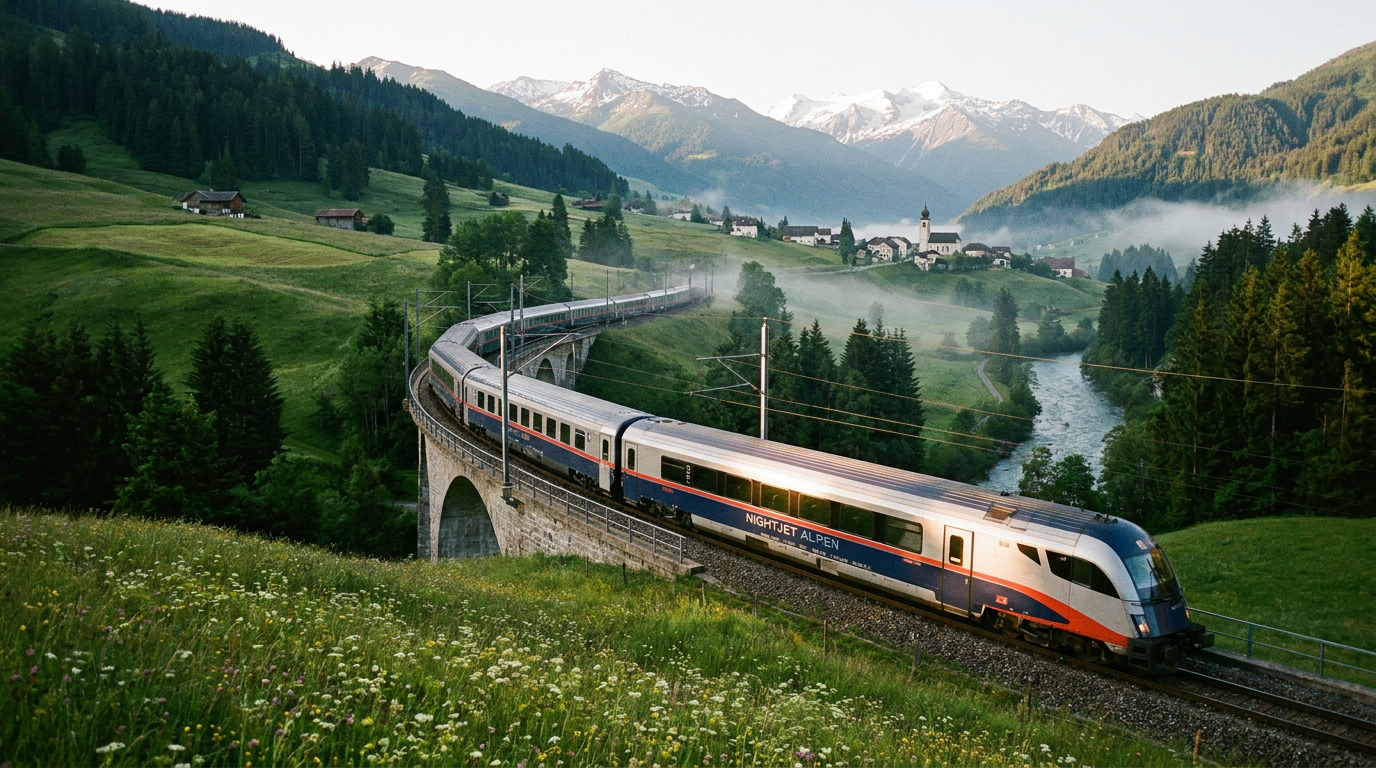
The romance of the overnight train is experiencing a profound modern renaissance. Across Europe, a growing demographic of travelers is increasingly bypassing crowded airport terminals and stressful security lines in favor of a more civilized journey. Instead of enduring the cramped cabins of short-haul flights, they are choosing to fall asleep to the gentle rhythm of the rails and wake up to Alpine sunrises or the historic architecture of a new city center. This shift represents more than just a nostalgic nod to the golden age of rail; it is a structural transformation in how the continent approaches international mobility.[1][4]
The primary catalyst for this year’s surge in rail travel is a wave of new and revived overnight routes launching throughout 2026. Leading this charge is European Sleeper, a Belgian-Dutch cooperative that has rapidly become the poster child for the night train revival. Operating independently of state-owned national railways, the company is stepping in to rescue and expand vital cross-border connections that traditional operators have struggled to maintain. Their entrepreneurial approach is proving that there is a robust, sustainable market for long-distance night trains.[1][5]
In March 2026, European Sleeper officially launched its highly anticipated Paris-Brussels-Berlin service. This crucial artery between three of Europe’s most important capitals was previously operated by the state-backed ÖBB Nightjet, which had launched the connection to great fanfare just a few years prior. However, late last year, the Austrian operator and its French partner, SNCF, announced their sudden withdrawal from the route after the French government abruptly cut essential transport subsidies. The cancellation was initially viewed as a massive blow to the continent's rail ambitions, sparking fears that the night train revival was losing its momentum.[1][5]
Rather than letting the iconic route fade into history, the independent cooperative launched a rapid funding round to take it over. By securing millions in community shares and private investment, European Sleeper proved that private enterprise and dedicated passengers can sustain international rail even when state governments pull back. The new service now runs three times a week, seamlessly connecting the cities and offering a combined six-times-weekly service between Brussels and Berlin when paired with the company's existing Prague route.[5]

But the expansion of the European rail map does not stop in Northern Europe. In June 2026, European Sleeper will inaugurate a highly anticipated north-south route connecting Amsterdam and Brussels directly to Milan. This ambitious expansion addresses a long-standing gap in the market, as sleepers from Central Europe to Northern Italy have historically been few and far between, often falling victim to mass engineering works and complex logistical hurdles. By establishing this connection, the operator is opening up entirely new car-free itineraries for travelers heading to the Italian lakes and the broader Mediterranean coast.[4][8]
This new Italian journey will take passengers through the heart of the Swiss Alps via the legendary Simplon Pass, offering spectacular dawn views before descending into the Lombardy region. Crucially, it marks the first scheduled train to connect Eurostar terminus points directly to Northern Italy via overnight rail. For travelers originating in the United Kingdom, this means they can finish a workday in London, catch an evening Eurostar to Brussels, step onto a waiting sleeper train, and be sipping espresso in Milan by the following morning—all without ever setting foot in an airport.[8]
Beyond Western Europe, the continental map is rapidly filling in with new connections. Poland's national operator, PKP Intercity, is launching the Adriatic Express, a remarkable seasonal service that crosses five countries in a single night. Traveling through Poland, the Czech Republic, Austria, and Slovenia, the train connects Warsaw directly with the Croatian coastal city of Rijeka. What was previously a grueling journey requiring three separate trains and an overnight hotel stay can now be completed in the comfort of an air-conditioned sleeping cabin.[4][8]
Beyond Western Europe, the continental map is rapidly filling in with new connections.
Simultaneously, the Baltic Express is establishing a permanent overnight link between Prague and Poland's Baltic Coast, capitalizing on the massive success of its initial seasonal run. Even domestic networks are seeing upgrades; in the UK, the iconic Caledonian Sleeper is adding a new stop at Birmingham International in early 2026, connecting the Midlands directly to the Scottish Highlands. This flurry of new routes reflects a coordinated effort by both private cooperatives and state operators to rebuild Europe's cross-border sleeper network after decades of systemic decline.[3][4][8]

What is driving this massive, continent-wide shift back to the rails? The primary engine is a growing, urgent public awareness of the environmental cost of aviation. As the realities of climate change become impossible to ignore, consumers are actively seeking ways to reduce their personal carbon footprints, and transportation is often the largest single factor. Short-haul flights—generally defined as those under 700 miles—are the most carbon-intensive form of passenger transport available today. Because aircraft consume the vast majority of their fuel during the energy-intensive phases of takeoff and landing, short hops generate disproportionately high greenhouse gas emissions per mile traveled compared to long-haul aviation.[2][3][6][7]
In stark contrast, taking a train between European cities emits up to 90 percent less carbon dioxide than flying the exact same route. This massive reduction is largely because European rail networks are highly electrified and increasingly powered by renewable energy grids. As countries continue to decarbonize their electricity sectors, the carbon footprint of a train journey shrinks even further. For climate-conscious travelers, swapping a one-hour flight for a twelve-hour train ride is the single most effective action they can take to mitigate the environmental impact of their holidays.[6][7]
Night trains also offer what sustainability analysts refer to as a "double sustainability benefit." By combining transportation and accommodation into a single ticket, passengers entirely eliminate the energy consumption, water usage, and carbon footprint associated with a night in a traditional hotel. This compounding environmental advantage is a key reason why policymakers and environmental groups are heavily lobbying for the expansion of night rail as a structural replacement for short-haul aviation across the European Union. It transforms the journey from a purely extractive logistical step into a functional part of the holiday itself.[7]

Logistically, the appeal of the sleeper train is equally compelling. Night trains deliver passengers directly from city center to city center, completely bypassing the secondary emissions and severe time costs associated with modern air travel. Travelers avoid the expensive transit to remote airports, the stress of two-hour security lines, the rigid liquid restrictions, and the increasingly exorbitant fees for checked baggage. Instead, they board in the heart of a city, enjoy a restaurant-standard meal in the dining car, and wake up exactly where they need to be.[6][7]
The data clearly reflects this behavioral shift among consumers. In 2024, Europeans traveled a staggering 443 billion kilometers by train—a nearly 6 percent increase over the previous year. Comprehensive surveys indicate that nearly 70 percent of European travelers are now willing to take night trains, with environmental awareness cited as one of the strongest predictors of this willingness. Recent volatility in global aviation fuel markets has only accelerated this trend, as rapid changes in energy prices quickly translate into higher flight costs and increased cancellation rates.[2][3]
However, the night train revival is not without its significant friction points. Operating cross-border rail in Europe requires navigating a labyrinth of different national track gauges, incompatible signaling systems, and competing infrastructure managers. Coordinating a single train that passes through five different countries—such as the new Adriatic Express—is an administrative and engineering marvel that requires years of delicate negotiation and planning. Furthermore, night trains must share the rails with high-speed daytime passenger services and heavy freight trains, making scheduling incredibly complex and leaving sleeper services vulnerable to delays from overnight engineering works.[3][8]

The financial realities also present a barrier to mass adoption. Track access charges—the tolls that operators must pay to national governments to use their railways—remain prohibitively high in many European countries. Because sleeper trains carry fewer passengers per carriage than densely packed daytime trains, these fixed infrastructure costs are distributed among fewer ticket sales. As a result, a private couchette on a sleeper train can still cost significantly more than a budget airline ticket, presenting a real dilemma for cost-conscious travelers who want to travel sustainably but are priced out of the rail market.[2][3]
Despite these economic and infrastructural hurdles, the momentum behind the European sleeper train is undeniable. Independent operators like European Sleeper have proven that passenger demand is strong enough to overcome bureaucratic inertia, successfully crowdfunding their expansions and filling the voids left by retreating state operators. As the rolling stock is modernized with better soundproofing, improved climate control, and enhanced privacy, the network is becoming more resilient and comprehensive than it has been in decades. The industry is demonstrating that sustainable mobility does not have to mean a reduction in comfort or convenience.[1][5]
Ultimately, the 2026 route map proves that sustainable travel is no longer just an ideological compromise—it is rapidly becoming the preferred way to experience the continent. As global temperatures rise and summer heatwaves make daytime travel increasingly uncomfortable, the overnight train offers a cool, reliable, and deeply civilized alternative. By turning the journey itself into an event, the sleeper train renaissance is successfully convincing millions of travelers that the best way to cross Europe is not to fly over it, but to sleep through it.[2][3][4]
How we got here
May 2023
European Sleeper launches its first independent night train between Brussels and Berlin.
Dec 2023
ÖBB Nightjet launches the Paris-Berlin route to great fanfare, signaling a major revival for state-backed night rail.
Late 2025
The French government cuts subsidies, forcing state operators to abandon the Paris-Berlin route.
March 2026
European Sleeper steps in to officially relaunch the Paris-Brussels-Berlin service.
June 2026
A new north-south route opens, connecting Amsterdam and Brussels to Milan via the Swiss Alps.
Viewpoints in depth
The Independent Operators' View
Argues that private enterprise and community funding can sustain international rail even when state governments pull back.
Independent operators like European Sleeper believe that the future of cross-border rail relies on agility and community investment rather than slow-moving state bureaucracy. By successfully crowdfunding their expansions, they argue they can bypass the political gridlock that often plagues national railways. They point to the rescue of the Paris-Berlin route as proof that passenger demand is strong enough to support a profitable, sustainable network without relying entirely on volatile government subsidies.
The Climate Advocates' View
Views the expansion of night rail as a critical structural replacement for highly polluting short-haul aviation.
Environmental organizations and climate-conscious travelers emphasize the stark math of transportation emissions. Because short-haul flights burn massive amounts of fuel during takeoff and landing, they are disproportionately damaging per mile. Climate advocates argue that the 90 percent reduction in CO2 offered by electrified rail, combined with the 'double sustainability benefit' of avoiding a hotel stay, makes the sleeper train a vital tool for decarbonization. They are increasingly lobbying for bans on ultra-short flights where viable rail alternatives exist.
The Slow Travel Movement's View
Champions the psychological and experiential benefits of reclaiming travel time from stressful airport environments.
For proponents of 'slow travel,' the night train renaissance is about more than just carbon footprints; it is a rejection of hyper-mobility. They argue that modern air travel has turned the journey into an extractive, stressful gauntlet of security lines and remote terminals. The sleeper train, by contrast, reclaims that time as a restful, productive, and romantic part of the holiday itself. Waking up in a city center, they argue, fundamentally improves the quality of the travel experience.
What we don't know
- Whether independent operators can maintain profitability long-term without the state subsidies that traditional national railways rely on.
- How budget airlines will adjust their pricing or lobbying efforts as cross-border rail captures more of the climate-conscious market.
Key terms
- European Sleeper
- A Belgian-Dutch cooperative rail company that operates independent night trains across Europe, funded partly by community shares.
- Nightjet
- The sleeper train brand operated by ÖBB (Austrian Federal Railways), which pioneered the modern revival of European night trains.
- Couchette
- A basic sleeping compartment on a train, typically featuring four to six bunk beds that convert into seats during the day.
- Track Access Charges
- Fees paid by train operators to national infrastructure managers for the right to run trains on their rail networks.
Frequently asked
Are sleeper trains cheaper than flying?
Not always. While you save on a hotel night and baggage fees, base ticket prices for sleeper cabins are often higher than budget airline fares due to track access charges.
How do UK travelers connect to these new routes?
Travelers can take the Eurostar from London to Brussels, which serves as a major hub for European Sleeper connections to Berlin, Prague, and Milan.
Do sleeper trains have Wi-Fi and power outlets?
Yes, modern sleeper trains are equipped with Wi-Fi, charging ports, and upgraded amenities, though connectivity can occasionally drop in mountainous regions.
Why are short-haul flights so polluting?
Aircraft consume the vast majority of their fuel during takeoff and landing, making short hops disproportionately carbon-intensive per mile traveled compared to trains.
Sources
Source coverage
8 outlets
3 viewpoints surfaced








[1]ForbesTourism & Slow Travel Advocates
Riding the European Sleeper night train
Read on Forbes →[2]The IndependentClimate-Conscious Travelers
European sleeper trains: environmental impact and new routes
Read on The Independent →[3]Yahoo NewsClimate-Conscious Travelers
Europe's cross-border sleeper network rebuild
Read on Yahoo News →[4]AfarTourism & Slow Travel Advocates
8 Exciting New Sleeper Train Routes Launching Across Europe
Read on Afar →[5]Business Travel News EuropeIndependent Rail Operators
European Sleeper will start Paris-Berlin night train services by March 2026
Read on Business Travel News Europe →[6]Seat61Climate-Conscious Travelers
Cut your CO2 emissions by up to 90%
Read on Seat61 →[7]MyEuroTrainTourism & Slow Travel Advocates
Inside a Modern Nightjet Sleeper Cabin: Experience Europe Overnight
Read on MyEuroTrain →[8]Byway TravelIndependent Rail Operators
New night trains Europe 2026 routes
Read on Byway Travel →

Every angle. Every day.
Get lifestyle stories with full source coverage and perspective breakdowns delivered to your inbox.