
Public Support Wanes as Congress Questions the Mounting Costs of the US-Iran Conflict
Growing skepticism among swing-state voters and bipartisan pushback in Congress are complicating the Trump administration's push for a record military budget following the February strikes on Iran.
By Factlen Editorial Team
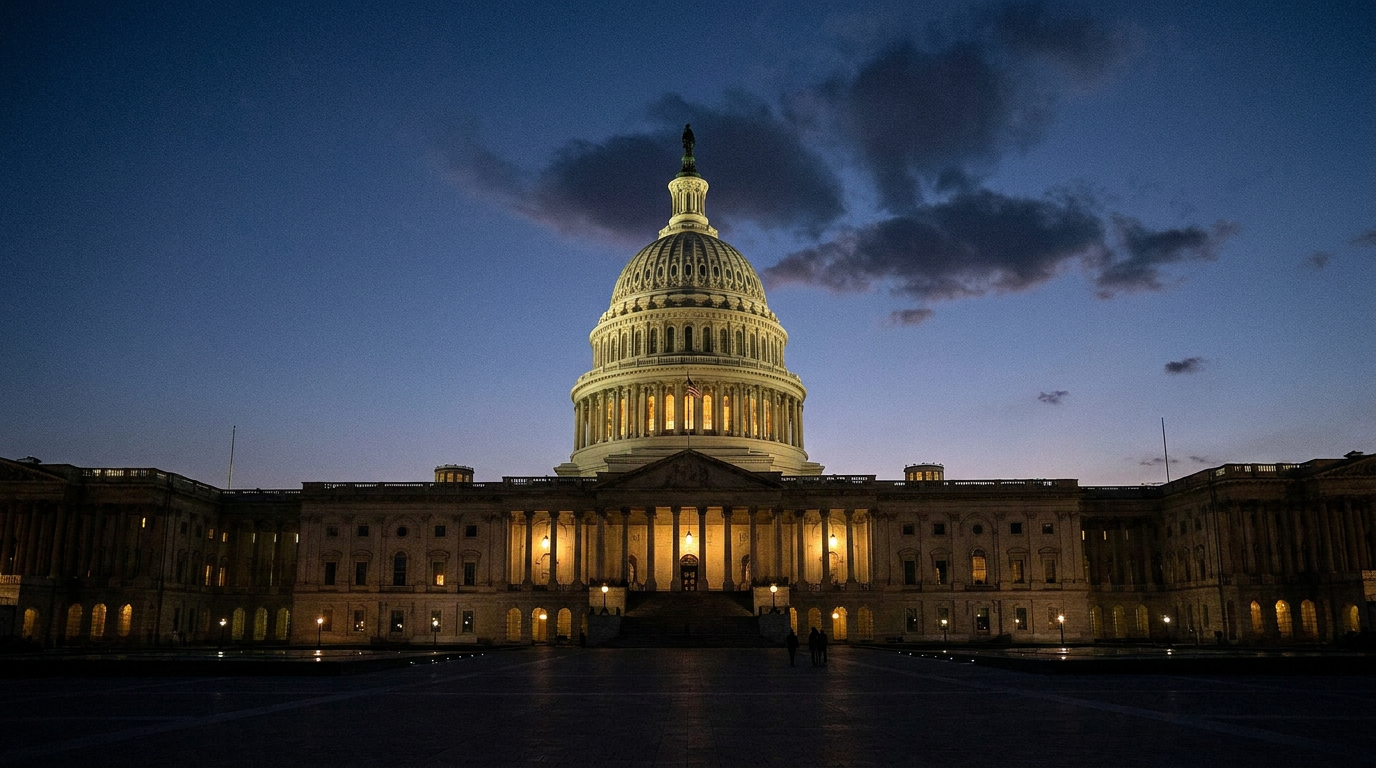
- Skeptical Electorate
- Argues that the conflict is a costly overextension that distracts from pressing domestic economic issues.
- National Security Advocates
- Maintains that the strikes were a necessary deterrent and that cutting funding projects dangerous weakness.
- Fiscal Scrutinizers
- Demands strict accounting and transparency for military expenditures to prevent ballooning federal deficits.
What's not represented
- · Active-duty service members deployed in the region
- · Iranian civilians affected by the conflict
Why this matters
The shifting public sentiment in crucial swing states, combined with congressional resistance, could force the administration to alter its military strategy and scale back requested defense spending, directly impacting national security policy and the federal deficit.
Key points
- Public support for the US-Iran conflict is waning, particularly among crucial swing-state voters.
- The administration's push for a record military budget is facing bipartisan resistance in Congress.
- Lawmakers are demanding greater transparency regarding the specific financial costs of the ongoing operations.
- Defense contractors are seeking long-term procurement guarantees as they ramp up weapons production.
- The political fallout could significantly impact the upcoming 2026 midterm elections.
Nearly four months after the United States and Israel launched coordinated military strikes against Iran, the domestic political landscape is shifting. What began as a decisive show of force is now facing mounting scrutiny from both the American public and a divided Congress. The human and economic tolls are coming into sharper focus, prompting a reevaluation of the conflict's long-term viability and its impact on domestic priorities.[1]
The erosion of support is particularly visible in crucial battleground states. Recent focus groups conducted with swing voters in Wisconsin reveal a growing consensus that the military engagement has become a costly overextension. Many of these voters, who are highly sought after by both parties, express frustration that domestic economic concerns are being sidelined in favor of an open-ended overseas conflict with no clear resolution in sight.[2]
The financial burden of the ongoing operations is staggering. While the administration has been reluctant to release an itemized accounting of the war's specific costs, independent estimates and congressional watchdogs point to billions of dollars already expended on munitions, logistics, and heightened regional deployments. This is in addition to the tragic human toll that has steadily climbed since the initial February 28 escalation.[1]

This sticker shock has directly spilled over into legislative battles on Capitol Hill. The White House's push for what would be the largest military budget in U.S. history is hitting significant roadblocks. Lawmakers from both sides of the aisle are demanding greater transparency, refusing to rubber-stamp the funding without a clear strategic endgame and a detailed breakdown of the Iran-specific expenditures.[3]
This sticker shock has directly spilled over into legislative battles on Capitol Hill.
The resistance in Congress is forming an unusual coalition. Progressive lawmakers have long opposed the escalation on humanitarian and anti-war grounds, but they are now being joined by fiscal conservatives who are balking at the ballooning federal deficit. This bipartisan skepticism is forcing the administration to defend its budget requests far more aggressively than anticipated, slowing down the legislative process.[3][4]
In response, the administration and its allied defense advocates maintain that the strikes were an absolute necessity to degrade Iran's capabilities and restore deterrence in the Middle East. They argue that the upfront costs, while high, pale in comparison to the strategic risks of allowing Tehran to operate unchecked. Officials warn that cutting defense funding now would project weakness and embolden adversaries on the global stage.[5]

The defense sector is also caught in the crossfire of this political debate. Major contractors are ramping up production to replenish depleted stockpiles of precision-guided munitions and interceptors used in the conflict. However, the uncertainty surrounding the final defense authorization bill has created friction, with industry leaders lobbying Congress for long-term procurement guarantees to justify their expanded manufacturing lines.[6]
As the 2026 midterm elections draw nearer, the political calculus is becoming increasingly complex. Candidates in tight races are being forced to navigate the widening gap between the administration's national security posture and an electorate that is increasingly weary of foreign entanglements. The sentiment in states like Wisconsin suggests that a blank-check approach to the conflict could be a significant electoral liability.[2][7]

The coming weeks will be critical as the defense budget moves through committee markups. The administration faces a stark choice: either declassify more information to justify the expenditures and win back skeptical lawmakers, or risk a protracted funding fight that could stall broader military modernization efforts. Ultimately, the trajectory of the U.S. posture toward Iran may be dictated as much by voters in the Midwest as by strategists in the Pentagon.[3][4]
How we got here
Feb 28, 2026
The United States and Israel launch coordinated military strikes against Iran.
Spring 2026
The administration submits a record-breaking military budget request to Congress.
June 2026
Bipartisan pushback stalls the budget as lawmakers demand transparency on war costs.
June 2026
Focus groups and polls reveal a significant drop in public support for the conflict among swing voters.
Viewpoints in depth
Swing-State Voters
Frustrated by the mounting costs and lack of a clear endgame.
For many voters in battleground states, the initial support for a show of strength has given way to economic anxiety. Focus groups indicate a strong desire to prioritize domestic issues like inflation and infrastructure over foreign entanglements. These voters view the ongoing operations as a 'blank check' that the country can ill afford, signaling a potential shift in electoral behavior if the conflict drags on.
Defense Hawks & Administration
Argue that the strikes were a necessary investment in long-term regional stability.
Proponents of the military action maintain that degrading Iran's capabilities was essential to protect U.S. allies and interests in the Middle East. They argue that the financial costs, while substantial, are a necessary premium for deterrence. From this perspective, any reduction in defense spending or public wavering projects weakness, potentially inviting further aggression from adversaries.
Fiscal Conservatives & Progressives
An unusual legislative alliance demanding strict accounting and oversight.
In Congress, the pushback is coming from both ends of the political spectrum. Progressives oppose the human toll and the escalation of hostilities, while fiscal conservatives are alarmed by the impact on the national deficit. Together, they are leveraging the defense authorization process to force the administration to declassify expenditure details and articulate a clear exit strategy.
What we don't know
- The exact dollar amount the U.S. has spent specifically on the Iran operations since February.
- Whether the administration will compromise on its budget request to secure congressional approval.
- How significantly the conflict will sway undecided voters in the upcoming midterm elections.
Key terms
- Defense Authorization Bill
- Annual federal legislation that establishes the budget and expenditures for the U.S. Department of Defense.
- Swing Voter
- A voter who is not strictly affiliated with a particular political party and whose support can shift depending on the issues or candidates.
- Deterrence
- A military strategy intended to dissuade an adversary from taking an action not yet started by threatening a strong counter-response.
Frequently asked
When did the current US-Iran conflict escalate?
The conflict escalated significantly following coordinated military strikes by the United States and Israel against Iran on February 28, 2026.
Why is Congress stalling the military budget?
A bipartisan coalition of lawmakers is demanding a detailed, itemized accounting of the costs associated with the Iran operations before approving the administration's record defense budget request.
How are swing voters reacting to the war?
Focus groups and polls indicate growing frustration among swing voters, who view the conflict as a costly distraction from domestic economic priorities.
Sources
Source coverage
7 outlets
3 viewpoints surfaced






[1]NYTFiscal Scrutinizers
The Costs of the Iran War: Thousands of Lives and Billions of Dollars
Read on NYT →[2]NPRSkeptical Electorate
These Wisconsin swing voters say Trump's war in Iran wasn't worth it
Read on NPR →Trump’s Military Budget Hits Snags Amid Questions on Iran War Costs
Read on NYT →[4]ReutersFiscal Scrutinizers
Bipartisan pushback grows in Congress over funding for Iran operations
Read on Reuters →[5]Fox NewsNational Security Advocates
White House defends Iran strike as necessary deterrent despite budget battles
Read on Fox News →[6]WSJNational Security Advocates
Defense Contractors Face Scrutiny as Iran Conflict Costs Swell
Read on WSJ →[7]The HillSkeptical Electorate
Swing state polls show waning support for Middle East troop deployments
Read on The Hill →

More in news politics
See all 5 stories →Election Reform
Evidence Pack: Do Nonpartisan Open Primaries Actually Reduce Political Polarization?
8 sources

US-Iran Deal
US and Iran Sign Preliminary Agreement to End Hostilities, Reopen Strait of Hormuz
7 sources

US-Iran Deal
US and Iran Sign Deal to End Four-Month Conflict: What the Agreement Covers and What Comes Next
8 sources
Every angle. Every day.
Get news politics stories with full source coverage and perspective breakdowns delivered to your inbox.