
US-Iran Peace Talks Postponed as Regional Violence Flares and Hormuz Remains Mined
High-level negotiations in Switzerland to implement the US-Iran peace deal have been delayed amid escalating Israeli strikes in Lebanon and a massive mine-clearing operation in the Strait of Hormuz.
By Factlen Editorial Team
- US Administration
- The deal is a necessary step to end the war and reopen global shipping, with economic relief strictly tied to Iranian compliance.
- Israeli Government & Skeptics
- The agreement prematurely rewards Iran without dismantling its nuclear infrastructure or curbing its regional proxies.
- Global Shipping Industry
- The political agreement is secondary to the physical reality of 80 naval mines blocking the world's most critical energy artery.
- Iranian Leadership
- The ceasefire is a strategic victory that forces the US to retreat, though American demands remain a point of friction.
What's not represented
- · Lebanese civilians affected by the border strikes
- · European energy importers reliant on Gulf oil
Why this matters
The delay in implementing the peace deal prolongs the closure of the Strait of Hormuz, keeping 20% of the world's oil supply constrained and threatening to drive up global energy costs. It also exposes a deepening fracture between the US and Israel over how to manage security in the Middle East.
Key points
- Planned US-Iran technical talks in Switzerland have been postponed due to logistics and escalating violence in Lebanon.
- Israel expanded its military control zone in southern Lebanon, challenging the ceasefire terms.
- Vice President JD Vance sharply rebuked Israeli critics of the deal, reminding them of the $4 billion in US military aid.
- The Strait of Hormuz remains blocked by an estimated 80 naval mines laid by the IRGC.
- Maritime experts estimate it will take 40 to 50 days to clear the mines and resume normal global oil shipping.
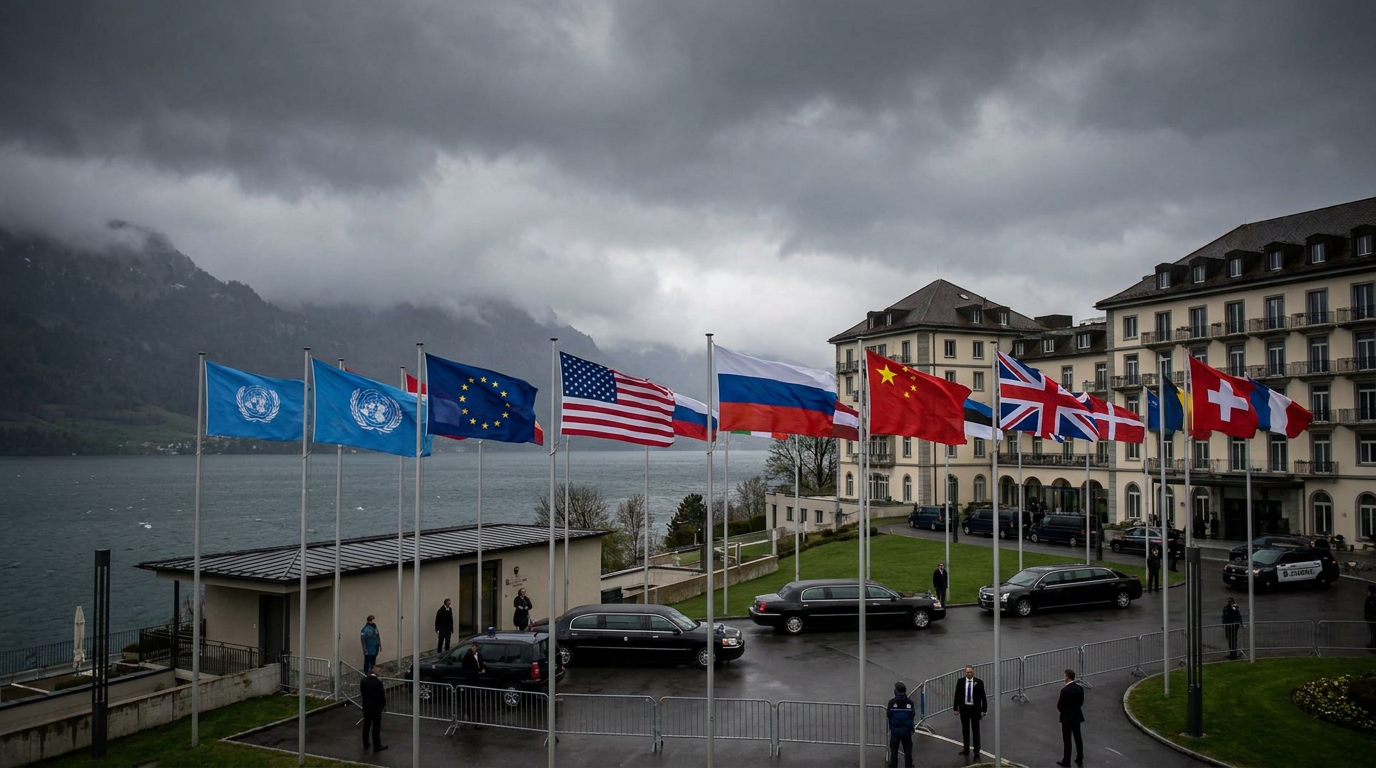
High-level technical talks between the United States and Iran, scheduled to take place in Switzerland, have been abruptly postponed just days after a landmark ceasefire agreement was signed. Vice President JD Vance, who has become the administration's face for the negotiations, canceled his planned departure for the Bürgenstock resort late Thursday, with the White House citing unpredictable logistics.[1][4][6]
The summit was intended to cement a 14-point memorandum of understanding signed earlier this week by President Donald Trump and Iranian President Masoud Pezeshkian at the Palace of Versailles. That interim pact formally paused a devastating four-month war that began in late February, opening a 60-day window to negotiate a permanent resolution to Iran's nuclear program and the reopening of global shipping lanes.[4][6]
However, the fragile diplomatic momentum was immediately undercut by surging violence in the Levant. As negotiators prepared to travel, Israel launched a wave of airstrikes against Hezbollah targets in southern Lebanon, responding to rocket fire from the Iranian-backed militant group. The Israeli military subsequently published maps indicating an expanded control zone in the area, effectively challenging the terms of the US-Iran ceasefire that called for a halt to regional hostilities.[2][3][5]
The escalating border conflict has exposed a deep rift between the Trump administration and the Israeli government regarding the merits of the peace deal. Hardline Israeli cabinet members, including National Security Minister Itamar Ben-Gvir and Finance Minister Bezalel Smotrich, have fiercely criticized the agreement, arguing it provides Tehran with economic relief without permanently dismantling its nuclear infrastructure or curbing its proxy militias.[3][4][5]

Vice President Vance delivered a blistering public rebuke to those Israeli critics during a White House press briefing, defending the administration's approach and warning Israeli officials against alienating Washington. "If I was in the cabinet of the Israeli government, I might not be attacking the only powerful ally that I have anywhere left in the entire world," Vance told reporters.[3][4]
Vance explicitly reminded the Israeli cabinet that two-thirds of the defensive weapons protecting their country were "built by American hands and paid for by American tax dollars," referencing the roughly $4 billion in annual military aid the US provides. He insisted that the deal strictly conditions any economic relief for Tehran on its compliance, stating that the US can "dial up" relief for good behavior or "turn it off" if Iran reneges.[3][4]

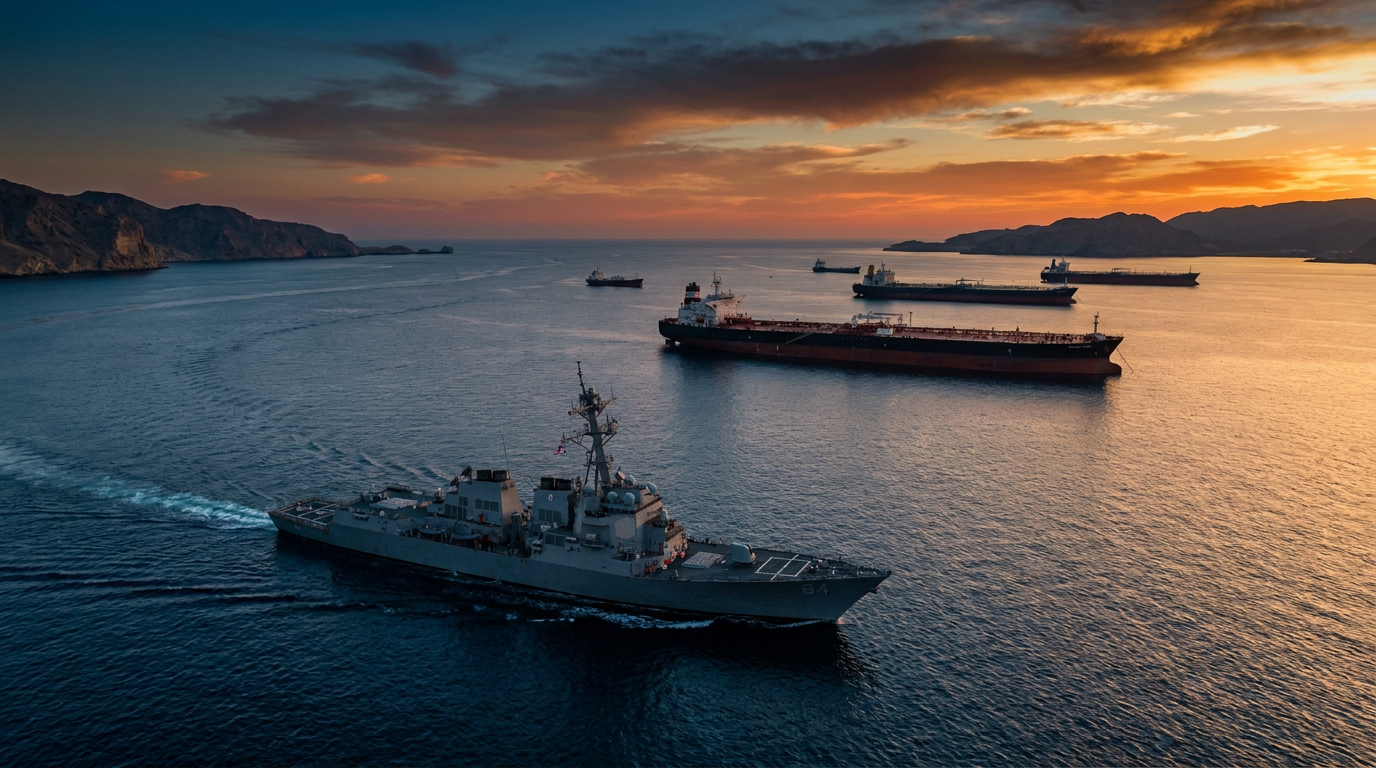
While the geopolitical fallout dominates the diplomatic sphere, the most immediate global crisis remains the physical blockade of the Strait of Hormuz. The critical maritime chokepoint, which historically processes roughly 20 percent of the world's seaborne oil trade, has been virtually paralyzed since the war began.[3][6][8]
While the geopolitical fallout dominates the diplomatic sphere, the most immediate global crisis remains the physical blockade of the Strait of Hormuz.
According to the independent tanker owner trade body Intertanko, the central transit route through the strait remains impassable, littered with an estimated 80 naval mines laid by the Islamic Revolutionary Guard Corps (IRGC) during the conflict. Daily shipping traffic through the corridor has cratered from a pre-war average of 140 vessels down to roughly seven.[3][7][8]
Clearing the waterway will be a massive, time-consuming logistical hurdle. Western maritime security sources estimate that even with conventional minesweepers and state-of-the-art underwater drones, it will take 40 to 50 days to render the strait safe for commercial transit. The IRGC deployed a mix of traditional moored mines and sophisticated "influence mines" that rest on the seabed and detonate when they detect a ship's acoustic or magnetic signature.[5][7]

In the interim, a handful of vessels have managed to navigate the periphery of the strait. Some ships are utilizing the southern route through Omani waters, while others are paying to transit through Iranian territorial waters in an arrangement the shipping industry has dubbed "Tehran's tollbooth." Vice President Vance noted that the US Navy has begun allowing ships through to Iranian ports, lifting a wartime blockade, and claimed that over 12.5 million barrels of oil moved through the channel on Wednesday night.[3][8]
Beyond the immediate maritime crisis, the postponed Swiss talks were meant to tackle the complex mechanics of Iran's nuclear program. The memorandum of understanding requires Iran to dilute its stockpile of highly enriched uranium under international supervision and explicitly forbids the procurement or development of nuclear weapons.[1][4][6][8]
In Tehran, the deal has been framed as a strategic victory, though leadership remains wary of American demands. Mojtaba Khamenei, who assumed the role of Supreme Leader after his father was killed in a US airstrike on the first day of the war, issued a written statement approving the negotiations. However, he cautioned that engaging in face-to-face talks with the US does not mean "accepting the enemy's point of view," signaling that the upcoming 60-day negotiation period will be highly contentious.[2][5]

For now, the diplomatic process is in a holding pattern. The Swiss foreign ministry confirmed that preparatory work at the Bürgenstock resort is continuing, and the White House maintains that the US delegation is prepared to depart at the "first available opportunity." But until the logistics are resolved and the regional violence subsides, the ambitious peace deal remains largely confined to paper.[1][4][6]
How we got here
Feb 28, 2026
The US and Israel launch an air war against Iran, prompting Tehran to blockade the Strait of Hormuz.
Jun 17, 2026
President Trump and Iranian President Pezeshkian sign a 14-point memorandum of understanding at Versailles to end the conflict.
Jun 18, 2026
Vice President JD Vance publicly defends the deal against Israeli criticism, warning that Trump is Israel's "only powerful ally."
Jun 19, 2026
Planned implementation talks in Switzerland are postponed amid escalating violence between Israel and Hezbollah in Lebanon.
Viewpoints in depth
US Administration's view
The deal is a necessary step to end the war and reopen global shipping, with economic relief strictly tied to Iranian compliance.
Vice President JD Vance and the White House argue that the 14-point MOU is a pragmatic victory that halts a devastating conflict while keeping leverage over Tehran. They emphasize that the agreement requires Iran to dilute its highly enriched uranium and that sanctions relief is not guaranteed upfront. Instead, the US maintains the ability to 'dial up' or 'turn off' economic benefits based on Iran's verifiable behavior over the 60-day negotiation window.
Israeli Government's view
The agreement prematurely rewards Iran without dismantling its nuclear infrastructure or curbing its regional proxies.
Hardline members of the Israeli cabinet view the ceasefire as a dangerous capitulation. They argue that pausing the war allows Hezbollah and other Iranian-backed militias to regroup, and that the 60-day negotiation window provides Tehran with an opportunity to extract economic concessions without fundamentally altering its strategic posture. Israel's decision to expand its military control zone in southern Lebanon reflects a deep distrust of the diplomatic process and a commitment to maintaining military pressure on Iran's borders.
Iranian Leadership's view
The ceasefire is a strategic victory that forces the US to retreat, though American demands remain a point of friction.
Tehran has framed the signing of the MOU as a testament to its resilience against the US-Israeli military campaign. Supreme Leader Mojtaba Khamenei approved the negotiations but warned that engaging in talks does not equate to accepting American terms. Iranian officials view the reopening of the Strait of Hormuz and the potential for sanctions relief as necessary steps for economic recovery, but they remain highly skeptical of Washington's willingness to honor its commitments in the long term.
Global Shipping Industry's view
The political agreement is secondary to the physical reality of 80 naval mines blocking the world's most critical energy artery.
For maritime operators and energy markets, the diplomatic maneuvering in Switzerland is overshadowed by the immediate danger in the Strait of Hormuz. Trade bodies like Intertanko stress that the central transit route is impassable, and insurance companies are unwilling to underwrite voyages until the waterway is verifiably swept. The industry is bracing for a prolonged 40-to-50-day clearance operation, warning that the 20 percent of global oil supply normally routed through the strait will remain severely bottlenecked.
What we don't know
- When the postponed technical talks in Switzerland will actually take place.
- Whether Israel will comply with the ceasefire terms regarding its operations in southern Lebanon.
- How quickly the US Navy and international partners can safely locate and neutralize the influence mines in the Strait of Hormuz.
Key terms
- Memorandum of Understanding (MOU)
- A formal agreement between two or more parties that outlines the terms and details of a mutual understanding, often serving as the foundation for a binding treaty.
- Influence mine
- A sophisticated naval explosive that rests on the seabed and detonates when it detects the acoustic or magnetic signature of a passing ship, rather than requiring physical contact.
- Highly enriched uranium
- Uranium that has been processed to contain a high concentration of the U-235 isotope, which can be used to fuel nuclear reactors or, at very high levels, nuclear weapons.
Frequently asked
Why were the Switzerland talks postponed?
The talks were delayed due to logistical challenges and a surge in violence between Israel and Hezbollah in southern Lebanon, which complicated the diplomatic environment.
Is the Strait of Hormuz open for shipping?
The central route remains closed due to an estimated 80 naval mines laid by Iran. A small number of ships are navigating the edges of the strait, but normal traffic is not expected to resume for 40 to 50 days.
What does the US-Iran deal actually do?
The interim agreement pauses military hostilities, opens a 60-day window to negotiate Iran's nuclear program, requires the dilution of highly enriched uranium, and aims to reopen global shipping lanes.
Sources
Source coverage
8 outlets
4 viewpoints surfaced








[1]The New York TimesIsraeli Government & Skeptics
Swiss Officials Say Iran Talks Are Off, for Now
Read on The New York Times →[2]Al JazeeraIranian Leadership
US-Iran talks postponed as Israel attacks Lebanon
Read on Al Jazeera →[3]The GuardianGlobal Shipping Industry
Normal shipping will not resume in strait of Hormuz until 80 mines cleared
Read on The Guardian →[4]The Washington PostUS Administration
Vance defends US-Iran deal and has sharp words for Israel
Read on The Washington Post →[5]The Times of IsraelIsraeli Government & Skeptics
Switzerland confirms planned US-Iran talks today in Burgenstock canceled
Read on The Times of Israel →[6]Business InsiderUS Administration
High-level talks between the US and Iran that were initially scheduled for Friday in Switzerland are now off
Read on Business Insider →[7]RAND CorporationGlobal Shipping Industry
Clearing Mines in the Strait of Hormuz: Q&A with Scott Savitz
Read on RAND Corporation →[8]Global NewsUS Administration
Vance defends Iran deal, says US Navy allowing ships through to Iranian ports
Read on Global News →
Every angle. Every day.
Get news politics stories with full source coverage and perspective breakdowns delivered to your inbox.