
How the Brain Washes Itself: The Science of Deep Sleep and Pink Noise
During deep sleep, the brain physically shrinks to flush out toxic waste, a process that new research suggests can be enhanced by listening to specific sound frequencies.
By Factlen Editorial Team
- Neuroscientists & Sleep Researchers
- Focus on the mechanical evidence of the glymphatic system and slow-wave sleep's role in memory and detox.
- Longevity & Brain Health Advocates
- Focus on actionable lifestyle interventions to protect cognitive health and prevent decline.
- Clinical Skeptics
- Caution against overstating the long-term disease prevention capabilities of acoustic stimulation.
What's not represented
- · Patients currently suffering from neurodegenerative diseases
- · Developers of commercial sleep-tracking and acoustic stimulation technology
Why this matters
Understanding how the brain physically clears out toxins during deep sleep offers actionable, non-invasive ways—like side-sleeping and acoustic stimulation—to protect long-term cognitive health and improve daily memory.
Key points
- The brain uses the glymphatic system to flush out toxic waste, including proteins linked to Alzheimer's.
- This washing process occurs almost exclusively during deep, slow-wave sleep.
- During deep sleep, brain cells shrink by up to 60%, allowing cerebrospinal fluid to flow freely.
- Listening to 'pink noise' can artificially enhance slow brain waves and deepen sleep.
- Studies show acoustic stimulation during sleep can improve memory recall by 10 to 12 percent.
- Sleeping on your side is considered the most efficient posture for brain waste clearance.
The sensation of waking up with a "clear head" after a good night's rest is not merely a psychological metaphor. It is the result of a rigorous, physical cleaning process that occurs inside the skull. For decades, scientists understood that sleep was essential for cognitive function, but the exact mechanical process of how the brain restored itself remained a mystery. Unlike the rest of the body, the brain lacks a traditional lymphatic system to clear away cellular waste.[5]
That mystery was solved in 2012 when researchers at the University of Rochester Medical Center identified a previously unknown plumbing network in the brain. They named it the glymphatic system. This specialized network piggybacks on blood vessels, pumping cerebrospinal fluid (CSF) through brain tissue to wash away the metabolic byproducts that accumulate during waking hours.[1][5]
The most remarkable feature of the glymphatic system is its schedule: it is almost entirely inactive while we are awake. It is only when the body enters the deepest stages of rest that the brain's cleaning crew goes to work. During this phase, the brain undergoes a dramatic physical transformation to facilitate the process.[1][2]
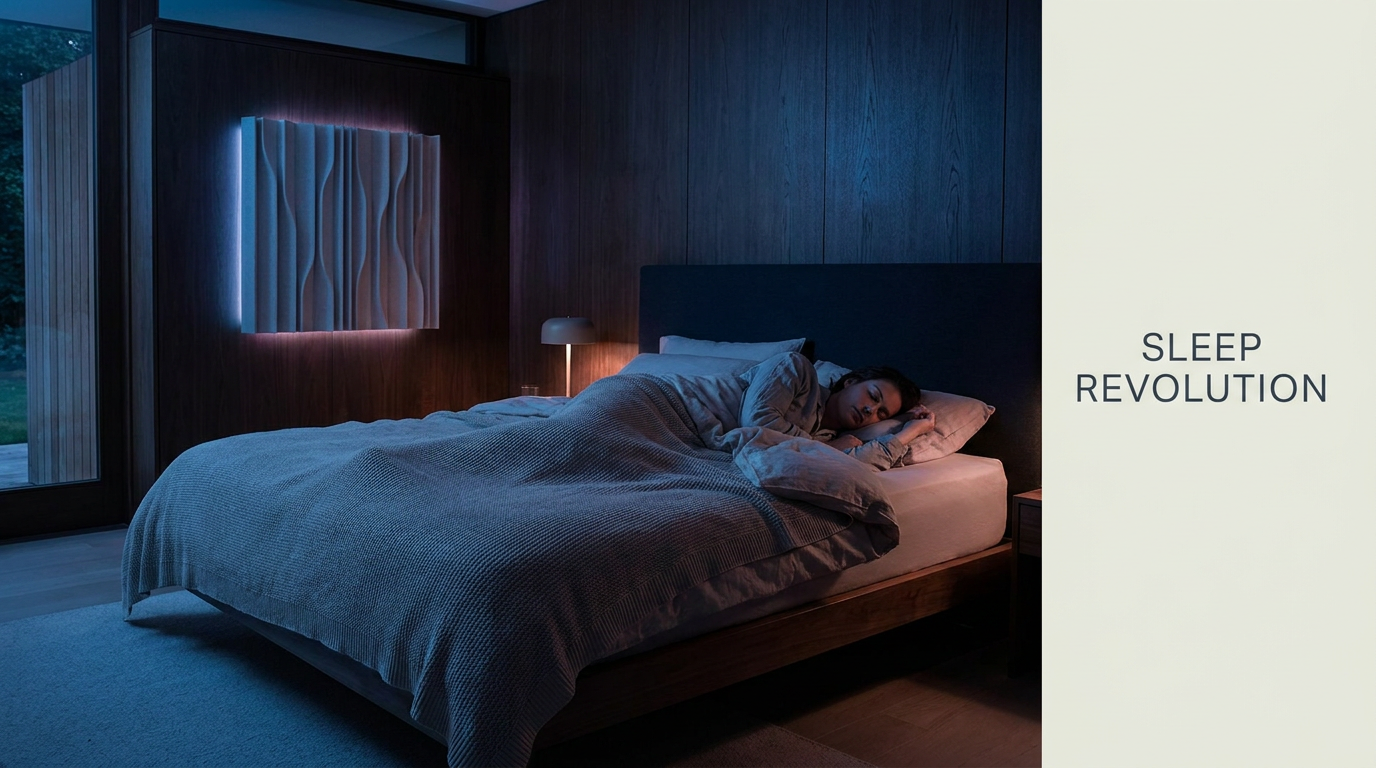
As the brain slips into non-rapid eye movement (NREM) Stage 3 sleep—commonly known as slow-wave sleep—the brain's glial cells actually shrink. This cellular contraction increases the interstitial space between brain cells by up to 60 percent. With the pathways widened, cerebrospinal fluid rushes in, flushing out toxic debris and carrying it toward the liver for elimination.[1][2][5]

The stakes of this nightly wash cycle are incredibly high. Among the waste products cleared by the glymphatic system is beta-amyloid, a sticky protein that, when allowed to accumulate, forms the plaques heavily associated with Alzheimer's disease and other forms of dementia. When sleep is chronically fragmented or cut short, this waste clearance is interrupted, leaving toxic proteins to pool in the brain.[1][2]
Because slow-wave sleep is the critical window for this detoxification, researchers have increasingly focused on how to maximize the time spent in this deep, restorative phase. As humans age, the amount of slow-wave sleep they naturally achieve tends to decline, which may partly explain the correlation between aging, poor sleep, and cognitive decline.[1][5]
This urgency has led to a fascinating breakthrough in sleep science: the use of acoustic stimulation to artificially enhance deep sleep. While pharmacological sleep aids can induce unconsciousness, they often fail to replicate the specific, synchronized electrical brain waves required for optimal glymphatic clearance and memory consolidation. Sound, however, appears to speak the brain's language.[3][5]

This urgency has led to a fascinating breakthrough in sleep science: the use of acoustic stimulation to artificially enhance deep sleep.
Researchers have discovered that playing specific frequencies of sound—specifically "pink noise"—can deepen slow-wave sleep without waking the sleeper. Pink noise is similar to white noise but with deeper, lower frequencies amplified and higher frequencies reduced. It mimics the gentle, continuous sounds found in nature, such as a steady rainfall, a rushing river, or rustling leaves.[3][4]
In clinical settings, scientists use a technique called closed-loop auditory stimulation. By monitoring a sleeper's brain waves with an EEG, a computer detects the exact moment the brain produces a slow oscillation. It then delivers a soft pulse of pink noise precisely synchronized with the "up-state" of that brain wave. This acoustic feedback loop essentially encourages the brain to produce larger, more robust slow waves.[3][4]
The results of these acoustic interventions have been striking, particularly regarding memory. Slow-wave sleep is not just for physical detoxification; it is also the period when the brain transfers new information from short-term storage in the hippocampus to long-term storage in the cortex. By boosting slow waves with pink noise, researchers have measurably improved this transfer process.[3][4]
In multiple studies, participants who slept with synchronized pink noise stimulation performed significantly better on declarative memory tests the following morning. On average, recall scores for word-pair tests improved by 10 to 12 percent compared to nights when the same participants slept in silence or received sham stimulation. The sound pulses appear to strengthen the communication between different regions of the brain during rest.[3][4][5]
While clinical closed-loop systems require specialized EEG equipment, the underlying principle is highly accessible. Many sleep specialists now recommend continuous pink noise as a low-cost, non-invasive tool for improving sleep architecture at home. Even without precise synchronization, a steady background of pink noise can mask environmental disruptions and help the brain settle into deeper rhythms.[4][5]

Beyond acoustic stimulation, researchers have identified other mechanical ways to optimize the glymphatic system. One of the most surprising findings relates to sleep posture. Studies tracking cerebrospinal fluid flow have found that sleeping in a lateral position—specifically on the side—appears to be the most efficient posture for brain waste clearance, outperforming both back and stomach sleeping.[1][2][5]
Consistency also plays a vital role. The glymphatic system is deeply tied to the body's circadian rhythms. Irregular sleep schedules, shift work, and exposure to blue light late at night can disrupt the timing of slow-wave sleep, reducing the efficiency of the brain's nightly wash cycle. Alcohol, while a sedative that can speed the onset of sleep, severely fragments sleep architecture and suppresses the deep NREM stages required for glymphatic flow.[2][5]
Despite the promising data, uncertainties remain. While pink noise reliably boosts memory consolidation in short-term trials, longitudinal studies are still needed to determine if acoustic stimulation can actively prevent the long-term accumulation of beta-amyloid or delay the onset of neurodegenerative diseases. Scientists are also exploring whether the benefits of pink noise diminish over time as the brain habituates to the sound.[3][4]

Furthermore, the exact relationship between memory consolidation and glymphatic clearance is still being mapped. Both processes rely heavily on slow-wave sleep, but it is not yet entirely clear if enhancing one automatically enhances the other, or if they simply share the same optimal biological window.[1][4][5]
What is clear, however, is that sleep is an active, vital biological event rather than a passive state of rest. By understanding the mechanics of the glymphatic system and the power of slow-wave sleep, individuals are no longer passive participants in their nightly rest. Through simple adjustments—like side-sleeping, consistent scheduling, and perhaps a pink noise machine—anyone can help their brain wash away the day.[1][2][5]
How we got here
2012
Researchers at the University of Rochester first describe the glymphatic system in mice.
2013
Studies reveal that brain cells shrink during sleep to allow cerebrospinal fluid to flush out beta-amyloid.
2015
Research demonstrates that sleeping in a lateral (side) position maximizes glymphatic clearance.
2017
Northwestern University researchers show that pink noise pulses during sleep significantly enhance memory recall in older adults.
2023
Meta-analyses confirm that acoustic stimulation reliably enhances slow-wave activity and memory consolidation across multiple demographics.
Viewpoints in depth
Neuroscientists & Sleep Researchers
Focus on the mechanical evidence of the glymphatic system and slow-wave sleep's role in memory and detox.
For the scientific community, the discovery of the glymphatic system fundamentally shifted the understanding of why animals sleep. Researchers emphasize the mechanical reality of the process: the physical shrinking of glial cells and the measurable flow of cerebrospinal fluid. They view acoustic stimulation primarily as a powerful experimental tool to manipulate slow-wave sleep in controlled environments, allowing them to isolate and study the exact mechanisms of memory consolidation and protein clearance.
Longevity & Brain Health Advocates
Focus on actionable lifestyle interventions to protect cognitive health and prevent decline.
Preventative health advocates view the glymphatic system as a critical target for lifestyle optimization. Rather than waiting for pharmacological treatments for Alzheimer's or dementia, this camp emphasizes immediate, non-invasive interventions. They champion practices like side-sleeping, strict circadian alignment, alcohol reduction, and the use of pink noise as low-risk, high-reward strategies to maximize brain detoxification and extend cognitive healthspan.
Clinical Skeptics
Caution against overstating the long-term disease prevention capabilities of acoustic stimulation.
While acknowledging the robust data showing that pink noise can boost overnight memory recall, clinical skeptics urge caution regarding broader health claims. They point out that most acoustic stimulation studies involve small sample sizes and measure short-term outcomes. They argue that while improving slow-wave sleep is undoubtedly beneficial, there is not yet definitive longitudinal proof that using a pink noise machine at home will actively prevent the onset of complex neurodegenerative diseases like Alzheimer's.
What we don't know
- Whether acoustic stimulation can actively prevent the long-term accumulation of Alzheimer's-related proteins.
- If the brain eventually habituates to pink noise, diminishing its effectiveness over time.
- The exact degree to which continuous, non-synchronized pink noise at home replicates the benefits of clinical, closed-loop stimulation.
Key terms
- Glymphatic System
- The brain's specialized waste clearance network that uses cerebrospinal fluid to flush out toxins during deep sleep.
- Slow-Wave Sleep (SWS)
- The deepest phase of non-rapid eye movement (NREM) sleep, characterized by slow, synchronized electrical brain waves.
- Cerebrospinal Fluid (CSF)
- A clear, colorless body fluid found in the brain and spinal cord that acts as a cushion and a waste-removal transport system.
- Pink Noise
- A type of background noise that contains all frequencies audible to humans, but with lower frequencies amplified, sounding like steady rainfall.
- Beta-amyloid
- A metabolic waste protein that can form sticky plaques in the brain, heavily associated with the development of Alzheimer's disease.
- Closed-loop Auditory Stimulation
- A clinical technique where sound pulses are played at the exact millisecond a slow brain wave is detected, enhancing the wave's power.
Frequently asked
Is pink noise the same as white noise?
No. White noise contains equal energy across all sound frequencies, which can sometimes sound harsh or high-pitched. Pink noise amplifies lower frequencies and reduces higher ones, creating a deeper, more soothing sound like a rushing river.
Can I just play pink noise on my phone all night?
Yes, playing continuous pink noise from a phone or sound machine can help mask disruptive background noises and promote relaxation. However, clinical studies showing the most dramatic memory benefits use specialized equipment to time the sound pulses exactly to the brain's natural waves.
Does sleeping on your side really help brain detox?
Research suggests it does. Studies observing the flow of cerebrospinal fluid have found that the lateral (side) sleeping position allows for the most efficient clearance of brain waste compared to sleeping on the back or stomach.
Does alcohol affect the glymphatic system?
Yes, negatively. While alcohol might help you fall asleep faster, it severely disrupts sleep architecture and reduces the amount of time spent in deep, slow-wave sleep, which is when the glymphatic system is most active.
Sources
Source coverage
5 outlets
3 viewpoints surfaced





[1]University of Rochester Medical CenterNeuroscientists & Sleep Researchers
Not All Sleep is Equal When It Comes to Cleansing the Brain
Read on University of Rochester Medical Center →[2]Cleveland ClinicLongevity & Brain Health Advocates
Glymphatic System: What It Is & Function
Read on Cleveland Clinic →[3]Frontiers in NeuroscienceNeuroscientists & Sleep Researchers
Modulating overnight memory consolidation by acoustic stimulation during slow-wave sleep
Read on Frontiers in Neuroscience →[4]National Institutes of HealthNeuroscientists & Sleep Researchers
Closed-loop auditory stimulation with pink noise enhances memory consolidation
Read on National Institutes of Health →[5]Factlen Editorial TeamLongevity & Brain Health Advocates
Synthesis by Factlen editorial team
Read on Factlen Editorial Team →
More in health
See all 7 stories →Exercise Therapy
Exercise Matches Medication for Depression Treatment, Major Evidence Reviews Conclude
8 sources

Metabolic Science
Beyond Weight Loss: How GLP-1 Hormones Are Rewiring Systemic Health
9 sources
Longevity Medicine
The 'Exercise Pill' Moves Closer to Reality: What to Know About Cambrian's New Longevity Drug
7 sources
Exercise Psychiatry
The Evidence Pack: How Exercise Matches Medication for Depression and Anxiety
6 sources

Every angle. Every day.
Get health stories with full source coverage and perspective breakdowns delivered to your inbox.