
The Science of Enzymatic Cleaners: How Biological Cleaning Actually Works
Unlike traditional chemicals that mask odors or bleach stains, enzymatic cleaners use biological catalysts to permanently digest organic matter. Understanding their molecular mechanism reveals why they succeed where conventional detergents fail.
By Factlen Editorial Team
- Biotech & Cleaning Formulators
- Focus on the molecular precision of the lock-and-key mechanism and the environmental benefits of neutral-pH biological cleaning.
- Professional Cleaners
- Emphasize that while enzymes are powerful, they require strict adherence to dwell times and often fail on deep carpet padding without mechanical extraction.
- Pet Owners & Consumers
- Value the permanent elimination of uric acid crystals, which finally solves the problem of ghost odors returning on humid days.
What's not represented
- · Chemical Disinfectant Manufacturers
- · Allergy Specialists
Why this matters
Understanding the difference between chemical oxidation and biological digestion can save you money on ineffective cleaning products and permanently solve recurring household issues like pet odors and stubborn grease.
Key points
- Enzymatic cleaners use natural proteins to digest organic matter rather than masking it with chemicals.
- They operate on a lock-and-key mechanism, targeting specific stains like proteins, fats, and starches.
- Unlike traditional cleaners, enzymes permanently destroy uric acid crystals, preventing pet odors from returning.
- Biological cleaners require 10 to 30 minutes of dwell time to complete their chemical reactions.
- They cannot be used simultaneously with chemical disinfectants like bleach, which destroy the enzymes.
Anyone who has scrubbed a pet stain or a kitchen grease spill knows the frustration of a returning odor. Traditional cleaning products often fail to permanently solve the problem because they rely on chemical oxidation or synthetic fragrances to merely mask or bleach the offending mess. The stain may vanish from sight, but the microscopic organic matter remains embedded in the surface.[6][7]
The alternative is biological. Enzymatic cleaners abandon the brute-force approach of bleach, ammonia, and harsh surfactants. Instead, they deploy natural proteins—enzymes—to dismantle organic matter at the molecular level, fundamentally changing the chemistry of the stain.[2][5]
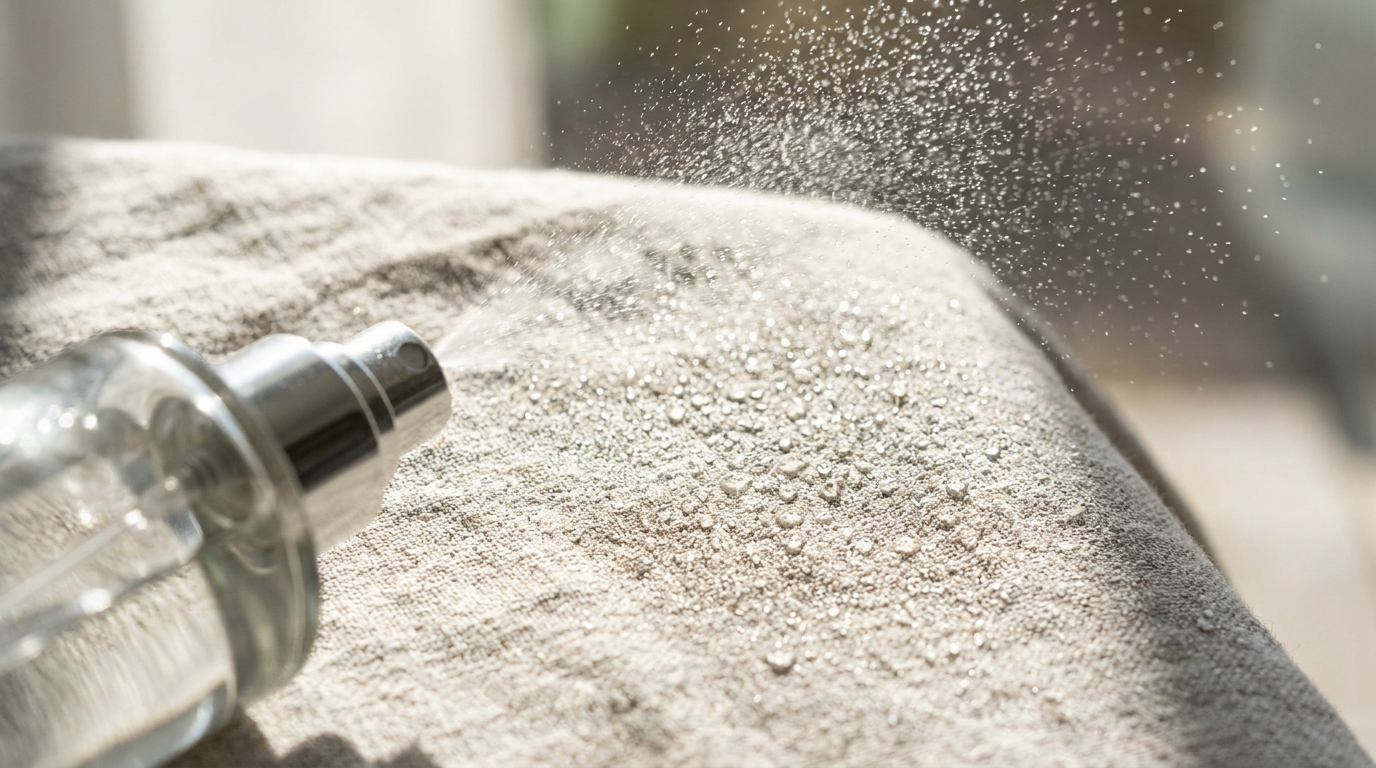
To understand how they work, it helps to view enzymes as biological catalysts. They are not living organisms, and they do not "kill" bacteria. Rather, they are complex proteins that accelerate chemical reactions, breaking down large, stubborn organic molecules into smaller, water-soluble fragments that can be easily wiped away.[1][5]
This process operates on a strict "lock-and-key" mechanism. A specific enzyme will only react with a specific type of molecule. Because of this precision, enzymatic formulas are highly targeted—they attack the organic waste without degrading or corroding the underlying surfaces, making them safe for delicate fabrics and natural stone.[1][6]

Formulators typically rely on a core group of four enzymes. Proteases target protein-based soils like blood, sweat, and food. Lipases break down fats and oils, making them highly effective for kitchen grease. Amylases dismantle starches and carbohydrates, while cellulases help soften fabrics and release trapped particulate soil.[2][6]
Many commercial enzymatic cleaners pair these targeted proteins with non-pathogenic, beneficial bacteria. Once the enzymes cleave the large organic molecules into manageable pieces, the dormant bacteria wake up and consume those fragments. The end result of this biological digestion is simply harmless carbon dioxide and water.[3][5]
This biological digestion is particularly crucial for pet owners dealing with urine. Pet urine contains uric acid crystals, a stubborn compound that traditional surfactants and oxidizing agents cannot dissolve. Chemical cleaners simply wash over them, leaving the root cause intact.[2][3]
This biological digestion is particularly crucial for pet owners dealing with urine.
When a standard chemical cleaner is used, it may lift the visible stain and mask the smell temporarily. However, the uric acid crystals remain embedded deep in the carpet fibers or grout. On humid days, moisture in the air reactivates these dormant crystals, causing the foul odor to suddenly return.[2][3]

Enzymatic formulas containing urease specifically target and destroy these uric acid crystals. By converting the uric acid into evaporating gases, the source material is eliminated entirely. The odor is permanently eradicated rather than merely covered up.[2][3]
Beyond efficacy, the shift toward biological cleaning is driven by environmental and health safety. Enzymatic cleaners operate at a neutral pH—typically between 6 and 8—and do not emit the volatile organic compounds (VOCs) or harsh, lung-irritating fumes associated with traditional solvents.[4][5]
Because their active ingredients are entirely biodegradable, they are safe for septic systems and do not contribute to downstream water pollution. In medical and industrial settings, they are increasingly used to decontaminate surgical equipment and clear plumbing drains without exposing workers to corrosive chemicals.[4][5]

However, biological cleaning requires a fundamental shift in user behavior. The most common reason enzymatic cleaners fail in residential settings is user impatience. Unlike chemical solvents that offer instant visual results, enzymes require "dwell time" to complete their chemical reactions.[3][7]
Professionals advise leaving the solution wet on the surface for 10 to 30 minutes—and sometimes overnight for severe plumbing clogs or deep stains. Wiping the surface too quickly halts the biological process before the organic matter is fully digested.[3][7]

Furthermore, because enzymes are delicate proteins, they are highly sensitive to their environment. Extreme heat can denature the proteins, rendering them useless, and they cannot survive contact with harsh chemical disinfectants.[1][4]
Applying bleach, ammonia, or antibacterial wipes alongside an enzymatic cleaner will instantly kill the beneficial bacteria and destroy the enzymes. Users must choose one method or the other, or wait until the surface is completely dry before switching products.[2][4]
Finally, while enzymatic sprays are highly effective for surface-level messes, they have physical limitations. If a spill has heavily saturated a carpet and soaked deeply into the sub-padding, a topical spray will only digest the top layer. In those cases, professional extraction is still required to physically remove the deep-set contaminants.[3][7]
Viewpoints in depth
Biotech Formulators
Focus on the molecular precision of the lock-and-key mechanism and the environmental benefits of neutral-pH biological cleaning.
Manufacturers of biological cleaning agents emphasize the elegance of the lock-and-key mechanism. By matching specific enzymes to specific organic soils, these formulas achieve high efficacy without the collateral damage caused by corrosive chemicals. Formulators point to the environmental benefits of this approach: because the active ingredients are naturally occurring proteins and beneficial bacteria, they break down harmlessly in the environment, making them safe for waterways and septic systems.
Professional Cleaners
Emphasize that while enzymes are powerful, they are not magic and require strict adherence to dwell times.
Cleaning professionals acknowledge the superiority of enzymes for organic stains but frequently warn against treating them as a miracle cure. They stress that biological cleaners require patience; wiping a surface immediately after spraying halts the chemical reaction. Furthermore, professionals note that DIY enzymatic sprays cannot penetrate deep enough to resolve heavy liquid saturation in carpet padding, meaning mechanical extraction is still necessary for severe messes.
Pet Owners
Focus on the permanent elimination of uric acid crystals, which finally solves the problem of ghost odors returning on humid days.
For consumers dealing with pets, the primary value of enzymatic cleaners lies in their ability to destroy uric acid. Pet owners frequently express frustration with traditional chemical sprays that merely mask odors with heavy synthetic fragrances, only for the smell to return weeks later. By digesting the uric acid crystals entirely, enzymatic formulas provide a permanent solution that prevents pets from returning to mark the same spot.
What we don't know
- How quickly the commercial cleaning industry will fully transition away from harsh chemical solvents in favor of biological alternatives.
- Whether future enzymatic formulations will be able to significantly reduce the required dwell time for consumer convenience.
Key terms
- Enzyme
- A natural protein that acts as a biological catalyst to speed up chemical reactions.
- Protease
- An enzyme specifically designed to break down protein-based stains like blood, sweat, and food.
- Lipase
- An enzyme that targets and dismantles fats, oils, and grease.
- Uric Acid
- A chemical compound found in urine that forms stubborn crystals, causing persistent odors if not biologically digested.
- Dwell Time
- The period a cleaning solution must remain wet on a surface to effectively break down contaminants.
Frequently asked
Can I use an enzymatic cleaner with bleach?
No. Chemical disinfectants like bleach or ammonia will destroy the delicate enzymes and kill the beneficial bacteria, rendering the biological cleaner useless.
Why does my pet's urine smell keep coming back?
Traditional cleaners leave behind uric acid crystals in the carpet or grout. When the air becomes humid, moisture reactivates these dormant crystals, bringing the smell back.
Are enzymatic cleaners safe for natural stone?
Yes. Because they operate at a neutral pH (unlike acidic cleaners like vinegar), they are generally safe for porous surfaces like marble and granite.
How long do enzymatic cleaners take to work?
They require a "dwell time" of at least 10 to 30 minutes to break down organic matter, and sometimes longer for deep-set stains or plumbing clogs.
Sources
Source coverage
7 outlets
3 viewpoints surfaced







[1]CleanChapsProfessional Cleaners
The Science Behind Enzymatic Cleaners
Read on CleanChaps →[2]UseOnaPet Owners & Consumers
Enzymatic vs Chemical Pet Cleaners: Which Actually Works?
Read on UseOna →[3]Vital Clean UtahProfessional Cleaners
Understanding the Science: How Enzymatic Cleaners Work
Read on Vital Clean Utah →[4]Infinita BiotechBiotech & Cleaning Formulators
Role of Enzymatic Cleaners in Disinfection
Read on Infinita Biotech →[5]Orapi AsiaBiotech & Cleaning Formulators
How Do Bio Enzyme Cleaners Work
Read on Orapi Asia →[6]Naturally It's CleanBiotech & Cleaning Formulators
The Science Behind Enzyme Cleaning: How It Works & Why It's Better
Read on Naturally It's Clean →[7]Factlen Editorial Team
Synthesis by Factlen editorial team
Read on Factlen Editorial Team →
Every angle. Every day.
Get home stories with full source coverage and perspective breakdowns delivered to your inbox.