
How Decentralized Social Media is Breaking the 'Walled Gardens' in 2026
Millions of users are migrating to interoperable networks like Bluesky and the Fediverse, fundamentally changing who controls algorithms and personal data.
By Factlen Editorial Team
- Open-Source Advocates
- Values data ownership, privacy, and protocol-level freedom over corporate control.
- Corporate Platforms
- Views interoperability as a necessary evolution to retain users while protecting their ecosystems.
- Mainstream Users
- Prioritizes convenience, network effects, and seamless interfaces over ideological decentralization.
- Digital Rights Advocates
- Focuses on breaking platform monopolies and ensuring a resilient digital information ecosystem.
What's not represented
- · Independent server administrators who bear the financial and legal burden of hosting decentralized communities.
- · Advertisers and brands struggling to navigate a fragmented, algorithm-free landscape.
Why this matters
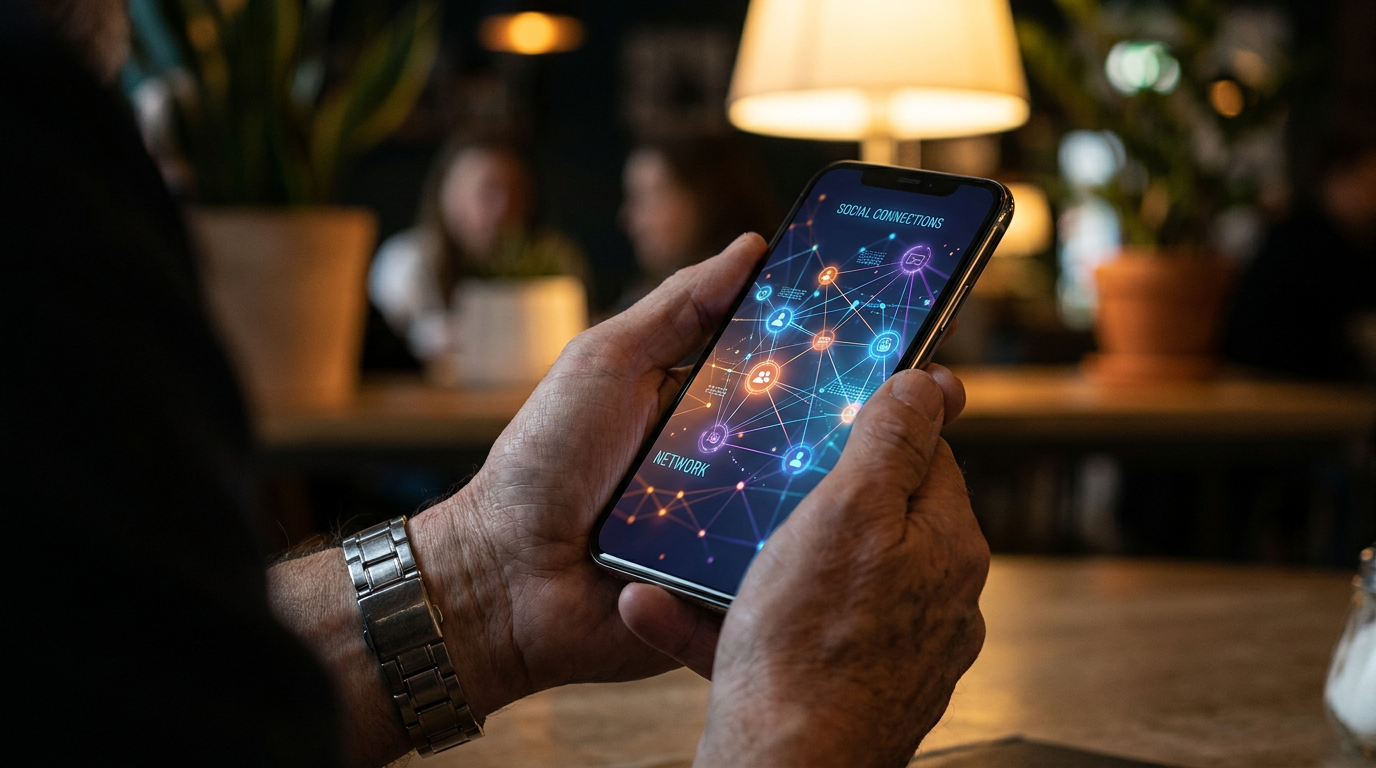
For the first time in a decade, you no longer have to surrender your data or submit to a single company's algorithm to connect with your friends online. The shift toward interoperable social media means you can own your digital identity and take it wherever you go.
Key points
- Decentralized social media allows users to own their data and move freely between different apps and servers.
- The ecosystem is primarily powered by two open protocols: ActivityPub and the AT Protocol.
- Bluesky's 'custom feeds' let users choose or build their own algorithms, removing corporate control over content discovery.
- Meta's Threads has integrated ActivityPub, allowing its 141 million daily users to interact with the broader Fediverse.
- Content moderation remains a complex challenge, relying on community-curated blocklists rather than a central authority.
For more than a decade, the internet has been defined by "walled gardens." Platforms like Facebook, X (formerly Twitter), and Instagram operated as closed ecosystems: you could only interact with people inside the same app, and the parent company owned your social graph. If you wanted to leave a platform because of a policy change or an influx of ads, you had to abandon your followers and start entirely from scratch. This model created massive network effects that locked users in, making it nearly impossible for new competitors to gain a foothold.[1]
In 2026, those walls are finally coming down. A massive migration is underway toward decentralized social media—a paradigm where networks talk to each other, users own their data, and algorithms are a matter of personal choice rather than corporate mandate. This shift is transforming the digital public sphere from a series of isolated corporate silos into an interconnected, user-driven ecosystem. Digital rights advocates argue that breaking the monopolistic power of algorithmically driven feeds is essential for a healthy information environment, and decentralized networks are providing the first viable alternative in years.[1][5]
This shift is being driven by two major forces: the explosive growth of open-source platforms like Bluesky, which recently surpassed 42 million users, and the surprising decision by tech giants like Meta to build bridges from their closed apps into the open web. The combination of grassroots adoption by tech-savvy early adopters and the institutional backing of massive corporate players has pushed decentralized social media out of the fringes and into the mainstream consciousness. For the first time, average internet users are beginning to understand that they do not have to accept algorithmic manipulation as the default price of staying connected with their friends and family online.[1]
To understand how this works, it helps to look at an older, universally understood technology: email. It doesn't matter if you use Gmail, Outlook, or Yahoo; you can send a message to anyone on any provider because they all share a common underlying protocol. Decentralized social media applies this exact same logic to public posts, likes, and follows. Instead of one massive server farm controlled by a single CEO, the network is hosted across thousands of independent servers that communicate using shared, open-source languages.[1][2]

The ecosystem is currently dominated by two primary protocols. The first is ActivityPub, an open standard recognized and maintained by the World Wide Web Consortium (W3C). ActivityPub powers Mastodon and forms the backbone of what is colloquially known as the "Fediverse"—a portmanteau of "federated universe." Because ActivityPub is an open standard, any developer can build an application that plugs into the Fediverse, instantly granting their users access to a global network of millions of people without needing to bootstrap a new user base from scratch.[6]
The second major standard is the Authenticated Transfer (AT) Protocol, developed by Bluesky. While technically distinct from ActivityPub, the AT Protocol shares the same philosophical goal: ensuring that developers and users are never locked out of the ecosystems they help build. The AT Protocol places a heavy emphasis on account portability and self-authenticating data, meaning that a user's identity is cryptographically tied to them, rather than to the specific server hosting their profile. This architecture allows for seamless third-party integration, enabling developers to build custom clients, analytics tools, and federated services that interact flawlessly with the core network.[4]
The second major standard is the Authenticated Transfer (AT) Protocol, developed by Bluesky.
The most immediate benefit of this decentralized architecture is data portability. On a traditional network, your identity is inextricably linked to the application layer. If a specific server or app changes its rules, gets flooded with advertisements, or shuts down entirely, you lose everything. On a decentralized network, you can simply pack up your profile, your history of posts, and your entire list of followers, and migrate them to a different provider. This dynamic forces platforms to actually compete for user retention through better features and policies, rather than relying on the hostage-taking mechanics of a closed social graph.[1][5]
But the most revolutionary change in 2026 isn't just where your data lives—it's who controls what you see. Centralized platforms rely on opaque, engagement-driven algorithms designed to maximize time-on-site, often prioritizing outrage, polarization, or "rage bait" to keep users scrolling. Decentralized platforms are flipping this model by unbundling the feed from the network itself. Bluesky, for instance, introduced the concept of "custom feeds," allowing users to subscribe to algorithms built by third-party developers or even create their own from scratch. This modular approach to content discovery strips the platform of its editorial power and places it directly into the hands of the individual user.[1][4][5]

If you want a feed that only shows posts from verified scientists, or one that strictly filters out political keywords, or simply one that displays chronological updates from your friends without any algorithmic interference, you can just install it. The user, not the platform, dictates the digital experience. This level of customization has proven incredibly popular among niche communities, journalists, and technologists who have grown exhausted by the unpredictable algorithmic shifts of traditional social media giants. By allowing users to curate their own digital environments, decentralized platforms are fostering healthier, more intentional online interactions that prioritize genuine connection over viral engagement.[1]
The momentum behind this movement has grown so undeniable that even the biggest players in the industry are adapting to survive. Meta's Threads, which boasts over 141 million daily active users, has spent the last year rolling out ActivityPub integration to over 100 countries. This integration allows Threads users to opt into the Fediverse. Once enabled, a user on a completely different platform like Mastodon can follow a Threads account, read their posts, and like them—without ever creating a Meta account or downloading the Threads app.[2]
However, the corporate bridge to the open web is still under construction, and it is not without its flaws. While Meta recently updated Threads to allow users to see and like replies from the Fediverse directly within the app, the integration remains frustratingly limited. Threads users still cannot respond directly to replies originating from Fediverse servers, and cross-platform notifications remain unreliable. Critics argue this friction is a deliberate attempt by Meta to keep users inside its own walled ecosystem while merely paying lip service to the ideals of open standards.[2][3]
Beyond corporate hesitation, there are genuine challenges to the decentralized model that have yet to be fully solved. The most pressing hurdle is content moderation. Without a central authority or a massive corporate trust and safety team to ban bad actors, moderation relies heavily on individual server administrators and community-curated blocklists. While this allows for highly tailored community guidelines, it can also be complex and overwhelming for average users to navigate, raising concerns about how decentralized networks will handle large-scale coordinated harassment or disinformation campaigns.[1][5]

Furthermore, the existence of two competing protocols—ActivityPub and the AT Protocol—means the open web is currently split into two distinct camps. While third-party developers and aggregators are building innovative tools to bridge this gap and display content from both protocols in a single interface, true seamless interoperability across the entire decentralized landscape remains a work in progress. The technical friction of managing multiple identities across different protocols still deters some mainstream users who prefer the frictionless onboarding of traditional apps.[1][4]
Despite these growing pains, the trajectory of 2026 is abundantly clear. The era of the monolithic, inescapable social network is ending. By giving users the power to choose their algorithms, own their digital identities, and move freely between platforms, decentralized social media is transforming the internet from a series of walled gardens back into an open, interoperable frontier. For the first time in a generation, the future of social media is being dictated by the users who create the content, rather than the corporations that host it.[1][5]

How we got here
2016
Mastodon launches, pioneering the modern decentralized social web.
2018
The W3C officially publishes the ActivityPub protocol as a recommended standard.
2022
Elon Musk acquires Twitter, sparking a massive wave of user migration to alternative platforms.
2024
Bluesky opens to the public, introducing the AT Protocol and custom feeds.
Mid-2025
Meta's Threads begins rolling out ActivityPub integration to select users.
Early 2026
Threads expands Fediverse sharing globally; Bluesky surpasses 42 million users.
Viewpoints in depth
Open-Source Advocates
This camp believes that social media infrastructure should be a public good, built on open protocols rather than proprietary code.
They argue that the AT Protocol and ActivityPub are the digital equivalents of email or HTTP—foundational layers that no single entity should own. They prioritize data portability and cryptographic identity verification, arguing that true freedom online requires users to have absolute sovereignty over their social graphs and the algorithms that curate their feeds.
Mainstream Users
Everyday users prioritize convenience, network effects, and seamless interfaces over ideological commitments to decentralization.
While they appreciate the idea of owning their data, mainstream users are often deterred by the technical friction of choosing a server, managing cryptographic keys, or navigating community blocklists. For this group, the success of decentralized social media hinges entirely on whether apps like Bluesky or Threads can make the underlying protocols invisible, delivering a frictionless experience that rivals traditional walled gardens.
Corporate Platforms
Tech giants view interoperability as a necessary evolution to retain users, though they remain protective of their ecosystems.
Companies like Meta recognize that consumer sentiment has shifted against closed ecosystems. By integrating ActivityPub into Threads, they aim to capture the goodwill of the open web while still maintaining the largest, most convenient access point to it. However, their implementations are often cautious and limited, reflecting a strategic balancing act between embracing open standards and preventing a mass exodus of their user base.
Digital Rights Advocates
This group focuses on the societal impact of decentralized networks, particularly regarding censorship resistance and platform monopolies.
They view the shift away from centralized platforms as a critical step in breaking the monopolistic power of Big Tech over the digital public sphere. However, they also raise concerns about the lack of centralized trust and safety mechanisms, warning that without robust, community-led moderation tools, federated networks could become safe havens for coordinated harassment and disinformation.
What we don't know
- Whether true, seamless interoperability will ever be achieved between the competing ActivityPub and AT protocols.
- How decentralized networks will handle large-scale coordinated disinformation campaigns without a central moderation team.
- If mainstream users will tolerate the slight friction of choosing servers and managing data portability long-term.
Key terms
- Fediverse
- A network of independent social media servers that can communicate with each other, functioning like a unified platform.
- ActivityPub
- An open, decentralized social networking protocol used by Mastodon and Threads.
- AT Protocol
- The underlying open-source framework developed by Bluesky to power its decentralized network.
- Interoperability
- The ability of different systems, apps, or networks to connect and exchange information seamlessly.
- Walled Garden
- A closed technology ecosystem where the service provider has total control over applications, content, and user data.
Frequently asked
Can I message a Mastodon user from Bluesky?
Not directly yet. Mastodon uses ActivityPub while Bluesky uses the AT Protocol, though third-party developers are building bridges to connect them.
Do I have to pay to use decentralized social media?
Most platforms are free to use, though some independent servers may ask for voluntary donations to cover their hosting costs.
What happens if the server I join shuts down?
Because you own your data, you can export your profile, posts, and followers and migrate them to a different server without losing your audience.
Sources
Source coverage
6 outlets
4 viewpoints surfaced





[1]Factlen Editorial TeamMainstream Users
Synthesis by Factlen editorial team
Read on Factlen Editorial Team →[2]9to5MacCorporate Platforms
Meta expands Threads fediverse integration to more countries
Read on 9to5Mac →[3]EngadgetCorporate Platforms
Threads' fediverse integration is growing, but still frustratingly limited
Read on Engadget →[4]GitHubOpen-Source Advocates
AT Protocol: A decentralized social media protocol
Read on GitHub →[5]Digital Public Sphere ReportDigital Rights Advocates
Decentralized Social Media Platforms as a Strategic Alternative
Read on Digital Public Sphere Report →[6]W3COpen-Source Advocates
ActivityPub: A decentralized social networking protocol
Read on W3C →


Every angle. Every day.
Get technology stories with full source coverage and perspective breakdowns delivered to your inbox.