
The Ultimate Guide to Buying an E-Bike in 2026
Electric bicycles have matured into a primary mode of transportation and recreation, but navigating the market's technical jargon can be daunting. This comprehensive guide breaks down e-bike classes, motor types, battery range, and safety certifications to help buyers make an informed investment.
By Factlen Editorial Team
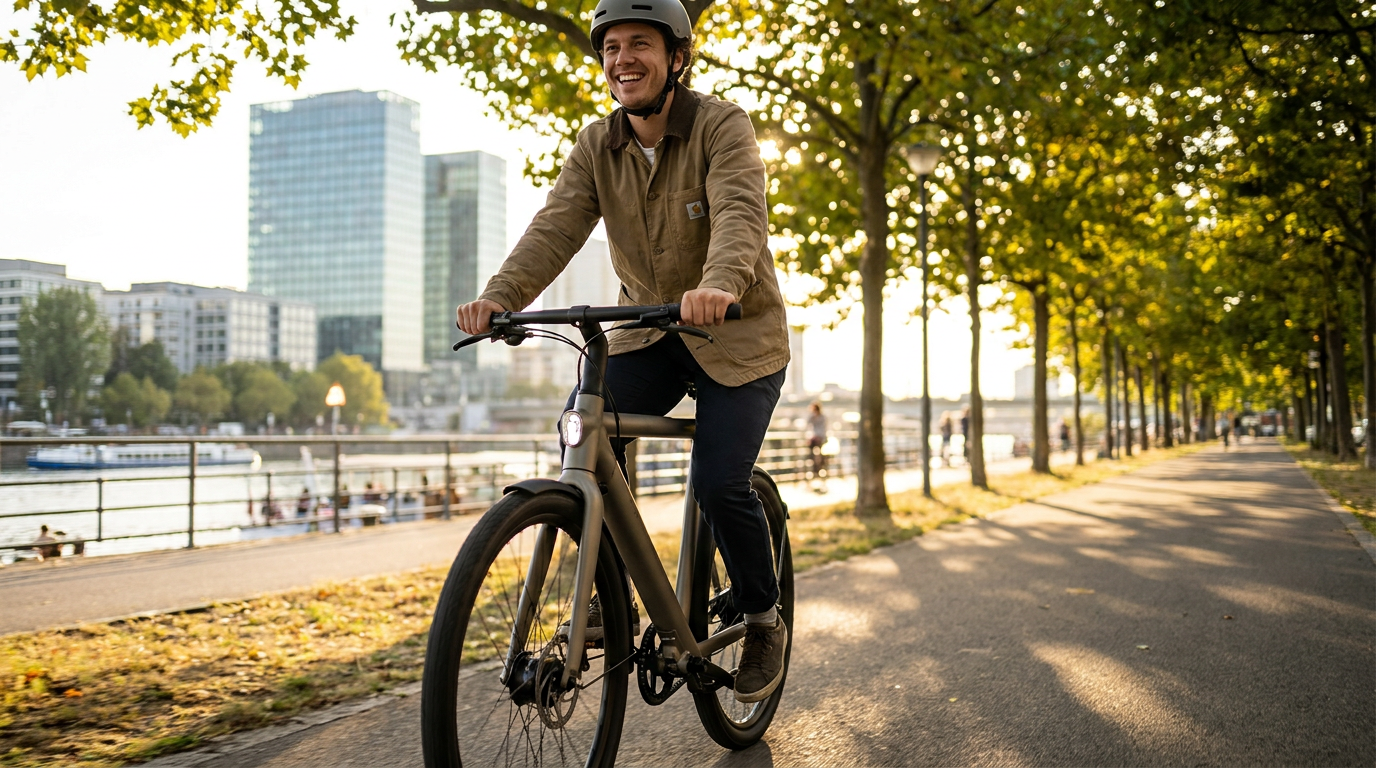
- Urban Commuters
- Riders focused on replacing car trips with sweat-free, reliable daily transit.
- Trail & Off-Road Riders
- Mountain bikers and adventurers who use e-bikes to tackle steeper climbs and rougher terrain.
- Safety & Regulation Advocates
- Organizations and experts focused on battery fire prevention and safe trail integration.
- Budget-Conscious Buyers
- Consumers seeking the benefits of electric mobility without the premium price tag.
What's not represented
- · Traditional Cyclists
- · Urban Planners
Why this matters
An electric bicycle is a major financial investment that can transform your daily commute and fitness routine. Understanding the technical specifications ensures you buy a safe, legal, and capable machine that actually fits your lifestyle, rather than an expensive garage ornament.
Key points
- E-bikes are divided into three classes based on top speed and throttle capabilities.
- Mid-drive motors offer superior hill-climbing torque, while hub motors are more affordable and simpler.
- Torque sensors provide a natural riding feel, whereas cadence sensors act like an on/off switch.
- Real-world battery range is typically 60 to 70 percent of manufacturer advertised maximums.
- Look for UL 2849 certification to ensure the battery and electrical system are safe from fire hazards.
- Purchasing from a local bike shop ensures proper assembly, fit, and reliable future maintenance.
The electric bicycle revolution has officially matured, fundamentally reshaping how people move through cities and explore the outdoors. In 2026, e-bikes are no longer viewed as a niche novelty or a controversial shortcut for traditional cyclists; they have firmly established themselves as a primary mode of daily transportation, a highly effective fitness tool, and a weekend escape vehicle for millions of riders. However, the explosion in popularity has brought a dizzying array of choices. With hundreds of brands flooding the market—ranging from century-old legacy bicycle manufacturers to heavily marketed direct-to-consumer internet startups—choosing the right model can feel like navigating an impenetrable maze of technical jargon. Buyers are bombarded with terms like watt-hours, torque sensors, and mid-drive motors, making the purchasing process daunting for newcomers.[6]
The stakes for making the right choice are remarkably high. A quality electric bicycle is a significant financial investment, with reliable entry-level models starting around $1,500 and premium, fully equipped machines easily exceeding $4,000. Buying the wrong type of e-bike can result in a frustrating experience: a bike that feels unnatural and jerky to ride, lacks the necessary torque to conquer your local hills, or is legally barred from your favorite local bike paths. Understanding your specific use case—whether that involves hauling groceries across town, commuting to an office in a business suit, or tackling steep mountain trails—is the essential first step before looking at a single specification sheet.[4][6]
The first and most crucial decision any buyer must make is selecting the appropriate classification. In the United States, the industry has universally adopted a three-class system that dictates where and how fast an e-bike is legally permitted to travel. Class 1 e-bikes are strictly pedal-assist only, meaning the electric motor only engages when the rider is actively turning the pedals. The motor's assistance automatically cuts off once the bicycle reaches 20 miles per hour. Because they lack a throttle and require human effort to move, Class 1 bikes are widely accepted on shared multi-use pedestrian paths, greenways, and dedicated mountain bike trails, making them the most versatile option for recreational riders.[1][2]
Class 2 e-bikes introduce a highly popular feature: the throttle. Like their Class 1 counterparts, the motor is legally capped at assisting up to 20 miles per hour, but the addition of a thumb or twist throttle allows the rider to cruise without pedaling at all. This functionality makes Class 2 models incredibly popular for urban commuters who want to arrive at the office completely sweat-free, or for riders carrying heavy cargo who need a burst of power to get started from a dead stop at a traffic light. However, because they can be propelled entirely by the motor, Class 2 bikes are frequently banned from dedicated singletrack mountain bike trails and certain restricted nature paths.[1][2]

Class 3 e-bikes are purpose-built for speed and efficiency. These models are pedal-assist only, but the motor continues to provide robust power up to a top speed of 28 miles per hour. These are the ultimate commuter machines for riders who need to share the road with cars, allowing them to keep pace with urban traffic flows and significantly reduce long commute times. Due to their considerably higher top speeds, Class 3 bikes face the strictest local regulations; they are frequently restricted from pedestrian-heavy bike paths and are generally treated more like mopeds by local municipalities, often requiring riders to wear specific types of helmets depending on state laws.[1][2]
Once a rider has selected the appropriate class for their local laws and riding style, the next major fork in the road is choosing the motor type. The two dominant designs in the modern e-bike market are hub motors and mid-drive motors. Hub motors are the older and more common technology, housed directly in the center of either the front or rear wheel. Because they operate entirely independently of the bicycle's chain and gearing system, they essentially push or pull the bike along the pavement, delivering power directly to the wheel regardless of what gear the rider is currently using.[3][6]
Hub motors offer several distinct advantages that make them the go-to choice for entry-level and commuter e-bikes. They are generally much more affordable to manufacture, require significantly less maintenance since they do not add stress to the bike's chain, and pair perfectly with throttle systems. They are ideal for flat city commutes and relaxed, paved cruising. However, because the heavy motor is concentrated entirely at the wheel, it can make the bicycle feel back-heavy and unbalanced. Furthermore, because hub motors cannot leverage the bike's mechanical gears, they are notably less efficient at climbing steep, sustained hills and can overheat under heavy loads.[3]
Hub motors offer several distinct advantages that make them the go-to choice for entry-level and commuter e-bikes.
Mid-drive motors represent the premium tier of e-bike propulsion. Instead of sitting in the wheel, a mid-drive motor is mounted directly at the bottom bracket, right between the rider's pedals. This central, low placement keeps the bicycle's center of gravity perfectly balanced, resulting in handling that feels remarkably similar to a traditional, non-electric bike. More importantly, mid-drive motors power the front chainring directly, meaning the motor's power is transferred through the bicycle's chain and rear cassette, allowing the motor to fully utilize the bike's existing mechanical gears.[3][6]

By using the mechanical advantage of the gearing system, mid-drive motors offer vastly superior torque and hill-climbing ability compared to hub motors of the same wattage. When a rider shifts into an easy gear for a steep climb, the motor also benefits from that easy gear, allowing it to spin efficiently without bogging down. This makes mid-drive systems the undisputed gold standard for electric mountain bikes, heavy-duty cargo bikes, and riders living in highly mountainous regions. The primary trade-offs for this premium performance are a significantly higher purchase price and increased wear and tear on the chain and cassette due to the high torque output.[3]
The way an e-bike decides to deliver its power is arguably just as important as where the motor is located, and this entirely comes down to the bike's internal sensors. Budget-friendly e-bikes almost exclusively rely on cadence sensors. A cadence sensor acts like a simple digital on/off switch; it merely detects whether the pedals are turning. If the pedals move, the motor delivers a predetermined amount of power based on the selected assist level, regardless of how hard the rider is actually pushing. This often results in a jerky, sudden surge of acceleration that can feel more like riding a lightweight motorcycle than a bicycle.[3][6]
Premium e-bikes, conversely, utilize sophisticated torque sensors. A torque sensor physically measures exactly how much pressure the rider is applying to the pedals in real-time. The motor's computer then amplifies that human effort proportionally. If you pedal lightly on a flat road, you receive a gentle, subtle assist; if you stand up and mash the pedals to conquer a steep incline, the motor instantly unleashes its full power to match your effort. Torque sensors provide a seamless, highly intuitive riding experience that doesn't feel like a motor is pushing you, but rather like you have suddenly developed superhuman athletic abilities.[3][6]
Battery capacity is the next critical metric to evaluate, universally measured in Watt-hours (Wh). The Watt-hour rating represents the size of the e-bike's "gas tank"—the higher the number, the more energy the battery holds, and the further the bike can travel on a single charge. Most standard commuter e-bikes feature batteries ranging from 400Wh to 750Wh. However, buyers must be highly skeptical of manufacturer range claims printed on the box. These advertised maximums are almost always calculated under perfect, laboratory-like conditions: a lightweight rider, traveling on perfectly flat pavement, with no wind, using the absolute lowest level of motor assistance.[4][6]
In real-world riding conditions, the actual range will be significantly lower. Factors such as steep hills, strong headwinds, cold weather, carrying heavy cargo, and heavy reliance on a throttle will drain a lithium-ion battery surprisingly quickly. Industry experts generally recommend that buyers expect to achieve only about 60 to 70 percent of the manufacturer's advertised maximum range. If your daily round-trip commute is 20 miles, you should actively look for a bicycle that advertises at least 40 miles of range. This built-in buffer ensures that battery degradation over time and unexpected detours will never leave you stranded with a dead battery.[4][6]

Safety must also be a paramount consideration, particularly regarding the electrical system. Following a series of highly publicized fires involving cheap, uncertified lithium-ion batteries in major cities, consumers must be vigilant. Buyers should strictly look for e-bikes that carry official UL 2849 or EN 15194 certifications. These rigorous, independent testing standards ensure that the battery cells, the motor, and the charger have been thoroughly evaluated as a complete system to prevent thermal runaway and fire hazards. Purchasing an unbranded, uncertified e-bike from an unknown overseas vendor to save money is a dangerous gamble that safety advocates strongly advise against.[1][5]
Finally, prospective buyers must consider the physical realities of owning and storing an electric bicycle. Because of the heavy motor and dense battery pack, e-bikes are significantly heavier than traditional bicycles, typically weighing between 45 and 70 pounds. If you live in a third-floor walk-up apartment or need to regularly lift the bike onto a car rack, a 65-pound commuter model will quickly become an unmanageable burden. In such scenarios, prioritizing a lightweight folding e-bike, or ensuring the model features an easily removable battery that can be carried inside separately, is absolutely essential for long-term ownership satisfaction.[4][6]

Ultimately, the absolute best way to choose an electric bicycle is to ride several different models in person. While direct-to-consumer online brands often offer highly tempting prices, purchasing from a local, dedicated bike shop provides invaluable benefits. A local shop offers the opportunity for real-world test rides to ensure proper frame fit, guarantees professional assembly by a trained mechanic, and provides a reliable partner for future maintenance and warranty claims. An e-bike is much more than just a consumer electronics purchase; when chosen correctly, it is a transformative investment in a healthier, more active, and more connected lifestyle.[5][6]
Viewpoints in depth
Urban Commuters
Riders focused on replacing car trips with sweat-free, reliable daily transit.
For daily commuters, the e-bike is a utility vehicle. This camp heavily favors Class 2 e-bikes equipped with throttles, allowing them to accelerate from stoplights safely and arrive at the office without needing a shower. They prioritize practical accessories like integrated fenders, cargo racks, and built-in lighting over high-end off-road performance, often finding that affordable hub motors perfectly meet their needs for paved city riding.
Trail & Off-Road Riders
Mountain bikers and adventurers who use e-bikes to tackle steeper climbs and rougher terrain.
Off-road enthusiasts view e-bikes as a way to maximize their time in nature, allowing them to complete twice as many downhill runs in a single afternoon. This group almost exclusively demands mid-drive motors paired with torque sensors, as the natural, proportional power delivery is essential for maintaining traction on loose dirt and navigating technical rock gardens. Because many trail networks ban throttles, they strictly adhere to Class 1 models to ensure legal access to singletrack trails.
Safety & Regulation Advocates
Organizations and experts focused on battery fire prevention and safe trail integration.
With the rapid proliferation of cheap, unbranded e-bikes, safety advocates are sounding the alarm on electrical hazards. This camp urges consumers to completely avoid direct-to-consumer models lacking UL 2849 certification, pointing to a rise in lithium-ion battery fires. They also advocate for clear education on the three-class system, arguing that keeping high-speed Class 3 bikes and throttle-heavy Class 2 bikes off crowded pedestrian paths is vital for the long-term public acceptance of e-bikes.
Budget-Conscious Buyers
Consumers seeking the benefits of electric mobility without the premium price tag.
Not everyone can afford a $4,000 mid-drive machine. Budget-conscious buyers are driving the massive popularity of entry-level e-bikes priced between $1,000 and $1,500. While they accept compromises—such as heavier frames, cadence sensors instead of torque sensors, and basic hub motors—they argue that these bikes still fundamentally lower the barrier to entry for cycling. For this group, an imperfect but affordable e-bike is vastly superior to no e-bike at all.
What we don't know
- How future state and local legislation might further restrict or reclassify high-speed Class 3 e-bikes.
- Whether solid-state battery technology will become affordable enough to significantly reduce e-bike weight in the near future.
Key terms
- Watt-hour (Wh)
- A measurement of battery capacity that indicates how much energy the battery can store, directly impacting the bike's maximum range.
- Torque Sensor
- A premium sensor that measures exactly how hard the rider is pushing on the pedals and delivers motor assistance proportionally for a natural feel.
- Cadence Sensor
- A basic sensor that detects whether the pedals are turning, acting like an on/off switch for the motor regardless of how hard the rider is pedaling.
- Mid-Drive Motor
- An electric motor positioned at the bike's bottom bracket (between the pedals) that powers the chain and utilizes the bike's gears.
- Hub Motor
- An electric motor housed directly in the center of the front or rear wheel, operating independently of the bicycle's gearing system.
- UL 2849
- A rigorous safety standard and certification for e-bike electrical systems that tests batteries, chargers, and motors to prevent fire hazards.
Frequently asked
Do I need a driver's license or insurance to ride an e-bike?
In most US states and European countries, standard Class 1, 2, and 3 e-bikes do not require a license, registration, or insurance, as they are legally classified as bicycles rather than motor vehicles.
How long do e-bike batteries last before needing replacement?
A high-quality lithium-ion e-bike battery typically lasts between 3 to 5 years, or roughly 500 to 1,000 full charge cycles, before its maximum capacity significantly degrades.
Can I ride an electric bike in the rain?
Yes, most modern e-bikes are highly water-resistant and designed to be ridden in the rain. However, they are not completely waterproof, so you should never submerge the motor or battery in deep water or use a high-pressure power washer on them.
What happens if the battery dies while I am riding?
If the battery runs out, the motor will stop providing assistance, but the e-bike functions exactly like a traditional bicycle. You can still pedal and use the mechanical gears to get home, though the bike will feel heavier than a standard bicycle.
Sources
Source coverage
6 outlets
4 viewpoints surfaced






[1]Bicycle ColoradoSafety & Regulation Advocates
E-Bike Buying Guide
Read on Bicycle Colorado →[2]Priority BicyclesUrban Commuters
E-Bike Classes Explained
Read on Priority Bicycles →[3]UpwayTrail & Off-Road Riders
Mid-Drive vs. Hub Motor: Which e-Bike motor is best?
Read on Upway →[4]Bike24Urban Commuters
How to Choose an E-Bike
Read on Bike24 →[5]E-Bike LoversSafety & Regulation Advocates
The Ultimate E-bike Buying Guide and Why Electric Bicycle Components Matter
Read on E-Bike Lovers →[6]Factlen Editorial TeamBudget-Conscious Buyers
Synthesis by Factlen editorial team
Read on Factlen Editorial Team →


Every angle. Every day.
Get shopping stories with full source coverage and perspective breakdowns delivered to your inbox.