
US-Iran Peace Talks in Switzerland Postponed Amid Renewed Lebanon Clashes
Planned diplomatic talks in Switzerland to cement a newly signed US-Iran memorandum of understanding have been indefinitely postponed following Vice President JD Vance's withdrawal and a deadly flare-up of violence in Lebanon.
By Factlen Editorial Team
- US Administration
- Defends the initial memorandum of understanding as a necessary step to end a costly 112-day war and lift the blockade, arguing the framework remains intact despite the Swiss delay.
- Iranian Government
- Views the Israeli strikes in Lebanon as a violation of the broader regional de-escalation required for peace, refusing to negotiate while allies are under fire.
- Economic & Maritime Stakeholders
- Deeply pessimistic about the immediate resumption of Hormuz traffic, viewing the uncleared mines and diplomatic stall as a guarantee of prolonged high oil prices.
- Israeli Security Establishment
- Maintains that military operations in Lebanon are necessary to secure its northern border, regardless of the broader US-Iran diplomatic timeline.
What's not represented
- · Lebanese Civilians
- · Omani Maritime Authorities
Why this matters
The collapse of immediate follow-up talks threatens the fragile truce ending the 112-day US-Iran conflict, leaving global shipping through the Strait of Hormuz paralyzed by naval mines and driving up global energy costs.
Key points
- US Vice President JD Vance canceled a trip to Switzerland, indefinitely postponing US-Iran peace talks.
- The delay follows renewed clashes in Lebanon that killed 18 people and four IDF soldiers.
- Iran refused to proceed with negotiations while its regional allies remain under active bombardment.
- The Strait of Hormuz remains blocked by approximately 80 naval mines, paralyzing normal shipping.
- Global oil prices spiked as markets reacted to the diplomatic breakdown and continued maritime blockade.
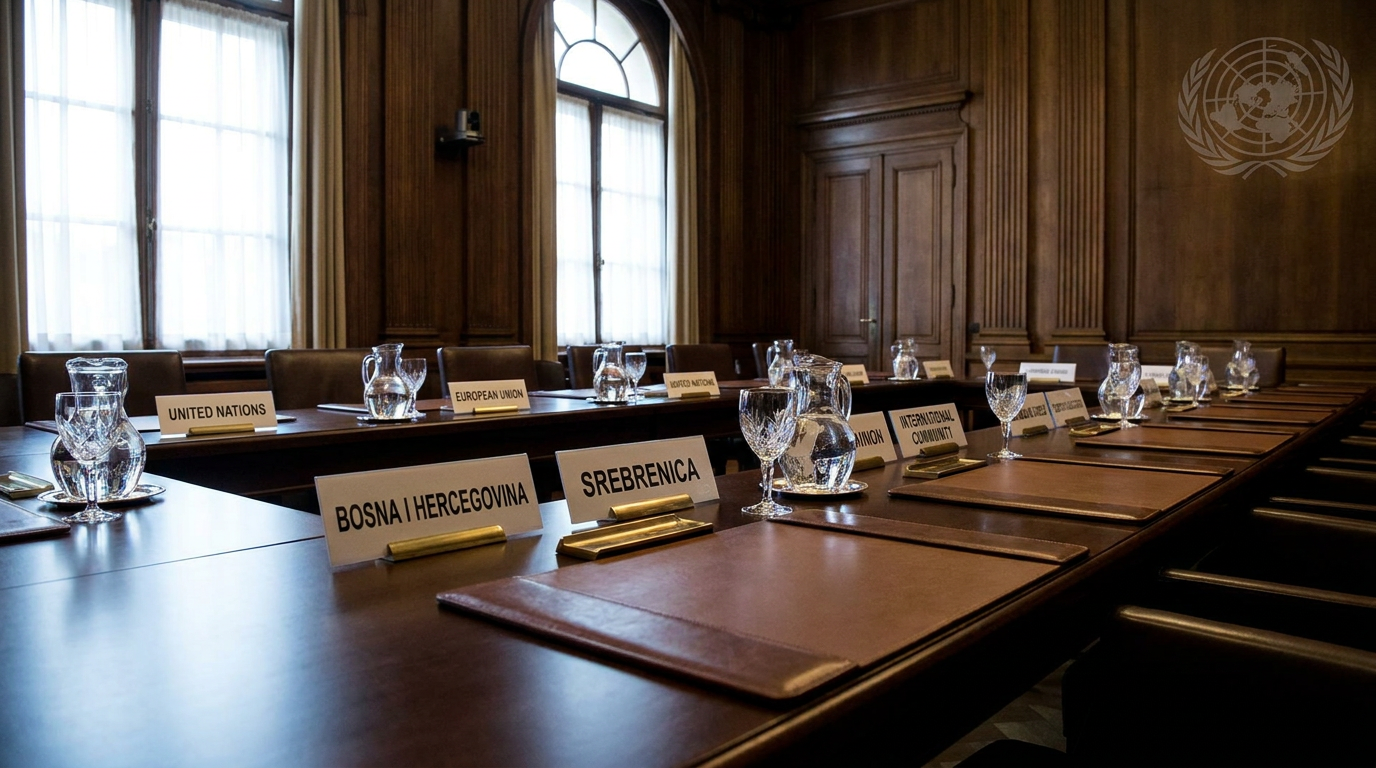
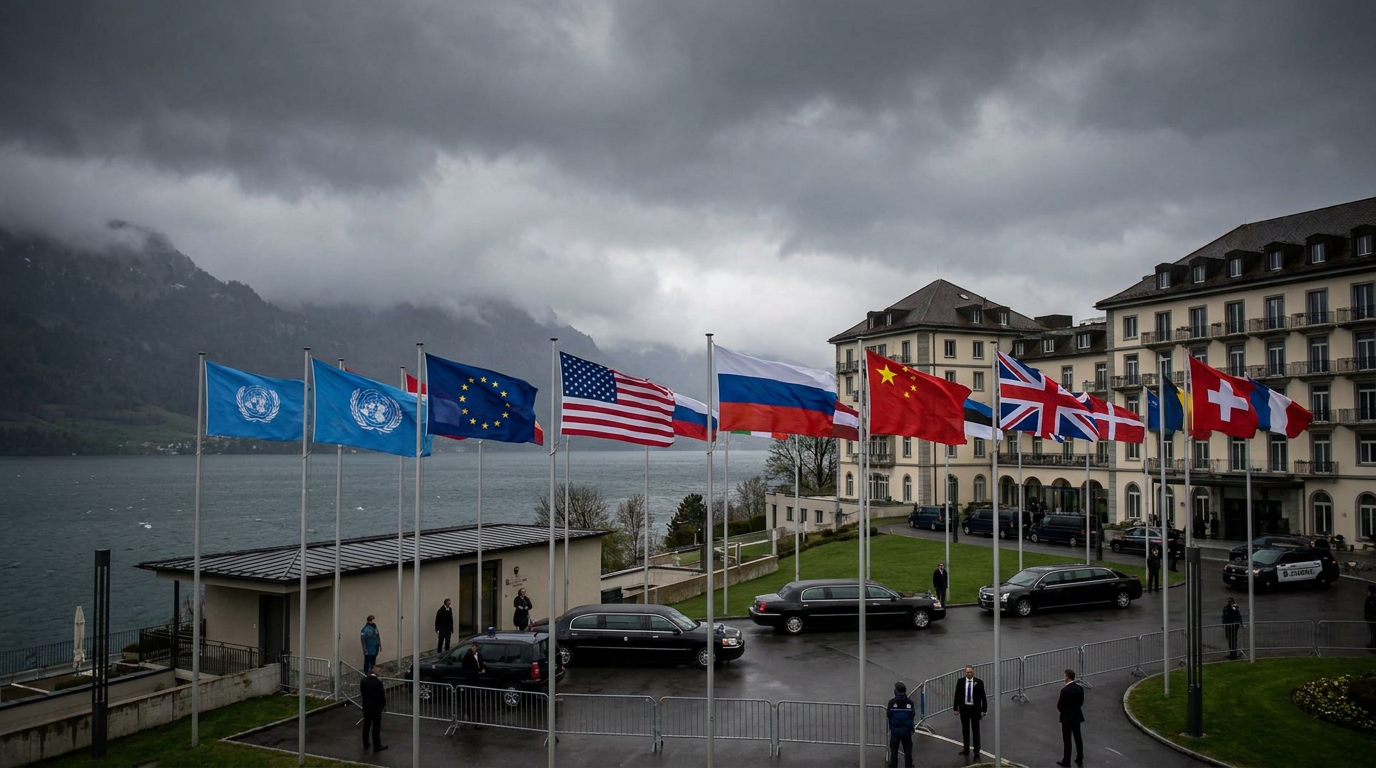
The fragile diplomatic momentum following this week's landmark United States-Iran memorandum of understanding has abruptly stalled. Highly anticipated follow-up talks in Switzerland have been indefinitely postponed after Vice President JD Vance, who was slated to lead the American delegation, pulled out of the trip. The summit was intended to iron out the complex logistical details of a truce designed to end 112 days of direct conflict and naval blockades.[1][2][6]
The immediate catalyst for the diplomatic breakdown appears to be a severe escalation of violence in neighboring Lebanon. Despite a regional truce meant to be in place to facilitate the Geneva talks, intense clashes erupted in southern Lebanon over the past 24 hours. The fighting resulted in the deaths of 18 people and four Israel Defense Forces (IDF) soldiers, shattering the temporary calm.[1][3][9]
In response to the Israeli military action, Tehran announced it would hold back from the Swiss negotiations. Iranian officials stated that cementing a permanent ceasefire with Washington is politically and strategically untenable while its regional allies remain under active bombardment. The withdrawal effectively paralyzes the diplomatic track, prompting Swiss officials to confirm that the talks are off "for now."[2][3]

The postponement deals a swift blow to the Trump administration's efforts to finalize the end of the conflict. Vice President Vance has publicly defended the initial memorandum of understanding, arguing that ending the US blockade and halting hostilities was a necessary step to secure American interests. However, critics in Washington have seized on the delay, questioning the durability of an agreement that fractured before the ink was fully dry.[6][10]
The initial agreement signed by President Trump earlier this week was widely seen as a preliminary framework rather than a comprehensive treaty. Key details regarding sanctions relief, military positioning, the disarmament of regional proxy forces, and the timeline for maritime normalization were explicitly left to be worked out by the delegations in Geneva. Without those meetings, the framework remains entirely theoretical.[2][10]
The initial agreement signed by President Trump earlier this week was widely seen as a preliminary framework rather than a comprehensive treaty.
The diplomatic freeze has immediate and severe consequences for the global economy, particularly maritime trade. The Strait of Hormuz, a critical chokepoint for global energy supplies, remains effectively closed to normal commercial traffic despite the signing of the initial memorandum.[4][5]

According to independent tanker owner trade bodies, the center of the strait is currently blocked by approximately 80 uncleared naval mines. While a few vessels have managed to exit the Gulf by taking risky, shallow routes through Omani territorial waters, authorities warn that normal shipping will not resume until a comprehensive international demining operation is completed—an operation that requires the very diplomatic coordination that just collapsed.[5]
Energy markets reacted swiftly to the dual shocks of the postponed talks and the Lebanon violence. Brent crude reversed its recent downward slide, climbing sharply as traders priced in the reality that the flow of oil and liquefied natural gas (LNG) tankers through the region will remain severely restricted for the foreseeable future.[4][8]

The prolonged disruption is already exacting a heavy toll on global economies that rely on Middle Eastern energy. In the United Kingdom, government borrowing surged to a higher-than-expected £23.3 billion in May, a spike directly attributed by economists to the economic fallout, supply chain disruptions, and inflationary pressures exacerbated by the 112-day Iran war.[7]
Without a scheduled framework to finalize the ceasefire, military commanders in the region remain on high alert. The prospect of a renewed blockade, further proxy escalations, or a miscalculation in the heavily mined Strait of Hormuz looms over the fragile truce, leaving the international community waiting to see if the Geneva track can be salvaged.[2][3][5]
How we got here
Early 2026
Direct conflict and a naval blockade begin between the United States and Iran, lasting 112 days.
June 17, 2026
President Trump signs a preliminary memorandum of understanding with Iran to halt hostilities.
June 18, 2026
Clashes erupt in southern Lebanon despite a regional truce, killing 18 civilians and 4 IDF soldiers.
June 19, 2026
VP JD Vance cancels his trip to Switzerland, and follow-up peace talks are indefinitely postponed.
Viewpoints in depth
US Administration's View
Defending the initial agreement as a vital step to end the war, despite the current diplomatic hurdles.
The Trump administration maintains that the memorandum of understanding signed earlier this week was a historic necessity to halt a costly 112-day war. Vice President JD Vance has publicly defended the framework, arguing that lifting the blockade and stopping direct military engagements serves core American interests. From Washington's perspective, the delay in Geneva is a temporary logistical setback caused by regional complexities, not a fundamental failure of the bilateral agreement itself.
Tehran's View
Refusing to compartmentalize the US-Iran ceasefire from the broader regional conflict involving Israel.
Iranian leadership views the diplomatic track and the military realities on the ground as inextricably linked. Following the deadly Israeli strikes in southern Lebanon, Tehran concluded it could not sit at a negotiating table in Switzerland while its regional allies were actively engaged in combat. For Iran, a genuine truce requires comprehensive de-escalation across all fronts, and they place the burden on Washington to rein in Israeli military operations before finalizing any bilateral treaty.
Global Energy Markets
Pricing in a prolonged disruption to Middle Eastern oil supplies as diplomatic solutions evaporate.
Commodity traders and maritime stakeholders are deeply pessimistic about the immediate future. The independent tanker owner trade bodies emphasize that the physical reality of 80 naval mines in the Strait of Hormuz supersedes any political memorandums. Without the scheduled Geneva talks to coordinate a massive international demining effort, energy markets are operating under the assumption that the vital waterway will remain closed to normal traffic, guaranteeing elevated oil prices and sustained inflationary pressure on global economies.
What we don't know
- When, or if, the Switzerland talks will be rescheduled.
- Who will take responsibility for clearing the 80 naval mines currently blocking the Strait of Hormuz.
- Whether the clashes in Lebanon will escalate into a broader regional war that fully shatters the US-Iran MoU.
Key terms
- Memorandum of Understanding (MoU)
- A formal agreement between two or more parties that signals a willingness to move forward with a treaty, though it lacks the binding details of a final accord.
- Strait of Hormuz
- A narrow, strategically vital waterway between the Persian Gulf and the Gulf of Oman through which roughly 20% of the world's oil consumption passes.
- Naval Mine
- A self-contained explosive device placed in water to damage or destroy surface ships or submarines, currently blocking major shipping lanes in the Middle East.
Frequently asked
Why were the Switzerland talks canceled?
Iran pulled out of the negotiations in response to deadly Israeli military strikes in Lebanon, prompting US Vice President JD Vance to cancel his trip to Geneva.
Is the Strait of Hormuz open for shipping?
Not for normal commercial traffic. Approximately 80 naval mines still block the center of the strait, forcing ships to take risky alternate routes through Omani waters.
Is the US-Iran war officially over?
A preliminary memorandum of understanding was signed to halt the 112-day conflict, but the comprehensive treaty remains unwritten due to the stalled talks.
Sources
Source coverage
10 outlets
4 viewpoints surfaced







[1]BBCUS Administration
US-Iran talks postponed as Vance pulls out of Switzerland trip
Read on BBC →[2]The New York TimesUS Administration
Swiss Officials Say Iran Talks Are Off, for Now
Read on The New York Times →[3]Al JazeeraIranian Government
US-Iran talks postponed as Israel attacks Lebanon
Read on Al Jazeera →Oil prices rise as Lebanon fighting erupts and Hormuz traffic still slow
Read on Al Jazeera →[5]The GuardianEconomic & Maritime Stakeholders
Normal shipping will not resume in strait of Hormuz until 80 mines cleared
Read on The Guardian →Iran war day 112: Vance defends Tehran ‘deal’ but Switzerland trips are off
Read on Al Jazeera →UK borrows more than expected as impact of Iran war takes toll
Read on The Guardian →[8]ReutersEconomic & Maritime Stakeholders
Brent crude reverses slide as Middle East ceasefire frays
Read on Reuters →[9]The Times of IsraelIsraeli Security Establishment
IDF confirms 4 soldiers killed in Lebanon clashes despite truce efforts
Read on The Times of Israel →[10]The Wall Street JournalUS Administration
Trump's Iran Deal Faces Scrutiny as Implementation Stalls in Switzerland
Read on The Wall Street Journal →
Every angle. Every day.
Get news politics stories with full source coverage and perspective breakdowns delivered to your inbox.