
The Science of 'Exercise in a Pill': How New Drugs Mimic the Benefits of a Workout
Biotech companies are advancing a new class of drugs known as exercise mimetics, designed to trigger the cellular benefits of physical exertion without actual movement.
By Factlen Editorial Team
- Longevity Researchers
- Scientists focused on extending human healthspan by targeting the cellular mechanisms of aging.
- Public Health Advocates
- Experts focused on population health, accessibility, and lifestyle interventions.
- Pharmaceutical Industry
- Drug developers and investors looking at the commercial viability of metabolic therapies.
What's not represented
- · Physical Therapists
- · Sports Medicine Physicians
Why this matters
For millions of people who cannot exercise due to age, injury, or severe obesity, the inability to move accelerates physical decline. A drug that safely replicates the metabolic effects of endurance training could preserve muscle mass, extend healthy lifespans, and counteract the muscle-wasting side effects of modern weight-loss drugs.
Key points
- Exercise mimetics are experimental drugs designed to replicate the metabolic benefits of physical activity without actual exertion.
- Cambrian Biopharma is developing a compound that targets AMPK, the body's primary cellular energy sensor, to induce a 'fast burn' metabolic state.
- Washington University researchers have developed SLU-PP-332, which targets ERR proteins to build fatigue-resistant muscle fibers.
- These drugs are primarily intended for the elderly, the disabled, and patients with severe metabolic diseases who cannot exercise.
- Pharmaceutical companies view mimetics as ideal companion therapies to GLP-1 weight-loss drugs to prevent associated muscle loss.
The universal prescription for almost every chronic ailment—from heart disease to metabolic syndrome—is a combination of diet and exercise. But what happens when a patient is simply too old, too frail, or too sick to run on a treadmill? For decades, the medical community has searched for a way to deliver the systemic benefits of physical activity to those who cannot physically exert themselves. Now, a new class of therapeutics is moving closer to reality, promising to fundamentally alter how we treat age-related decline.[6]
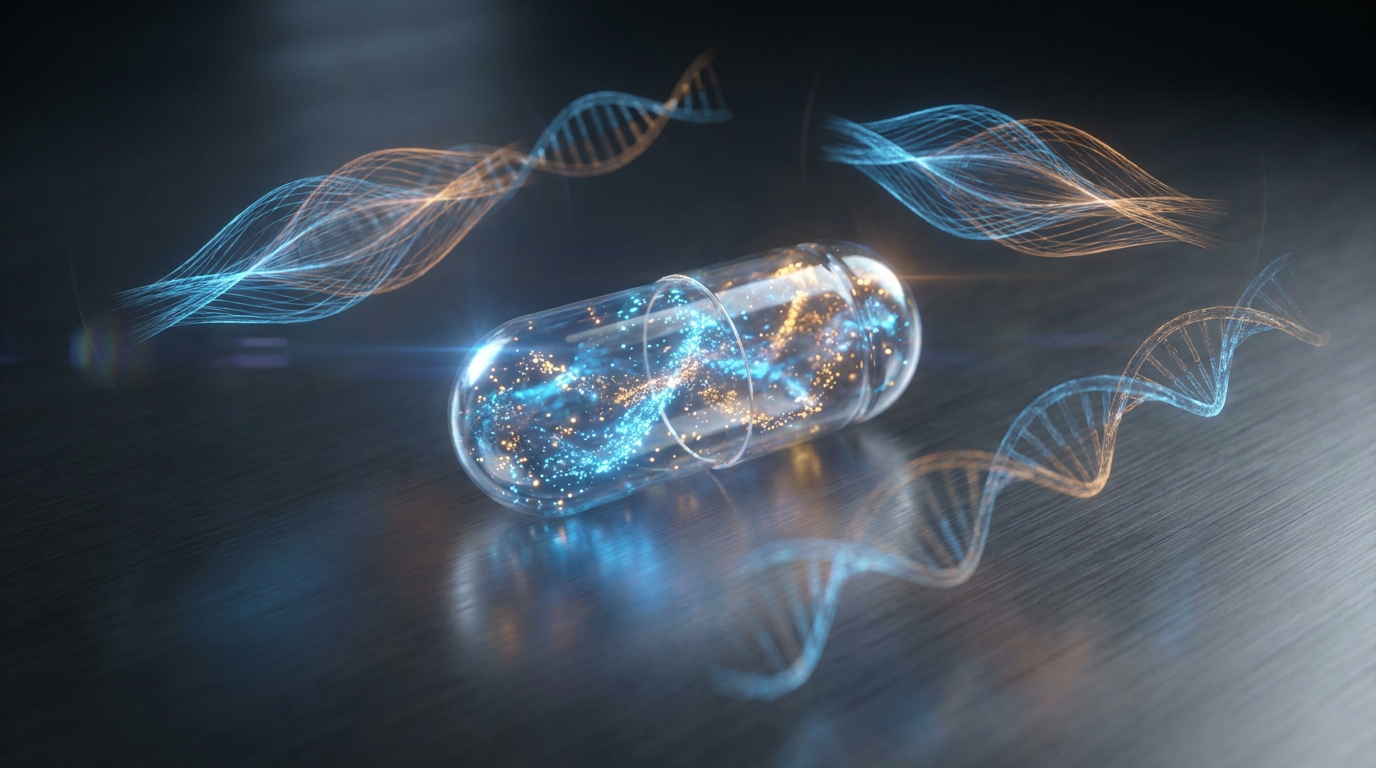
Recent progress by longevity-focused biotech companies has reignited interest in this holy grail of modern medicine: the "exercise mimetic." Cambrian Biopharma, a company developing therapies to target the mechanistic drivers of aging, recently advanced an experimental compound that mimics the metabolic effects of endurance training. The development has sparked widespread optimism among researchers who believe that pharmacologically replicating a workout could be the key to extending human healthspan and treating a myriad of metabolic disorders.[1][3]
To understand how these drugs work, it is crucial to distinguish them from traditional stimulants. Exercise mimetics are not like caffeine or amphetamines, which simply elevate the heart rate and stimulate the central nervous system. Instead, they are highly sophisticated molecules designed to trick the body's cells into believing they are undergoing intense physical exertion. By binding to specific receptors, these compounds trigger the exact same genetic and enzymatic pathways that are naturally activated when muscles contract and consume energy during a strenuous workout.[4][6]
Cambrian's leading candidate, developed by its subsidiary Amplifier Therapeutics, targets a vital cellular energy sensor known as AMPK. In a healthy human body, the innate ability to activate AMPK naturally decreases with age, making it harder for older adults to maintain metabolic efficiency. By artificially stimulating this pathway, the experimental drug aims to restore the cellular resilience typically seen in much younger, highly active individuals, offering a pharmacological bridge to better cardiovascular and metabolic health.[1][3]

The biological mechanism behind AMPK is elegantly simple. When a person engages in heavy physical effort—like running a marathon or lifting weights—their cellular energy levels drop precipitously. This sudden depletion of fuel violently awakens the AMPK enzyme, which acts as a biological panic button. Once activated, AMPK initiates a cascade of survival protocols: it commands the cell to stop storing excess energy as fat and to immediately start burning stored lipids to keep the body functioning.[3][5]
By activating AMPK without the prerequisite of physical strain, Cambrian's drug forces the body into a "fast burn" metabolic state. The physiological results are remarkably similar to those of a dedicated athlete in training. Endurance capacity goes up, cardiovascular health improves, and the body begins to shed fat while preserving lean muscle mass. Furthermore, the function of major organs, from the liver to the kidneys, shows marked improvement as the systemic burden of excess metabolic waste is cleared.[3][6]
While Cambrian focuses on the AMPK pathway, other researchers are tackling the exercise mimetic puzzle from a different angle. A team at Washington University has spent the last decade developing a compound named SLU-PP-332, which targets a distinct set of proteins called estrogen-related receptors (ERRs). Unlike AMPK, which acts as an emergency energy sensor, ERRs function as the genetic blueprint managers inside skeletal muscle cells, dictating how the tissue adapts to prolonged physical stress.[2][6]
While Cambrian focuses on the AMPK pathway, other researchers are tackling the exercise mimetic puzzle from a different angle.
When activated by SLU-PP-332, these receptors signal the muscle to undergo a profound physical transformation. The compound forces the muscle tissue to transition away from fast-twitch fibers and toward dense, highly oxygenated, slow-twitch fibers. These are the fatigue-resistant muscle fibers predominantly found in endurance athletes. By upregulating the transcription factors responsible for skeletal muscle adaptation, the drug essentially tricks the body into a state of sustained endurance training, increasing mitochondrial density while the patient remains completely at rest.[2][4]
The results of early animal trials have been striking. In laboratory experiments, mice administered SLU-PP-332 were able to run significantly longer on rodent treadmills, exhibiting vastly improved stamina despite having no prior endurance training. Beyond performance enhancement, the compound successfully counteracted features of metabolic syndrome in the mice, improving their ability to handle glucose and reducing excess fat storage. Researchers noted that the drug offered protective effects against heart failure and age-related kidney decline.[2][5]

The sudden explosion of pharmaceutical interest in exercise mimetics is heavily tied to the current boom in GLP-1 weight-loss drugs, such as Wegovy and Zepbound. While these blockbuster medications have revolutionized the treatment of obesity by suppressing appetite and inducing rapid weight loss, they come with a significant clinical drawback. Because GLP-1s induce a catabolic state through a severe caloric deficit, patients inevitably lose a substantial amount of lean muscle mass alongside their body fat.[1][6]
This muscle degradation is particularly dangerous for older adults, for whom the loss of physical strength can lead to frailty, falls, and a loss of independence. Exercise mimetics are increasingly viewed as the perfect companion therapy to GLP-1 agonists. By signaling the body to preserve and build skeletal muscle tissue even while in a caloric deficit, a mimetic could counteract the muscle-wasting side effects of modern weight-loss drugs, ensuring that patients lose fat while maintaining their physical strength and metabolic engine.[3][6]
Despite the futuristic appeal of an "exercise pill," researchers emphasize that these medications are not designed to let healthy individuals skip the gym in favor of the couch. The primary target demographic consists of patients suffering from severe obesity, heart failure, neurodegenerative diseases, and sarcopenia—the age-related loss of muscle mass. For these populations, the inability to exercise creates a vicious cycle of declining mobility and worsening metabolic disease that an exercise mimetic could finally break.[2][5]

Bringing these drugs to market, however, requires navigating a complex regulatory landscape. The Food and Drug Administration does not currently recognize "aging" or a "lack of exercise" as treatable medical conditions. Consequently, longevity biotech companies must first prove that their compounds are safe and effective for specific, recognized diseases—such as cardiometabolic disease or clinical obesity. Only after securing approval for these targeted indications can the drugs be prescribed more broadly as preventative longevity treatments.[3][6]
It is also vital to acknowledge the inherent limitations of pharmacological interventions. A pill cannot replicate every single benefit of a comprehensive physical workout. For instance, the mechanical stress placed on the skeletal system during weight-bearing exercise is absolutely necessary to maintain bone density and prevent osteoporosis. Furthermore, the complex release of endorphins, the systemic circulation of myokines, and the mental health benefits associated with actual physical movement are incredibly difficult to perfectly simulate in a laboratory setting.[4][5]
Nevertheless, the ability to pharmacologically flip the switch on mitochondrial biogenesis and fat oxidation represents a monumental paradigm shift in modern medicine. While it may never fully replace the holistic benefits of a morning run or a weightlifting session, the exercise mimetic offers unprecedented hope. For the millions of people trapped in a cycle of physical decline, a pill that delivers the cellular benefits of exercise could be the intervention that makes a vibrant, healthy life possible again.[1][6]
How we got here
Early 2000s
Scientists identify the AMPK pathway as a critical energy sensor activated during physical exercise.
2008
Researchers discover that a compound called AICAR can improve endurance in sedentary mice, sparking the search for 'exercise pills'.
2023
Cambrian Biopharma launches Amplifier Therapeutics to push a new pan-AMPK activator into human clinical trials.
March 2024
Washington University researchers present findings on SLU-PP-332, an ERR agonist that successfully increases fatigue-resistant muscle fibers in mice.
June 2026
Clinical progress on exercise mimetics accelerates as the pharmaceutical industry seeks companion drugs to prevent muscle loss from GLP-1 weight-loss treatments.
Viewpoints in depth
Longevity Researchers
Scientists focused on extending human healthspan by targeting the cellular mechanisms of aging.
This camp views exercise mimetics as a foundational tool for preventative medicine. Because the body's natural ability to activate energy-sensing pathways like AMPK declines with age, researchers argue that pharmacological intervention is necessary to maintain mitochondrial health. They see these drugs not just as obesity treatments, but as broad-spectrum geroprotectors that could delay the onset of cardiovascular disease, Alzheimer's, and frailty.
Public Health Advocates
Experts focused on population health, accessibility, and lifestyle interventions.
While welcoming the technology for the elderly and disabled, public health experts caution against the societal framing of an 'exercise pill.' They emphasize that physical activity provides pleiotropic benefits—such as bone density reinforcement through mechanical impact, joint lubrication, and mental health improvements via endorphins—that no single molecule can replicate. Their concern is that healthy individuals might use these drugs as a substitute for actual movement.
Pharmaceutical Industry
Drug developers and investors looking at the commercial viability of metabolic therapies.
For the pharma sector, the immediate value of exercise mimetics lies in their synergy with GLP-1 agonists. Because current blockbuster weight-loss drugs cause patients to lose significant lean muscle mass alongside fat, an exercise mimetic that preserves muscle tissue is seen as the ultimate companion drug. Investors are pouring billions into this space, betting that the combination therapy will become the gold standard for metabolic treatment.
What we don't know
- Whether the long-term artificial activation of energy-sensing pathways like AMPK carries unforeseen side effects in humans.
- If exercise mimetics can successfully cross the blood-brain barrier to offer the cognitive benefits typically associated with physical activity.
- How the FDA will ultimately regulate drugs that target aging or lack of exercise, given that neither is currently classified as a disease.
Key terms
- Exercise Mimetic
- A pharmacological compound that replicates the physiological and metabolic benefits of physical activity without requiring mechanical strain.
- AMPK
- An enzyme that serves as the body's master energy sensor, triggering fat burning and energy production when cellular fuel levels drop.
- ERR (Estrogen-Related Receptor)
- A type of protein inside muscle cells that acts as a genetic blueprint manager, regulating how muscles adapt to endurance training.
- Mitochondrial Biogenesis
- The process by which cells increase their number of mitochondria, the 'power plants' of the cell, leading to higher energy capacity.
- Sarcopenia
- The age-related, involuntary loss of skeletal muscle mass and strength.
Frequently asked
What exactly is an exercise mimetic?
It is a class of drugs designed to trigger the same genetic and metabolic pathways in your cells that are normally activated by physical exertion, without requiring actual movement.
Will this pill make me lose weight without working out?
While these compounds force the body to burn fat and increase resting metabolism, they are currently being developed for patients with severe obesity or muscle-wasting conditions, not as a shortcut for healthy individuals.
Can this replace going to the gym?
No. While mimetics can improve muscle endurance and metabolic health, they cannot replicate the mechanical benefits of exercise, such as strengthening bones and joints, or the mental health benefits of physical activity.
When will these drugs be available to the public?
Several candidates are currently in Phase I and Phase II clinical trials. Because they must be proven safe and effective for specific diseases before approval, widespread availability is likely still years away.
Sources
Source coverage
6 outlets
3 viewpoints surfaced






[1]STAT NewsPharmaceutical Industry
STAT+: Cambrian’s experimental longevity drug mimics exercise
Read on STAT News →[2]American Chemical SocietyPharmaceutical Industry
Exercise in a Pill: Design and Synthesis of Novel ERR Agonists as Exercise Mimetics
Read on American Chemical Society →[3]BioSpaceLongevity Researchers
Cambrian BioPharma Launches Amplifier Therapeutics to Develop AMPK Activator
Read on BioSpace →[4]BMB ReportsLongevity Researchers
Exercise mimetics and their potential as therapeutics
Read on BMB Reports →[5]National Institutes of HealthPublic Health Advocates
Exercise Mimetics: Impact on Health and Performance
Read on National Institutes of Health →[6]Factlen Editorial TeamPublic Health Advocates
Synthesis by Factlen editorial team
Read on Factlen Editorial Team →
More in health
See all 7 stories →mRNA Innovation
FDA Advisory Panel Unanimously Recommends First mRNA Flu Vaccine
8 sources
Exercise Therapy
Exercise Rivals Medication for Depression and Anxiety, Massive Clinical Review Finds
7 sources

Brain Health
How the Brain Washes Itself: The Science of Deep Sleep and Pink Noise
5 sources

Nutritional Psychiatry
The Emerging Evidence for Nutritional Psychiatry: How Diet is Becoming a Mainstream Mental Health Tool
7 sources

Every angle. Every day.
Get health stories with full source coverage and perspective breakdowns delivered to your inbox.