
Shingles Vaccine Linked to 24% Lower Dementia Risk in Major New Study
A comprehensive analysis of Medicare data reveals that older adults who received the recombinant shingles vaccine had a significantly reduced risk of developing dementia over a four-year period.
By Factlen Editorial Team
- Causal Mechanism Proponents
- Researchers who argue the vaccine directly protects the brain by preventing viral damage.
- Methodological Skeptics
- Epidemiologists who caution that observational data cannot definitively prove cause and effect.
- Public Health Advocates
- Clinicians focused on the immediate, proven benefits of routine immunization for older adults.
What's not represented
- · Patients suffering from early-stage dementia
- · Caregivers in skilled nursing facilities
Why this matters
Dementia is one of the most devastating and costly conditions of aging, with few effective treatments. If a widely available, routine immunization can significantly delay or prevent cognitive decline, it represents a massive breakthrough for public health and individual longevity.
Key points
- Older adults who received the recombinant shingles vaccine had a 24% lower relative risk of developing dementia over four years.
- The absolute risk of dementia dropped from 24.6% in unvaccinated adults to 18.8% in vaccinated adults.
- Researchers analyzed health records from more than 500,000 Medicare beneficiaries admitted to skilled nursing facilities.
- The vaccine may protect the brain by preventing viral neuroinflammation or by boosting the immune system's ability to clear toxic proteins.
- While the findings are observational, they add to growing evidence that routine immunizations offer significant neuroprotective benefits.
The recombinant shingles vaccine is highly effective at preventing a painful viral reactivation that affects millions of older adults. Now, a major new study suggests it may also serve as a powerful shield against cognitive decline. The findings add significant weight to an emerging body of evidence indicating that routine immunizations could offer profound neuroprotective benefits, potentially transforming how the medical community approaches dementia prevention.[1][2]
The study, published in the peer-reviewed Annals of Internal Medicine by researchers at the Brown University School of Public Health, analyzed comprehensive health records and Medicare data. The research team examined the outcomes of more than 500,000 Medicare beneficiaries aged 66 and older, creating one of the largest and most detailed observational cohorts to date on this specific medical question.[4][5]
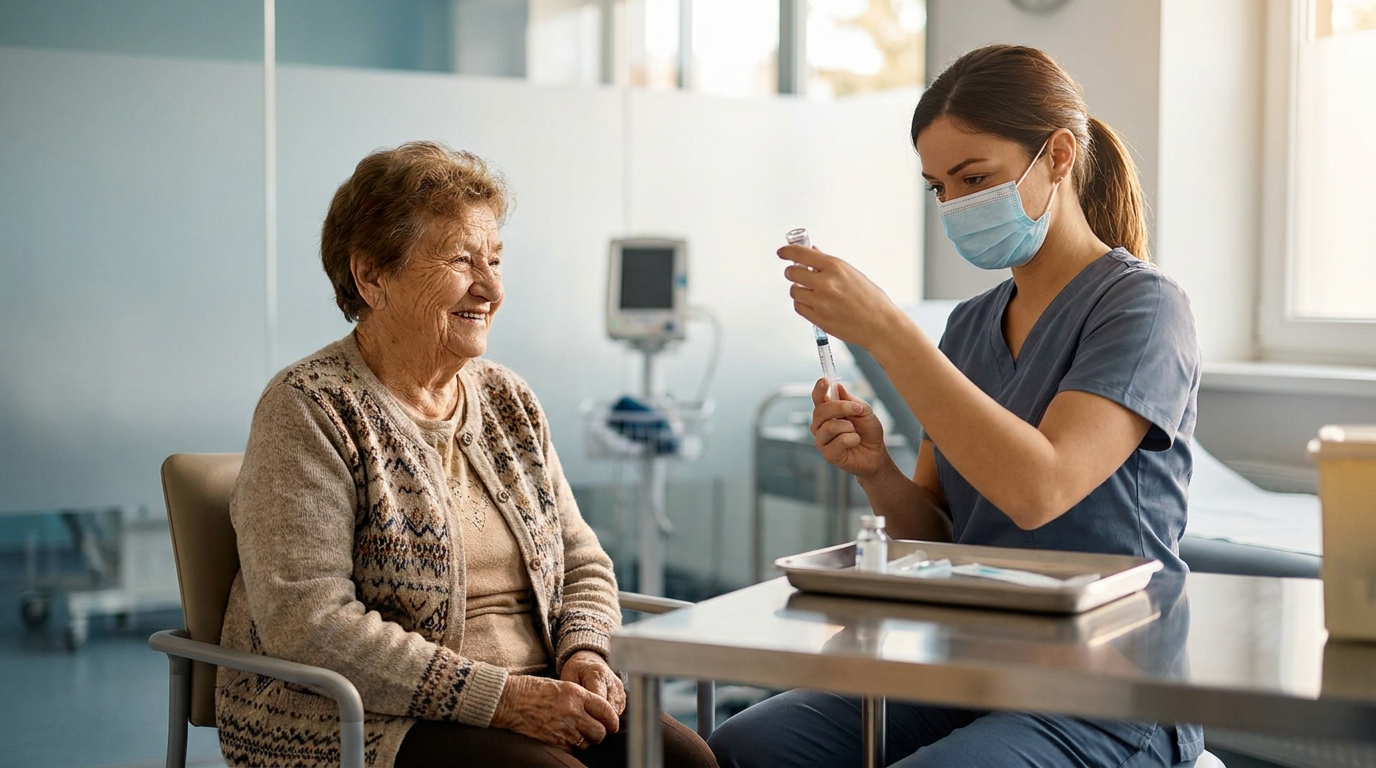
The population studied was highly specific: older adults newly admitted to skilled nursing facilities for either short-term rehabilitation or long-term care. This demographic is exceptionally vulnerable to both shingles outbreaks and the onset of dementia, making it an ideal, high-stakes cohort for examining the potential neuroprotective effects of the vaccine in a real-world clinical setting.[1][5]
The primary claim emerging from the data is striking. Receiving the recombinant zoster vaccine (RZV), commercially known as Shingrix, is associated with a substantially lower risk of developing dementia. The researchers tracked the patients over a four-year follow-up period, comparing the cognitive trajectories of those who received the immunization against those who remained unvaccinated.[4][6]
The statistical analysis revealed a 24 percent relative reduction in dementia risk for those who received at least one dose of the vaccine. This protective association remained robust across various demographic slices of the cohort, reinforcing earlier, smaller studies that had hinted at a connection between viral suppression and cognitive longevity.[3][5]
In absolute terms, the risk reduction is substantial. The data showed that 18.8 percent of vaccinated adults developed dementia within the four-year window, compared to 24.6 percent of those who were not vaccinated. This 5.8 percentage point drop translates to roughly one in 17 dementia cases potentially being prevented through a standard, widely available vaccination.[5][6]

"We were honestly taken aback by the results," noted lead author Dr. Kaley Hayes, an associate director of pharmacoepidemiology at Brown University. "However, they actually are consistent with other studies that have primarily included the older form of the vaccine. It fits into this large puzzle that's just starting to come together that the vaccines are effective at preventing shingles and also appear to have neuroprotective benefits as well."[5][6]
How exactly does a shot in the arm protect the complex architecture of the brain? Researchers point directly to the varicella-zoster virus, the pathogen responsible for chickenpox that lies dormant in the human nervous system for decades after the initial childhood infection.[7][8]
How exactly does a shot in the arm protect the complex architecture of the brain?
When the aging immune system weakens, this dormant virus can reactivate as shingles, triggering widespread and severe inflammation. This intense neuroinflammation can cause significant systemic damage and has been heavily linked to an increased risk of strokes, which in turn dramatically elevates the risk of vascular dementia and Alzheimer's disease.[6][8]
By preventing the reactivation of the virus, the recombinant vaccine effectively blocks this inflammatory cascade before it can begin. Preserving the vascular and neural integrity of the brain from these viral assaults appears to be a primary mechanism by which the vaccine delays or prevents the onset of severe cognitive decline.[6][8]
A secondary, equally compelling theory focuses on the specific formulation of the modern Shingrix vaccine. Unlike older live-attenuated vaccines, the recombinant version contains a specialized adjuvant known as AS01, which is engineered to provoke a highly robust and durable immune response in older adults.[7][8]
Some immunologists hypothesize that this powerful adjuvant may trigger a broader, pathogen-independent immunomodulatory effect. In essence, the vaccine might train the aging immune system to become more efficient at clearing out toxic cellular debris—such as the amyloid plaques and neurofibrillary tangles that are the hallmark drivers of Alzheimer's disease.[7][8]

Despite the compelling data and biologically plausible mechanisms, the study remains observational, meaning it cannot definitively prove a direct cause-and-effect relationship. Transparent uncertainty is a crucial component of epidemiological research, and scientists are careful not to overstate the findings until clinical trials can validate the exact mechanics at play.[5][8]
The most significant confounding factor in this type of vaccine research is known as the "healthy vaccinee effect." Individuals who proactively seek out immunizations often possess better access to healthcare, higher socioeconomic status, and engage in healthier daily lifestyle behaviors—all of which independently lower the risk of developing dementia.[5][7]
The Brown University research team rigorously attempted to adjust for these variables, noting that the vaccinated patients in their cohort were indeed slightly younger and healthier at baseline. Even after complex statistical adjustments to account for these differences, the protective association remained robust, though hidden biases can never be entirely eliminated in retrospective data sets.[5][8]
To move the scientific consensus from correlation to undeniable causation, the medical community requires large-scale randomized controlled trials. Such trials would definitively isolate the vaccine's effect on the brain by eliminating the lifestyle biases inherent in observational studies.[6][8]

However, designing these trials presents a unique ethical dilemma. Because the shingles vaccine is already recommended as the standard of care for older adults to prevent a highly painful disease, administering a placebo to a control group of vulnerable seniors is ethically fraught, forcing researchers to rely on increasingly sophisticated data modeling instead.[8]
In the interim, public health officials emphasize that the immediate, proven benefits of the vaccine are indisputable. Shingles is a debilitating, excruciating condition that affects roughly one in three adults over their lifetime, often resulting in chronic nerve pain that can shatter an older adult's quality of life.[7][8]
If this routine immunization also serves to delay or prevent the onset of dementia, it elevates the shingles shot into one of the most powerful, dual-purpose interventions in modern geriatric care. For millions of aging adults, a simple trip to the pharmacy may offer the best available defense for both their physical comfort and their cognitive future.[1][8]
How we got here
2017
The FDA approves Shingrix, the highly effective recombinant shingles vaccine, replacing older live-attenuated versions.
2024
Early observational studies begin linking older shingles vaccines to a reduced risk of dementia, sparking scientific interest.
2025
A major study in Wales finds a 20 percent reduction in dementia risk among older adults who received the older live-attenuated vaccine.
June 2026
Brown University researchers publish data showing the newer recombinant vaccine is associated with a 24 percent lower dementia risk.
Viewpoints in depth
Causal Mechanism Proponents
Researchers who argue the vaccine directly protects the brain by preventing viral damage.
This camp points to the biological plausibility of the varicella-zoster virus causing long-term neurological harm. When the dormant chickenpox virus reactivates as shingles, it triggers a massive inflammatory response that can damage blood vessels and neurons. By blocking this reactivation, the vaccine prevents the cascading neuroinflammation that accelerates cognitive decline. Some immunologists also highlight the vaccine's adjuvant, AS01, suggesting it may train the aging immune system to clear out the toxic proteins associated with Alzheimer's disease.
Methodological Skeptics
Epidemiologists who caution that observational data cannot definitively prove cause and effect.
Skeptics emphasize the 'healthy vaccinee effect'—a well-documented statistical bias where individuals who proactively seek out vaccines also tend to exercise more, eat better, and have superior access to healthcare. While researchers attempt to adjust for these variables, retrospective health records cannot capture every lifestyle factor. This camp argues that until a randomized controlled trial is conducted, the medical community should refrain from prescribing the shingles vaccine specifically as a dementia preventative, treating the cognitive benefits as a promising but unproven correlation.
Public Health Advocates
Clinicians focused on the immediate, proven benefits of routine immunization for older adults.
For public health officials and geriatricians, the debate over causation versus correlation is secondary to the immediate clinical utility of the vaccine. Shingles is a highly prevalent and excruciatingly painful condition that affects roughly one in three older adults, often leading to long-term nerve damage. Advocates argue that the potential for a 24 percent reduction in dementia risk should be used as a powerful public messaging tool to combat vaccine fatigue and increase uptake, turning a standard preventative measure into a dual-purpose shield for aging populations.
What we don't know
- Whether the vaccine directly causes the reduction in dementia risk, or if healthier lifestyle factors among vaccinated individuals explain the gap.
- How long the neuroprotective benefits of the vaccine last beyond the four-year follow-up period studied.
- Whether the vaccine's adjuvant (AS01) actively helps the immune system clear Alzheimer's-related proteins from the brain.
Key terms
- Recombinant Zoster Vaccine (RZV)
- The modern, non-live shingles vaccine (marketed as Shingrix) that uses a small piece of the virus combined with an adjuvant to trigger an immune response.
- Neuroinflammation
- Inflammation of the nervous tissue, often caused by infection or injury, which is heavily linked to the progression of neurodegenerative diseases like Alzheimer's.
- Healthy Vaccinee Effect
- A statistical bias in observational studies where people who get vaccinated also tend to have healthier lifestyles and better healthcare access, making them less likely to get sick regardless of the vaccine.
- Adjuvant
- An ingredient used in some vaccines that helps create a stronger, more durable immune response in people receiving the immunization.
- Absolute Risk Reduction
- The actual difference in the rate of an event occurring between two groups, such as the 5.8 percentage point difference in dementia cases between the vaccinated and unvaccinated cohorts.
Frequently asked
What is the shingles vaccine?
Shingrix is a recombinant vaccine recommended for adults 50 and older to prevent shingles, a painful rash caused by the reactivation of the chickenpox virus.
How much does the vaccine lower dementia risk?
The study found a 24% relative reduction in dementia risk over four years among older adults in skilled nursing facilities who received the vaccine.
Does the vaccine cure dementia?
No. The vaccine is preventative, not a treatment. It appears to lower the risk of developing dementia in the future, but it does not reverse existing cognitive decline.
Why might the vaccine protect the brain?
Researchers believe it prevents the shingles virus from causing severe inflammation in the nervous system, which can lead to strokes and cognitive damage.
Sources
Source coverage
8 outlets
3 viewpoints surfaced








[1]STAT NewsPublic Health Advocates
Shingles vaccine may lower dementia risk, new study finds
Read on STAT News →[2]Inc. MagazinePublic Health Advocates
A common vaccine may be the secret to avoiding cognitive decline
Read on Inc. Magazine →[3]FirstWord PharmaPublic Health Advocates
Shingles Vaccine Linked to Lower Dementia Risk in Older Adults, Study Suggests
Read on FirstWord Pharma →[4]Annals of Internal MedicineCausal Mechanism Proponents
Recombinant Shingles Vaccine and Dementia Risk in Older Adults
Read on Annals of Internal Medicine →[5]Brown UniversityCausal Mechanism Proponents
Shingles vaccine linked to 24% lower risk of dementia in older adults
Read on Brown University →[6]CIDRAPCausal Mechanism Proponents
Receiving the recombinant zoster vaccine lowers the risk of a dementia diagnosis
Read on CIDRAP →[7]Gavi, the Vaccine AllianceMethodological Skeptics
Can vaccines prevent dementia? The evidence is growing
Read on Gavi, the Vaccine Alliance →[8]Factlen Editorial TeamMethodological Skeptics
Synthesis by Factlen editorial team
Read on Factlen Editorial Team →
More in health
See all 6 stories →mRNA Innovation
FDA Advisory Panel Unanimously Recommends First mRNA Flu Vaccine
8 sources
Exercise Therapy
Exercise Rivals Medication for Depression and Anxiety, Massive Clinical Review Finds
7 sources
Brain Health
How the Brain Washes Itself: The Science of Deep Sleep and Pink Noise
5 sources
Nutritional Psychiatry
The Emerging Evidence for Nutritional Psychiatry: How Diet is Becoming a Mainstream Mental Health Tool
7 sources

Every angle. Every day.
Get health stories with full source coverage and perspective breakdowns delivered to your inbox.