
Sodium-Ion Batteries Move from Lab to Road, Promising Cheaper and Cold-Resistant EVs
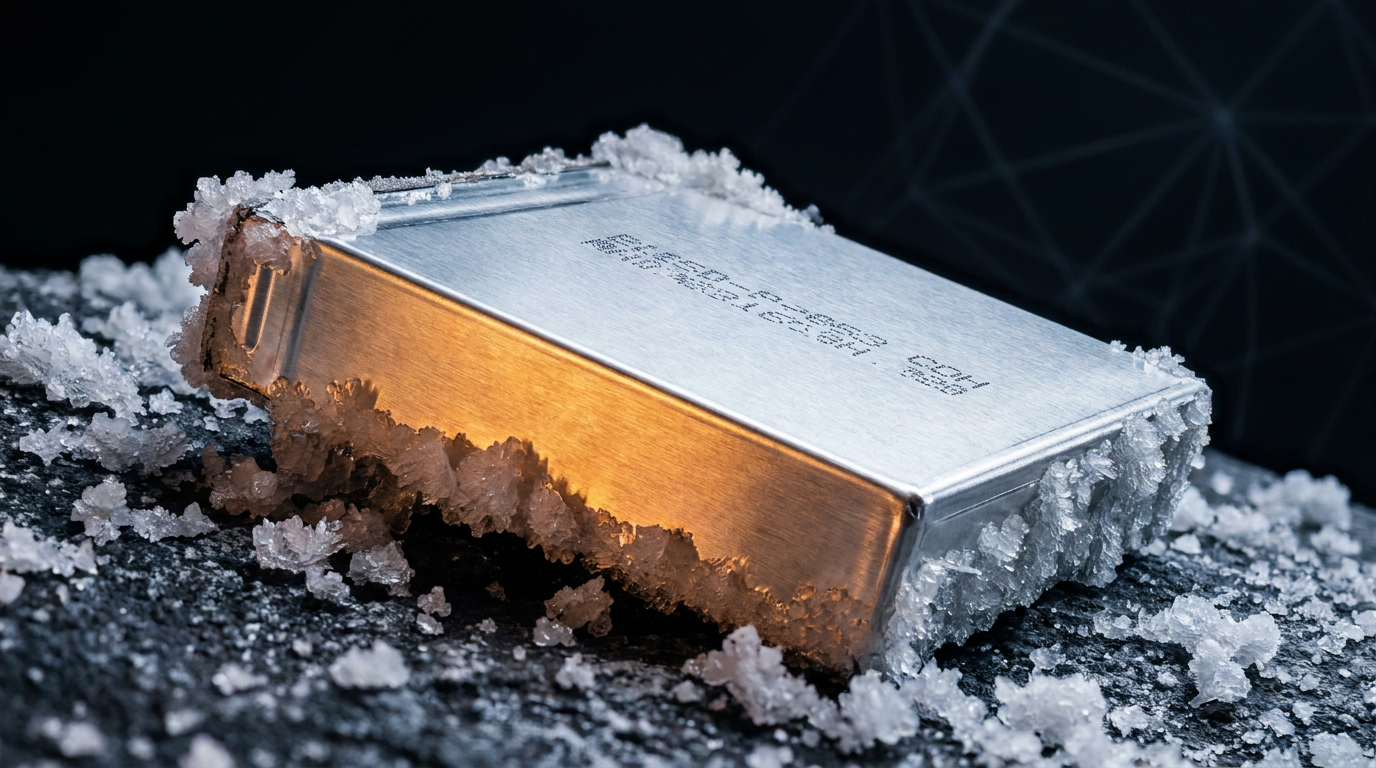
After years of development, sodium-ion batteries are entering mass production in 2026, offering a cheaper, cobalt-free alternative to lithium that thrives in extreme cold.
By Factlen Editorial Team
- Battery Manufacturers
- Focused on scaling production and overcoming technical bottlenecks to achieve cost parity.
- Automakers
- Pursuing a dual-chemistry strategy to democratize EV access and secure supply chains.
- Energy Analysts
- Highlighting the geopolitical and grid-scale implications of decoupling from critical minerals.
What's not represented
- · Lithium Mining Industry
- · Battery Recycling Facilities
Why this matters
By replacing expensive and geopolitically sensitive lithium with abundant sodium, this breakthrough paves the way for truly affordable electric vehicles and reliable grid storage, while solving the notorious problem of EV range loss in freezing winter temperatures.
Key points
- Sodium-ion batteries are entering mass production in 2026, marking a major shift in electric vehicle technology.
- The cells use abundant, low-cost sodium instead of lithium, completely eliminating the need for expensive cobalt and nickel.
- Sodium-ion batteries thrive in extreme cold, retaining up to 90 percent of their capacity at minus 40 degrees Celsius.
- While their lower energy density makes them unsuitable for luxury EVs, they are ideal for budget city cars and commercial fleets.
- Major automakers like General Motors are also adopting sodium-ion technology for massive grid-scale energy storage systems.
The electric vehicle industry has spent the last decade chasing a single, highly effective element: lithium. But in 2026, the battery landscape is undergoing its most significant shift in years, driven not by a rare metal, but by one of the most abundant elements on Earth. Sodium-ion batteries, long relegated to laboratory experiments and pilot programs, are officially entering mass production.[1][4]
The turning point arrived this year when CATL, the world's largest battery manufacturer, confirmed it had overcome key manufacturing bottlenecks. At the 2026 Equipment Powerhouse Forum in late May, the company's chief scientist announced that its sodium-ion cells are ready for full-scale industrialization, targeting passenger vehicles, commercial fleets, and energy storage.[2]
This transition is already materializing on the road. In early 2026, Chinese automaker Changan, in partnership with CATL, unveiled the Nevo A06—the world's first mass-production passenger vehicle powered by a sodium-ion pack. Slated to hit the market in mid-2026, the sedan marks the beginning of what industry experts are calling a "dual-chemistry era."[1][5]
To understand why automakers are aggressively pursuing sodium, it helps to look at how the technology works. At a foundational level, a sodium-ion battery operates on the same principles as a lithium-ion cell. Ions shuttle back and forth between an anode and a cathode through an electrolyte during charging and discharging cycles.[4][8]

The critical difference lies in the materials. Instead of relying on lithium, these new cells use sodium as the active ingredient. Because sodium does not easily alloy with aluminum at anode potentials, manufacturers can also replace the expensive copper current collectors used in lithium-ion cells with cheaper aluminum foil.[2][8]
Furthermore, sodium-ion chemistries completely eliminate the need for cobalt and nickel—two critical minerals plagued by price volatility, supply chain bottlenecks, and geopolitical concentration. Sodium, by contrast, is roughly 1,000 times more abundant than lithium and can be extracted from common mineral deposits or even seawater.[4][7]
This material abundance translates directly into supply chain security and cost reduction. While lithium prices have historically been subject to wild market swings, sodium offers a stable, low-cost baseline. As manufacturing scales up, analysts project that sodium-ion batteries will become significantly cheaper to produce than the current budget standard, lithium iron phosphate (LFP).[1][6]
This material abundance translates directly into supply chain security and cost reduction.
Beyond economics, sodium-ion technology possesses a unique superpower that solves one of the EV industry's most persistent headaches: extreme cold weather performance. Traditional lithium-ion batteries suffer severe range degradation and sluggish charging speeds when temperatures plummet.[1][5]
Sodium-ion cells, however, thrive in the cold. CATL's Naxtra battery can retain roughly 90 percent of its capacity at minus 40 degrees Celsius. Even at minus 30 degrees, it delivers nearly three times the discharge power of an equivalent LFP battery, and it can still accept a charge when frozen solid. For drivers in northern climates, this thermal resilience is a game-changer.[5]

The technology also boasts an impressive safety profile. Sodium-ion cells are less prone to thermal runaway—the dangerous chain reaction that causes battery fires—and they can be safely transported at a zero percent state-of-charge without damaging the cell's long-term health.[7]
Despite these advantages, sodium-ion is not poised to kill lithium entirely. The primary trade-off is energy density. Because sodium ions are physically larger and heavier than lithium ions, they store less energy per kilogram. CATL's current mass-production cells achieve an energy density of about 175 Wh/kg.[1][4]
While this figure is a record for sodium and sufficient for a 400-kilometer (250-mile) driving range, it still trails the high-density nickel-manganese-cobalt (NMC) batteries used in premium, long-range EVs. Consequently, automakers are positioning sodium-ion as the go-to chemistry for budget-friendly city cars, commercial fleets, and two-wheelers, leaving lithium to dominate the luxury and long-haul segments.[2][4][7]

However, the ceiling for sodium is rising rapidly. Competitors like BAIC Group have already validated prototypes exceeding 170 Wh/kg that are compatible with ultra-fast charging, allowing a full recharge in just 11 minutes. CATL is actively developing next-generation architectures aimed at reaching 600 kilometers of range, which would put sodium-ion in direct competition with mainstream LFP batteries.[1][2][7]
The impact of this chemistry extends far beyond passenger vehicles. Because weight and physical size are less critical for stationary applications, sodium-ion is emerging as a premier solution for grid-scale energy storage.[3][6]
In June 2026, General Motors announced a strategic partnership with Peak Energy to develop sodium-ion cells specifically for stationary storage bunkers. As data centers and renewable energy grids demand massive, reliable, and affordable power storage, GM executives noted that sodium-ion is uniquely positioned to offer lower lifetime costs than lithium for these 20-year installations.[3][8]

The infrastructure to support this shift is already being laid. The International Energy Agency notes that 2026 is a pivotal year for scaling the technology, with gigafactories coming online and thousands of battery-swap stations being deployed across colder regions to support the rollout. By democratizing access to zero-emission technology and stabilizing the global supply chain, salt may ultimately be the key to the next phase of the energy transition.[4][5][7]
How we got here
1980s
Scientists begin developing the fundamental principles of sodium-ion battery technology in laboratories.
2023
The first small-scale pilot electric vehicles utilizing early sodium-ion cells appear in China.
Feb 2026
Changan and CATL unveil the Nevo A06, the world's first mass-production passenger EV powered by sodium-ion.
May 2026
CATL confirms it has overcome manufacturing bottlenecks, paving the way for full-scale industrialization.
Jun 2026
General Motors announces a strategic partnership to develop sodium-ion batteries for massive grid-scale energy storage.
Viewpoints in depth
Battery Manufacturers
Focused on scaling production and overcoming technical bottlenecks to achieve cost parity.
For battery giants like CATL and BYD, the immediate priority is industrialization. Having solved issues like gas generation and water control in the cells, manufacturers are now rapidly building gigafactories dedicated to sodium. Their long-term roadmap involves pushing energy density closer to 200 Wh/kg, which would allow sodium to directly cannibalize the massive market currently held by budget lithium-iron-phosphate (LFP) batteries.
Automakers
Pursuing a dual-chemistry strategy to democratize EV access and secure supply chains.
Car manufacturers view sodium as a strategic hedge against volatile lithium prices. By adopting a dual-chemistry approach, companies like Changan and BAIC can reserve expensive lithium batteries for their high-margin, long-range luxury vehicles, while using cheap, abundant sodium to build profitable entry-level city cars. This strategy also opens up new markets in colder climates where traditional EVs have historically struggled to gain traction.
Energy Analysts
Highlighting the geopolitical and grid-scale implications of decoupling from critical minerals.
Energy researchers emphasize that sodium-ion's true revolutionary potential lies outside the vehicle. Because stationary grid storage doesn't require lightweight batteries, the lower energy density of sodium is irrelevant. Analysts point out that using salt-based batteries for grid storage frees up the world's limited lithium supply for the transportation sector, easing geopolitical tensions over mineral mining and accelerating the broader transition to renewable energy.
What we don't know
- Exactly how quickly manufacturing can scale to meet global demand, as scaling new battery chemistries often involves unforeseen production hurdles.
- Whether future technological breakthroughs will allow sodium-ion energy density to fully match premium lithium-ion batteries.
- How the established lithium mining industry will adjust its pricing and supply strategies in response to a viable, low-cost competitor.
Key terms
- Sodium-ion (Na-ion) battery
- A type of rechargeable battery that uses sodium ions to store and release energy, offering a cheaper and more abundant alternative to lithium.
- Energy density
- The amount of energy a battery can store relative to its weight (measured in Wh/kg), which determines how far an EV can drive on a single charge.
- Thermal runaway
- A dangerous chain reaction within a battery cell that causes it to rapidly overheat and potentially catch fire.
- LFP (Lithium Iron Phosphate)
- Currently the most common low-cost lithium-ion battery chemistry, widely used in budget EVs but vulnerable to cold weather.
- Grid-scale energy storage
- Massive stationary battery installations used to store excess electricity from renewable sources and stabilize the power grid.
Frequently asked
Are sodium-ion batteries cheaper than lithium-ion?
Yes, because sodium is vastly more abundant than lithium and the cells do not require expensive metals like cobalt or nickel, they are projected to be significantly cheaper at scale.
Do sodium-ion batteries work in cold weather?
Exceptionally well. Unlike lithium-ion batteries that lose significant range in freezing temperatures, sodium-ion cells can retain up to 90 percent of their capacity at minus 40 degrees Celsius.
Will sodium replace lithium in all electric vehicles?
Not immediately. Because sodium-ion batteries have a lower energy density (they are heavier for the same amount of power), lithium will still dominate long-range and luxury EVs, while sodium will power budget cars and city fleets.
What else are sodium-ion batteries used for?
Because their physical size and weight matter less in stationary applications, they are becoming a premier choice for grid-scale energy storage to support renewable energy and data centers.
Sources
Source coverage
8 outlets
3 viewpoints surfaced








[1]ElectrekBattery Manufacturers
CATL is bringing sodium-ion batteries to EVs in 2026
Read on Electrek →[2]CarNewsChinaBattery Manufacturers
CATL to mass-produce sodium-ion batteries in 2026, targets 600 km range
Read on CarNewsChina →[3]Car and DriverAutomakers
GM Is Adding a Fourth Battery Chemistry: Sodium-Ion
Read on Car and Driver →[4]International Energy AgencyEnergy Analysts
Recent technological advances and investment announcements suggest dynamics are shifting for sodium-ion batteries
Read on International Energy Agency →[5]CATLBattery Manufacturers
CHANGAN Automobile, in partnership with CATL, today unveiled the world's first mass-production passenger vehicle equipped with sodium-ion batteries
Read on CATL →[6]Inside Climate NewsEnergy Analysts
GM is one of several automakers branching out into energy storage systems
Read on Inside Climate News →[7]Latam MobilityAutomakers
Ultra-fast Charging and 450 km of Range: BAIC Group Advances in Sodium Batteries
Read on Latam Mobility →[8]General MotorsAutomakers
Why sodium-ion batteries will reshape grid-scale energy storage
Read on General Motors →

Every angle. Every day.
Get automotive stories with full source coverage and perspective breakdowns delivered to your inbox.