
How Women's Wrestling Became the Fastest-Growing Sport in America
Fuelled by explosive grassroots participation and the first-ever NCAA championship in 2026, women's wrestling has transformed from a niche pursuit into a collegiate powerhouse.
By Factlen Editorial Team
- Grassroots Advocates
- Organizations focused on youth access, state-level sanctioning, and growing the talent pool.
- Collegiate Administrators
- Athletic directors and university presidents managing athletic portfolios and Title IX compliance.
- Sports Analysts
- Observers tracking the sport's structural growth, Olympic synergy, and broader cultural impact.
What's not represented
- · Male collegiate wrestlers adjusting to shared facility resources
- · High school athletic directors managing the logistics of adding new teams
Why this matters
The institutionalization of women's wrestling provides thousands of female athletes with new pathways to college scholarships, elite athletic development, and Olympic competition, fundamentally altering the landscape of Title IX sports.
Key points
- Women's wrestling became the NCAA's 91st championship sport in 2026, hosting its inaugural national tournament in Iowa.
- High school girls' participation surged past 74,000 in the 2024-25 season, making it the fastest-growing sport in the country.
- Forty-six states now officially sanction girls' high school wrestling, allowing athletes to compete in female-only divisions.
- Over 150 colleges now sponsor varsity programs, heavily driven by Division II and Division III institutions.
- Because NCAA women's wrestling uses Olympic freestyle rules, the college circuit serves as a direct pipeline for the U.S. National Team.
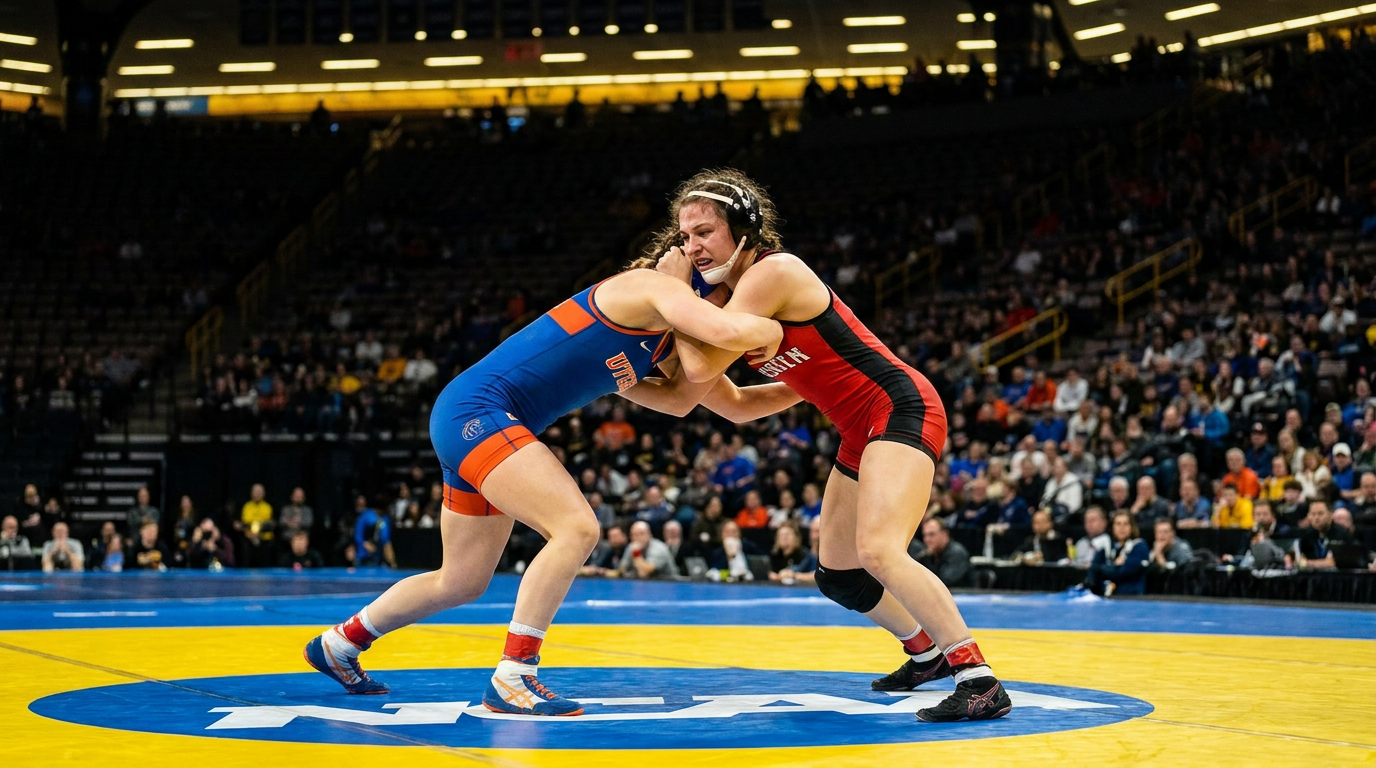
The landscape of American combat sports shifted permanently in March 2026. Inside the Xtream Arena in Coralville, Iowa, the roar of the crowd signaled the conclusion of the inaugural NCAA Women's Wrestling Championship. McKendree University narrowly edged out the University of Iowa to claim the first-ever team title, but the true victory extended far beyond the podium.[2]
For decades, female wrestlers had fought for a place on the mat, often relegated to club status or forced to compete against boys. The 2026 championship marked the moment women's wrestling officially arrived as the NCAA's 91st championship sport, graduating from its previous "Emerging Sports" designation.[2][6]
The NCAA's decision was not merely a gesture of goodwill; it was a necessary reaction to an undeniable demographic explosion. Women's wrestling is currently the fastest-growing high school sport in the United States, outpacing traditional stalwarts in year-over-year expansion.[1][6]
The numbers paint a picture of hyper-growth. According to the National Federation of State High School Associations (NFHS), girls' wrestling participation topped 74,000 in the 2024-25 academic year. That figure represents a staggering 15 percent jump from the previous year alone.[1][3]

To understand the magnitude of this surge, one must look back just a decade. Ten years ago, barely 11,000 girls wrestled nationwide. Those who did were almost entirely reliant on boys' teams for training and competition, facing physical disadvantages and, frequently, societal stigma.[1][6]
The catalyst for the current boom was the systematic push for state-sanctioned girls' championships. While Hawaii led the way by sanctioning the sport in 1998, the movement accelerated rapidly in the late 2010s and early 2020s.[6]
Today, 46 states officially sanction girls' high school wrestling. This structural change means female athletes can compete exclusively against other girls in their own weight classes. Removing the barrier of co-ed competition opened the floodgates for participation.[4][6]
As high school participation skyrocketed, the demand for collegiate opportunities surged in tandem. Organizations like Wrestle Like a Girl and the National Wrestling Coaches Association (NWCA) lobbied aggressively for collegiate expansion, arguing that the talent pool was vast and underserved.[4][6]
As high school participation skyrocketed, the demand for collegiate opportunities surged in tandem.
The initial wave of collegiate growth was driven heavily by Division II and Division III institutions. For smaller schools, adding women's wrestling proved to be a highly cost-effective strategy to boost female enrollment, meet Title IX requirements, and provide equitable athletic opportunities.[2][6]

The NCAA formally recognized women's wrestling as an "Emerging Sport" in 2020. The program requires a sport to reach 40 varsity programs to be considered for full championship status. Women's wrestling obliterated that threshold in record time.[4][6]
By the time the 2026 championships rolled around, over 150 colleges across the NCAA, NAIA, and NJCAA sponsored varsity women's wrestling programs. The sheer volume of programs made the transition to a unified national championship inevitable.[4]
The momentum eventually forced Division I powerhouses to take notice. The University of Iowa became the first Power Five school to field a women's team, instantly drawing elite international talent, selling out arenas, and proving the sport's commercial viability at the highest level.[2][6]
The prestige factor continues to permeate the highest echelons of academia. In June 2026, Columbia University announced it would elevate its women's wrestling club to full varsity status for the 2027-28 academic year, backed by a $10 million endowment. It marked the first new varsity sport added by the Ivy League institution in nearly two decades.[5]

Beyond the collegiate ranks, the NCAA's embrace of women's wrestling is fundamentally reshaping America's Olympic prospects. Unlike collegiate men's wrestling, which uses a unique American "folkstyle" ruleset, collegiate women's wrestling uses "freestyle"—the exact ruleset used in the Olympic Games.[2][6]
This alignment makes the NCAA a perfect, ready-made incubator for Olympic talent. Athletes no longer have to choose between a college education and international training. They can utilize campus resources, elite coaching, and high-level collegiate competition to prepare directly for the world stage.[2][6]

The synergy is already evident. Athletes like Iowa's Kennedy Blades, a 2024 Olympic silver medalist, exemplify the new paradigm. Half of the U.S. national team members are current college athletes, utilizing the NCAA season as a training ground for the upcoming 2028 Los Angeles Summer Olympics.[2]
The explosion of the women's sport has also generated a halo effect for wrestling as a whole. Driven by the overall cultural momentum, expanded facilities, and increased coaching staffs, boys' high school participation recently rebounded past 300,000 for the first time since the 1980s.[1][3]
The inaugural 2026 NCAA Championship was not a finish line, but a starting gun. With a formalized pipeline stretching from youth clubs to the Olympic podium, women's wrestling has permanently cemented its place in the American sporting landscape.[6]
How we got here
1998
Hawaii becomes the first state to officially sanction a girls' high school wrestling championship.
2004
Women's wrestling makes its debut as an official Olympic sport at the Athens Games.
2020
The NCAA officially recognizes women's wrestling as an "Emerging Sport."
2024
High school girls' wrestling participation surpasses 74,000, becoming the fastest-growing sport in the country.
2026
The NCAA hosts its first-ever unified Women's Wrestling Championship in Coralville, Iowa.
Viewpoints in depth
Grassroots Advocates
Organizations focused on youth access and state-level sanctioning.
Groups like Wrestle Like a Girl and USA Wrestling argue that the foundation of the sport's success lies in state-level sanctioning. By lobbying state athletic associations to create separate girls' divisions, they removed the physical and social barriers of forcing girls to wrestle boys. They view the NCAA championship as the ultimate validation of their decades-long effort to build a youth pipeline.
Collegiate Administrators
Athletic directors and university presidents managing athletic portfolios.
For many Division II and Division III administrators, women's wrestling represents a strategic enrollment tool. It offers a cost-effective way to attract dedicated student-athletes, balance Title IX compliance, and expand broad-based athletic opportunities without the massive infrastructure costs associated with sports like football or ice hockey.
Olympic Committees
National team coaches and international wrestling federations.
USA Wrestling's national team leadership views the NCAA's adoption of freestyle wrestling as a massive competitive advantage for the United States. Because the collegiate rules perfectly mirror the Olympic rules, the NCAA effectively serves as a fully-funded, nationwide Olympic training center, preparing athletes for the 2028 Los Angeles Games and beyond.
What we don't know
- How quickly more Division I Power Five conferences will adopt the sport following the University of Iowa's early success.
- Whether the rapid growth in high school participation will outpace the availability of qualified coaches and dedicated training facilities.
Key terms
- Freestyle Wrestling
- The international style of wrestling used in the Olympics and NCAA women's wrestling, which allows holds on the legs and rewards exposing an opponent's back to the mat.
- Folkstyle Wrestling
- The traditional American style of wrestling used in NCAA men's wrestling and most high school boys' programs, emphasizing control and escaping from the bottom position.
- Emerging Sports for Women
- An NCAA program designed to help schools provide more athletic opportunities for women by recognizing and supporting new sports until they reach championship status.
- Title IX
- A federal civil rights law in the United States that prohibits sex-based discrimination in any school or education program that receives federal funding.
Frequently asked
Do female college wrestlers compete against men?
No. With the establishment of the NCAA Women's Wrestling Championship and state-sanctioned high school divisions, female athletes compete exclusively against other women in dedicated weight classes.
What style of wrestling do women use in the NCAA?
NCAA women's wrestling uses freestyle rules, which is the exact same style used in the Olympic Games. This differs from NCAA men's wrestling, which uses American folkstyle.
Which college won the first NCAA women's wrestling team title?
McKendree University won the inaugural NCAA Women's Wrestling Championship team title in March 2026, narrowly defeating the University of Iowa.
Sources
Source coverage
6 outlets
3 viewpoints surfaced





[1]National Federation of State High School AssociationsGrassroots Advocates
High School Wrestling's Comeback: Participation, Opportunity Reach All-time Highs
Read on National Federation of State High School Associations →[2]NCAACollegiate Administrators
Women's wrestling is one of the fastest-growing sports in college athletics
Read on NCAA →[3]USA WrestlingGrassroots Advocates
NFHS reports new records for high school wrestling participation for both girls and boys in 2024-25
Read on USA Wrestling →[4]National Wrestling Coaches AssociationGrassroots Advocates
Building the Future of Women's Wrestling
Read on National Wrestling Coaches Association →[5]Columbia University AthleticsCollegiate Administrators
Women's Wrestling Becomes The First Varsity Sport Added At Columbia In Nearly 20 Years
Read on Columbia University Athletics →[6]Factlen Editorial TeamSports Analysts
Synthesis by Factlen editorial team
Read on Factlen Editorial Team →

More in sports
See all 5 stories →Serena's Comeback
Serena Williams returns to competitive tennis, confirms Wimbledon doubles reunion with Venus
6 sources

NBA Finals
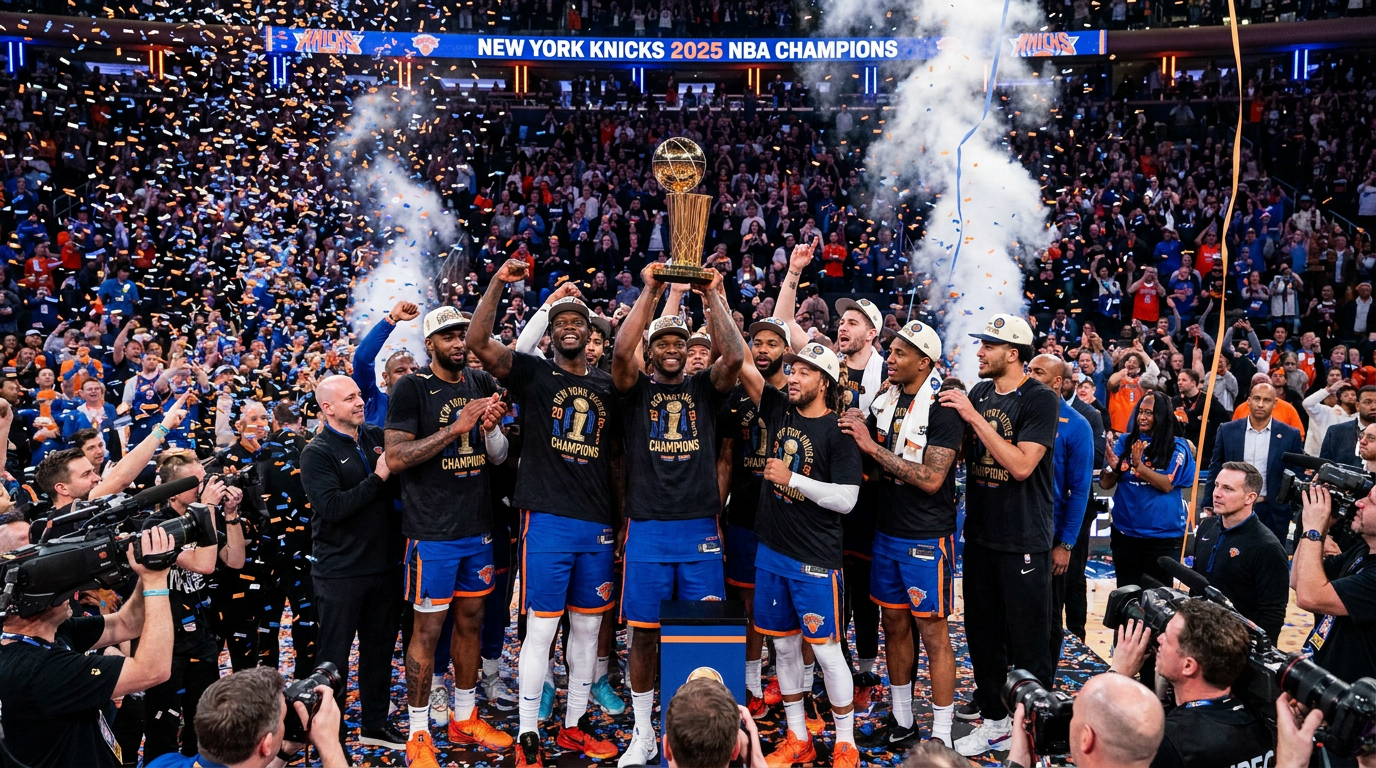
New York Knicks Win 2026 NBA Finals, Ending 53-Year Championship Drought
6 sources
Women's Super League
Mary Earps Returns to Women's Super League in Statement Signing for London City Lionesses
7 sources

Every angle. Every day.
Get sports stories with full source coverage and perspective breakdowns delivered to your inbox.