
Vance Arrives in Switzerland for US-Iran Nuclear Talks as Tehran Threatens Strait of Hormuz
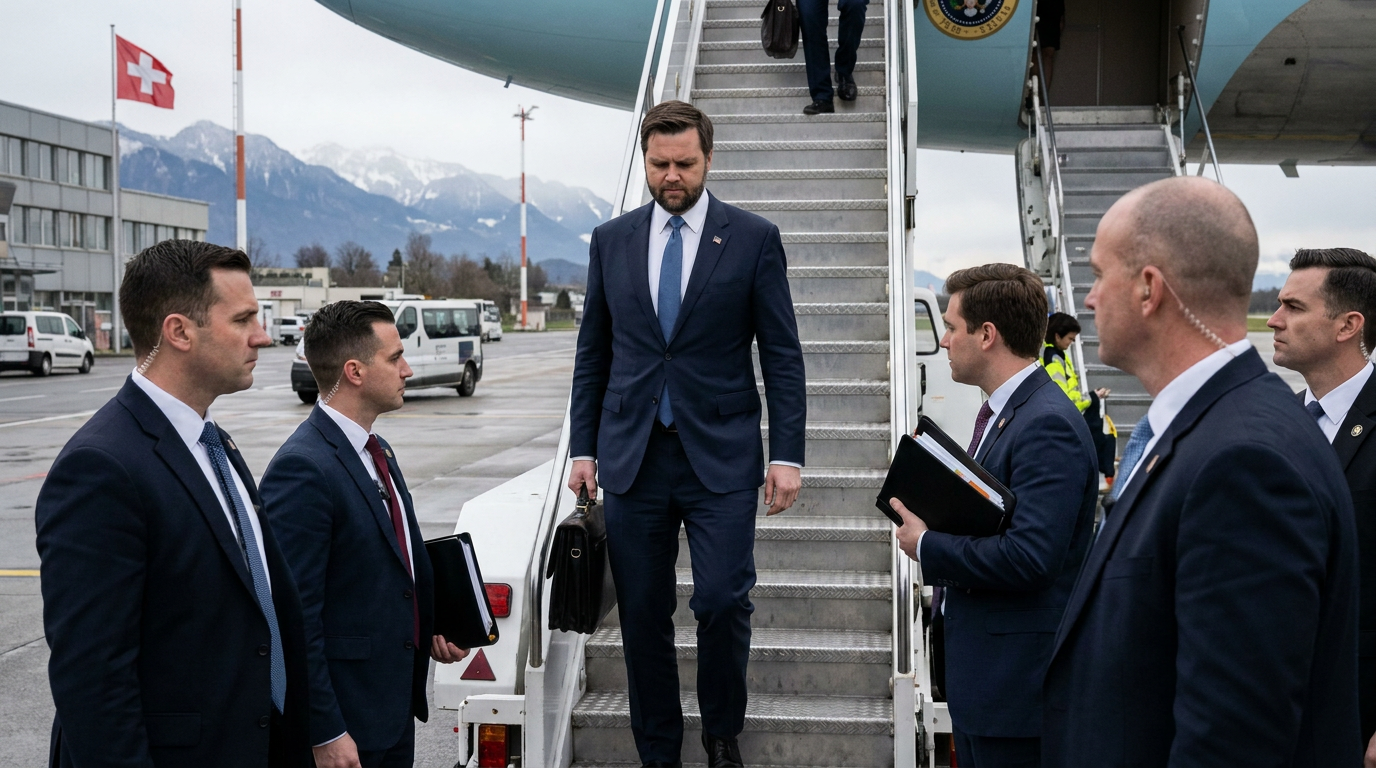
Vice President JD Vance has arrived in Switzerland for the first direct US-Iran nuclear negotiations since April, even as Tehran threatens to close the Strait of Hormuz in retaliation for Israeli strikes in Lebanon.
By Factlen Editorial Team
- US Negotiators
- Focused on establishing a 60-day framework for nuclear de-escalation while demanding freedom of navigation in the Persian Gulf.
- Iranian Officials
- Leveraging the threat of closing the Strait of Hormuz to pressure the US and Israel over military actions in Lebanon.
- Market Analysts
- Highly concerned that any disruption or toll implementation in the Strait of Hormuz will trigger a global energy shock.
- Conservative US Voices
- Advocating for a hardline stance against Iranian toll threats, suggesting the US should control maritime transit fees instead.
What's not represented
- · European Energy Importers
- · Lebanese Civilians
Why this matters
The Strait of Hormuz is the world's most critical oil chokepoint, handling roughly 20% of global petroleum consumption. A closure or the imposition of transit tolls would immediately spike global energy prices, directly impacting US inflation and gas prices while testing the administration's diplomatic leverage.
Key points
- Vice President JD Vance is in Switzerland for the first direct US-Iran nuclear talks since April.
- Iran has threatened to close the Strait of Hormuz in response to Israeli strikes in Lebanon.
- The talks aim to launch a 60-day window for nuclear negotiations.
- Donald Trump suggested the US might charge its own tolls for transit through the strait.
- Global energy markets are bracing for potential oil price spikes due to the maritime threats.
Vice President JD Vance arrived at the Bürgenstock ski resort in Switzerland on Saturday to launch a critical round of direct nuclear negotiations with Iran. The high-stakes diplomatic summit marks the first face-to-face talks between Washington and Tehran since the Islamabad summit in April, aiming to establish a 60-day framework for nuclear de-escalation.[1][8]
However, the diplomatic window has opened against a backdrop of severe regional volatility. Just hours before the delegations convened, Iranian officials announced their intention to close the Strait of Hormuz, citing deadly Israeli military strikes in Lebanon that killed 16 people.[2][4]
The threat to the Strait of Hormuz—a vital maritime chokepoint through which roughly a fifth of the world’s daily oil consumption flows—immediately escalated the stakes of the Swiss summit. Tehran framed the potential closure as a direct response to what it called Israeli ceasefire violations, effectively linking the nuclear negotiations to the broader conflict in the Levant.[2][7]

The Iranian delegation's arrival in Switzerland was confirmed late Saturday, setting the stage for Sunday's opening sessions. US officials have signaled that maintaining freedom of navigation in the Persian Gulf will now run parallel to the nuclear agenda, complicating Vance's mandate to secure a lasting non-proliferation agreement.[1][8]
The Iranian delegation's arrival in Switzerland was confirmed late Saturday, setting the stage for Sunday's opening sessions.
Complicating the diplomatic picture further, former President Donald Trump weighed in on the crisis, vowing that Iran would not be permitted to charge tolls for vessels transiting the Strait of Hormuz. In a surprising pivot, Trump suggested that the United States might instead impose its own transit fees, referencing an initial 60-day period outlined in a recent US-Iran memorandum of understanding.[3][6]
The memorandum, which has not been fully declassified, reportedly leaves the door open for future toll structures after the 60-day negotiation window closes. This ambiguity has sparked intense debate in Washington over whether the US is implicitly recognizing Iranian leverage over the waterway or attempting to assert American maritime dominance in the region.[3][7]

Global energy markets are bracing for severe volatility when trading opens on Monday. Energy analysts warn that even a partial disruption or the imposition of transit tolls in the Strait of Hormuz could send Brent crude prices surging, threatening to reignite inflationary pressures in Western economies just as central banks attempt to stabilize interest rates.[4][5]
The dual-track crisis places Vance in a precarious negotiating position. He must navigate Tehran's demands regarding its nuclear enrichment program while simultaneously defusing a maritime standoff that threatens global economic stability. European allies, heavily dependent on Middle Eastern energy exports, are closely monitoring the talks, urging both sides to separate the nuclear portfolio from the ongoing violence in Lebanon.[5][7]
As the 60-day negotiation clock begins, the immediate challenge for the US delegation will be securing a commitment from Iran to keep the Strait of Hormuz open without conceding ground on nuclear enrichment limits. The outcome in Bürgenstock will likely dictate the trajectory of US-Iran relations for the remainder of the year.[1][8]

How we got here
April 2026
The US and Iran hold a diplomatic summit in Islamabad, setting the stage for future talks.
June 20, 2026
Israeli strikes in Lebanon kill 16 people, prompting Iranian threats to close the Strait of Hormuz.
June 20, 2026
Vice President JD Vance and the Iranian delegation arrive in Switzerland for direct negotiations.
Viewpoints in depth
US Administration's View
Focused on securing a nuclear agreement while maintaining absolute freedom of navigation.
For the US delegation, the primary objective in Switzerland is to lock in a 60-day framework that halts Iran's nuclear enrichment progress. However, the administration views the threat to the Strait of Hormuz as an unacceptable escalation that cannot be used as leverage in the nuclear talks. US officials are working to separate the maritime security issue from the non-proliferation agenda, warning that any disruption to global shipping will be met with a severe international response.
Iran's View
Using regional chokepoints to exert pressure over conflicts in the Levant.
Tehran is explicitly linking its control over the Strait of Hormuz to the broader geopolitical conflict involving Israel and Lebanon. By threatening the world's most critical oil artery, Iranian officials aim to force the US to rein in Israeli military operations as a precondition for nuclear de-escalation. The Iranian delegation views the maritime threat as a necessary counterweight to US economic sanctions and military presence in the region.
Global Energy Markets' View
High anxiety over supply chain disruptions and the potential for a massive inflation shock.
Energy analysts and commodity traders view the diplomatic summit through the lens of pure economic risk. The Strait of Hormuz handles roughly 20% of the world's daily oil consumption, and there are few viable alternative routes for that volume of crude. Market watchers warn that even the implementation of transit tolls—let alone a full military closure—would instantly drive up Brent crude prices, threatening to undo months of progress central banks have made in fighting inflation.
What we don't know
- Whether Iran will actually attempt to block commercial vessels or impose tolls in the Strait of Hormuz.
- The specific details of the US-Iran memorandum of understanding regarding the 60-day negotiation period.
- How European allies will respond if the nuclear talks collapse over the maritime dispute.
Key terms
- Strait of Hormuz
- A narrow waterway between the Persian Gulf and the Gulf of Oman, serving as the world's most important oil transit chokepoint.
- Memorandum of Understanding
- A formal agreement between two or more parties that establishes a framework for cooperation, though it is not always legally binding.
Frequently asked
Why is JD Vance in Switzerland?
Vice President Vance is leading the US delegation in direct nuclear negotiations with Iran, aiming to establish a 60-day framework for de-escalation.
Why is Iran threatening the Strait of Hormuz?
Tehran claims it is closing the strait in retaliation for recent Israeli military strikes in Lebanon that killed 16 people.
What happens if the Strait of Hormuz is closed?
Because roughly 20% of the world's oil passes through the strait, a closure would likely cause an immediate and severe spike in global energy prices.
What did Donald Trump say about the situation?
Trump vowed that Iran would not be allowed to charge tolls in the strait, but suggested the US might impose its own fees based on a recent memorandum of understanding.
Sources
Source coverage
8 outlets
4 viewpoints surfaced







[1]AxiosUS Negotiators
Vance travels to Switzerland for nuclear talks with Iran
Read on Axios →[2]Al JazeeraIranian Officials
Iran war live: Vance heads to Switzerland; Israel kills 16 in Lebanon
Read on Al Jazeera →Trump vows Iran will not charge Strait of Hormuz tolls, but says US might
Read on Al Jazeera →[4]ReutersIranian Officials
Iran threatens Hormuz closure as US nuclear talks begin in Switzerland
Read on Reuters →[5]BloombergMarket Analysts
Oil Markets Brace for Hormuz Disruption Amid Swiss Talks
Read on Bloomberg →[6]Fox NewsConservative US Voices
Trump warns Iran on Hormuz tolls as Vance lands in Switzerland
Read on Fox News →[7]The New York TimesUS Negotiators
Vance Faces High-Stakes Nuclear Diplomacy Under Shadow of Hormuz Threat
Read on The New York Times →[8]CNNUS Negotiators
US and Iran resume direct nuclear talks amid escalating Middle East tensions
Read on CNN →
More in news politics
See all 5 stories →
Every angle. Every day.
Get news politics stories with full source coverage and perspective breakdowns delivered to your inbox.