
The Evidence on Smart Rings: How Accurate Are Oura, Samsung, and Ultrahuman?
Consumer sleep rings have reached near-clinical accuracy for basic metrics, but independent studies reveal significant limitations in sleep staging and age-related precision.
By Factlen Editorial Team
- Clinical Sleep Researchers
- Scientists focused on the medical validity of consumer wearables.
- Wearable Tech Reviewers
- Technology critics evaluating devices for everyday consumer utility.
- Subscription Skeptics
- Consumers and reviewers who prioritize devices without recurring monthly fees.
What's not represented
- · Older Adults
- · Primary Care Physicians
Why this matters
As millions of consumers abandon bulky smartwatches for sleek smart rings, understanding the actual scientific accuracy of these devices is crucial for making informed purchasing decisions and correctly interpreting your own health data.
Key points
- Smart rings have largely replaced wrist-worn wearables as the preferred form factor for sleep tracking due to comfort and sensor placement.
- Top-tier devices like the Oura Ring Gen 4 show near-clinical accuracy for basic metrics like total sleep time and sleep efficiency.
- Independent studies reveal that consumer sleep trackers struggle to accurately identify specific sleep stages like REM and deep sleep.
- Wearable accuracy drops significantly for older adults, with devices frequently underestimating their total sleep time.
- The market is currently split between subscription-based models (Oura) and one-time purchase ecosystems (Samsung, Ultrahuman).
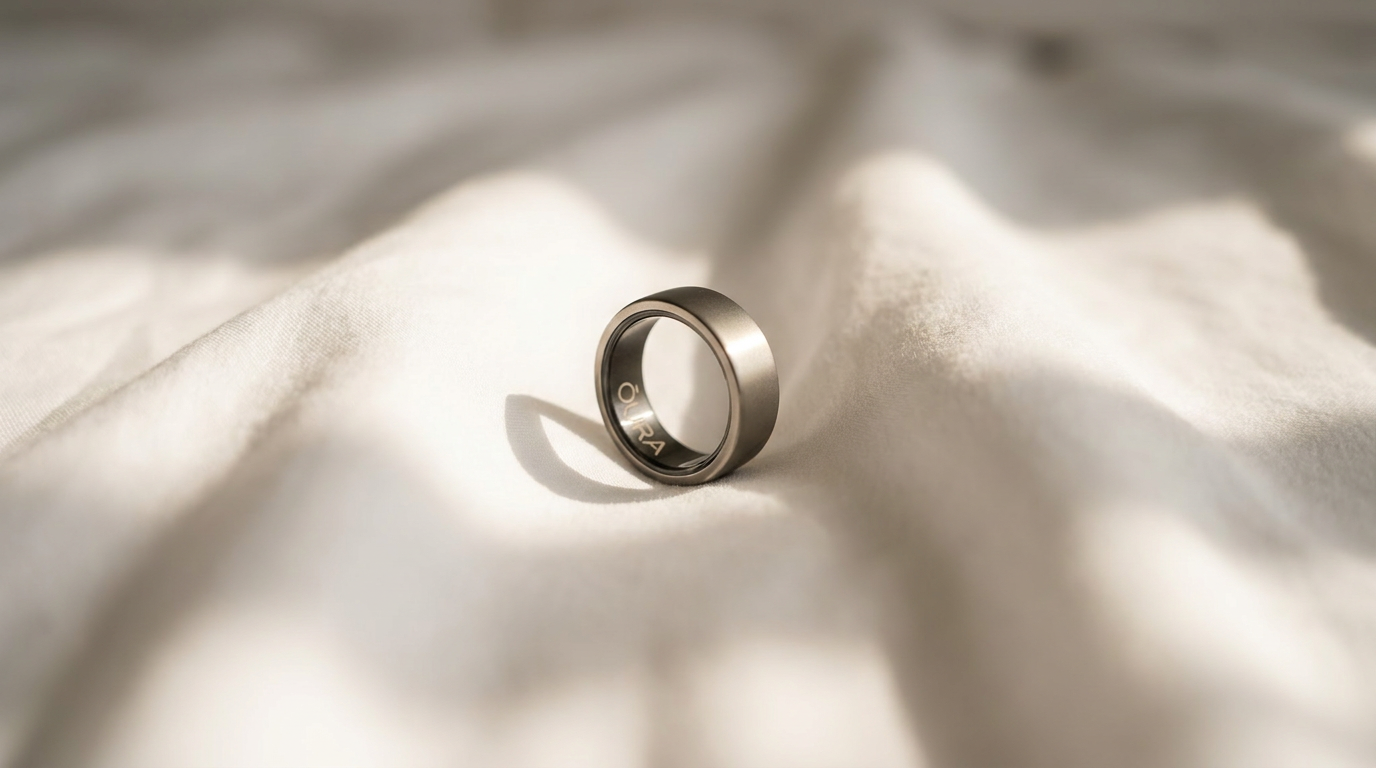
For millions of people, the nightly ritual of strapping a bulky smartwatch to their wrist has been replaced by something far more elegant: a titanium smart ring. As consumer health technology has miniaturized, smart rings have emerged as the preferred form factor for sleep tracking. Because fingers lack the thick tissue and hair of the wrist, and because rings naturally sit flush against the skin, they offer an ideal vantage point for capturing heart rate and blood oxygen data. But as the market explodes with new options, a critical question remains: are these tiny devices actually accurate?
To answer that question, we must look past the polished marketing materials and examine the underlying science. The latest generation of smart rings promises to decode the mysteries of our circadian rhythms, offering granular breakdowns of light, deep, and REM sleep. We analyzed recent clinical validation studies, peer-reviewed medical journals, and extensive real-world testing data to separate the genuine scientific breakthroughs from the algorithmic guesswork. The evidence reveals a landscape where consumer wearables have achieved remarkable milestones, yet still harbor significant, often unpublicized, blind spots.
When it comes to simply determining whether you are asleep or awake, the best smart rings are no longer toys. A 2025 systematic review conducted by researchers at the University at Buffalo analyzed data from 388 individuals, comparing the Oura Ring Gen 4 against medical-grade polysomnography (PSG)—the clinical gold standard that uses scalp electrodes to monitor brain waves. The results offered compelling evidence that top-tier consumer wearables have closed the gap with sleep labs for core duration metrics.[1]
The researchers found that the Oura Ring was statistically equivalent to polysomnography for measuring Total Sleep Time and Sleep Efficiency. The mean difference for Total Sleep Time was just under three minutes, meaning the ring was, on average, within a fraction of a percent of the clinical reading. Sleep efficiency—the percentage of time in bed actually spent asleep—differed by a mere 1.32 percent. For the average consumer looking to establish a reliable baseline of their nightly rest, these numbers confirm that premium smart rings provide highly dependable data.[1]

While detecting when you sleep is highly accurate, detecting how you sleep is a much harder mathematical problem. Consumer rings rely on movement (actigraphy) and heart rate variability to guess your sleep stage, whereas clinical labs measure actual brain activity. Independent studies show that while devices detect general sleep epochs with over 90 percent sensitivity, they exhibit significantly lower specificity when attempting to categorize those epochs into light, deep, and REM sleep. Users should view their nightly sleep stage charts as broad trends rather than absolute medical facts.[2]
Perhaps the most significant blind spot in the current wearable landscape is age. A landmark 2026 study published in the journal Sleep Advances by researchers at UMass Amherst revealed a stark demographic divide. The study assessed the validity of consumer sleep-tracking devices in older adults (aged 56 to 80) compared to young adults (aged 19 to 24). The findings demonstrated that while the algorithms work exceptionally well for younger physiology, they degrade significantly when applied to older populations.[2]
In older adults, the tested devices consistently underestimated total sleep time—sometimes by over an hour—and significantly overestimated deep sleep time. The researchers noted that the limits of agreement were generally much wider for older adults across all measured metrics, suggesting a severe lack of precision. The study concluded that older adults, as well as clinicians using consumer devices as a replacement for polysomnography, should use extreme caution when interpreting the results, highlighting an urgent need for age-calibrated algorithms.[2]

In older adults, the tested devices consistently underestimated total sleep time—sometimes by over an hour—and significantly overestimated deep sleep time.
Beyond clinical accuracy, the real-world utility of a smart ring depends heavily on its physical comfort, its software ecosystem, and its pricing model. The hardware itself is becoming increasingly commoditized, with most premium rings utilizing similar arrays of photoplethysmography (PPG) sensors, accelerometers, and skin temperature monitors. Consequently, the market has fractured into three distinct approaches, led by Oura, Samsung, and Ultrahuman, each catering to a different type of consumer.
The Oura Ring Gen 4 remains the editorial and scientific gold standard for the category. Reviewers consistently praise its highly refined, user-friendly app and its comprehensive 8-sensor array. It tracks everything from continuous blood oxygen saturation to subtle skin temperature deviations, which can reliably predict impending illness or accurately track menstrual cycles. For users who want the most polished, clinically validated experience available, Oura continues to dominate the conversation.[5][7]
However, Oura's business model requires a mandatory monthly subscription fee to unlock its most valuable insights, including daily readiness scores, detailed sleep staging, and long-term health trends. This recurring financial cost has become a significant point of friction for many consumers, opening the door for formidable competitors who offer straightforward one-time purchase models. The ongoing debate over data ownership—specifically whether users should have to continuously rent access to their own biometric data—has become a central theme in wearable technology reviews.[5][7]
The Samsung Galaxy Ring represents the tech giant's first major foray into the smart ring space, and it has been widely praised for eliminating the subscription paywall. Designed to integrate seamlessly with the Android ecosystem, it leverages Samsung Health's AI-powered Energy Score to provide daily readiness insights. Reviewers highlight its scratch-resistant titanium concave design and its innovative charging case, which holds multiple extra charges for travel.[4][6]
While the Galaxy Ring excels in hardware design and ecosystem integration, some real-world testers have noted minor accuracy quirks compared to established rivals. Several reviewers found that the ring occasionally missed chunks of final morning sleep, logging them as awake time and subsequently lowering their overall sleep scores. While it serves as an excellent, frictionless companion for Samsung users, it may lack the absolute biometric depth demanded by hardcore data enthusiasts.[4]

The Ultrahuman Ring Air targets the biohacker and fitness enthusiast demographic, offering deep metabolic and recovery insights without any recurring fees. Weighing as little as 2.4 grams, it is marketed as the world's lightest sleep-tracking wearable. The companion app is incredibly data-dense, offering unique features like circadian alignment recommendations, optimal caffeine consumption windows, and granular heart rate variability tracking to dictate daily training loads.[3][5]
Testers frequently highlight Ultrahuman's comfort during sleep, but note that its ultra-light design can feel slightly obtrusive or uncomfortable during heavy strength training or barbell work. Furthermore, the sheer volume of data presented in the app can initially overwhelm casual users who just want a simple sleep score. Nevertheless, for athletes who want unfiltered access to their biometrics, it represents a compelling alternative to the Oura ecosystem.[3]

If you are a young to middle-aged adult looking to optimize your rest, a premium smart ring offers a highly reliable baseline for your sleep habits and recovery trends. The data is accurate enough to drive meaningful lifestyle changes—such as highlighting the negative impact of late-night alcohol on your resting heart rate—even if the exact minutes of REM sleep remain an algorithmic approximation rather than a clinical certainty.
Ultimately, choosing the right device comes down to your personal tolerance for subscription fees, your preferred smartphone ecosystem, and your specific demographic profile. But the broader scientific and editorial consensus is abundantly clear: the era of the bulky, uncomfortable wrist-worn sleep tracker is officially over. Smart rings have successfully miniaturized the core functions of a sleep lab, bringing actionable, near-clinical health insights directly to your finger in a format that is genuinely comfortable to wear 24 hours a day.
How we got here
2015
Oura launches its first-generation smart ring on Kickstarter, pioneering the finger-worn health tracker category.
2022
The consumer smart ring market expands rapidly as miniaturized biosensors allow for clinical-grade heart rate and temperature tracking.
2024
Samsung officially enters the market with the Galaxy Ring, validating the form factor for mainstream Android users.
Jan 2026
A landmark UMass Amherst study reveals a significant 'age gap' in wearable accuracy, prompting calls for better algorithms for older adults.
Viewpoints in depth
Clinical Sleep Researchers
Scientists focused on the medical validity of consumer wearables.
For clinical researchers, the benchmark for any sleep tracker is polysomnography (PSG). While they acknowledge that modern smart rings are remarkably accurate at detecting basic sleep duration, they caution against taking 'sleep stage' graphs as gospel. Because consumer devices rely on movement and heart rate rather than brain waves, their ability to perfectly separate REM from deep sleep remains mathematically limited. Furthermore, researchers are increasingly vocal about algorithmic bias, noting that most devices are calibrated on younger, healthier populations, leading to significant accuracy drop-offs for older adults.
Wearable Tech Reviewers
Technology critics evaluating devices for everyday consumer utility.
Tech reviewers evaluate smart rings through the lens of friction and habit-building. From this perspective, a device's exact clinical precision matters less than its comfort, battery life, and the clarity of its software. Reviewers argue that if a ring is comfortable enough to wear every night and its data is consistent enough to highlight personal trends—like the impact of a late-night meal on resting heart rate—it has succeeded. They heavily weigh the user experience, often penalizing devices that hide basic health metrics behind mandatory monthly paywalls.
Biohackers and Athletes
Data-driven users focused on maximizing physical recovery and performance.
This camp views sleep not just as rest, but as a measurable performance metric. They gravitate toward devices that offer deep, unfiltered access to metrics like Heart Rate Variability (HRV) and skin temperature deviations. For these users, the value of a smart ring lies in its ability to dictate daily training loads—telling them when to push hard in the gym and when to take a rest day. They often prefer subscription-free platforms like Ultrahuman that provide granular, actionable insights without overly simplifying the data.
What we don't know
- Whether consumer smart rings can reliably detect or diagnose complex sleep disorders like sleep apnea without clinical oversight.
- How quickly manufacturers will update their algorithms to close the accuracy gap for older adults.
- Whether the long-term use of sleep trackers improves actual health outcomes or simply increases user anxiety about sleep quality.
Key terms
- Polysomnography (PSG)
- The medical gold standard for sleep studies, using scalp electrodes to measure brain waves, blood oxygen, and heart rate.
- Heart Rate Variability (HRV)
- The variation in time between consecutive heartbeats, used by wearables as a key indicator of physical recovery and stress.
- Sleep Epoch
- A standard 30-second window of time used by sleep researchers and algorithms to categorize the specific stage of sleep a person is in.
- SpO2
- An estimate of blood oxygen saturation levels, measured by shining infrared light through the skin to detect potential breathing issues during sleep.
Frequently asked
Do I need to pay a monthly subscription to use a smart ring?
It depends on the brand. The Oura Ring requires a monthly membership for full insights, while the Samsung Galaxy Ring and Ultrahuman Ring Air provide all data without recurring fees.
Are smart rings as accurate as wrist-worn fitness trackers?
Yes, and often better for sleep. Because fingers have strong pulse signals and rings fit snugly, they frequently outperform smartwatches in tracking nighttime heart rate and blood oxygen.
Can a smart ring accurately track my sleep stages?
They are highly accurate at detecting when you fall asleep and wake up, but separating light, deep, and REM sleep remains an educated guess compared to clinical brain-wave monitoring.
Do these devices work equally well for everyone?
No. Recent clinical studies show that consumer sleep trackers are significantly less accurate for older adults, often underestimating their total sleep time.
Sources
Source coverage
7 outlets
3 viewpoints surfaced







[1]Sleep Science SpaceClinical Sleep Researchers
Consumer Wearables Reach Medical-Grade Accuracy: 2025 Systematic Review
Read on Sleep Science Space →[2]Sleep AdvancesClinical Sleep Researchers
Performance evaluation of consumer sleep-tracking wearables and nearables in healthy young and older adults
Read on Sleep Advances →[3]Garage Gym ReviewsSubscription Skeptics
Ultrahuman Ring AIR Review
Read on Garage Gym Reviews →[4]Runner's WorldSubscription Skeptics
Samsung Galaxy Ring review: I trained for an ultra with it
Read on Runner's World →[5]TechRadarWearable Tech Reviewers
Best smart ring 2026: the top sleep and fitness trackers
Read on TechRadar →[6]PCMagWearable Tech Reviewers
The Best Smart Rings for 2026
Read on PCMag →[7]The Consumers GuideWearable Tech Reviewers
The Best Sleep Tracker Rings of 2026: Our Top Picks Tested
Read on The Consumers Guide →
Every angle. Every day.
Get shopping stories with full source coverage and perspective breakdowns delivered to your inbox.