
The Economic Stakes of the Strait of Hormuz Crisis and the Threat of U.S. Tolls
As Iran claims to have closed the Strait of Hormuz and President Trump threatens U.S. tolls, global energy markets face a potential supply shock that could push oil to $200 a barrel and complicate the Federal Reserve's inflation fight.
By Factlen Editorial Team
- U.S. Administration
- Asserts its role as the guarantor of Middle East maritime security and demands compliance with the 60-day ceasefire.
- Iranian Military Command
- Views the closure as a legitimate response to ongoing regional hostilities and perceived U.S. treaty violations.
- Global Energy Markets
- Focused on the catastrophic supply shock and price spikes that a prolonged closure or toll system would trigger.
- Central Bankers & Economists
- Concerned that an energy-driven inflation spike will force higher interest rates and risk a global recession.
What's not represented
- · Shipping and logistics companies facing soaring insurance premiums
- · Oil-importing developing nations disproportionately affected by price spikes
Why this matters
The Strait of Hormuz is the world's most critical energy chokepoint. A prolonged closure or the introduction of unprecedented maritime tolls would send global oil and gas prices skyrocketing, directly increasing the cost of fuel, goods, and borrowing for consumers worldwide.
Key points
- Iran claims to have closed the Strait of Hormuz, citing U.S. and Israeli breaches of a 60-day interim peace deal.
- U.S. Central Command disputes the closure, stating that millions of barrels of oil successfully transited the waterway on Saturday.
- President Trump threatened to impose U.S. tolls on the Strait if a final diplomatic agreement is not reached within 60 days.
- Analysts warn a prolonged closure could push Brent crude to $200 a barrel and trigger a global recession.
- The energy shock complicates the Federal Reserve's inflation fight, as U.S. inflation recently accelerated to 4.2%.
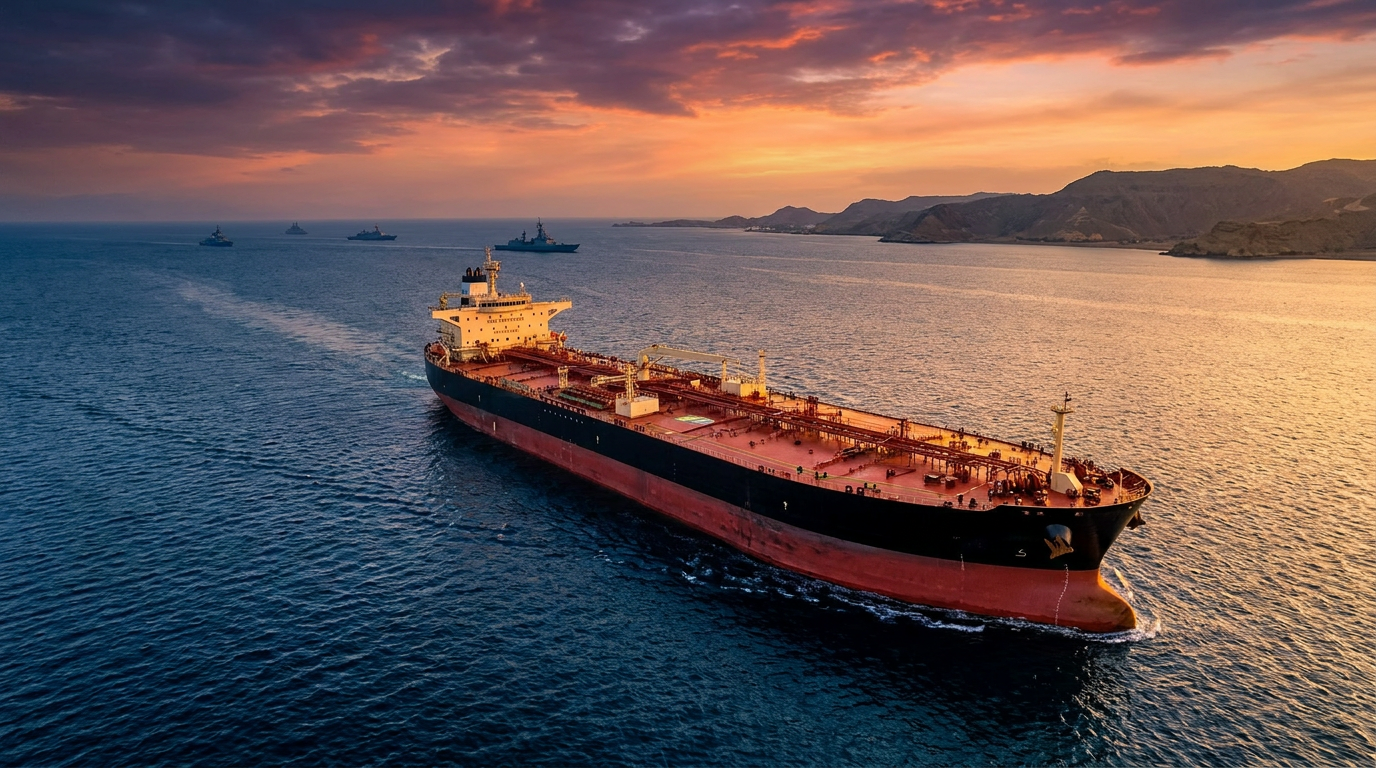
The global economy is bracing for a historic supply shock as the geopolitical standoff over the Strait of Hormuz escalates. On Saturday, Iran's joint military command announced it had closed the vital waterway in response to ongoing Israeli military operations in Lebanon, accusing the United States of breaching its commitments under a fragile new interim peace deal.[2]
The announcement immediately threw global energy markets into uncertainty. The 60-day ceasefire agreement, signed just days prior, explicitly required the Strait to remain open and toll-free to allow the resumption of commercial shipping and the stabilization of oil supplies.[1]
In response to Tehran's declaration, U.S. President Donald Trump issued a stark ultimatum. Taking to social media, Trump warned that if a final diplomatic agreement is not reached within the 60-day window, the United States may begin imposing its own tolls on vessels transiting the Strait.[1]
Trump argued that such fees would serve as reimbursement for the U.S. acting as the "Guardian Angel" of the Middle East, covering past, present, and future security costs. He emphasized that no other nation would be permitted to collect tolls during or after the ceasefire period.[1]

However, the reality on the water remains heavily contested. U.S. Central Command (CENTCOM) swiftly disputed Iran's claims of a closure, stating that traffic continues to flow and that U.S. forces are actively monitoring the corridor to ensure compliance.[2]
"Iran does not control the Strait of Hormuz," a CENTCOM spokesperson affirmed, noting that dozens of merchant ships carrying more than 17 million barrels of oil had successfully transited the waterway on Saturday alone.[2]
Despite CENTCOM's assurances, the mere threat of a prolonged closure—or the unprecedented introduction of U.S. maritime tolls—has severe implications for the global economy. The Strait of Hormuz is widely considered the world's most critical energy chokepoint, with few viable alternative routes.[4][7]
Despite CENTCOM's assurances, the mere threat of a prolonged closure—or the unprecedented introduction of U.S.
More than 11 million barrels per day of crude and condensate production rely on the route, alongside roughly 20% of the world's liquefied natural gas (LNG) supply. Energy intelligence firm Wood Mackenzie warns that a sustained disruption here poses the single greatest threat to global energy markets in decades.[4]
In a worst-case scenario where the Strait remains largely closed through the end of 2026, Wood Mackenzie projects that Brent crude prices could approach $200 per barrel. Such a price spike would likely trigger a global recession, dragging global GDP growth below 2% and causing permanent economic scarring.[4]
Even a temporary disruption threatens to undo recent market relief. Just days ago, oil prices had tumbled to around $82 a barrel, driven by market optimism that the U.S.-Iran memorandum of understanding would restore confidence in energy supply chains and clear the backlog of stranded vessels.[5]
The timing of this energy shock is particularly perilous for the U.S. economy, which is already grappling with stubborn inflation. The U.S. annual inflation rate accelerated to 4.2% in May 2026, driven largely by a 17.9% surge in energy costs stemming from the broader Middle East conflict.[8]

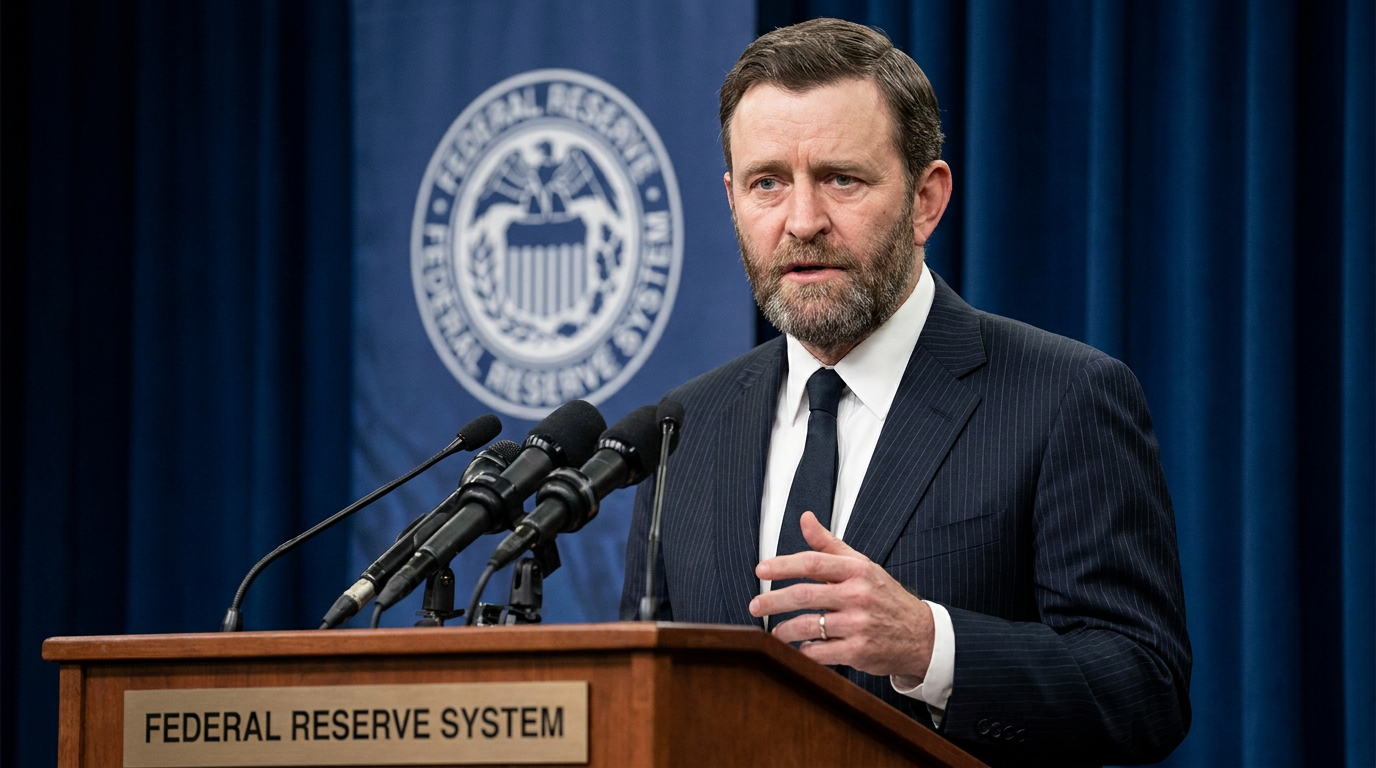
This inflationary pressure has forced the Federal Reserve to maintain a restrictive monetary policy. At their June 17 meeting, the Federal Open Market Committee, led by new Chair Kevin Warsh, voted unanimously to hold the federal funds rate steady at 3.50% to 3.75%.[6]
The Fed's updated economic projections reflect a growing unease with price stability. Policymakers raised their forecast for core personal consumption expenditures (PCE) inflation—the Fed's preferred gauge—to 3.3% for 2026, up significantly from their March estimate of 2.7%.[3][6]
Chair Warsh has signaled a hyper-focus on inflation over labor market concerns, noting that supply-driven price increases in sectors like energy are keeping inflation elevated relative to the central bank's 2% objective.[6]

How we got here
May 2026
U.S. inflation accelerates to 4.2%, driven by a 17.9% surge in energy costs.
June 15, 2026
Oil prices drop to $82 a barrel following the announcement of a U.S.-Iran interim peace deal.
June 17, 2026
The Federal Reserve holds interest rates at 3.50-3.75% and raises its inflation forecasts.
June 20, 2026
Iran claims to close the Strait of Hormuz; President Trump threatens U.S. tolls if the peace deal fails.
Viewpoints in depth
The U.S. Administration's View
The U.S. asserts its role as the guarantor of Middle East maritime security and demands compliance with the 60-day ceasefire.
President Trump's threat to impose tolls represents a significant shift in U.S. maritime policy. The administration argues that the United States has acted as the 'Guardian Angel' of the region for decades, bearing the financial and military burden of keeping the Strait open. By floating the idea of tolls, the U.S. is signaling that it will no longer provide this security umbrella for free if diplomatic efforts fail, while simultaneously warning Iran that any attempt by Tehran to collect its own fees will be blocked.
Iran's Military Command
Tehran views the closure as a legitimate response to ongoing regional hostilities and perceived U.S. treaty violations.
Iranian officials argue that the interim peace deal was contingent on a comprehensive cessation of hostilities, including Israeli operations in Lebanon. From Tehran's perspective, the continued fighting constitutes a 'clear breach' of the agreement by the U.S. and its allies. By claiming to close the Strait, Iran is leveraging its geographic control over the chokepoint to pressure the international community, demonstrating that it can unilaterally choke off global energy supplies if its security demands are not met.
Macroeconomists & Central Banks
Financial policymakers fear the geopolitical standoff will trigger an unmanageable inflationary shock.
For the Federal Reserve and global central banks, the Strait of Hormuz crisis is a worst-case scenario. The U.S. economy is already battling 4.2% inflation, driven largely by energy costs. Economists warn that if oil spikes toward $200 a barrel, it will bleed into the prices of all transported goods and services. This would force the Fed, under new Chair Kevin Warsh, to abandon any plans for rate cuts and instead resume aggressive tightening, significantly raising the risk of a severe global recession.
What we don't know
- Whether the U.S. military would actively escort commercial vessels or engage Iranian forces if Tehran attempts to physically block the Strait.
- How the United States would practically enforce and collect maritime tolls from international shipping companies.
- Whether the 60-day diplomatic window will yield a permanent agreement or collapse into renewed conflict.
Key terms
- Strait of Hormuz
- A narrow, strategically vital waterway between the Persian Gulf and the Gulf of Oman, through which a massive portion of the world's oil and LNG passes.
- Brent Crude
- The leading global price benchmark for Atlantic basin crude oils, used to price two-thirds of the world's internationally traded crude oil supplies.
- Core PCE Inflation
- The Personal Consumption Expenditures price index, excluding volatile food and energy prices; it is the Federal Reserve's preferred measure of inflation.
- Federal Funds Rate
- The target interest rate set by the Federal Reserve at which commercial banks borrow and lend their excess reserves to each other overnight.
Frequently asked
Why did Iran claim to close the Strait of Hormuz?
Iran's military cited ongoing Israeli military operations in Lebanon, accusing the U.S. of breaching its commitments under a recent interim peace deal.
What did President Trump threaten to do?
Trump warned that if a final peace deal isn't reached in 60 days, the U.S. may impose its own tolls on ships passing through the Strait to recoup security costs.
Is the Strait actually closed right now?
U.S. Central Command disputes Iran's claim, stating that merchant traffic continues to flow and that Iran does not control the waterway.
How would a closure affect the global economy?
Analysts warn a prolonged closure could push oil prices to $200 a barrel, triggering a global recession and severely worsening inflation.
Sources
Source coverage
8 outlets
4 viewpoints surfaced








[1]ForbesU.S. Administration
Trump Says U.S. May Impose Tolls In Strait Of Hormuz If Peace Deal Fails
Read on Forbes →[2]NPRIranian Military Command
Iran claims Hormuz closure, U.S. says ships still passing
Read on NPR →[3]BloombergCentral Bankers & Economists
Fed’s Favorite Gauge Is Seen Showing Faster Inflation
Read on Bloomberg →[4]Wood MackenzieGlobal Energy Markets
Strait of Hormuz closure risks greatest global energy supply shock in decades
Read on Wood Mackenzie →[5]Al JazeeraGlobal Energy Markets
Oil prices continue slide amid hopes for peace, opening of Strait of Hormuz
Read on Al Jazeera →[6]J.P. Morgan Asset ManagementCentral Bankers & Economists
FOMC Statement: June 2026
Read on J.P. Morgan Asset Management →[7]Chatham HouseGlobal Energy Markets
The next Strait of Hormuz crisis could be even worse
Read on Chatham House →[8]Trading EconomicsCentral Bankers & Economists
United States Inflation Rate
Read on Trading Economics →


Every angle. Every day.
Get business stories with full source coverage and perspective breakdowns delivered to your inbox.