
Fed Signals 2026 Rate Hikes as Supply Shocks Drive Sticky Inflation
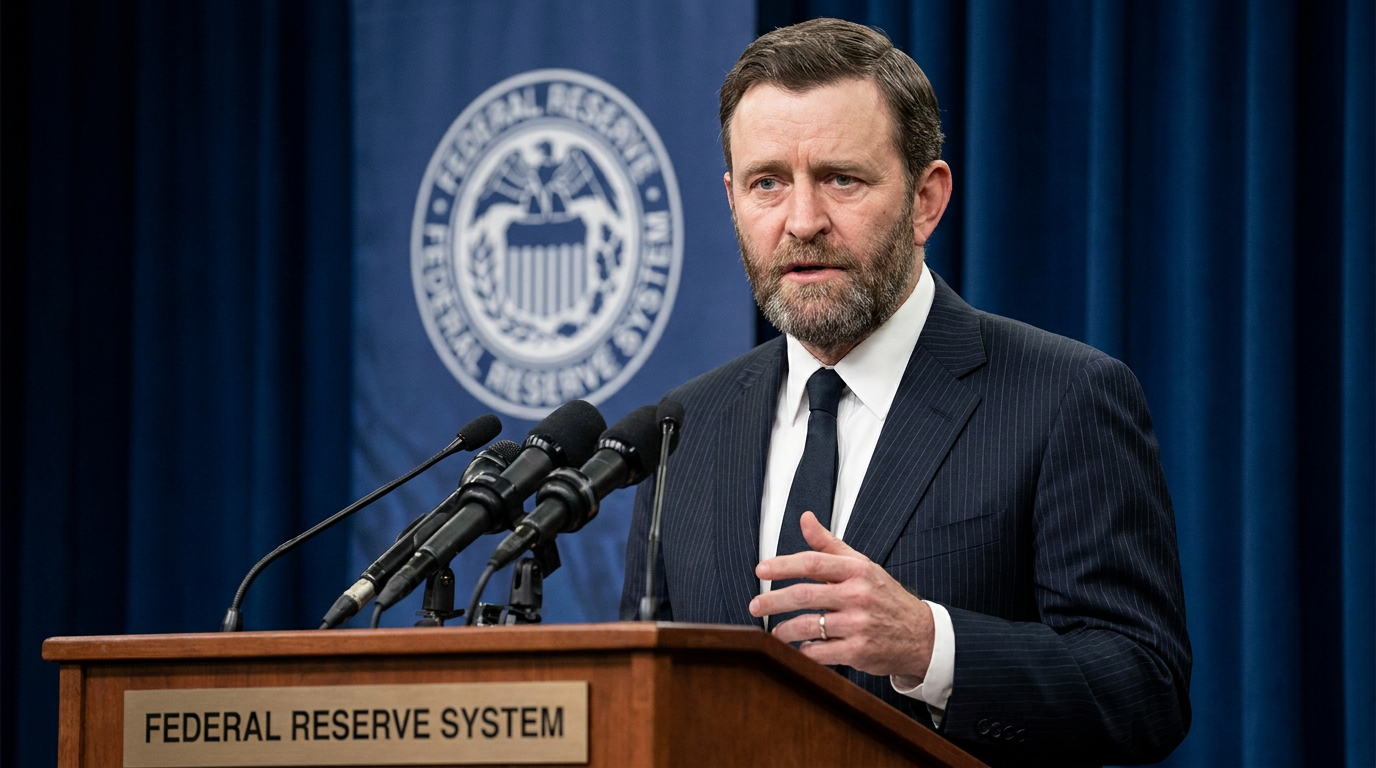
The Federal Reserve held interest rates steady but shocked markets by projecting rate hikes later in 2026, as new Chair Kevin Warsh confronts sticky inflation driven by geopolitical and climate supply shocks.
By Factlen Editorial Team
- Monetary Policymakers
- Central bankers prioritizing the eradication of inflation over maximizing employment.
- Market Analysts
- Financial professionals bracing for a prolonged period of restrictive credit and stagflation risks.
- Supply Chain Monitors
- Commodity experts emphasizing that physical bottlenecks are the true drivers of current price instability.
What's not represented
- · Consumer Advocates
- · Emerging Market Central Banks
Why this matters
A return to rate hikes means higher borrowing costs for mortgages, auto loans, and corporate debt, signaling that the era of elevated inflation is far from over. As the Fed prioritizes price stability over economic growth, consumers and businesses must prepare for a prolonged period of restrictive credit and a heightened risk of recession.
Key points
- The Federal Reserve held its benchmark interest rate steady at 3.50% to 3.75% during its June 2026 meeting.
- Policymakers updated their projections to signal at least one rate hike by the end of 2026, reversing earlier expectations of cuts.
- The Fed significantly raised its 2026 PCE inflation forecast to 3.6%, acknowledging that price pressures remain stubbornly high.
- New Fed Chair Kevin Warsh emphasized a strict focus on eradicating inflation, prioritizing price stability over labor market growth.
- Global supply shocks, including the Strait of Hormuz closure and a looming Super El Niño, are heavily contributing to the inflationary pressure.
The Federal Reserve has delivered a stark reality check to global markets. At its June 2026 meeting, the central bank held its benchmark interest rate steady at 3.50% to 3.75%, but the accompanying economic projections signaled a dramatic hawkish pivot.[1][2]
The updated "dot plot"—a chart recording each Fed official's projection for future interest rates—revealed that policymakers now expect the median federal funds rate to reach 3.8% by the end of 2026. This implies at least one rate hike is coming this year, a sharp reversal from March when the consensus pointed toward rate cuts.[1][2]
The catalyst for this shift is a stubbornly persistent rise in consumer prices. The Fed significantly revised its forecast for Personal Consumption Expenditures (PCE) inflation—its preferred gauge—raising the 2026 year-end estimate from 2.7% to a troubling 3.6%.[1][4]

Core PCE, which strips out volatile food and energy prices to reveal underlying inflation trends, was also marked up to 3.3%. This indicates that inflationary pressures are deeply ingrained in the broader economy, moving beyond temporary supply chain hiccups into services and wages.[2][3]
The June meeting also marked the debut of newly appointed Fed Chair Kevin Warsh, who used his first press conference to establish a resolute, inflation-first mandate. Warsh mentioned inflation nineteen times during his remarks, while referencing the labor market only four times, signaling that price stability will take absolute precedence over maximizing employment.[3]
"Inflation has been running well ahead of the Fed's long-stated inflation goal of 2%," Warsh noted, emphasizing that the central bank's blinders are off regarding the stickiness of current price pressures. This represents a distinct rhetorical shift from his predecessor, prioritizing aggressive containment over a "soft landing."[3]
The mechanism driving this renewed inflation is a complex web of global supply shocks, rather than just overheated domestic demand. Central bankers are increasingly forced to navigate crises that cannot be solved by simply raising borrowing costs.[8]
The mechanism driving this renewed inflation is a complex web of global supply shocks, rather than just overheated domestic demand.
Foremost among these is the severe disruption in global energy markets stemming from the 2026 Iran war. The effective closure of the Strait of Hormuz—a vital maritime chokepoint—has stranded roughly 20% of the world's daily oil supply, sending Brent crude prices soaring earlier in the year.[5]

While a preliminary ceasefire framework between the U.S. and Iran has recently brought oil prices down from their wartime peak of $120 per barrel to around $80, the physical supply destruction has already occurred. U.S. crude inventories have plummeted, and the market remains highly vulnerable to any breakdown in peace talks.[5][9]
Furthermore, political rhetoric continues to inject volatility into energy logistics. Former President Donald Trump recently suggested that the U.S. might impose tolls on vessels transiting the Strait if a comprehensive peace deal fails, a move that would permanently elevate shipping costs and, by extension, global fuel prices.[6]
Compounding the energy shock is a looming agricultural crisis driven by a "Super El Niño" climate pattern. The World Meteorological Organization has assigned a high probability to a severe warming of the Pacific Ocean, which historically disrupts global weather and decimates crop yields.[7][8]
This climatic shift threatens to trigger rolling waves of commodity-driven inflation. Extreme heat and altered rainfall patterns are already impacting major agricultural producers, with Australian wheat production expected to fall sharply and South Asian sugar yields highly exposed.[8]

The agricultural squeeze is further exacerbated by the Hormuz closure, which has trapped roughly a third of the world's urea fertilizer supply. With fertilizer prices doubling, the cost of food production is surging precisely as extreme weather threatens the physical harvest.[8]
For stock traders and bond investors, this confluence of risks—higher for longer interest rates, energy volatility, and climate-driven food inflation—requires a total reassessment of 2026 portfolios. Treasury yields spiked across the curve following the Fed's announcement, reflecting the new reality of sustained restrictive monetary policy.[3][8]

The broader economic consequence is a renewed tilt toward stagflation: a toxic combination of stagnant economic growth and high inflation. The Fed slightly downgraded its 2026 U.S. GDP growth forecast to 2.2%, acknowledging the drag that higher borrowing costs will exert on corporate expansion and consumer spending.[1][8]
Ultimately, the Federal Reserve is attempting to use a blunt instrument—interest rates—to suppress demand enough to offset these massive global supply constraints. Whether this strategy can successfully anchor inflation expectations without triggering a severe recession remains the defining economic question of 2026.[2][3]
How we got here
Feb 2026
The Iran war escalates, effectively closing the Strait of Hormuz and disrupting 20% of global oil supplies.
Mar 2026
The Federal Reserve projects multiple rate cuts for the year, underestimating the stickiness of global inflation.
Apr 2026
Brent crude oil prices peak near $120 per barrel amid massive supply destruction and geopolitical uncertainty.
Jun 11, 2026
The World Meteorological Organization warns of a potentially historic 'Super El Niño' threatening global agriculture.
Jun 17, 2026
The Fed holds rates steady but pivots hawkishly, raising inflation forecasts and signaling rate hikes for late 2026.
Viewpoints in depth
The Federal Reserve's Stance
Central bankers are prioritizing the eradication of inflation over maximizing employment.
Under new Chair Kevin Warsh, the Federal Reserve has adopted an unambiguously hawkish posture. Policymakers argue that failing to contain inflation now will lead to entrenched price increases that are far more damaging in the long run. By signaling rate hikes despite a slowing economy, the Fed is demonstrating a willingness to tolerate higher unemployment and slower GDP growth to ensure that the 2% inflation target is ultimately met.
Market Analysts & Investors
Financial markets are bracing for a prolonged period of restrictive credit and stagflation risks.
Wall Street analysts are rapidly reassessing their 2026 outlooks, moving away from expectations of a 'soft landing' toward preparations for stagflation. Investors point out that the Fed's primary tool—interest rates—cannot drill for more oil, open maritime chokepoints, or change the weather. Consequently, there is growing concern that the Fed might overtighten monetary policy, crushing consumer demand without actually solving the underlying supply-side drivers of inflation.
Global Supply Chain Monitors
Commodity experts emphasize that physical bottlenecks are the true drivers of current price instability.
Logistics and climate experts argue that macroeconomic policy is secondary to physical realities on the ground. The effective closure of the Strait of Hormuz has not only stranded 20% of global oil but also trapped a third of the world's urea fertilizer. Combined with the severe agricultural disruptions anticipated from the 'Super El Niño,' these monitors warn that food and energy prices will remain highly volatile regardless of the Federal Reserve's interest rate decisions.
What we don't know
- Whether the preliminary ceasefire framework between the U.S. and Iran will hold and permanently reopen the Strait of Hormuz.
- Exactly how severely the incoming Super El Niño will impact global agricultural yields and food prices.
- If the Federal Reserve's restrictive monetary policy will trigger a severe economic recession before inflation is fully contained.
Key terms
- Dot Plot
- A chart published quarterly by the Federal Reserve showing where each official expects interest rates to be in the future.
- Core PCE
- The Personal Consumption Expenditures price index excluding volatile food and energy prices; it is the Federal Reserve's preferred inflation gauge.
- Stagflation
- An economic condition characterized by a toxic combination of stagnant economic growth, high unemployment, and high inflation.
- Strait of Hormuz
- A narrow maritime chokepoint between the Persian Gulf and the Gulf of Oman through which roughly 20% of the world's oil supply passes.
- El Niño
- A periodic climate pattern characterized by the warming of surface waters in the eastern Pacific Ocean, which can severely disrupt global weather and agriculture.
Frequently asked
Did the Federal Reserve raise interest rates in June 2026?
No, the Fed held the benchmark federal funds rate steady at 3.50% to 3.75%. However, they signaled that rate hikes are likely later in the year.
Why is the Fed projecting more rate hikes?
Inflation has proven much stickier than expected. The Fed raised its 2026 Personal Consumption Expenditures (PCE) inflation forecast from 2.7% to 3.6%, prompting a more aggressive monetary stance.
How does the Strait of Hormuz affect US inflation?
The Strait of Hormuz is a critical maritime chokepoint. Its closure during the 2026 Iran war disrupted 20% of global oil supplies and trapped crucial fertilizer shipments, driving up energy and food production costs worldwide.
What is a 'Super El Niño' and why does it matter?
A 'Super El Niño' is a severe warming of the Pacific Ocean that disrupts global weather patterns. It threatens to cause extreme droughts and floods in key agricultural regions, which could decimate crop yields and trigger a wave of food inflation.
Sources
Source coverage
9 outlets
3 viewpoints surfaced








[1]FXStreetMonetary Policymakers
Fed raises 2026 interest rate forecast to 3.8%, lifts PCE inflation projections
Read on FXStreet →[2]TradingKeyMonetary Policymakers
June Fed Decision Delivered: Rates Held Unchanged but Dot Plot Significantly Raised, 9 Back Continued Rate Hikes in 2026
Read on TradingKey →[3]RBC EconomicsMonetary Policymakers
FOMC Recap: Warsh ushers in new era at the Fed
Read on RBC Economics →[4]BloombergMarket Analysts
Fed’s Favorite Gauge Is Seen Showing Faster Inflation
Read on Bloomberg →[5]Brookings InstitutionSupply Chain Monitors
From chokepoint to crisis: The Strait of Hormuz and global oil markets
Read on Brookings Institution →[6]ForbesSupply Chain Monitors
Trump Says U.S. May Impose Tolls In Strait Of Hormuz If Peace Deal Fails
Read on Forbes →[7]Smithsonian MagazineSupply Chain Monitors
The 'Super' El Niño Has Arrived. Here's How It Might Affect the World's Weather and Economy
Read on Smithsonian Magazine →A Stock Trader’s Guide to Navigating a Rare ‘Super El Niño’
Read on Bloomberg →[9]Al JazeeraSupply Chain Monitors
Oil prices continue slide amid hopes for peace, opening of Strait of Hormuz
Read on Al Jazeera →
Every angle. Every day.
Get business stories with full source coverage and perspective breakdowns delivered to your inbox.