
How to Choose an E-Bike in 2026: The Ultimate Buyer's Guide
As e-bikes mature into sophisticated transportation tools, new 2026 safety laws and advanced motor technologies make understanding the spec sheet essential before buying.
By Factlen Editorial Team
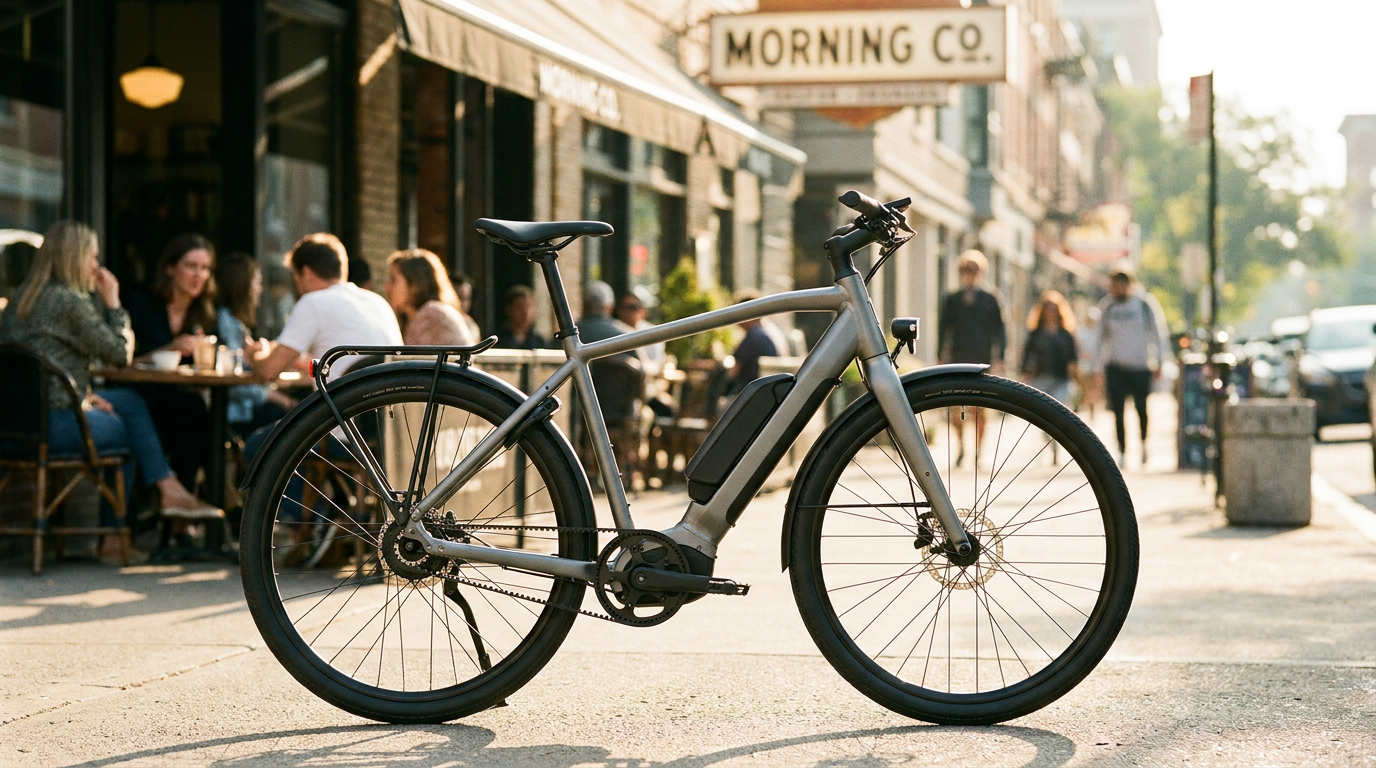
- Urban Commuters
- Prioritize reliability, range, safety certifications, and cargo capacity for daily transit.
- Performance & Trail Riders
- Focus on mid-drive motors, torque sensors, and natural ride feel for fitness and off-road capability.
- Safety Regulators
- Focus strictly on fire safety, UL certifications, and keeping high-speed uncertified bikes off pedestrian paths.
What's not represented
- · Traditional acoustic bicycle purists who oppose e-bikes on shared trails.
- · Delivery gig workers who rely on budget e-bikes and face challenges affording UL-certified models.
Why this matters
Buying the wrong e-bike in 2026 can mean wasting thousands on a vehicle that doesn't fit your needs, or worse, purchasing an uncertified battery that poses a severe fire hazard and voids your home insurance.
Key points
- Mid-drive motors leverage the bike's gears for better hill climbing, while hub motors offer simpler, budget-friendly propulsion.
- Torque sensors measure pedaling force for a natural ride, whereas cadence sensors act as basic on/off switches.
- New 2026 laws in major jurisdictions mandate UL 2849 system-level certification to prevent lithium-ion battery fires.
- The US uses a three-class system to regulate e-bike speeds and throttle usage on public roads and trails.
- Real-world battery range is determined by watt-hours (Wh), rider weight, terrain, and the selected assistance level.
The e-bike market in 2026 has reached a definitive state of maturity. No longer clunky novelties with bolted-on batteries and exposed wiring, today's electric bicycles are sophisticated, purpose-built transportation tools. They have become genuine car replacements for urban commuters and essential gear for outdoor enthusiasts. But with this rapid technological evolution comes a steep learning curve for consumers. The market is currently flooded with hundreds of brands, ranging from premium European manufacturers to direct-to-consumer internet startups. For the uninitiated, buying an e-bike requires navigating a minefield of technical specifications, safety certifications, and local legal classifications.[1]
For first-time buyers, stepping onto a showroom floor or browsing an online retailer can feel like taking a pop quiz in electrical engineering. Volts, watt-hours, torque sensors, and mid-drive motors dominate the marketing materials and spec sheets. Understanding these terms is no longer optional; it is the only way to ensure you are buying a vehicle that actually fits your lifestyle. Making the wrong choice isn't just a matter of an uncomfortable ride or wasted money. In 2026, purchasing the wrong e-bike can mean buying a vehicle that is legally restricted from your local trails, or worse, acquiring a fire hazard that voids your home insurance policy.[7]
The most fundamental decision a buyer must make is the type of motor powering the bike. The motor dictates how the bicycle handles, how it climbs hills, and how it delivers its power to the pavement. The two dominant architectures in the industry are hub motors and mid-drive motors. While both serve the same ultimate purpose of propelling the rider forward, their engineering philosophies and real-world riding characteristics are vastly different. Choosing between them is the first step in narrowing down the overwhelming array of options.[2][5]
Hub motors represent the older, simpler, and more affordable technology. Housed entirely within the center of the front or rear wheel, they operate completely independently of the bicycle's mechanical gears. When a hub motor engages, it effectively pushes or pulls the wheel directly. Because they are relatively cheap to manufacture and easy to install, hub motors are the standard choice for budget-friendly e-bikes, folding models, and electric mopeds designed for flat city commuting. They are highly reliable and require very little maintenance because they do not add stress to the bike's chain or derailleurs.[2][5]
While hub motors are excellent for flat terrain and riders on a strict budget, they have distinct drawbacks. Because the heavy motor is concentrated at the center of the wheel, it alters the bike's center of gravity, often making the rear end feel sluggish and heavy. Furthermore, because hub motors operate independently of the drivetrain, they cannot leverage the bike's mechanical gears. If you encounter a steep, sustained climb, a hub motor must rely entirely on its raw electrical power to push you up the hill, which can quickly drain the battery and cause the motor to overheat.[5]

Mid-drive motors, by contrast, are mounted directly at the bike's bottom bracket, nestled right between the pedals. This central placement keeps the weight low and perfectly balanced, preserving the natural, agile handling characteristics of a traditional acoustic bicycle. Because the weight is not hanging off the rear wheel, mid-drive e-bikes are much easier to maneuver over curbs, potholes, and technical off-road terrain. This makes them the undisputed standard for electric mountain bikes and high-end urban commuters who demand precision handling.[2][5]
More importantly, mid-drive motors deliver their power directly into the bike's drivetrain. When the rider shifts into an easier gear to tackle a steep hill, the motor benefits from that exact same mechanical advantage. This synergy between human effort, mechanical gearing, and electrical power makes mid-drives incredibly efficient. They can conquer massive inclines without overheating and generally extract much more range out of the same size battery compared to a hub motor. The trade-off is a higher upfront cost and increased wear and tear on the bike's chain and cassette.[5][7]
But a motor is only as smart as the sensors controlling it. The sensor acts as the brain of the operation, determining exactly when and how much electrical power the motor should unleash onto the drivetrain. The e-bike industry utilizes two primary types of sensors to measure rider input: cadence sensors and torque sensors. Understanding the fundamental engineering difference between these two technologies is arguably the single most important factor in determining how natural, intuitive, and enjoyable the e-bike will feel to ride on a daily basis.[2]
Cadence sensors are essentially basic on/off switches. They use a ring of magnets to detect whether the pedals are turning. If the pedals are moving, the motor kicks in at a predetermined power level; if the pedals stop, the motor cuts out. This can result in a jerky, moped-like sensation where the bike feels like it is running away from the rider. You can lightly spin the pedals without applying any real effort, and the motor will still do all the work. While some riders appreciate this effortless cruising, it feels entirely disconnected from the traditional cycling experience.[2][7]
They use a ring of magnets to detect whether the pedals are turning.
Torque sensors offer a vastly superior, albeit more expensive, riding experience. A torque sensor physically measures the exact amount of force the rider is applying to the pedals. A tiny component inside the bottom bracket deforms slightly under the rider's pressure, sending real-time, microsecond data to the motor controller. If you pedal lightly, the motor provides a gentle, subtle hum of assistance. If you stand up and mash the pedals to beat a changing traffic light, the motor instantly surges with proportional, aggressive power.[2][5]

Riders universally describe torque sensors as giving them "superman legs"—a seamless, intuitive amplification of their own natural physical effort. Because the power delivery is perfectly matched to the rider's input, torque sensor-equipped bikes are much easier to control at low speeds and in tight traffic. They also conserve battery life significantly better than cadence sensors, as the motor only outputs maximum power when the rider genuinely demands it. For anyone looking to maintain the authentic feel of riding a bicycle, a torque sensor is a non-negotiable feature.[5]
Powering these sophisticated motor systems is the battery, whose true capacity is measured in watt-hours (Wh). While marketers often boast about high voltages or amp-hours, watt-hours represent the actual total energy pool available in the "tank." A 500Wh battery is generally considered the baseline standard for a reliable commuter bike, though cargo bikes and long-distance tourers often feature 750Wh or even dual-battery setups. However, buyers should be highly skeptical of manufacturer range claims, which are often calculated under unrealistic, perfectly flat, tailwind conditions.[7]
Real-world range fluctuates wildly based on a multitude of external factors. The rider's weight, the steepness of the terrain, tire pressure, and even the ambient outside temperature all play massive roles in how fast the battery drains. Most importantly, the level of motor assistance selected by the rider dictates efficiency. Riding in "Eco" mode might yield 60 miles of range, while blasting the bike in "Turbo" mode could drain the same battery in just 15 miles. Understanding watt-hours allows buyers to make apples-to-apples comparisons across different brands.[7]
However, in 2026, raw battery capacity has become entirely secondary to battery safety. The landscape of urban micromobility shifted dramatically over the past few years following a highly publicized wave of devastating lithium-ion battery fires. These catastrophic fires were almost exclusively caused by cheap, uncertified "grey market" imports featuring poorly constructed internal cells and mismatched chargers. When a low-quality lithium-ion battery is overcharged, punctured, or physically damaged, it can enter a dangerous state of thermal runaway—a violent, self-sustaining chemical fire that burns at extreme temperatures and cannot be easily extinguished by traditional firefighting means.[6][8]
In direct response to this escalating public safety crisis, sweeping new regulations have taken effect across the country. Landmark legislation, such as California's AB 544 and New York City's Local Law 39, now strictly mandates that all e-bikes sold within their jurisdictions must carry UL 2849 certification. This is a comprehensive, system-level safety standard that rigorously tests the battery, motor, controller, and charger together as a unified electrical system. It ensures that the components communicate safely, actively monitors cell temperatures, and prevents the specific electrical overloads that inevitably lead to thermal runaway.[3][6][8]

Buying an uncertified e-bike in 2026 is a massive liability. Beyond the severe, life-threatening fire risk to your home and family, uncertified bikes are increasingly being banned from apartment buildings, college campuses, and public transit networks. Furthermore, many insurance companies are now explicitly voiding renter's and homeowner's policies if a fire is traced back to an uncertified micromobility device. Consumers must actively look for the holographic UL certification sticker and verify it in the official database before making a purchase.[6][8]
Finally, buyers must navigate the legal classifications of e-bikes, which dictate exactly where the vehicle can be ridden. The United States relies on a standardized three-class system. Class 1 bikes are pedal-assist only, with the motor cutting off at 20 mph. Class 2 bikes include a throttle, allowing the rider to move without pedaling at all, also capped at 20 mph. Class 3 bikes are pedal-assist only but are allowed to reach higher speeds, with the motor cutting off at 28 mph.[4]
Internationally, the rules are often much stricter. In the European Union, the United Kingdom, and Australia, e-bikes are generally limited to a maximum continuous motor output of 250 watts and a top assisted speed of 25 km/h (15.5 mph). Throttles are largely illegal in these regions. Anything that exceeds these strict limits is legally classified as a moped or motorcycle, requiring formal vehicle registration, mandatory insurance, and a DOT-approved motorcycle helmet. Understanding your local laws is critical to avoiding heavy fines or vehicle impoundment.[4][7]

Ultimately, the best e-bike is the one perfectly tailored to the rider's specific daily mission. A throttle-equipped Class 2 hub-drive might be the ideal, budget-friendly solution for a sweaty commuter looking to arrive at the office in pristine condition. Conversely, a Class 1 mid-drive equipped with a highly sensitive torque sensor is the holy grail for a fitness enthusiast looking to tackle weekend mountain trails with a natural, amplified feel. There is no single "best" bike, only the right tool for the job.[1][7]
Industry experts universally recommend test-riding multiple motor and sensor configurations at a local shop before making a final purchase. A glossy online spec sheet simply cannot convey the subtle, physical difference between a jerky cadence sensor and a smooth torque sensor, nor can it guarantee that the frame geometry will fit your body comfortably. By prioritizing mandatory UL-certified safety standards, understanding the underlying mechanics of modern e-bike drivetrains, and buying from a reputable local dealer who can actually service the proprietary electronics, consumers can confidently and safely join the growing micromobility revolution.[1][7]
How we got here
Pre-2020
Early e-bikes are dominated by heavy, bolted-on hub motors and basic cadence sensors.
2020–2023
A pandemic-era micromobility boom floods the market with cheap, uncertified 'grey market' e-bikes.
2023–2024
A sharp rise in lithium-ion battery fires prompts cities like New York to draft emergency safety legislation.
Jan 2026
Strict new laws, including California's AB 544, take effect, mandating UL 2849 certification for all new e-bikes.
Viewpoints in depth
The Commuter's View
Prioritizes low maintenance, throttle options, and budget-friendly hub motors for getting from A to B without sweating.
For daily urban commuters, the primary goal of an e-bike is to replace a car trip without arriving at the office drenched in sweat. This camp often favors Class 2 hub-drive e-bikes equipped with throttles, allowing them to cruise effortlessly through traffic. They prioritize practical features like integrated lighting, heavy-duty cargo racks, and large watt-hour batteries over nuanced ride feel, viewing the bike strictly as a utilitarian transit tool.
The Enthusiast's View
Argues that mid-drive motors and torque sensors are essential for a natural cycling experience and proper weight distribution.
Cycling purists and mountain bikers view e-bikes as an extension of their own physical ability rather than a motorized scooter. This camp insists on mid-drive motors and highly sensitive torque sensors, which preserve the bike's natural center of gravity and provide a seamless 'superman legs' sensation. They are willing to pay a premium for systems that leverage the bike's mechanical gears, allowing them to tackle steep, technical off-road climbs that would cause a hub motor to overheat.
The Regulator's View
Focuses strictly on fire safety, UL 2849 compliance, and keeping high-speed, uncertified bikes off pedestrian paths.
Lawmakers and fire safety officials are primarily concerned with mitigating the risks associated with the micromobility boom. Following a surge in thermal runaway incidents, this camp has pushed aggressively for mandatory UL 2849 system-level certifications to eliminate dangerous 'grey market' batteries. They also advocate for strict enforcement of the three-class system, ensuring that heavy, high-speed electric mopeds are kept off multi-use pedestrian trails and properly registered as motor vehicles.
What we don't know
- How strictly local municipalities will enforce the new 2026 UL certification bans on existing, older e-bikes.
- Whether the insurance industry will begin offering standardized, affordable e-bike policies as the market matures.
- How battery technology will evolve to further reduce the weight of high-capacity commuter models.
Key terms
- Watt-hours (Wh)
- A measure of battery capacity indicating the total energy pool available, calculated by multiplying volts by amp-hours.
- Mid-drive motor
- An electric motor positioned at the bicycle's bottom bracket that delivers power directly through the bike's mechanical gears.
- Hub motor
- An electric motor housed entirely within the center of the front or rear wheel, operating independently of the bike's gears.
- Torque sensor
- A device that measures the exact physical force a rider applies to the pedals, providing proportional motor assistance.
- Cadence sensor
- A basic sensor that detects whether the pedals are turning, triggering the motor like an on/off switch.
- Thermal runaway
- A dangerous chain reaction within a lithium-ion battery where overheating causes adjacent cells to ignite, leading to severe fires.
- UL 2849
- A comprehensive safety certification that tests an e-bike's entire electrical system—battery, motor, and charger—to prevent fires.
Frequently asked
What is the difference between a torque sensor and a cadence sensor?
A cadence sensor acts like an on/off switch, turning the motor on when you pedal. A torque sensor measures how hard you are pedaling and delivers proportional power, creating a much more natural riding experience.
Do I need a license or insurance to ride an e-bike?
In the US, Class 1, 2, and 3 e-bikes are generally treated as bicycles and do not require a license or insurance. However, high-power bikes exceeding 750 watts or 28 mph may be legally classified as mopeds.
Why is UL 2849 certification so important?
UL 2849 ensures the entire electrical system has been rigorously tested against fire and electrical hazards. Many cities and states now legally mandate this certification to prevent dangerous lithium-ion battery fires.
How do I calculate the real-world range of an e-bike?
While manufacturers provide estimates, real-world range depends heavily on battery capacity (watt-hours), rider weight, terrain, and the level of motor assistance used. A 500Wh battery typically provides 30 to 50 miles of range under average conditions.
Sources
Source coverage
8 outlets
3 viewpoints surfaced








[1]Factlen Editorial TeamSafety Regulators
Synthesis by Factlen editorial team
Read on Factlen Editorial Team →[2]Cycle VoltaPerformance & Trail Riders
Making Sense of E-Bike Motors and Sensors
Read on Cycle Volta →[3]MovcanSafety Regulators
The 2026 Battery Safety Deadline: What's Changing
Read on Movcan →[4]FiidoUrban Commuters
Comparative Table of E-Bike Regulations (2026)
Read on Fiido →[5]UpwayPerformance & Trail Riders
Mid-Drive vs Hub Motors: E-Bike Buying Guide
Read on Upway →[6]TST EbikeSafety Regulators
California E-bike Law 2026: What Buyers Must Know
Read on TST Ebike →[7]BikelineUrban Commuters
E-Bike Buying Guide for Beginners
Read on Bikeline →[8]PUJH EbikeSafety Regulators
The New Gold Standard in Battery Safety: UL 2849
Read on PUJH Ebike →

More in shopping
See all 8 stories →Electric Motorcycles
The 2026 Guide to Electric Motorcycles: Range, Charging, and the Tipping Point for EV Bikes
6 sources
Summer Sales
Amazon, Target, and Walmart Kick Off Unprecedented 'Summer Sales War' in June
6 sources

Grid Tech
How Bidirectional Charging is Turning EVs into Home Power Plants
7 sources
Display Tech
OLED vs. Mini-LED TVs in 2026: The Complete Trade-Off Analysis
7 sources

Every angle. Every day.
Get shopping stories with full source coverage and perspective breakdowns delivered to your inbox.