
Inside the Fragile US-Iran Preliminary Deal to End the 110-Day War
U.S. and Iranian delegations have converged in Switzerland to implement a 14-point memorandum of understanding aimed at ending a devastating 110-day conflict. But ongoing fighting in Lebanon and disputes over the Strait of Hormuz threaten to unravel the fragile truce before a final agreement can be reached.
By Factlen Editorial Team
- U.S. Administration & Allies
- Views the deal as a necessary step to stabilize the global economy and prevent a wider war.
- Israeli Government & Security Establishment
- Fiercely opposes the framework, arguing it rewards Tehran and leaves Israel vulnerable.
- Iranian Leadership & Hardliners
- Frames the agreement as a victory that breaks the economic blockade while maintaining regional influence.
- Regional Mediators
- Focused on pragmatic de-escalation and preventing regional economic collapse.
What's not represented
- · Lebanese civilians caught in the crossfire
- · Global shipping and energy executives
Why this matters
The 110-day conflict has devastated the global economy, disrupted international shipping, and pushed the Middle East to the brink of a wider regional war. If this 60-day framework holds, it could stabilize global energy markets and reshape the geopolitical balance; if it fails, the resumption of hostilities could permanently close the Strait of Hormuz and draw neighboring states into the crossfire.
Key points
- The U.S. and Iran have signed a preliminary 14-point agreement to end their 110-day conflict and reopen the Strait of Hormuz.
- High-level delegations have arrived in Switzerland for technical talks to implement the 60-day negotiation framework.
- The deal requires Iran to down-blend its enriched uranium in exchange for the unfreezing of billions in assets and oil export waivers.
- Israel has rejected the framework, refusing to halt its military operations against Hezbollah in southern Lebanon.
- Despite brief Iranian threats to re-close the Strait of Hormuz, U.S. forces confirm that commercial oil traffic continues to flow.
After 110 days of a devastating conflict that reshaped the Middle East and rattled the global economy, the United States and Iran have signed a preliminary agreement to halt hostilities. The 14-point Memorandum of Understanding (MOU), signed digitally by U.S. President Donald Trump and Iranian President Masoud Pezeshkian, establishes a fragile 60-day window to negotiate a permanent peace. The war, which began in late February with joint U.S.-Israeli strikes on Iranian targets, quickly spiraled into a regional conflagration that choked off international shipping and sent energy markets into a tailspin. Now, the two adversaries have agreed to a broad framework designed to pull the region back from the brink. However, the ink on the digital signatures had barely dried before the realities of the deeply entrenched conflict began to test the limits of the new accord, revealing just how difficult the path to a final treaty will be.[1][2]
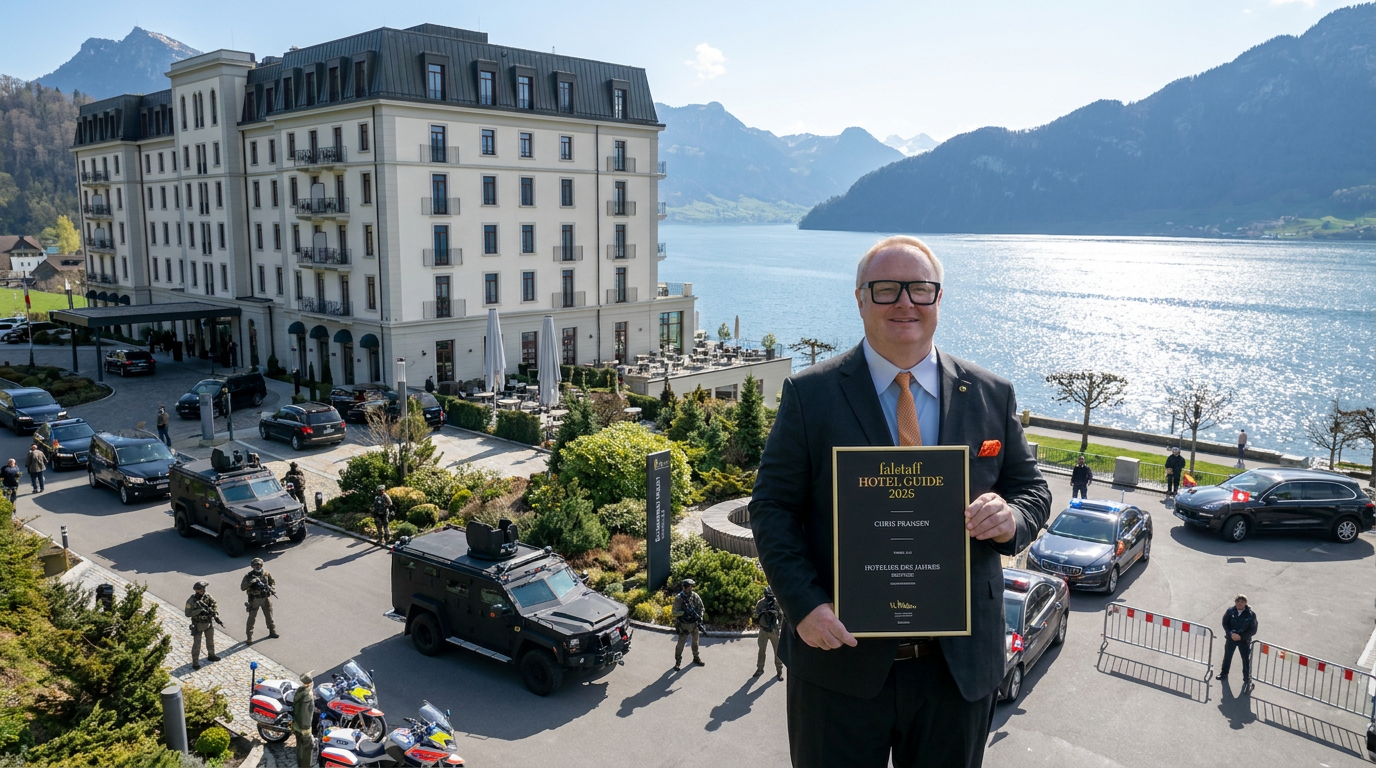
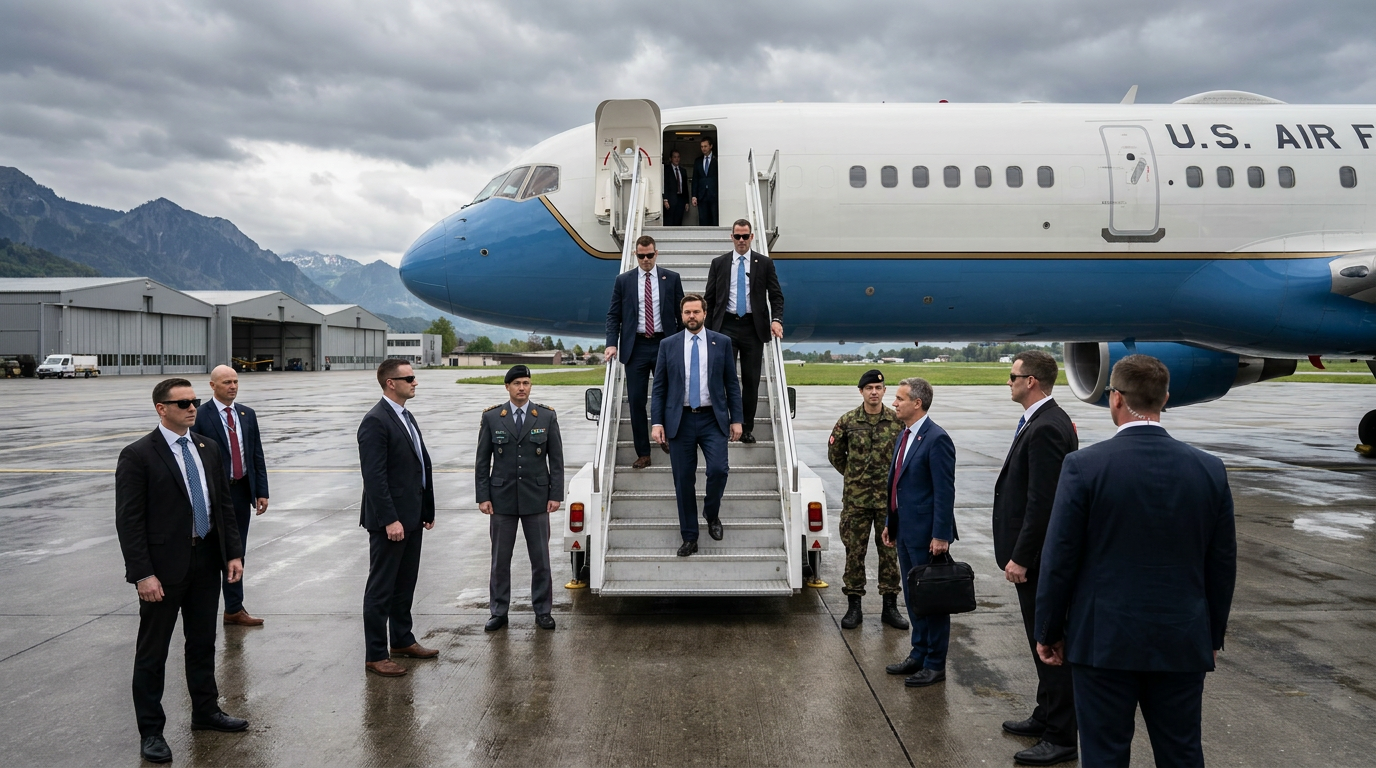
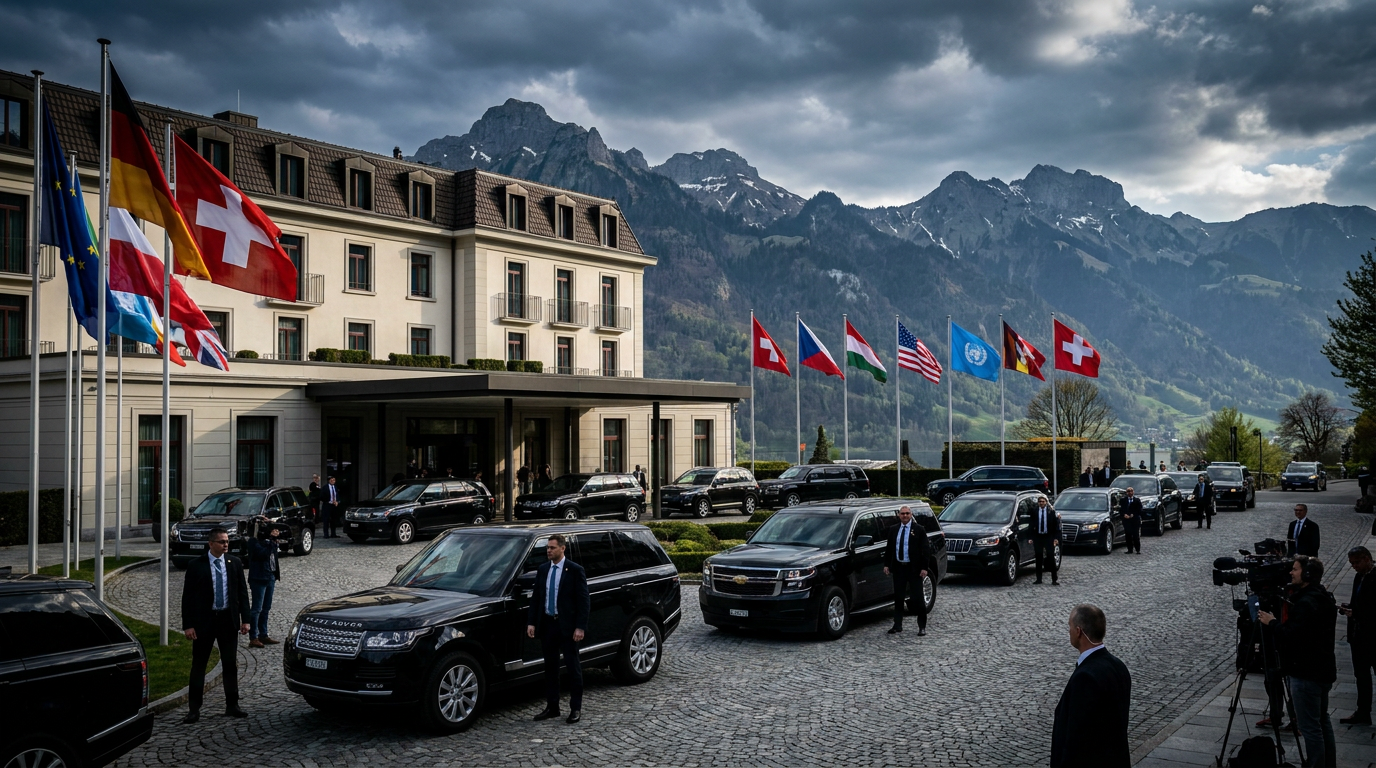
To translate this broad framework into actionable policy, high-level delegations have converged on the Bürgenstock resort in Switzerland. U.S. Vice President JD Vance leads the American team, joined by special envoys Jared Kushner and Steve Witkoff, signaling the administration's urgent prioritization of the diplomatic track. The Iranian delegation is headed by Parliament Speaker Mohammad Bagher Ghalibaf and Foreign Minister Abbas Araghchi, alongside senior officials from Tehran's central bank and oil ministry. The presence of such senior figures underscores the high stakes of the technical talks, which are tasked with hammering out the granular details of sanctions relief, nuclear inspections, and maritime security. The mountaintop resort, heavily secured and isolated, serves as a neutral ground where the two sides must bridge a massive deficit of trust.[3][4]
The face-to-face technical talks, which were briefly delayed from Friday to Sunday due to regional flare-ups, are being heavily facilitated by international mediators who have a vested interest in regional stability. Qatar and Pakistan have played central roles in bridging the gap between Washington and Tehran, acting as crucial conduits during the darkest days of the 110-day war. Pakistani Prime Minister Shehbaz Sharif and Qatari officials have traveled directly to the Swiss Alps to keep the dialogue on track, working alongside Swiss diplomats to manage the logistics of the indirect and direct engagements. These mediators are not merely hosting the event; they are actively proposing compromises and attempting to build a consensus around a proposed $300 billion regional reconstruction fund that could serve as a financial anchor for a lasting peace.[3][5]
At the core of the preliminary deal is a mutual de-escalation of maritime and economic warfare, which had brought global supply chains to their knees. The United States has agreed to immediately lift its naval blockade on Iranian ports, a move designed to de-escalate the immediate military standoff in the Persian Gulf. Concurrently, the U.S. Treasury Department is set to issue sweeping waivers allowing Tehran to export crude oil, petroleum products, and derivatives without facing the crushing secondary sanctions that defined the pre-war era. For the U.S. administration, these concessions are viewed as necessary tactical retreats to secure a broader strategic victory, though critics argue they prematurely surrender vital economic leverage before Tehran has made irreversible concessions on its nuclear infrastructure.[1][2]

In exchange for this immediate economic relief, Iran committed to reopening the Strait of Hormuz—a critical global energy artery that Tehran had effectively blockaded since the war escalated. The MOU explicitly stipulates that the strait will remain completely toll-free for the duration of the 60-day negotiation period. This provision is designed to allow millions of barrels of oil to resume flowing to international markets, stabilizing prices and easing the economic anxiety that has gripped Europe and Asia. For the global economy, the unhindered passage of commercial vessels through this narrow chokepoint is the most immediate and tangible benefit of the preliminary agreement, serving as a barometer for the overall health of the ceasefire.[1][2]
However, the maritime truce was immediately tested by the volatile realities of the region. Over the weekend, Iran’s central military command abruptly claimed it had re-closed the strait to vessel traffic, citing what it called a breach of the agreement by Israel in neighboring Lebanon. The announcement sent a brief shockwave through global markets, threatening to unravel the Bürgenstock talks before they even began. U.S. Central Command quickly disputed the Iranian claim, stating unequivocally that the waterway remained open and under close American monitoring. Military officials confirmed that 55 merchant ships, carrying over 17 million barrels of oil, had successfully transited the strait on Saturday alone, suggesting that Tehran's declaration may have been more rhetorical posturing than a genuine military blockade.[2][4]
The dispute over the waterway prompted a sharp and immediate response from Washington, highlighting the fragile nature of the detente. President Trump publicly threatened to impose American tolls on vessels passing through the Strait of Hormuz if a final, comprehensive deal is not reached within the 60-day window. He framed the potential fees as necessary compensation for "services rendered" by the U.S. military in acting as the guardian of Middle Eastern waterways. This aggressive rhetoric underscores the administration's willingness to use economic coercion to force Tehran's hand at the negotiating table, while simultaneously reassuring domestic audiences that the United States will not indefinitely subsidize global maritime security without extracting tangible geopolitical concessions.[2][6]
The dispute over the waterway prompted a sharp and immediate response from Washington, highlighting the fragile nature of the detente.
Beyond maritime security, the technical talks in Switzerland must address the existential core of the conflict: Iran’s nuclear program. The MOU requires Iran to begin down-blending its stockpiles of highly enriched uranium, a critical step toward ensuring the country cannot rapidly break out and produce a nuclear weapon. President Trump has publicly declared that the framework guarantees Iran will "never have a nuclear weapon," setting a high bar for the technical negotiators in Bürgenstock. The process of down-blending—mixing highly enriched uranium with natural or depleted uranium to reduce its fissile concentration—is technically complex and requires rigorous international oversight to verify that the material is genuinely being rendered unusable for military purposes.[1][7]
Establishing that rigorous inspection regime is perhaps the most daunting hurdle for the negotiators. U.S. officials are pushing for the immediate return of International Atomic Energy Agency (IAEA) inspectors to key Iranian nuclear facilities, including the heavily fortified Fordow Fuel Enrichment Plant and the Natanz Nuclear Facility. These sites have been largely off-limits to international monitors since the conflict escalated, creating a dangerous blind spot for Western intelligence. American negotiators insist that without a credible, intrusive inspection regime, the promises of down-blending are meaningless. Tehran, however, is likely to use the pace and scope of IAEA access as a bargaining chip, demanding front-loaded sanctions relief before allowing inspectors full rein over its most sensitive sovereign installations.[5][7]

If Iran complies with the nuclear and maritime stipulations, the agreement promises substantial, long-term economic relief that could transform the country's domestic landscape. Billions of dollars in frozen Iranian assets, currently held in escrow accounts in countries like Qatar, would be released for humanitarian purchases, including food and medicine. However, U.S. officials have been at pains to emphasize that this unfreezing is strictly contingent on verifiable implementation of the MOU's terms, not merely the signing of the document. The phased release of these funds is designed to keep Tehran tethered to the diplomatic process, ensuring that the economic lifeline can be severed if Iranian compliance falters during the critical 60-day window.[1][5]
The most volatile threat to the agreement, however, lies outside the direct control of Washington and Tehran, rooted in the complex proxy dynamics of the Levant. The MOU explicitly calls for an immediate and permanent termination of military operations on all fronts, specifically including the ongoing hostilities in Lebanon. This clause effectively requires Iran to rein in Hezbollah, its most powerful regional proxy, and demands that all parties cease cross-border bombardments. By linking the broader U.S.-Iran detente to the localized conflict in southern Lebanon, the negotiators have created a massive vulnerability, allowing actors who are not formally at the table to dictate the success or failure of the entire diplomatic enterprise.[1][8]
Israel, which was notably absent from the U.S.-Iran negotiations, has fiercely rejected this condition. Prime Minister Benjamin Netanyahu stated unequivocally that Israel is not bound by the framework and will not withdraw its troops from southern Lebanon. The Israeli government maintains that its military must retain a free hand to neutralize Hezbollah threats and secure its northern border, regardless of what Washington and Tehran agree upon in Switzerland. This fundamental disconnect places the United States in a deeply uncomfortable position, forcing the administration to balance its commitment to the new peace framework against its historical alliance with Israel, which views the MOU as a dangerous capitulation.[2][8]
The preliminary deal has sparked intense political fallout within Israel, exposing deep rifts over the country's strategic direction. Critics across the Israeli political spectrum have accused the U.S. of abandoning its ally, arguing that the 110-day war delayed but did not permanently dismantle Iran’s nuclear ambitions. Security establishment figures have expressed profound alarm that the waived oil sanctions and the unfreezing of billions of dollars will simply allow Tehran to rapidly refill its war chest and rearm its proxy networks across the Middle East. For Netanyahu, the U.S.-Iran deal has become a domestic political crisis, with rivals arguing that his handling of the war ultimately led to an agreement that leaves Israel more isolated and vulnerable than before.[2][4]

The disconnect between the diplomatic framework signed in Washington and the reality on the ground was violently illustrated over the weekend. Deadly exchanges between Israeli forces and Hezbollah militants in southern Lebanon resulted in the deaths of four Israeli soldiers and dozens of Lebanese civilians. The intense bombardments threatened to completely derail the start of the Swiss talks, prompting Iran to temporarily delay the departure of its delegation. This flare-up demonstrated exactly how fragile the MOU truly is; every rocket fired across the Blue Line has the potential to trigger a cascading collapse of the entire agreement, forcing negotiators to constantly put out localized fires while trying to build a macro-level peace.[4][8]
Before departing for Switzerland, Vice President Vance acknowledged the precarious nature of the Lebanon front but expressed a measured optimism. He told reporters that the U.S. diplomatic team is actively managing the situation to ensure security for both Israel and Lebanon, emphasizing that progress on a localized ceasefire is a top priority alongside the nuclear issue. Vance's comments reflect a deliberate strategy to compartmentalize the crises, attempting to prevent the violence in the Levant from poisoning the technical discussions regarding uranium enrichment and sanctions relief. However, keeping these issues separate will require an extraordinary feat of diplomatic agility, especially as hardliners in both Israel and Iran actively seek to link them.[4][5]
The clock is now ticking on the 60-day negotiation window established by the MOU. While the period can technically be extended by mutual consent, the sheer volume of technical details that must be resolved makes the timeline highly ambitious. Negotiators must draft hundreds of pages of binding protocols covering everything from the specific centrifuge cascades at Natanz to the precise banking channels authorized to handle Iranian oil revenues. Every clause will be scrutinized by domestic opponents in Washington, Tehran, and Jerusalem, meaning the technical teams in Bürgenstock are operating under immense political pressure to deliver a flawless document before the fragile truce inevitably cracks.[1][5]

If the Bürgenstock talks succeed, they could lay the groundwork for a broader political settlement and a massive, multi-national reconstruction effort that could fundamentally reshape the Middle East. A permanent deal would not only neutralize the immediate threat of a nuclear-armed Iran but could also integrate Tehran into a regional economic architecture that disincentivizes future conflicts. But with deeply entrenched regional animosities, active combat still raging in the Levant, and domestic political clocks ticking loudly in all the involved capitals, the path from a 14-point memorandum to a lasting, verifiable peace remains fraught with peril.[1][8]
How we got here
Late Feb 2026
The 110-day conflict begins with joint U.S.-Israeli strikes on Iran.
Mid-June 2026
U.S. President Donald Trump and Iranian President Masoud Pezeshkian digitally sign a 14-point preliminary MOU to halt the war.
June 18, 2026
The U.S. lifts its naval blockade and commercial ships begin transiting the Strait of Hormuz.
June 19, 2026
Fighting flares between Israel and Hezbollah in Lebanon, temporarily delaying the start of technical talks.
June 21, 2026
U.S. and Iranian delegations, led by JD Vance and Mohammad Bagher Ghalibaf, arrive in Switzerland to begin implementation negotiations.
Viewpoints in depth
The U.S. Administration
Views the deal as a necessary step to stabilize the global economy and prevent a wider war.
U.S. officials argue that the 110-day conflict had reached a point of diminishing returns, severely disrupting global shipping and energy markets. By securing a 60-day window and the immediate reopening of the Strait of Hormuz, the administration believes it has created the breathing room necessary to negotiate a permanent end to Iran's nuclear ambitions. They maintain that sanctions relief is strictly tied to verifiable compliance, ensuring Washington retains leverage.
The Israeli Government
Fiercely opposes the framework, arguing it rewards Tehran and leaves Israel vulnerable.
Prime Minister Benjamin Netanyahu and a broad spectrum of Israeli politicians view the preliminary deal as a dangerous capitulation. They argue that the war delayed but did not destroy Iran's nuclear program, and that the unfreezing of billions of dollars will simply allow Tehran to rearm its proxy networks. Crucially, Israel insists it is not bound by the MOU's demand for a ceasefire in Lebanon, maintaining that it must continue military operations to neutralize Hezbollah.
The Iranian Leadership
Frames the agreement as a victory that breaks the economic blockade while maintaining regional influence.
For Tehran, the immediate lifting of the U.S. naval blockade and the issuance of oil export waivers represent a critical economic lifeline. Iranian officials emphasize that their agreement to down-blend uranium and allow inspections is a proportional concession for sanctions relief. However, hardliners within the regime continue to use the Strait of Hormuz and proxy forces in Lebanon as leverage, warning that any perceived U.S. or Israeli violations will result in the immediate collapse of the deal.
The Mediators (Qatar & Pakistan)
Focused on pragmatic de-escalation and preventing regional economic collapse.
Gulf and regional mediators view the conflict as an existential threat to their own economies, which rely heavily on safe passage through the Strait of Hormuz. Pakistan and Qatar have invested immense diplomatic capital in keeping both sides at the table, prioritizing the technical implementation of the ceasefire over ideological victories. They are pushing for the establishment of a $300 billion reconstruction fund to stabilize the region once a final deal is reached.
What we don't know
- Whether Iran will fully comply with IAEA inspections and uranium down-blending requirements.
- How the U.S. will manage Israel's ongoing military operations in Lebanon without violating the terms of the MOU.
- If a comprehensive, permanent nuclear agreement can actually be reached within the ambitious 60-day window.
Key terms
- Memorandum of Understanding (MOU)
- A formal, non-binding agreement outlining the broad terms of a deal before a final, legally binding treaty is drafted.
- Strait of Hormuz
- A narrow, strategically critical waterway between the Persian Gulf and the Gulf of Oman through which a significant portion of the world's oil supply passes.
- Down-blending
- The process of reducing the concentration of the fissile isotope U-235 in enriched uranium, making it unsuitable for use in a nuclear weapon.
- IAEA
- The International Atomic Energy Agency, the United Nations watchdog responsible for verifying that nuclear programs are used for peaceful purposes.
Frequently asked
What is the 14-point MOU between the US and Iran?
It is a preliminary agreement to end the 110-day war, reopen the Strait of Hormuz, lift the U.S. naval blockade, and establish a 60-day window to negotiate a final deal regarding Iran's nuclear program.
Is the Strait of Hormuz currently open?
Yes. Despite Iranian claims of re-closing the strait over the weekend, U.S. Central Command confirmed that dozens of merchant ships carrying millions of barrels of oil successfully transited the waterway.
Why is Israel opposed to the agreement?
Israel argues the deal provides Iran with billions in sanctions relief without permanently dismantling its nuclear program. Israel also refuses to abide by the deal's requirement to halt military operations against Hezbollah in Lebanon.
Where are the peace talks taking place?
Technical negotiations are being held at the Bürgenstock Resort in Switzerland, facilitated by mediators from Qatar and Pakistan.
Sources
Source coverage
8 outlets
4 viewpoints surfaced








[1]The GuardianRegional Mediators
US-Iran deal takeaways: reopening the strait of Hormuz, waived oil sanctions and Lebanon
Read on The Guardian →[2]PBS NewsHourU.S. Administration & Allies
U.S. and Iran to talk Sunday in Switzerland as Tehran says it closed Strait of Hormuz again
Read on PBS NewsHour →[3]CBS NewsU.S. Administration & Allies
Vice President JD Vance departs for Switzerland for US-Iran peace talks
Read on CBS News →[4]The Times of IsraelIsraeli Government & Security Establishment
Vance heads to Switzerland, says hoping for progress on Lebanon truce and nuclear issue
Read on The Times of Israel →[5]Radio Free Europe / Radio LibertyRegional Mediators
US-Iran Talks Revived As Vance Heads To Switzerland For High-Stakes Push
Read on Radio Free Europe / Radio Liberty →[6]Al JazeeraIranian Leadership & Hardliners
What we know so far about the US-Iran ceremony in Switzerland
Read on Al Jazeera →[7]BBC NewsU.S. Administration & Allies
Trump says preliminary deal means Iran will 'never have a nuclear weapon'
Read on BBC News →[8]The HinduRegional Mediators
Newly signed deal to end West Asia conflict under strain as fighting flares in Lebanon
Read on The Hindu →

More in news politics
See all 6 stories →Border Policy
Human Rights Groups Sue Canada Over Deportation of Asylum Seekers to U.S.
6 sources
US-Iran Negotiations
U.S. and Iranian Delegations Arrive in Switzerland to Finalize War-Ending Accord
8 sources
Vehicle Emissions
EPA Transmits California Emissions Waivers to Congress for Repeal Amid Sweeping Climate Lawsuits
8 sources
US-Iran Conflict
U.S. and Iranian Delegations Open High-Stakes Ceasefire Negotiations in Switzerland
7 sources
Every angle. Every day.
Get news politics stories with full source coverage and perspective breakdowns delivered to your inbox.