
Why Healthy People Are Wearing Continuous Glucose Monitors
Once strictly a prescription tool for diabetes management, continuous glucose monitors are now available over the counter, sparking a massive new trend in proactive metabolic health.
By Factlen Editorial Team
- Metabolic Optimization Advocates
- Biohackers and preventative health startups who believe real-time data empowers better lifestyle choices.
- Medical Skeptics
- Endocrinologists and traditional practitioners who warn against over-monitoring healthy bodies.
- Regulatory Officials
- Agencies focused on safely expanding device access while maintaining clear boundaries.
What's not represented
- · Health insurance providers evaluating coverage for preventative wellness tools
- · Individuals with Type 1 diabetes facing supply chain competition for sensors
Why this matters
Over-the-counter continuous glucose monitors are transforming how we understand nutrition, turning a reactive medical device into a proactive wellness tool. By revealing exactly how your body responds to food, sleep, and stress in real time, this technology offers a personalized roadmap to better energy and long-term metabolic health.
Key points
- The FDA cleared the first over-the-counter continuous glucose monitors (CGMs) in 2024, opening the market to non-diabetics.
- CGMs measure glucose levels in the interstitial fluid every few minutes, providing a 24-hour picture of metabolic health.
- Proponents use the devices to achieve "metabolic flexibility" and avoid energy crashes caused by blood sugar spikes.
- Medical skeptics warn that normal post-meal glucose spikes are harmless and that over-monitoring can lead to food anxiety.
- OTC devices are intentionally designed as lifestyle tools and lack the critical low-glucose alarms used by insulin-dependent patients.
You eat what you think is a healthy meal—grilled salmon, brown rice, and roasted vegetables. An hour later, you feel sluggish, foggy, and inexplicably hungry again. For years, most people chalked this afternoon crash up to stress, poor sleep, or simply the cost of doing business in a busy world. Today, a growing cohort of health-conscious individuals are looking at their smartphones to blame a different culprit: a hidden blood sugar spike.[6]
The device driving this revelation is the continuous glucose monitor (CGM). Once strictly a prescription medical device reserved for managing type 1 and type 2 diabetes, the CGM has rapidly crossed over into the mainstream consumer wellness market. What was once a specialized tool for preventing dangerous hypoglycemic emergencies is now being embraced by athletes, biohackers, and everyday professionals seeking to optimize their daily energy levels.[3][6]
The regulatory floodgates for this consumer shift opened in March 2024, when the U.S. Food and Drug Administration (FDA) cleared the Dexcom Stelo as the first over-the-counter (OTC) continuous glucose monitor. Intended for adults 18 and older who do not use insulin, the Stelo was quickly followed by Abbott's Lingo, a competing device explicitly cleared as a general health and wellness tool rather than a strict diabetes management system.[1][4]
By 2026, these devices have become as ubiquitous in certain fitness circles as smartwatches and sleep trackers. But this transition from reactive medical treatment to proactive metabolic optimization raises a fundamental question that has divided the medical community: does a metabolically healthy person actually need to track their blood sugar in real time?[3][6]

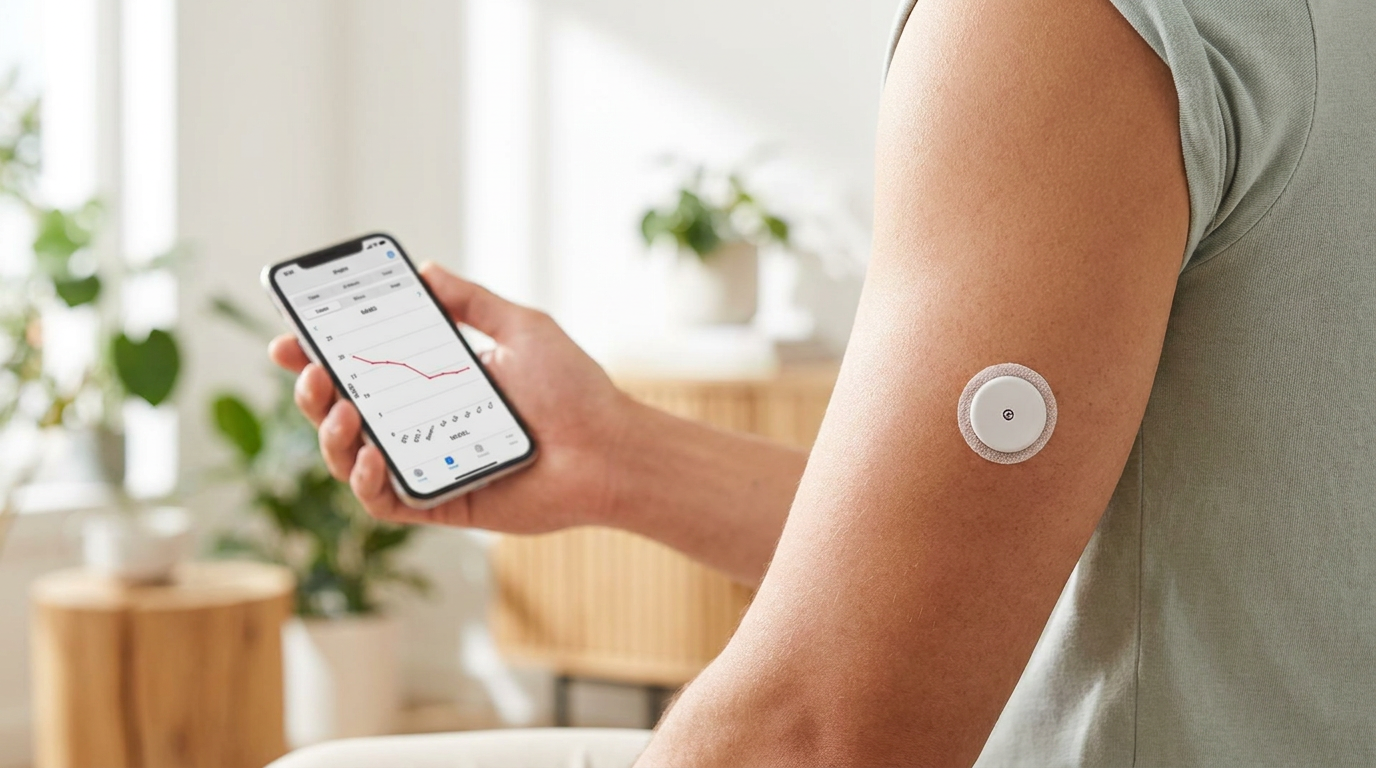
To understand the debate, it helps to understand the mechanism. A CGM does not actually measure blood. Instead, a user applies a small, quarter-sized patch to the back of their upper arm or abdomen. A tiny, flexible filament sits just under the skin, measuring glucose levels in the interstitial fluid—the fluid that naturally surrounds the body's cells.[3]
The sensor takes a reading every few minutes and transmits the data wirelessly to a paired smartphone app. Unlike a traditional fingerstick test that provides a single, isolated snapshot in time, a CGM offers a continuous, 24-hour motion picture of a user's metabolic response to food, exercise, stress, and sleep. Users typically wear a single sensor for 10 to 15 days before replacing it.[1][3][4]
For non-diabetics, the primary appeal of this data lies in the pursuit of "metabolic flexibility"—the body's ability to efficiently switch between burning carbohydrates and burning fat for fuel. Proponents argue that standard medical testing often misses early warning signs of metabolic dysfunction, leaving patients in the dark until they officially cross the threshold into prediabetes.[5][6]
A routine blood panel might show a perfectly normal fasting glucose level, even while a person experiences massive, dysregulated glucose spikes and crashes after meals. Research published in the ACNEM Journal highlights this blind spot: in one study of 665 healthy individuals wearing CGMs, 15 percent experienced glucose excursions into the diabetic range, and 36 percent spiked into the pre-diabetic range.[5]

A routine blood panel might show a perfectly normal fasting glucose level, even while a person experiences massive, dysregulated glucose spikes and crashes after meals.
For many users, the most powerful benefit of an OTC CGM is simply behavioral psychology. Seeing a real-time graph of your glucose climbing rapidly after eating a bowl of pasta is a far more visceral trigger for behavior change than reading a generic nutrition guideline. Users often naturally adjust their diets, opting for more protein, fiber, and post-meal walks to "flatten the curve" of their blood sugar.[4][6]
However, the traditional medical community remains highly skeptical of the clinical utility of this data for the general public. Endocrinologists caution that a blood sugar spike after eating carbohydrates is not inherently dangerous—it is a normal, healthy physiological response that the human body is perfectly equipped to handle.[4]
"Right now, there's no solid evidence that continuous glucose monitors offer clear benefits for people without diabetes," noted Dr. Michael Natter, an endocrinologist at NYU Langone Health, in an interview with Popular Science. While the technology is undeniably powerful, the long-term science linking flattened glucose curves in healthy people to actual disease prevention is still emerging.[2][3]

There is also a documented psychological downside to the biohacking trend. Experts warn that providing highly granular, real-time data without proper medical context can lead to unnecessary anxiety. Some users develop orthorexic tendencies, intentionally withholding food or avoiding perfectly healthy fruits and complex carbohydrates simply because they cause a temporary, harmless rise in the app's graph.[2][4]
To mitigate these risks, OTC devices like the Dexcom Stelo and Abbott Lingo are intentionally limited compared to their prescription counterparts. They do not feature the low-glucose alarms that are critical for insulin users, and they often measure a narrower range of glucose values, reinforcing their status as lifestyle tools rather than diagnostic medical instruments.[1][4]

The market has responded to this need for context by pairing the hardware with specialized software. A wave of health-tech startups now offer direct-to-consumer programs that integrate OTC CGM data with personalized coaching, helping users interpret their spikes and make sustainable lifestyle changes rather than panicking over a single high reading.[3][6]
Ultimately, the rise of the OTC continuous glucose monitor represents a broader cultural shift toward personalized, data-driven healthcare. For those with unexplained fatigue, a family history of metabolic disease, or a genuine curiosity about their unique biology, a short-term trial of a CGM can be genuinely illuminating. But for the metabolically healthy, it remains a fascinating tool for self-discovery rather than a strict medical necessity.[3][6]
How we got here
Pre-2024
CGMs are strictly prescription-only in the U.S., primarily used by individuals with Type 1 and Type 2 diabetes.
March 2024
The FDA clears the Dexcom Stelo, the first over-the-counter CGM for adults not using insulin.
June 2024
Abbott receives FDA clearance for its OTC wellness CGM, the Lingo.
2025–2026
Direct-to-consumer CGM programs surge in popularity among non-diabetics for fitness and longevity tracking.
Viewpoints in depth
Metabolic Optimization Advocates
Biohackers and preventative health startups who believe real-time data empowers better lifestyle choices.
This camp argues that the traditional medical system is too reactive, waiting until a patient develops prediabetes to intervene. By democratizing access to continuous glucose monitors, they believe individuals can discover their unique biological responses to specific foods and make micro-adjustments to their diets. For these advocates, the behavioral change prompted by seeing a real-time glucose spike is a powerful tool for long-term longevity and sustained energy.
Medical Skeptics
Endocrinologists and traditional practitioners who warn against over-monitoring healthy bodies.
Many traditional medical professionals caution that the human body is perfectly designed to handle temporary rises in blood sugar after a meal. They argue that providing clinical-grade data to the general public without medical context often leads to unnecessary anxiety and disordered eating habits. This camp emphasizes that there is currently no long-term scientific evidence proving that artificially flattening normal glucose curves in healthy people prevents disease.
Regulatory Officials
Agencies focused on safely expanding device access while maintaining clear boundaries.
Regulators like the FDA have taken a middle-ground approach, clearing these devices for over-the-counter use to promote health equity and accessibility, while strictly limiting their features. By ensuring OTC devices lack the critical low-blood-sugar alarms required by insulin-dependent diabetics, regulators aim to clearly separate consumer wellness tools from diagnostic medical equipment.
What we don't know
- Whether intentionally flattening normal glucose spikes in healthy individuals actually prevents long-term metabolic disease.
- How the widespread availability of OTC monitors will impact rates of eating disorders and food anxiety.
- Whether the behavioral changes prompted by short-term CGM use are sustained after the user stops wearing the device.
Key terms
- Continuous Glucose Monitor (CGM)
- A wearable biosensor that automatically tracks blood sugar levels around the clock.
- Interstitial Fluid
- The fluid surrounding the body's cells, where CGM sensors measure glucose levels instead of drawing actual blood.
- Metabolic Flexibility
- The body's ability to efficiently switch between burning carbohydrates and burning fat for energy.
- Time in Range
- The percentage of time a person's glucose levels remain within a target, healthy bracket.
- Orthorexia
- An unhealthy obsession with eating only foods considered perfectly healthy or pure, sometimes triggered by hyper-tracking.
Frequently asked
Do I need a prescription to buy a CGM?
No. As of 2024, the FDA has cleared several CGMs, including Dexcom Stelo and Abbott Lingo, for over-the-counter purchase by adults who do not use insulin.
Does applying the glucose sensor hurt?
Most users report little to no pain. The device uses a tiny, flexible filament that sits just under the skin, rather than a rigid needle.
Can a continuous glucose monitor diagnose diabetes?
No. Over-the-counter CGMs are cleared as general wellness tools or for managing diet. They are not intended to diagnose diabetes.
Why do some doctors advise against healthy people using them?
Endocrinologists emphasize that blood sugar naturally rises after eating carbohydrates. Without medical context, seeing these normal spikes can cause unnecessary anxiety or lead to overly restrictive diets.
Sources
Source coverage
6 outlets
3 viewpoints surfaced






[1]U.S. Food and Drug AdministrationRegulatory Officials
FDA Clears First Over-the-Counter Continuous Glucose Monitor
Read on U.S. Food and Drug Administration →[2]Popular ScienceMedical Skeptics
Why non-diabetics are wearing continuous glucose monitors
Read on Popular Science →[3]News-MedicalMetabolic Optimization Advocates
Glucose Monitoring: Friend or Fad?
Read on News-Medical →[4]diaTribeMedical Skeptics
Curious about Abbott's Lingo? So were we.
Read on diaTribe →[5]ACNEM JournalMetabolic Optimization Advocates
Continuous Glucose Monitors in Non-Diabetic Populations
Read on ACNEM Journal →[6]Factlen Editorial TeamMetabolic Optimization Advocates
Synthesis by Factlen editorial team
Read on Factlen Editorial Team →


Every angle. Every day.
Get health stories with full source coverage and perspective breakdowns delivered to your inbox.