
How Neural Networks and NNUE Transformed Modern Chess Engines
The integration of Efficiently Updatable Neural Networks (NNUE) has given chess engines human-like intuition without sacrificing their machine-like calculation speed.
By Factlen Editorial Team
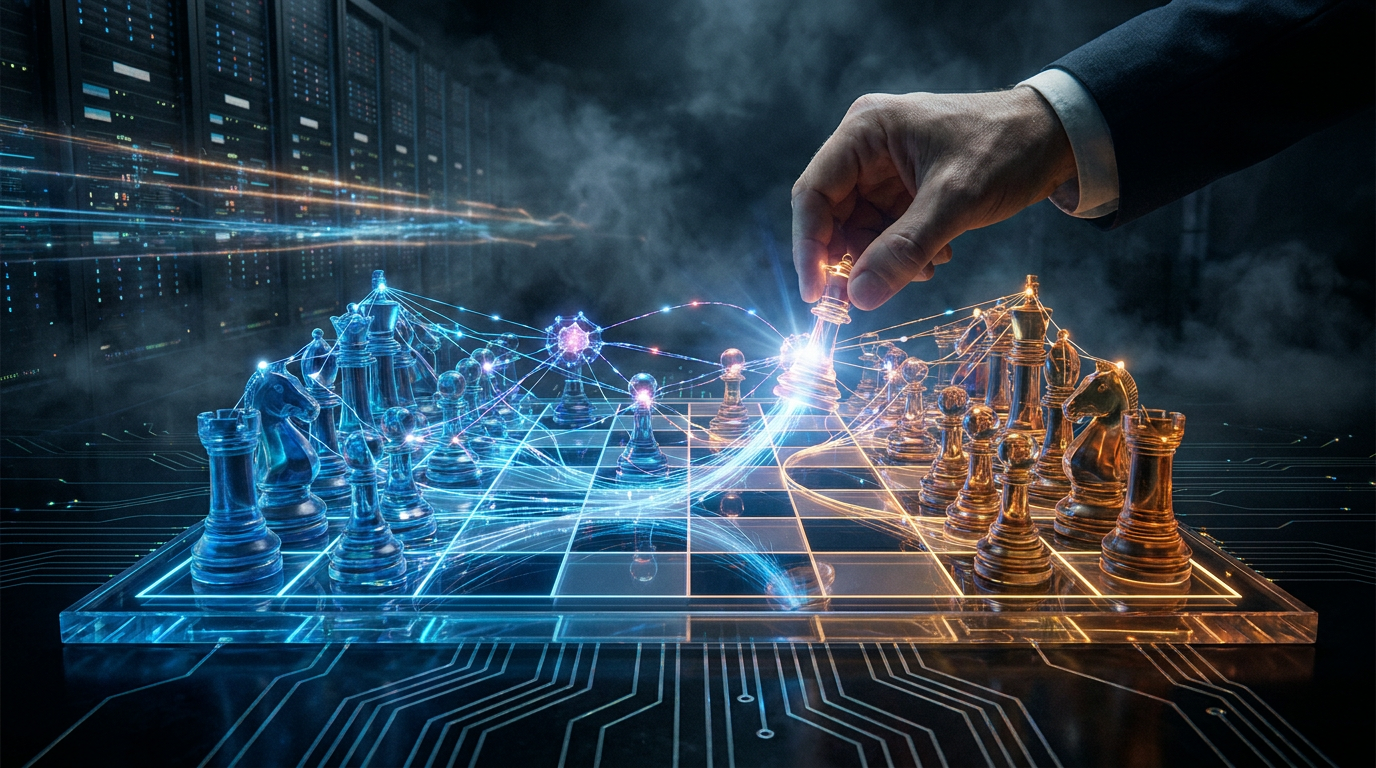
- Hybrid Architecture Developers
- Engineers who blend traditional search algorithms with lightweight neural networks.
- Classical Search Advocates
- Engine developers who prioritize raw calculation speed and tactical perfection.
- Neural Network Pioneers
- Researchers focused on self-play, pattern recognition, and human-like strategic intuition.
What's not represented
- · Casual chess players
- · Traditional chess coaches
Why this matters
Understanding how modern chess engines work demystifies the seemingly magical evaluations seen on every chess broadcast. It also reveals a broader truth about artificial intelligence: the most powerful systems today don't choose between human-like intuition and machine-like calculation—they combine both.
Key points
- Modern chess engines operate at an Elo rating above 3650, far beyond human capabilities.
- Classical engines relied on brute-force calculation and rigid, hand-crafted evaluation rules.
- AlphaZero revolutionized the field in 2017 by using neural networks to teach itself chess.
- NNUE technology combined the speed of classical search with the intuition of neural networks.
- This hybrid approach allows engines to run efficiently on standard CPUs without needing expensive GPUs.
- AI has paradoxically made human chess more creative by proving that traditional dogmas can be broken.
The evaluation bar hovering next to a live chess broadcast is now a staple of the modern game. When a grandmaster blunders, millions of viewers know instantly because a computer tells them so.[1][5]
But the numbers driving that evaluation bar—whether it reads +0.3, -1.5, or announces a forced mate—are generated by software that has undergone a quiet, profound revolution over the last decade.[6]
Today, the world's best chess engines operate at an estimated Elo rating above 3650, roughly 800 points higher than the reigning human World Champion. They are virtually unbeatable by any human alive.[1][2]
To understand how machines became so alien and untouchable, we have to look at the collision of two distinct philosophies: the brute-force calculation of the 1990s and the neural-network intuition of the modern era.[6]

For decades, computer chess relied on a paradigm known as classical search. Engines like Deep Blue and early versions of Stockfish used an algorithm called alpha-beta pruning to look ahead millions of moves into the future.[1][5]
To decide if a resulting position was good or bad, these classical engines used a Hand-Crafted Evaluation (HCE) function. Human programmers wrote strict rules into the code: a pawn is worth one point, a knight is worth three, and king safety is paramount.[3][5]
This approach was incredibly fast, allowing engines to evaluate tens of millions of positions per second on standard processors. But it had a fatal flaw: it was rigid. If a position required breaking a human rule—like sacrificing a queen for long-term positional paralysis—the classical engine simply could not see it.[5]
That changed permanently in December 2017, when Google DeepMind unveiled AlphaZero. Given only the basic rules of chess, AlphaZero played millions of games against itself over four hours, learning entirely through reinforcement learning.[1][4]
When AlphaZero played a 100-game match against Stockfish 8, the reigning champion of the classical era, it did not just win—it dismantled the traditional engine without losing a single game.[2][4]

AlphaZero played a style that grandmasters described as alien. It routinely sacrificed pawns and pieces for intangible concepts like space and piece activity, proving that the hand-crafted rules of classical engines were fundamentally limited.[2][4]
AlphaZero played a style that grandmasters described as alien.
AlphaZero was never released to the public, but the open-source community quickly mobilized to replicate its architecture, creating the publicly available Leela Chess Zero (Lc0).[2][5]
Leela uses a massive neural network and Monte Carlo Tree Search. Instead of calculating every possible reply, it uses pattern recognition to guess the most promising moves, evaluating only about 75,000 positions per second on a high-end graphics card.[3][5]
This created a schism in computer chess. On one side, Leela offered brilliant, human-like strategic intuition but required expensive GPUs and was relatively slow. On the other side, Stockfish offered lightning-fast tactical perfection on standard CPUs but lacked Leela's deep positional understanding.[3][6]
The solution arrived in 2020 from an unexpected source: computer Shogi, or Japanese chess. A Japanese developer named Yu Nasu had invented a concept called the Efficiently Updatable Neural Network, or NNUE.[3]

NNUE is a hybrid approach. It replaces the rigid, hand-crafted evaluation rules of classical engines with a small, highly optimized neural network that can run efficiently on a standard processor.[3][5]
The genius of NNUE lies in its accumulator. Because a chess move only changes a few pieces on the board, the network does not recalculate the entire position from scratch. It only updates the specific neurons affected by the move.[3]
This allows an engine like Stockfish to retain its blazing-fast alpha-beta search—evaluating 30 million positions per second on a CPU—while gaining the profound positional intuition of a neural network.[3][5]
When Stockfish integrated NNUE in August 2020, its playing strength jumped by roughly 100 Elo points overnight. It successfully married the tactical infallibility of a machine with the strategic depth of artificial intelligence.[3]

How we got here
1997
IBM's Deep Blue defeats World Champion Garry Kasparov using classical brute-force search.
Dec 2017
Google DeepMind reveals AlphaZero, which taught itself chess in four hours and crushed Stockfish.
Jan 2018
The open-source community launches Leela Chess Zero to replicate AlphaZero's neural network approach.
2018
Japanese developer Yu Nasu invents the NNUE architecture for computer Shogi.
Aug 2020
Stockfish officially integrates NNUE, gaining roughly 100 Elo points and cementing the hybrid era.
Viewpoints in depth
Classical Search Advocates
Engine developers who prioritize raw calculation speed and tactical perfection.
This camp argues that chess is ultimately a game of concrete calculation. By utilizing alpha-beta pruning and maximizing the number of nodes evaluated per second, classical search ensures that no tactical blunders slip through. They view the integration of NNUE as a way to improve the heuristic evaluation without sacrificing the brute-force speed that makes engines tactically infallible.
Neural Network Pioneers
Researchers focused on self-play, pattern recognition, and human-like strategic intuition.
Inspired by AlphaZero, this perspective believes that the future of chess AI lies in deep learning and Monte Carlo Tree Search. Proponents of engines like Leela Chess Zero argue that evaluating fewer positions with a much 'smarter' neural network produces higher-quality, more creative chess. They value the engine's ability to understand long-term compensation and positional sacrifices that traditional brute-force engines often misunderstand.
Hybrid Architecture Developers
Engineers who blend traditional search algorithms with lightweight neural networks.
This camp, responsible for the modern iterations of Stockfish, believes that the dichotomy between search and intuition is a false choice. By implementing Efficiently Updatable Neural Networks (NNUE), they argue that an engine can maintain the 30-million-node-per-second speed of classical search while utilizing a CPU-friendly neural network for evaluation. This pragmatic approach has consistently produced the highest-rated engines on the planet.
What we don't know
- Whether pure neural network engines will eventually surpass hybrid NNUE engines on standard hardware.
- The absolute mathematical ceiling of chess engine Elo ratings.
- How future quantum computing might disrupt the current alpha-beta search paradigm.
Key terms
- NNUE
- Efficiently Updatable Neural Network; a CPU-friendly architecture that evaluates chess positions rapidly without requiring a graphics card.
- Alpha-Beta Pruning
- A search algorithm that stops evaluating a move as soon as it finds proof that the move is worse than a previously examined option.
- Monte Carlo Tree Search
- A probabilistic search algorithm used by engines like Leela Chess Zero to explore the most promising lines rather than calculating every possibility.
- Self-Play
- A machine learning method where an AI trains by playing millions of games against itself, starting from random moves.
- Elo Rating
- A mathematical system used to calculate the relative skill levels of players or engines in zero-sum games like chess.
Frequently asked
Can a human grandmaster beat a modern chess engine?
No. The top human players peak around 2850 Elo, while modern engines like Stockfish operate above 3650 Elo, making them virtually unbeatable by humans in standard time controls.
What is the difference between Stockfish and Leela Chess Zero?
Stockfish relies primarily on lightning-fast calculation enhanced by a small neural network (NNUE), while Leela uses a massive neural network to 'intuit' the best moves, evaluating far fewer positions but with deeper strategic understanding.
Do I need a powerful computer to run these engines?
Thanks to NNUE technology, engines like Stockfish run exceptionally well on standard CPUs, including smartphones. Pure neural engines like Leela perform best with a dedicated GPU.
Sources
Source coverage
6 outlets
3 viewpoints surfaced





[1]Chess.comClassical Search Advocates
What Is A Chess Engine?
Read on Chess.com →[2]WorldChessNeural Network Pioneers
Best Chess Engines in the World
Read on WorldChess →[3]Beuke.orgHybrid Architecture Developers
Efficiently Updatable Neural Network (NNUE)
Read on Beuke.org →[4]ChessBaseNeural Network Pioneers
Replaying history with AlphaZero
Read on ChessBase →[5]ChessworldClassical Search Advocates
How Chess Engines Work
Read on Chessworld →[6]Factlen Editorial TeamHybrid Architecture Developers
Synthesis by Factlen editorial team
Read on Factlen Editorial Team →


Every angle. Every day.
Get sports stories with full source coverage and perspective breakdowns delivered to your inbox.