
The Rise of 'Coolcationing': How Climate Change is Redrawing the Global Tourism Map
As extreme summer heat reshapes traditional holiday hotspots, travelers are increasingly flocking to temperate northern destinations in a booming trend known as 'coolcationing.'
By Factlen Editorial Team
- Northern Tourism Boards
- Embrace the economic boom of coolcationing but emphasize the need for sustainable infrastructure to prevent overtourism in fragile ecosystems.
- Southern Destination Operators
- Focus on adapting to the climate reality by aggressively marketing the 'shoulder seasons' and diversifying away from peak-summer beach reliance.
- Climate Adaptation Researchers
- View the shift as a textbook example of human behavioral adaptation, tracking how the Tourism Climate Index dictates macro-economic flows.
What's not represented
- · Local residents in newly popular northern towns facing sudden overtourism
- · Aviation industry planners adjusting long-term fleet deployments for new routes
Why this matters
The traditional summer vacation is undergoing a permanent geographic shift. For travelers, this means rethinking when and where to book; for global economies, it represents a massive reallocation of the multi-trillion-dollar tourism industry.
Key points
- Extreme summer heat is driving travelers away from traditional Mediterranean peak-season holidays.
- Northern destinations like Sweden, Norway, and Scotland are experiencing a surge in summer tourism.
- European Commission models project a 10% drop in southern summer demand but an overall increase in European travel.
- Southern destinations are adapting by heavily promoting spring and autumn 'shoulder season' visits.
- The trend is spurring sustainable infrastructure investments, including new long-distance rail routes to Scandinavia.
For decades, the quintessential summer vacation meant one thing: migrating toward the equator in search of sun, sand, and sweltering heat. But as global temperatures continue to climb and extreme weather events become the norm across traditional hotspots, a profound behavioral shift is redrawing the global tourism map. Travelers are increasingly pointing their compasses north.[6]
The travel industry has dubbed this phenomenon "coolcationing"—a portmanteau of "cool" and "vacation." Originally coined as a niche luxury trend around 2023, it has rapidly matured into a dominant market force by the summer of 2026. Instead of flocking to the Mediterranean coast or the Caribbean in July, travelers are seeking out the temperate climates of Scandinavia, the Baltics, the Scottish Highlands, and the Pacific Northwest.[3][6]
This migration is not merely anecdotal; it is a rational response to a changing climate that is actively altering the Tourism Climate Index (TCI). The TCI is a metric used by researchers to evaluate the climatic suitability of a destination for general tourism, factoring in thermal comfort, sunshine, and precipitation. As heatwaves turn southern beaches into endurance tests, the optimal TCI zone is steadily marching toward higher latitudes.[1][4]
A landmark study by the European Commission's Joint Research Centre modeled this exact shift. The research projected that under higher warming scenarios, southern coastal regions in Europe could lose nearly 10% of their core summer tourists. Conversely, northern coastal regions are projected to see a 5% increase in summer demand, fundamentally rebalancing the continent's visitor economy.[1]

The data on the ground already reflects this pivot. According to the European Travel Commission, 55% of Europeans surveyed recently stated they planned to holiday in "less popular or off-the-beaten-track" destinations to escape both the heat and the resulting overtourism of traditional hubs. Travelers are actively prioritizing locations where they can hike, cycle, and sleep without relying on air conditioning.[2][3]
Travelers are actively prioritizing locations where they can hike, cycle, and sleep without relying on air conditioning.
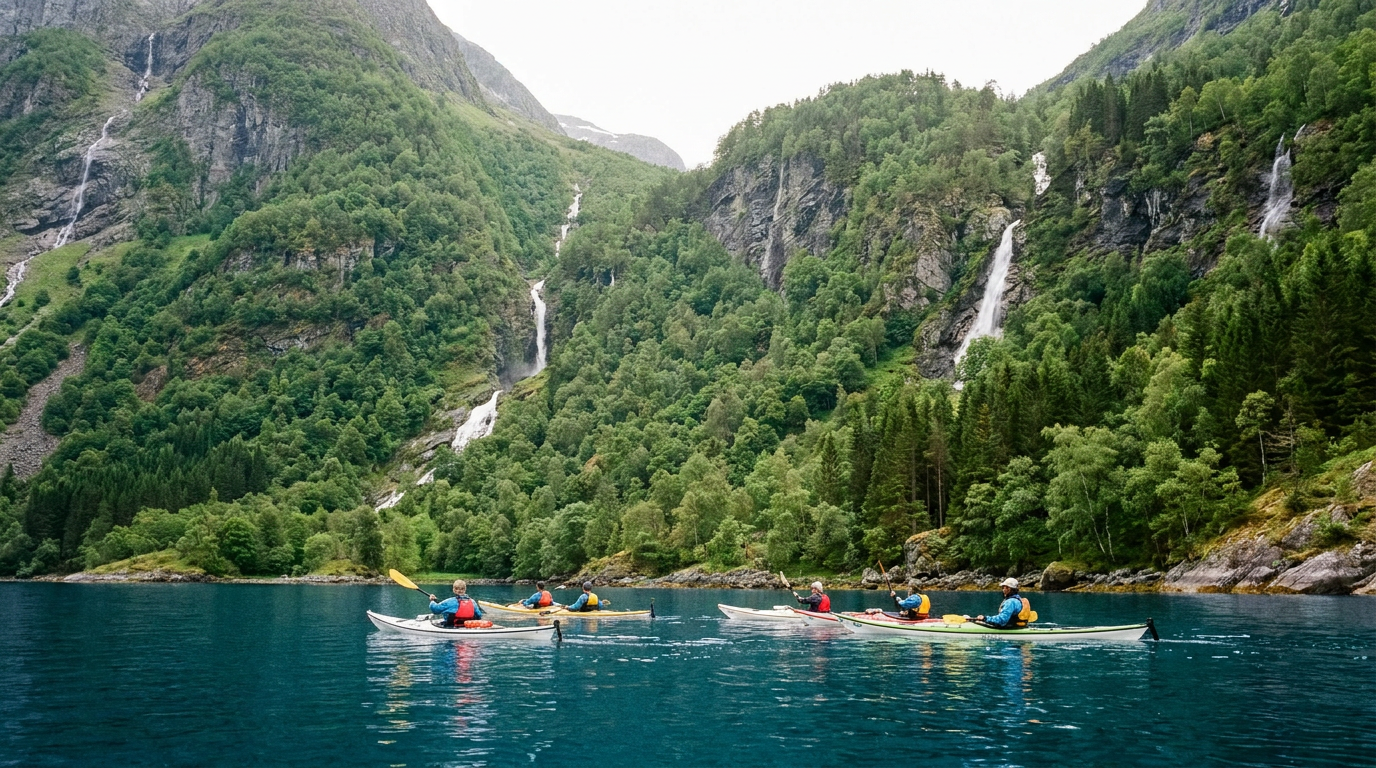
Sweden, Norway, and Iceland have emerged as the primary beneficiaries of this cooling quest. Sweden's tourism board recently reported a 21% surge in search inquiries from overseas travelers, while airlines have rapidly added new routes to northern Norway to accommodate the influx. The appeal lies in the combination of moderate 20–25°C (68–77°F) summer days, endless daylight hours, and vast, uncrowded natural landscapes.[3][6]
The coolcationing boom is also driving significant infrastructure investments. Stockholm, for instance, is experiencing a renaissance as a long-distance rail hub. Operators are launching new direct daytime and sleeper services linking the Swedish capital to Copenhagen, Hamburg, and beyond. This aligns perfectly with the coolcation demographic, which tends to heavily index toward sustainable, lower-emission travel.[5]

However, the rise of the North does not spell the end for the South—it simply changes the calendar. Mediterranean destinations are rapidly adapting by pivoting their marketing toward the "shoulder seasons." Rather than fighting the July heat, tourism boards in Spain, Italy, and Greece are promoting April, May, September, and October as the ideal times to visit.[1][4]
This seasonal flattening is already visible in booking data. The European Travel Commission notes that 22% of travelers are now intentionally delaying their holidays until early autumn to secure milder weather, fewer crowds, and better value. In fact, European Commission models project that the month of April could eventually see an 8.9% increase in tourist flows across the continent as visitors adjust their schedules.[1][2]

Beyond temperature, coolcationing intersects with broader wellness trends, particularly "sleep tourism" and "blue health." High-end travelers are increasingly seeking out cold-water swimming in Nordic lakes or quiet retreats in the Slovenian Alps. The psychological appeal of a quiet, temperate environment offers a stark contrast to the chaotic, overheated reality of peak-season mega-resorts.[6]
Yet, this geographic shift brings its own set of challenges. Destinations in the far north, historically accustomed to short, quiet summer seasons, are now grappling with the sudden pressures of overtourism. Small archipelagos and rural highland communities must quickly develop sustainable capacity to ensure that the influx of climate refugees does not degrade the very pristine environments they came to enjoy.[4][6]
Ultimately, coolcationing represents one of the most visible ways humanity is adapting its leisure habits to a warming planet. By chasing the chill and embracing the shoulder seasons, travelers are not just finding relief from the heat—they are forging a more distributed, year-round, and potentially more sustainable global tourism industry.[6]
How we got here
2023
The term 'coolcationing' begins to gain traction in luxury travel media as a niche response to Mediterranean heatwaves.
Summer 2024
Record-breaking global temperatures accelerate the shift, with northern tourism boards reporting massive spikes in search interest.
2025
The European Travel Commission reports that over half of European travelers are actively seeking off-the-beaten-track and cooler destinations.
May 2026
New long-distance rail services launch connecting central Europe to Stockholm, reflecting the permanent infrastructure shift.
Viewpoints in depth
Northern Tourism Boards
Embrace the economic boom of coolcationing but emphasize the need for sustainable infrastructure.
For destinations like Sweden, Norway, and Scotland, the influx of summer travelers represents a massive economic windfall. Tourism authorities are leaning into their natural advantages, marketing their endless summer days, pristine archipelagos, and comfortable temperatures. However, these boards are acutely aware of the risks of overtourism. Because many of these regions have historically catered to smaller, niche crowds, there is a concerted push to develop sustainable infrastructure—such as expanded rail networks and eco-certified lodging—to ensure the natural environment isn't degraded by the very people coming to enjoy it.
Southern Destination Operators
Focus on adapting to the climate reality by aggressively marketing the 'shoulder seasons'.
Rather than viewing the coolcationing trend as a death knell, operators in Spain, Italy, and Greece are treating it as an opportunity to flatten the curve of seasonal tourism. By shifting their marketing weight to April, May, September, and October, they aim to alleviate the crushing infrastructure strain of July and August. This pivot not only promises a more comfortable experience for visitors but also offers local economies a more stable, year-round revenue stream rather than relying on a frantic eight-week summer window.
Climate Adaptation Researchers
View the shift as a textbook example of human behavioral adaptation to a warming planet.
Economists and climate scientists track this migration through metrics like the Tourism Climate Index (TCI). From their perspective, the shift in travel patterns is a highly visible, real-time example of climate adaptation. As the optimal zones for human thermal comfort move northward, capital and human movement naturally follow. Researchers emphasize that while the aggregate impact on European tourism demand remains positive, the localized economic shocks require proactive policy planning to support communities losing their traditional peak-season income.
What we don't know
- Whether northern infrastructure can scale quickly enough to handle the sustained year-over-year growth in summer visitors.
- How the economic loss of peak summer revenue will permanently alter the tax base of smaller Mediterranean coastal towns.
Key terms
- Coolcationing
- A portmanteau of 'cool' and 'vacation,' referring to the trend of traveling to temperate or northern destinations to avoid extreme summer heat.
- Tourism Climate Index (TCI)
- A metric used by researchers to evaluate how suitable a destination's climate is for general tourism, factoring in temperature, humidity, sunshine, and rain.
- Shoulder Season
- The travel periods between the peak and off-peak seasons, typically spring (April/May) and autumn (September/October), which are becoming increasingly popular.
- Sleep Tourism
- A wellness travel trend focused on rest and recovery, often driving travelers toward cooler, quieter environments conducive to better sleep.
Frequently asked
What exactly is coolcationing?
Coolcationing is a travel trend where vacationers intentionally choose destinations with milder, temperate climates—such as Scandinavia or Scotland—to escape the extreme summer heat of traditional holiday spots.
Are southern European destinations losing tourists?
While models project a potential 10% drop in peak summer demand for southern coastal regions, these areas are successfully adapting by attracting more visitors during the cooler spring and autumn 'shoulder seasons.'
How does this affect the travel economy?
It is redistributing tourism revenue. Northern regions are seeing a surge in bookings and infrastructure investment, while the overall European tourism market is projected to grow slightly as travel spreads more evenly throughout the year.
Sources
Source coverage
6 outlets
3 viewpoints surfaced






[1]European CommissionClimate Adaptation Researchers
Regional impact of climate change on European tourism demand
Read on European Commission →[2]European Travel CommissionSouthern Destination Operators
European Travel Sentiment Survey 2025
Read on European Travel Commission →[3]AS USASouthern Destination Operators
Coolcation? The travel trend that has tourists shifting to cooler locations to avoid the heat
Read on AS USA →[4]World Economic ForumClimate Adaptation Researchers
The impact of the climate crisis on tourism
Read on World Economic Forum →[5]Trip By TripNorthern Tourism Boards
Stockholm rail boom driven by 'coolcationing' and sustainability
Read on Trip By Trip →[6]Factlen Editorial TeamClimate Adaptation Researchers
Synthesis by Factlen editorial team
Read on Factlen Editorial Team →


Every angle. Every day.
Get travel stories with full source coverage and perspective breakdowns delivered to your inbox.