
The Evidence Behind 'Nature Prescriptions' for Mental Health
As doctors increasingly prescribe time in green spaces for anxiety and depression, a growing body of clinical evidence reveals exactly how nature alters brain chemistry and lowers stress hormones.
By Factlen Editorial Team
- Clinical Researchers
- Focuses on the measurable neurobiological and physiological changes caused by nature exposure.
- Public Health Planners
- Views green space as essential municipal infrastructure necessary for population-level health.
- Integrative Medicine Advocates
- Emphasizes holistic lifestyle interventions alongside or in place of traditional pharmaceuticals.
What's not represented
- · Urban residents without safe park access
- · Indigenous communities with traditional ecological knowledge
Why this matters
Mental health interventions often involve costly therapy or medications with side effects. Understanding the precise clinical benefits of 'nature prescriptions' offers readers a free, accessible, and scientifically validated tool to manage daily stress and improve cognitive function.
Key points
- Medical professionals are increasingly formalizing 'nature prescriptions' as an evidence-based treatment for anxiety and depression.
- Just 20 to 30 minutes in a natural setting can significantly lower salivary cortisol, the body's primary stress hormone.
- Brain imaging shows that walking in nature quiets the neural regions responsible for depressive rumination.
- Research establishes a clear dose-response threshold: 120 minutes of green space exposure per week maximizes psychological benefits.
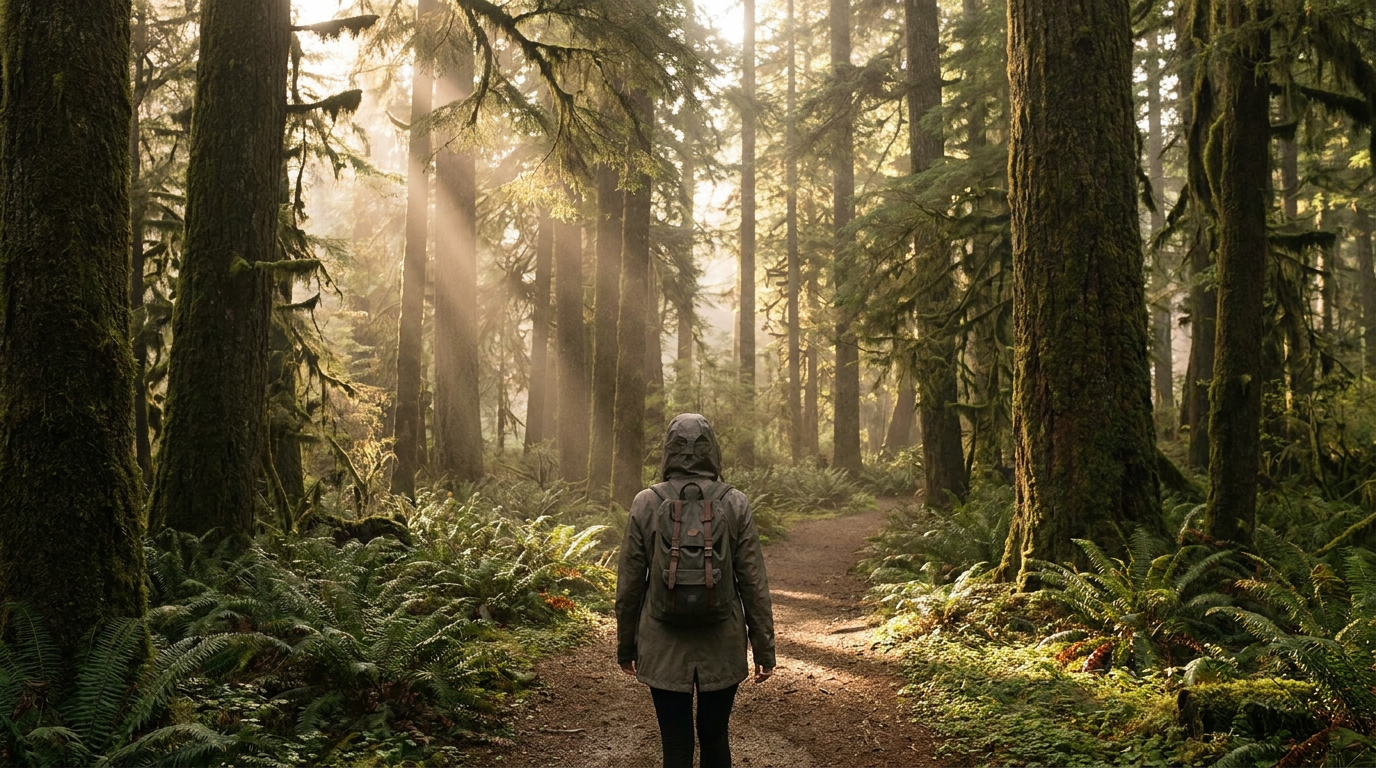
Across clinics in North America and Europe, a quiet revolution in mental health treatment is taking root: doctors are handing out park passes instead of just pills. The concept of the 'nature prescription' has evolved from a holistic wellness trend into a formalized medical intervention, backed by national health services and integrated into standard psychiatric care.[1]
This shift from folk wisdom to clinical protocol is driven by a surge in neurobiological research. It is no longer sufficient to simply say that fresh air feels good; researchers are now mapping exactly how exposure to green spaces alters brain architecture, downregulates the nervous system, and interrupts the neural pathways associated with clinical depression.[6]
The foundational mechanism behind nature therapy involves the autonomic nervous system. Modern urban environments—characterized by constant noise, concrete geometry, and digital screens—keep the human brain in a state of mild, continuous hyperarousal. Nature exposure acts as a biological circuit breaker, shifting the body from sympathetic 'fight-or-flight' dominance to parasympathetic 'rest-and-digest' recovery.[4]
The most immediate and measurable effect of this shift is the reduction of cortisol, the body's primary stress hormone. Clinical trials examining the 'nature pill' concept have demonstrated that a simple 20 to 30-minute walk in a natural setting can drop salivary cortisol levels by more than 20 percent, a biochemical response that outpaces equivalent exercise in an urban or indoor environment.[2][4]

Psychologists attribute much of this restorative effect to the visual complexity of the natural world. The fractal patterns found in leaves, branches, and flowing water gently engage the brain's involuntary attention. This phenomenon, known as Attention Restoration Theory, allows the brain's directed attention—the exhausting focus required for emails, driving, and deep work—to rest and replenish.[4]
Beyond stress reduction, nature exposure shows profound efficacy in breaking the cycle of rumination. Rumination—the repetitive, uncontrollable loop of negative thoughts—is a hallmark symptom of both anxiety and major depressive disorder, and it is notoriously difficult to disrupt with traditional talk therapy alone.[1][6]
Neuroimaging studies using fMRI technology have provided a literal picture of this disruption. When subjects complete a 90-minute walk in a natural setting, brain scans reveal significantly decreased neural activity in the subgenual prefrontal cortex, a region heavily implicated in depressive rumination. Subjects who walked for the same duration in high-traffic urban areas showed no such neural quieting.[3]
Neuroimaging studies using fMRI technology have provided a literal picture of this disruption.
The benefits of green space also extend into the immune-brain connection. Trees and plants emit airborne antimicrobial organic compounds called phytoncides. When inhaled, these compounds have been shown to significantly boost the activity of human natural killer (NK) cells, which play a vital role in immune defense.[2]
Because chronic inflammation is increasingly recognized as a major contributing factor to depressive symptoms and cognitive decline, this immune system boost provides a secondary, physiological pathway for nature's mental health benefits. The body's physical healing directly supports its psychological resilience.[4][6]
With the mechanisms established, clinical researchers have turned their attention to the 'dose-response' relationship. Just as a physician must determine the correct milligram dosage for an antidepressant, psychologists have sought to quantify exactly how much nature is required to achieve a clinically significant improvement in mental wellbeing.[1]

A landmark epidemiological analysis of nearly 20,000 individuals established a clear threshold: 120 minutes per week. Participants who spent at least two hours in green spaces reported substantially higher psychological well-being and lower mental distress than those who spent less time, regardless of their age, gender, or socioeconomic status.[3]
Crucially for public health implementation, this 120-minute threshold does not need to be achieved in a single wilderness excursion. The data indicates that the time can be broken up into smaller, manageable increments. Six 20-minute sessions in a local park are just as effective as one two-hour weekend hike, making the intervention highly accessible for busy urban populations.[3][5]
However, the urban application of nature prescriptions presents unique challenges. Not all green space is created equal. A small, noisy city park bordered by heavy traffic does not provide the same cognitive restoration or acoustic buffering as a quiet woodland, highlighting the need for high-quality, biodiverse urban design.[5]

This evidence has prompted public health planners and municipal governments to rethink city infrastructure. Organizations like the World Health Organization now advocate for urban green spaces not as luxury aesthetic amenities, but as critical public health infrastructure essential for population-level mental health management.[5][6]
While nature prescriptions are not a wholesale replacement for acute psychiatric care or necessary pharmaceuticals, they represent a powerful, side-effect-free adjunct therapy. By understanding the precise biological mechanisms at play, patients are empowered to use the natural world as an active, evidence-based tool for their own cognitive and emotional resilience.[1][6]
Viewpoints in depth
Clinical Researchers
Focuses on the measurable neurobiological and physiological changes caused by nature exposure.
For neuroscientists and clinical psychologists, the value of nature therapy lies entirely in its measurable biological outcomes. This camp emphasizes fMRI data, cortisol swabbing, and immune cell counts to validate green space as a hard medical intervention rather than a soft wellness trend. They argue that understanding the precise mechanisms—such as how visual fractals rest the prefrontal cortex—is essential for standardizing 'nature doses' in psychiatric care.
Public Health Planners
Views green space as essential municipal infrastructure necessary for population-level health.
Urban planners and global health organizations look at nature prescriptions through the lens of population health and equity. They argue that if 120 minutes of nature is a medical necessity, then unequal access to safe, quiet green spaces is a profound public health failure. This perspective advocates for redesigning cities to integrate biodiversity into daily commutes and neighborhoods, treating parks with the same infrastructural importance as hospitals and water systems.
Integrative Medicine Advocates
Emphasizes holistic lifestyle interventions alongside or in place of traditional pharmaceuticals.
Integrative physicians and ecotherapy practitioners view nature prescriptions as a vital tool to reduce the over-reliance on psychiatric medications for mild to moderate anxiety. While acknowledging the necessity of pharmaceuticals for severe cases, this camp champions nature as a free, side-effect-free intervention that empowers patients to take daily, active control over their nervous systems and overall well-being.
What we don't know
- Whether virtual reality (VR) nature experiences can replicate the full physiological benefits of actual green space for bedridden patients.
- The exact degree to which urban noise pollution cancels out the cognitive benefits of city parks.
- How the mental health benefits of 'blue spaces' (oceans, lakes, rivers) quantitatively compare to 'green spaces' (forests, parks).
Key terms
- Attention Restoration Theory
- A psychological theory proposing that exposure to natural environments encourages effortless brain function, allowing the mental fatigue caused by deep concentration to recover.
- Rumination
- The psychological process of continuously thinking about the same dark, sad, or negative thoughts, heavily associated with depression and anxiety.
- Phytoncides
- Airborne antimicrobial compounds emitted by trees and plants that have been shown to boost human immune function when inhaled.
- Subgenual Prefrontal Cortex
- A specific region of the brain that regulates mood and is often hyperactive in individuals experiencing clinical depression and rumination.
Frequently asked
How much time in nature is needed to see benefits?
Clinical studies suggest a threshold of 120 minutes per week. This can be achieved in a single two-hour block or broken up into shorter daily sessions of about 20 minutes.
Does the type of nature matter?
Yes. Environments with high biodiversity, natural sounds, and visual complexity (like forests or quiet coastal areas) provide greater cognitive restoration than noisy, highly manicured urban parks.
Can nature replace my antidepressant medication?
No. Nature prescriptions are designed as an adjunct therapy—a complementary tool to be used alongside traditional psychiatric care, therapy, and prescribed medications, not as a standalone cure for severe clinical depression.
What if I live in a dense city without a forest?
Even small interactions with nature, such as walking down a tree-lined street, visiting a local botanical garden, or tending to a community garden, have been shown to lower cortisol and improve mood.
Sources
Source coverage
6 outlets
3 viewpoints surfaced






[1]NPRPublic Health Planners
Why doctors are increasingly prescribing nature walks for anxiety
Read on NPR →[2]The Washington PostIntegrative Medicine Advocates
The measurable mental health benefits of 'green exercise'
Read on The Washington Post →[3]Scientific ReportsClinical Researchers
Spending at least 120 minutes a week in nature is associated with good health and wellbeing
Read on Scientific Reports →[4]American Psychological AssociationClinical Researchers
Nurtured by nature: Psychological research on green space and cognition
Read on American Psychological Association →[5]World Health OrganizationPublic Health Planners
Urban green spaces and health: A review of evidence
Read on World Health Organization →[6]Factlen Editorial TeamIntegrative Medicine Advocates
Synthesis by Factlen editorial team
Read on Factlen Editorial Team →

More in health
See all 7 stories →Prostate Cancer
How AI, PSMA-PET Scans, and Targeted Radiation Are Transforming Prostate Cancer Care
8 sources

Longevity Science
The Evidence Behind Blue Zones: What the Data Actually Says About Extreme Longevity
7 sources
Oncology
How Precision Medicine and mRNA Are Winning the 50-Year War on Cancer
6 sources

Cancer Research
How the 'War on Cancer' Transformed Survival Rates Over 50 Years
6 sources

Every angle. Every day.
Get health stories with full source coverage and perspective breakdowns delivered to your inbox.