
The Gut-Brain Axis: How Nutritional Psychiatry is Reshaping Mental Health Treatment
Emerging 2026 clinical data demonstrates that targeting the microbiome with probiotics and diet can meaningfully improve depression and anxiety, cementing the gut-brain connection as a pillar of modern psychiatric care.
By Factlen Editorial Team
- Nutritional & Integrative Psychiatrists
- Argue that diet and microbiome health should be foundational, first-line interventions for mood disorders.
- Clinical Researchers & Geriatricians
- Maintain that while diet is a helpful adjunct, severe mental illness requires targeted neurological medications.
- Global Public Health Officials
- Focus on the need to scale up accessible, evidence-based interventions for global populations.
What's not represented
- · Dietitians and Nutritionists
- · Patients with severe treatment-resistant depression
Why this matters
For decades, mental health treatment has focused almost exclusively on brain chemistry. The proven link between gut health and mood empowers patients with accessible, daily dietary tools to actively improve their mental well-being alongside traditional therapies.
Key points
- A 2026 clinical trial found that daily probiotics meaningfully improved depression and anxiety in seniors when used alongside standard antidepressants.
- The emerging field of nutritional psychiatry links mental health directly to metabolic health and the gut microbiome.
- An estimated 90% of the body's serotonin is produced in the digestive tract, not the brain.
- Western diets high in ultra-processed foods cause gut dysbiosis, leading to systemic inflammation that can cross the blood-brain barrier.
For decades, the standard medical approach to treating depression and anxiety has focused almost exclusively on the brain. Psychiatry has traditionally operated on a "neck-up" model, treating mood disorders as chemical imbalances within the central nervous system that require targeted neurological interventions. This framework has saved countless lives and remains the bedrock of modern psychiatric care. However, a growing body of evidence is forcing the medical community to expand its focus downward. The rapidly emerging field of "nutritional psychiatry" suggests that mental health is deeply intertwined with metabolic health and the trillions of bacteria residing in the human digestive tract. This paradigm shift reframes mental illness as a whole-body systemic condition.[6]
Researchers are increasingly finding that the food we eat, the integrity of our intestinal lining, and the diversity of our gut microbiome play foundational roles in regulating our emotions, our resilience to stress, and our cognitive function. By targeting the gut, clinicians are discovering new pathways to alleviate suffering in patients who have not found full relief through traditional psychopharmacology alone. This month, a new clinical trial published in the Journal of the American Geriatrics Society provided some of the most concrete, actionable evidence yet for this gut-brain connection, focusing on older adults suffering from moderate unipolar depression.[1][2][6]
The researchers conducted a rigorous randomized, double-blind, placebo-controlled trial to determine if altering the patients' gut bacteria could directly influence their psychiatric symptoms. The trial divided the seniors into two distinct groups. One group received their standard antidepressant medication alongside a daily inactive placebo, while the other group received their standard care plus a daily probiotic supplement. The results were striking. Researchers found that the patients who took the daily probiotic experienced modest but clinically meaningful improvements in both their depression and anxiety symptoms compared to the placebo group.[1][2]
The probiotics acted as a powerful adjunct, measurably boosting the efficacy of the standard antidepressants without introducing new adverse side effects. For a population where traditional medications often fall short or take months to show benefits, a simple, low-risk, and highly tolerable intervention represents a major breakthrough in daily care management. The study's authors noted that the findings are novel and biologically plausible, prompting plans for larger-scale clinical trials. The success of this trial adds significant weight to the argument that psychiatric treatment protocols must begin to incorporate gastrointestinal health as a standard metric of care.[1][2]

To understand why introducing bacteria into the stomach could alleviate despair in the mind, researchers point to the "gut-brain axis." This is not a metaphor; it is a physical and biochemical communication network that links the enteric nervous system—which governs the gastrointestinal tract—directly with the central nervous system. The primary physical highway for this connection is the vagus nerve, a massive cranial nerve that runs from the brainstem all the way down to the abdomen. The gut microbiome, which consists of trillions of microorganisms, acts as a bustling chemical factory along this neural highway.[3][4]
The primary physical highway for this connection is the vagus nerve, a massive cranial nerve that runs from the brainstem all the way down to the abdomen.
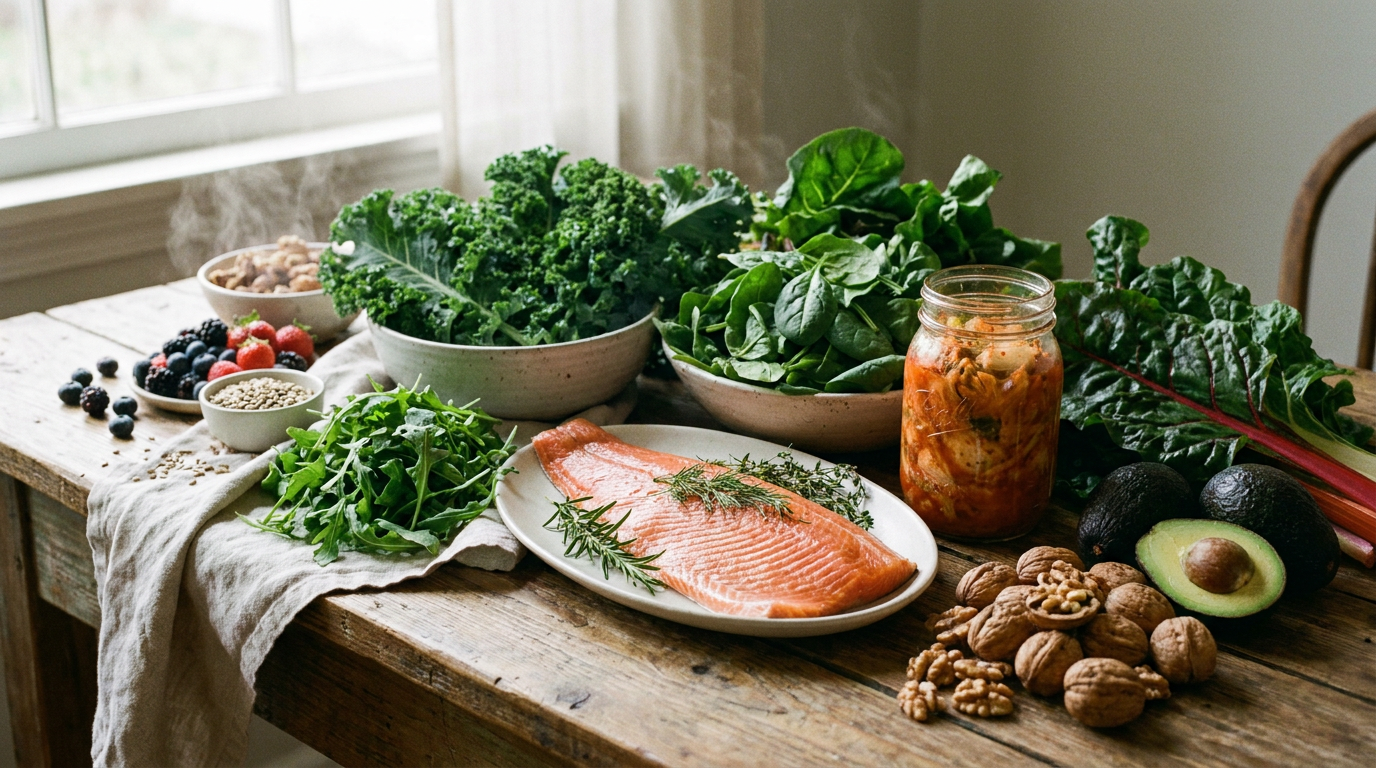
These microbes produce a vast array of neuroactive compounds that travel up the vagus nerve to influence brain function. Perhaps the most surprising discovery in this field is that an estimated 90 percent of the body's serotonin—the exact neurotransmitter targeted by the most common class of antidepressant medications, known as SSRIs—is actually produced in the digestive tract, not in the brain. Beyond serotonin, beneficial gut bacteria produce short-chain fatty acids (SCFAs), such as butyrate, during the fermentation of dietary fiber. These SCFAs are crucial for maintaining the integrity of the intestinal barrier and actively reducing systemic inflammation.[3][4]

A comprehensive April 2026 review published in the journal Nutrients synthesized data from human and animal trials, confirming that diet is the primary modifiable determinant of this delicate microbial ecosystem. The review highlighted the severe psychological toll of modern eating habits. Western dietary patterns—characterized by a high intake of ultra-processed foods, saturated fats, refined sugars, and critically low levels of dietary fiber—consistently lead to a state of "gut dysbiosis." This microbial imbalance allows harmful bacteria to proliferate, which degrades the intestinal barrier in a condition colloquially known as "leaky gut."[3]
When the barrier is compromised, toxins and undigested food particles escape into the bloodstream, triggering a chronic, low-grade immune response. This systemic inflammation does not stay confined to the gut. Inflammatory molecules known as cytokines circulate through the blood and can cross the blood-brain barrier, directly impacting the central nervous system. Once inside the brain, these inflammatory cytokines disrupt neurotransmitter metabolism and alter neural plasticity. Researchers now increasingly recognize this neuroinflammation as a primary driver of depressive symptoms, cognitive impairment, and anxiety disorders, fundamentally linking the modern diet to the modern mental health crisis.[3][4]

Conversely, the Nutrients review noted that diets rich in fiber, omega-3 fatty acids, and fermented foods actively promote a diverse microbiome, suppressing this inflammatory cascade and protecting neurological health. The World Health Organization has recently emphasized the urgent need to scale up evidence-based, accessible interventions for the more than one billion people living with mental health conditions globally. Traditional psychiatric care is highly resource-intensive, requiring specialized clinicians who are in short supply worldwide. Nutritional psychiatry offers a highly scalable, self-directed tool that patients can utilize every single day to support their own recovery.[3][5]
As the evidence base matures, the clinical landscape is beginning to shift. Psychiatric conferences in 2026 are increasingly featuring dedicated tracks on the gut-brain connection, and progressive clinics are beginning to integrate registered dietitians directly into their psychiatric care teams. This multidisciplinary approach ensures that patients receive comprehensive treatment that addresses both their neurochemistry and their metabolic health simultaneously. Ultimately, nutritional psychiatry is transforming mental healthcare from a strictly pharmacological discipline into a holistic practice that empowers patients with agency over their own healing, unlocking a powerful new frontier in the effort to alleviate mental illness.[6]
How we got here
Early 2000s
Initial animal studies begin demonstrating that altering gut bacteria can change behavior and stress responses in mice.
2017
The SMILES trial becomes one of the first randomized controlled trials to show that dietary improvement can effectively treat major depressive episodes.
April 2026
A comprehensive review in Nutrients synthesizes decades of data, cementing the link between Western diets, gut dysbiosis, and mental illness.
June 2026
A clinical trial in the Journal of the American Geriatrics Society demonstrates that daily probiotics meaningfully boost the efficacy of standard antidepressants in seniors.
Viewpoints in depth
Nutritional Psychiatrists
Argue that diet and microbiome health should be foundational, first-line interventions for mood disorders.
This camp points to the overwhelming evidence linking systemic inflammation and gut dysbiosis to neuroinflammation. They advocate for prescribing dietary changes, prebiotics, and probiotics alongside or even before traditional psychopharmaceuticals, arguing that treating the brain without addressing the gut ignores the root cause of many depressive symptoms.
Traditional Psychopharmacologists
Maintain that while diet is a helpful adjunct, severe mental illness requires targeted neurological medications.
While acknowledging the emerging data on the gut-brain axis, this camp cautions against overstating the efficacy of probiotics as a standalone cure. They emphasize that for severe, acute, or treatment-resistant psychiatric conditions, traditional SSRIs and targeted neurological interventions remain the gold standard, and diet should be viewed strictly as a supplementary lifestyle modification.
Public Health Advocates
Focus on the systemic and socioeconomic barriers to implementing nutritional psychiatry at scale.
This perspective highlights that the 'Western diet' driving gut dysbiosis is largely a product of food insecurity and socioeconomic disparity. They argue that prescribing a diet rich in fresh whole foods, omega-3s, and fermented products is ineffective if patients live in food deserts where ultra-processed foods are the only affordable and accessible options.
What we don't know
- Which specific strains of probiotic bacteria are most effective for different psychiatric conditions.
- How individual genetic differences interact with the microbiome to influence mental health outcomes.
- Whether dietary interventions can provide sufficient relief for the most severe, treatment-resistant forms of depression and schizophrenia.
Key terms
- Nutritional Psychiatry
- An emerging medical discipline that uses diet, nutrition, and gut health interventions to treat and manage mental health conditions.
- Gut-Brain Axis
- The physical and biochemical communication network that connects the digestive tract to the brain.
- Dysbiosis
- An imbalance or maladaptation of the microbial communities in the gut, often linked to poor diet and resulting in inflammation.
- Vagus Nerve
- A major cranial nerve that serves as the primary neural highway between the gut and the brain.
- Cytokines
- Small proteins crucial in controlling the growth and activity of immune system cells, which can cross the blood-brain barrier and drive neuroinflammation.
Frequently asked
What is the gut-brain axis?
It is the bidirectional communication network linking the enteric nervous system in the gut to the central nervous system in the brain, primarily via the vagus nerve.
Can probiotics replace my antidepressants?
No. Current research, including the 2026 clinical trial, studies probiotics and dietary changes as an adjunct—an addition to standard care—not a replacement for prescribed psychiatric medications.
What foods support a healthy microbiome?
Diets rich in dietary fiber, omega-3 fatty acids, and fermented foods help cultivate diverse, beneficial gut bacteria and reduce systemic inflammation.
How does inflammation affect mental health?
Chronic low-grade inflammation in the gut can release cytokines that cross the blood-brain barrier, which researchers increasingly link to depressive symptoms, cognitive impairment, and anxiety.
Sources
Source coverage
6 outlets
3 viewpoints surfaced






[1]ScienceDailyClinical Researchers & Geriatricians
A daily probiotic may help relieve depression and anxiety
Read on ScienceDaily →[2]Journal of the American Geriatrics SocietyClinical Researchers & Geriatricians
Efficacy of Adjunct PRObiotics as Compared to the Standard Care in Moderate Unipolar Depression Among Geriatric Patients
Read on Journal of the American Geriatrics Society →[3]NutrientsNutritional & Integrative Psychiatrists
Diet-Microbiome-Brain Axis in Mental Health: A Narrative Review
Read on Nutrients →[4]National Institutes of HealthClinical Researchers & Geriatricians
Gut Microbiota and Mental Health: Mechanisms and Clinical Applications
Read on National Institutes of Health →[5]World Health OrganizationGlobal Public Health Officials
WHO launches guide to scale up psychological self-help interventions
Read on World Health Organization →[6]Factlen Editorial TeamNutritional & Integrative Psychiatrists
Synthesis by Factlen editorial team
Read on Factlen Editorial Team →
More in health
See all 7 stories →Prostate Cancer
How AI, PSMA-PET Scans, and Targeted Radiation Are Transforming Prostate Cancer Care
8 sources
Longevity Science
The Evidence Behind Blue Zones: What the Data Actually Says About Extreme Longevity
7 sources

Oncology
How Precision Medicine and mRNA Are Winning the 50-Year War on Cancer
6 sources
Cancer Research
How the 'War on Cancer' Transformed Survival Rates Over 50 Years
6 sources

Every angle. Every day.
Get health stories with full source coverage and perspective breakdowns delivered to your inbox.