
Gaming Industry Expands Accessibility with 3D-Printable Hardware and Blind-Accessible Titles
Major developers and hardware makers have rolled out a wave of new accessibility features in mid-2026, including 3D-printable controller attachments and fully narrated games for blind players. The shift moves inclusive design from an optional bonus to a core industry standard.
By Factlen Editorial Team
- Accessibility Advocates
- Argue that inclusive design must be a day-one standard and emphasize the need for multiplatform hardware compatibility.
- Hardware Manufacturers
- Focus on community-driven iteration, offering free 3D-printable files to lower the cost of adaptive setups.
- Disability Nonprofits
- Emphasize the social impact, noting that accessible virtual worlds erase physical barriers and foster community.
What's not represented
- · Esports tournament organizers
- · Independent 3D-printing services
Why this matters
For the estimated 450 million gamers with disabilities, these advancements remove physical and visual barriers, allowing them to participate fully in digital communities. By offering free 3D-printable files and integrating software assists at launch, the industry is drastically lowering the financial and technical hurdles to inclusive play.
Key points
- Microsoft expanded its Xbox Adaptive Thumbstick Topper program with new 3D-printable designs.
- Kakao Games distributed over 600 customized assistive devices to disabled players in South Korea.
- Upcoming blockbusters and indie games are integrating full screen-reader and audio description support.
- Advocates are now pushing for universal, cross-platform accessibility controllers to reduce costs.
The video game industry is undergoing a quiet but profound transformation in the summer of 2026, pushing accessibility from an optional post-launch bonus to a core design expectation. Across major hardware showcases and summer gaming festivals, developers and manufacturers are rolling out unprecedented tools to welcome players of all abilities. Rather than treating inclusive design as an afterthought, studios are now building games from the ground up with features that accommodate a wide spectrum of physical and cognitive needs. This paradigm shift is fundamentally changing how games are played, ensuring that the digital worlds of tomorrow are open to everyone.[1][7]
The stakes for this industry-wide shift are massive. According to recent data, an estimated 450 million people worldwide who play video games have some form of disability. For these players, traditional controllers and visual-heavy interfaces have long presented frustrating, sometimes insurmountable barriers to entry. Disability nonprofits like Easterseals have begun comparing the current wave of accessible game design to "curb cuts" on physical sidewalks—innovations originally built for wheelchair users that ultimately smooth the path for parents with strollers, cyclists, and delivery workers. In the gaming world, features designed for disabled players often end up improving the quality of life for the entire player base.[1][5]
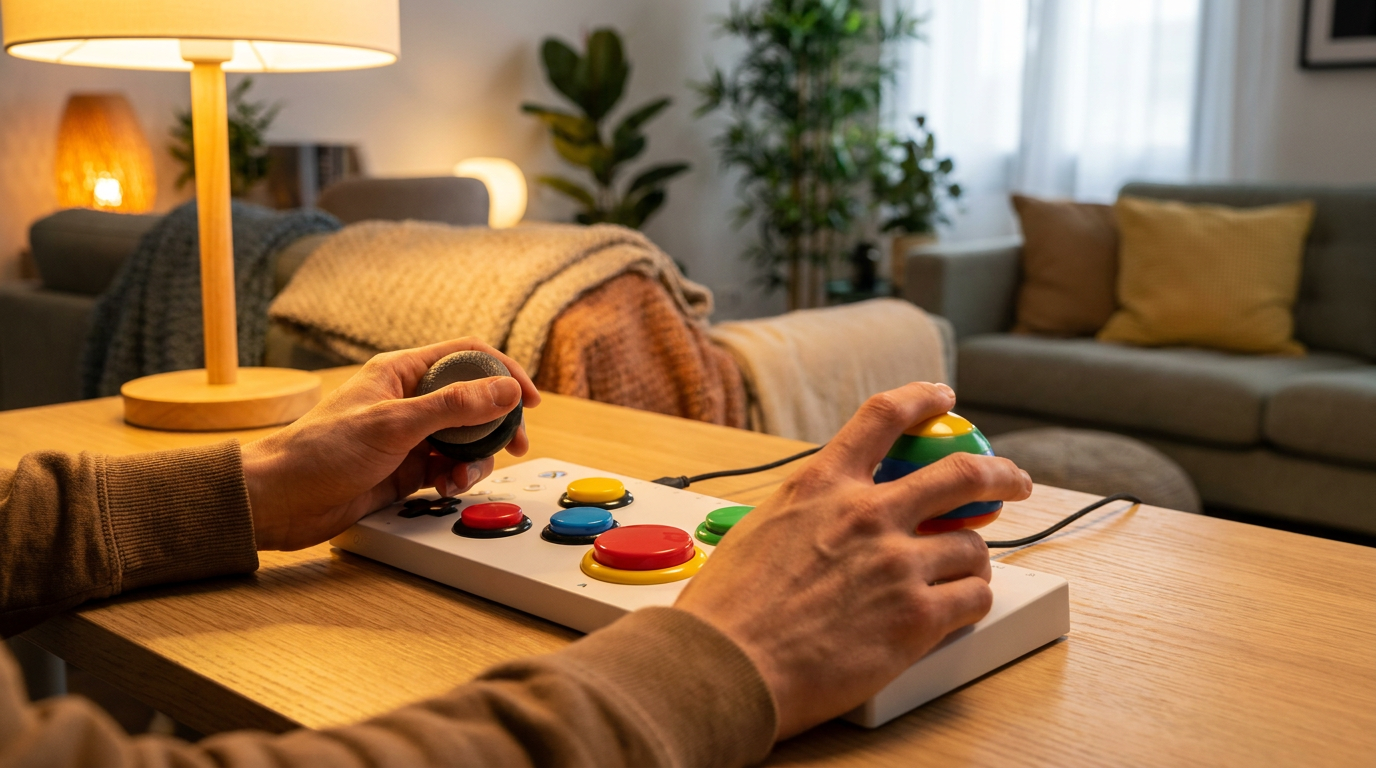
Hardware customization is currently leading the charge in this accessibility revolution. Microsoft recently expanded its widely praised Xbox Adaptive Thumbstick Topper program, a service that allows players with limited mobility to customize and download 3D-printable attachments for their controllers. By shifting the manufacturing process to the community via 3D printing, the company is bypassing the slow and expensive traditional supply chains that typically make specialized medical and adaptive equipment prohibitively expensive for the average consumer.[2][5]

The updated program now offers seven distinct adaptive topper shapes, including a highly requested "goalpost" design that provides a wider surface area for players who lack fine motor control in their thumbs. Because the design files are entirely free to download, players can print them at home or utilize local 3D-printing services to create their customized setups. This open-source approach drastically lowers the financial barrier, allowing players to experiment with different shapes and sizes until they find the perfect ergonomic fit for their specific physical requirements.[2][3][5]
These new designs are the direct result of extensive community feedback and rigorous playtesting. Players reported needing more secure attachments during high-force gameplay, prompting engineers to redesign the base connections for improved durability and stability. As hardware makers are increasingly acknowledging, accessibility is never a one-size-fits-all endeavor. A controller modification that works perfectly for a player with muscular dystrophy might be entirely unsuited for a player with cerebral palsy, making modularity and easy customization the most critical elements of modern hardware design.[3][5]
These new designs are the direct result of extensive community feedback and rigorous playtesting.
The push for inclusive hardware extends far beyond North America, with international markets making significant strides. In South Korea, the publisher Kakao Games recently received a prestigious government commendation for its "Play Buddy Together" initiative, which stands as the country's first comprehensive assistive-device support program dedicated specifically to video game accessibility. The program highlights how corporate partnerships can bridge the gap between expensive hardware and the players who need it most.[1]
Over the past three years, the South Korean program has successfully matched nearly 100 disabled players with 608 highly customized assistive devices. These setups include advanced, expensive technologies like the Tobii Eye Tracker 5, which allows players to control the camera with their eye movements, and the QuadStick Mouse, a mouth-operated joystick designed specifically for quadriplegic gamers. By partnering with the National Rehabilitation Center, the initiative ensures that players receive clinical support when setting up their complex gaming rigs.[1]

Software developers are working diligently to match these impressive hardware strides. During the Access-Ability Summer Showcase 2026, a massive spotlight was placed on video games built specifically with blind and low-vision players in mind. Historically, blind gamers have had to rely on sighted assistance or brute-force memorization to navigate complex digital environments, but a new wave of development tools is making independent play a reality for the visually impaired.[3][6]
Innovative indie titles like Celsius Strays and The Tennis Academy are launching with full environmental narration, detailed audio descriptions, and text-to-speech functionality for all interface elements. Meanwhile, massive upcoming blockbusters like Marvel's Wolverine are integrating robust screen-reader support, high-contrast visual modes, and intelligent navigation assists directly into their launch builds. This ensures that visually impaired players can experience major cultural moments alongside the rest of the gaming community, rather than waiting months for an accessibility patch.[3]
Mobile gaming, which often relies heavily on inherently inaccessible flat touch screens, is also adapting to the new inclusive standard. At Nordic Game 2026, the UK-based charity SpecialEffect demonstrated exactly how mobile developers can integrate support for eye gaze technology, external joysticks, and switch controls into their touch-heavy games. By building alternative input methods into the core code of mobile applications, developers are opening up the massive smartphone gaming market to players with severe motor disabilities.[3]

The social and emotional impact of these technologies extends far beyond mere entertainment. Virtual worlds offer unique spaces where the physical and transportation barriers that disabled individuals face in offline spaces simply do not exist. By removing the friction of inaccessible controls, the gaming industry is opening up new avenues for friendship, shared challenges, and community building, allowing disabled players to compete and collaborate on a truly level playing field.[1]
Despite this incredible progress, advocates stress that the industry still has significant hurdles to clear before true parity is achieved. A major ongoing request from the community is the development of a unified, multiplatform accessibility controller standard. Currently, disabled players often have to purchase multiple expensive, complex setups if they want to play across different ecosystems like the PlayStation 5, Xbox, and the upcoming Nintendo Switch 2. Breaking down these walled gardens remains the next great frontier for inclusive gaming.[4]
How we got here
March 2023
Kakao Games launches South Korea's first assistive-device support program for gamers.
2024
Microsoft introduces the initial Xbox Adaptive Thumbstick Topper program.
January 2026
Industry leaders present the next era of inclusive tools at the CES 'Gaming for All' panel.
May 2026
Xbox releases updated 3D-printable hardware designs for Global Accessibility Awareness Day.
June 2026
The Access-Ability Summer Showcase highlights a new wave of fully blind-accessible indie titles.
Viewpoints in depth
Accessibility Advocates
Pushing for universal standards and day-one inclusion.
Advocates argue that accessibility can no longer be treated as a post-launch patch or a niche feature. They are pushing for multiplatform hardware compatibility, noting that disabled players shouldn't have to buy entirely new, expensive adaptive setups just to switch from an Xbox to a Nintendo console. Furthermore, they emphasize that software features like screen readers and high-contrast modes must be integrated into the core development pipeline from day one.
Hardware Manufacturers
Focusing on modularity and community-driven iteration.
Companies like Microsoft are leaning heavily into modular, open-ended designs. By providing free 3D-printable files for controller attachments, manufacturers are effectively crowdsourcing the final mile of hardware customization. This approach acknowledges that disability is highly individualized, and no single mass-produced controller can meet everyone's needs. Instead, they are building hubs that players can customize with cheap, easily replaceable parts.
Disability Nonprofits
Highlighting the social and community-building power of gaming.
Organizations like Easterseals view gaming not just as entertainment, but as a vital social lifeline. Virtual worlds erase the physical and transportation barriers that often isolate disabled individuals in the offline world. By making games more accessible, the industry is opening up digital public squares where players can form friendships, compete on equal footing, and share experiences without their disabilities defining their participation.
What we don't know
- Whether major console manufacturers will collaborate on a unified, cross-platform accessibility controller standard.
- How quickly mobile game developers will adopt eye-tracking and switch-control standards on a broad scale.
Key terms
- Adaptive Controller
- A customizable gaming hub designed for players with limited mobility, allowing them to plug in external switches, buttons, and joysticks.
- Screen Reader
- Assistive software that reads on-screen text and interface elements aloud for blind and low-vision users.
- Eye Gaze Technology
- Hardware that tracks a user's eye movements to control a cursor or input commands without physical hand movement.
- QuadStick
- A mouth-operated game controller designed specifically for quadriplegic gamers.
Frequently asked
Are the 3D-printable thumbsticks free?
Yes, the design files are free to download, allowing players to print them at home or through a local 3D printing service.
What makes a game blind-accessible?
It typically includes full menu narration, text-to-speech for dialogue, audio descriptions of the environment, and specific audio cues for navigation and combat.
Can adaptive controllers be used on any console?
Currently, most adaptive controllers are ecosystem-specific, though advocates are pushing for multiplatform compatibility to reduce costs for players.
Sources
Source coverage
7 outlets
3 viewpoints surfaced







[1]Thompson TribuneDisability Nonprofits
Gaming for All: Adaptive interfaces multiply across 2026
Read on Thompson Tribune →[2]Console CreaturesHardware Manufacturers
For GAAD 2026, Xbox Releases Fresh Accessibility Updates
Read on Console Creatures →[3]Blind GamingAccessibility Advocates
Xbox marks GAAD with improved adaptive thumbsticks and clearer accessibility discovery
Read on Blind Gaming →[4]Access-AbilityAccessibility Advocates
2026 Gaming Accessibility Predictions / Questions
Read on Access-Ability →[5]XboxHardware Manufacturers
Xbox Adaptive Thumbstick Topper Program Updates
Read on Xbox →[6]EurogamerAccessibility Advocates
Access-Ability Summer Showcase 2026 highlights inclusive design
Read on Eurogamer →[7]GameSpotHardware Manufacturers
How 2026 became a turning point for video game accessibility
Read on GameSpot →


Every angle. Every day.
Get entertainment stories with full source coverage and perspective breakdowns delivered to your inbox.