
U.S. and Iran Open 60-Day Window to Finalize Peace Treaty in Switzerland
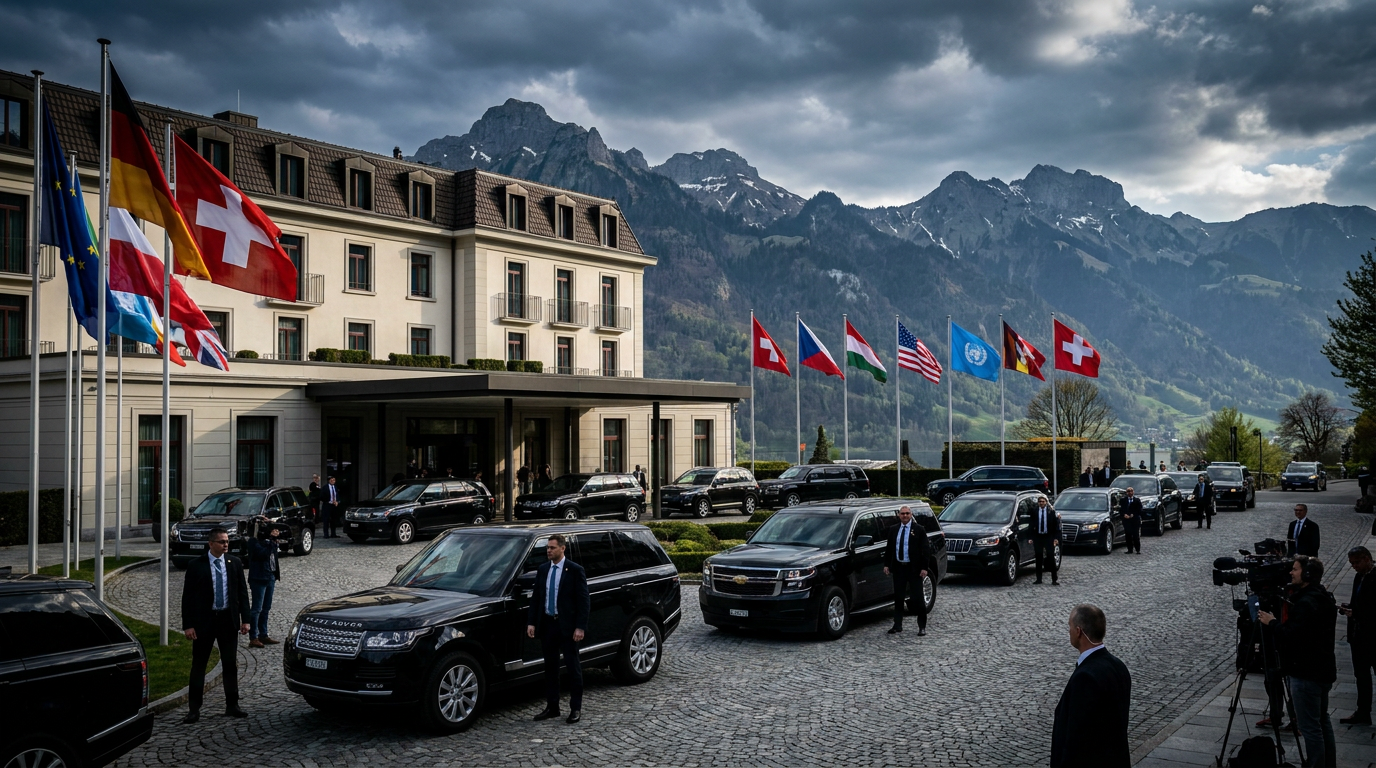
U.S. and Iranian delegations have arrived in Switzerland to negotiate the final terms of a 14-point framework aimed at ending the 110-day war and reopening the Strait of Hormuz.
By Factlen Editorial Team
- U.S. Administration
- Prioritizes ending the 110-day war, securing nuclear concessions, and stabilizing global oil markets.
- Iranian Leadership
- Seeks immediate sanctions relief, the unfreezing of assets, and an end to military strikes on its allies.
- Israeli Government
- Rejects the deal's premise, prioritizing the military defeat of Hezbollah and viewing Iranian nuclear promises as untrustworthy.
- Global Markets & Mediators
- Focused entirely on preventing regional escalation and ensuring the uninterrupted flow of commercial shipping.
What's not represented
- · Lebanese civilians caught in the crossfire of the ongoing Israel-Hezbollah conflict.
- · European and Asian energy importers who rely heavily on the Strait of Hormuz.
Why this matters
The outcome of these 60-day negotiations will determine whether the global economy faces a renewed energy crisis or a stabilized Middle East. If the framework collapses, the resumption of the 110-day war could permanently sever the Strait of Hormuz and drag the U.S. back into direct military conflict.
Key points
- U.S. and Iranian delegations have arrived in Switzerland to negotiate a final peace treaty within a 60-day window.
- The talks aim to finalize a 14-point framework that ends the 110-day war and reopens the Strait of Hormuz.
- Iran has agreed to down-blend its enriched uranium under IAEA supervision in exchange for massive sanctions relief.
- The deal is threatened by ongoing fighting in Lebanon, as Israel refuses to halt its campaign against Hezbollah.
- President Trump has threatened to impose U.S. tolls on the Strait of Hormuz if a final agreement collapses.
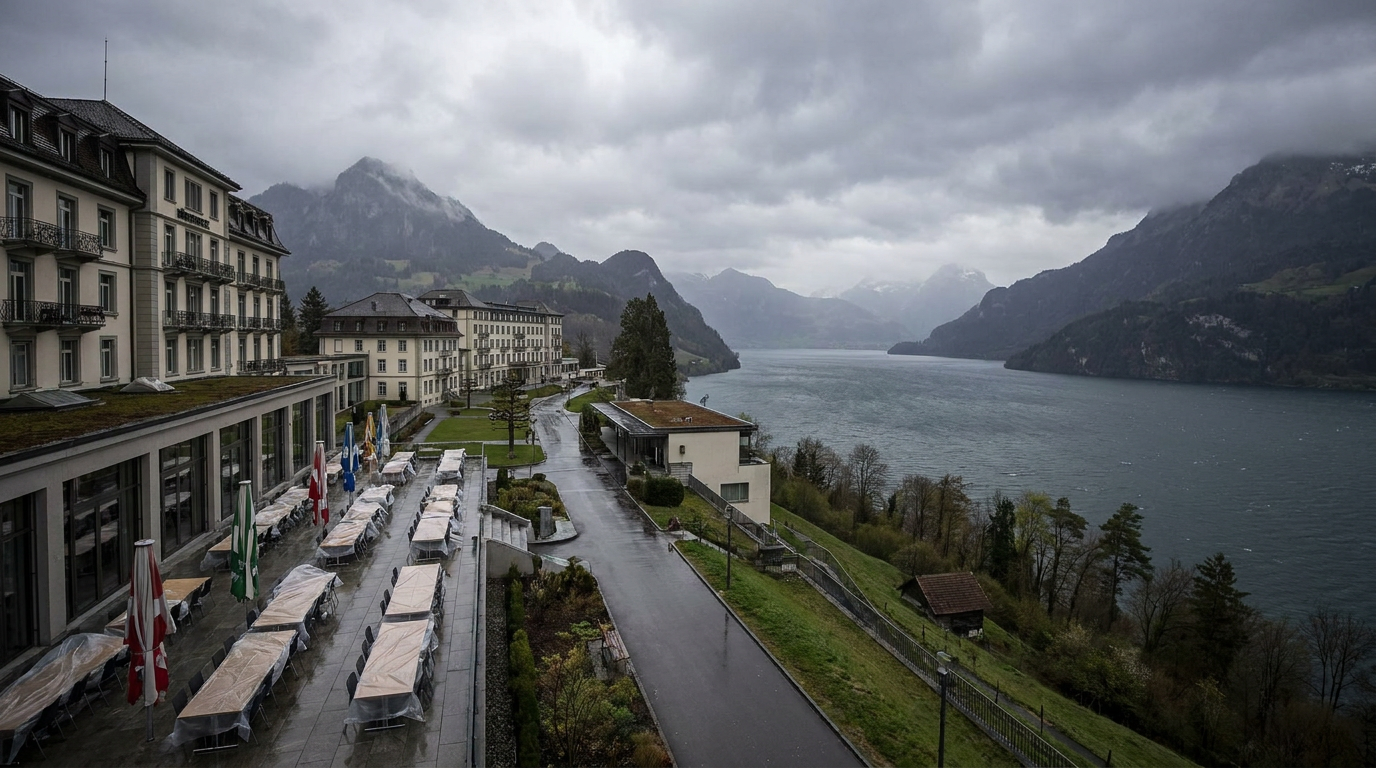
U.S. Vice President JD Vance touched down in Switzerland on Sunday, launching a high-stakes diplomatic sprint to convert a fragile ceasefire into a permanent peace treaty between the United States and Iran. The arrival of American, Iranian, Pakistani, and Qatari delegations at the Alpine resort of Bürgenstock marks the beginning of a 60-day window to finalize the details of a 14-point Memorandum of Understanding (MoU).[1][6]
The preliminary agreement, signed digitally and in person by U.S. President Donald Trump and Iranian President Masoud Pezeshkian, aims to formally end a devastating 110-day war that has paralyzed global energy markets. However, the path to a final treaty is fraught with technical hurdles, regional spoilers, and deep-seated mistrust.[2][4]
The conflict erupted on February 28, 2026, when coordinated U.S. and Israeli airstrikes targeted Iranian nuclear and military infrastructure, prompting Tehran to effectively shutter the Strait of Hormuz. The resulting economic shockwaves forced mediators from Pakistan and Qatar to broker the current MoU, which demands an "immediate and permanent termination of military operations on all fronts."[2][7]

The most immediate global relief comes from the unblocking of the Strait of Hormuz, a maritime chokepoint that handles roughly a fifth of the world's traded oil. Under the MoU, the U.S. has agreed to lift its naval blockade, while Iran is required to ensure toll-free passage for commercial vessels for at least 60 days.[4][7]
To address the war's root cause, the framework requires Iran to maintain the "status quo" of its nuclear program and explicitly states that Tehran will not procure or develop nuclear weapons. Crucially, Iranian negotiators have agreed to "down-blend" their stockpile of highly enriched uranium on Iranian soil, a process that will be supervised by inspectors from the International Atomic Energy Agency (IAEA).[1][7]
In exchange for these nuclear concessions, the U.S. is offering massive economic incentives. The MoU outlines the release of an estimated $24 billion to $25 billion in frozen Iranian sovereign assets, though the exact timeline for these transfers remains a fierce point of contention in Geneva.[2][7]

Furthermore, the agreement commits the U.S. and its regional partners to establish a $300 billion reconstruction and investment fund to rebuild Iran's war-torn economy. This fund, however, will only become operational if a final, verifiable nuclear treaty is signed at the end of the 60-day window.[3][7]
and its regional partners to establish a $300 billion reconstruction and investment fund to rebuild Iran's war-torn economy.
Despite the diplomatic progress in Switzerland, the entire framework threatens to unravel over ongoing violence in Lebanon. The MoU explicitly calls for a cessation of hostilities by the U.S., Iran, and their respective allies, which Tehran interprets as a mandate for Israel to halt its campaign against Hezbollah.[6]
Israel, which is not a signatory to the U.S.-Iran deal, has fiercely rejected this condition. Prime Minister Benjamin Netanyahu has vowed to maintain a military presence in southern Lebanon until the threat from Hezbollah is neutralized, and Israeli forces launched fresh airstrikes over the weekend.[3][6]

Netanyahu's defiance has triggered an unprecedented public rift with the Trump administration. U.S. intelligence agencies have reportedly warned the White House that the Israeli premier may actively attempt to undermine the Iran deal, while Trump has publicly urged Israel not to derail the fragile peace process.[6]
The Lebanon loophole nearly collapsed the talks before they began. Iran briefly delayed sending its delegation to Switzerland and claimed it had re-closed the Strait of Hormuz in retaliation for Israeli strikes, though U.S. Central Command disputed the closure, confirming that millions of barrels of oil were still flowing.[3][6]
In a bid to maintain leverage, President Trump issued a stark warning over the weekend, threatening to impose U.S. tolls on vessels transiting the Strait of Hormuz if a final deal is not reached within the 60-day timeframe. Trump claimed the fees would serve as reimbursement for America's role as the "Guardian Angel" of Middle Eastern waterways.[4][5]

Iranian hardliners, meanwhile, insist that Tehran retains sovereign rights over the strait and have pledged to introduce their own passage fees once the 60-day toll-free period expires. This fundamental disagreement over maritime control will be a central focus for Vance and his Iranian counterparts, parliamentary speaker Mohammad Bagher Ghalibaf and Foreign Minister Abbas Araghchi.[2][3]
As technical teams sit down in Bürgenstock, the mediators from Islamabad and Doha are working frantically to keep both sides at the table. The next eight weeks will determine whether the 14-point framework can evolve into a durable geopolitical settlement, or if the Middle East will plunge back into a catastrophic regional war.[1][5]
How we got here
Feb 2026
The U.S. and Israel launch coordinated airstrikes on Iranian nuclear sites, sparking a 110-day regional war.
April 2026
Pakistan and Qatar broker a fragile, temporary two-week ceasefire, though fighting continues in Lebanon.
Mid-June 2026
President Trump and President Pezeshkian sign a 14-point Memorandum of Understanding to end the conflict.
June 21, 2026
U.S. Vice President JD Vance arrives in Switzerland to begin a 60-day negotiation window for a final treaty.
Viewpoints in depth
U.S. Administration's view
The White House views the deal as a necessary mechanism to contain Iran's nuclear ambitions and stabilize global energy markets.
U.S. officials emphasize that the 14-point framework is a pragmatic victory that immediately reopens the Strait of Hormuz while freezing Iran's nuclear progress. By tying massive economic incentives—like the $300 billion reconstruction fund and sanctions relief—directly to verifiable IAEA inspections, the administration believes it has created a structure where Iran has more to lose by walking away.
Iranian Leadership's view
Tehran views the agreement as a strategic survival mechanism that secures vital economic relief while preserving its regional influence.
For Iran, the MoU is a means to end a devastating 110-day war and lift a crippling U.S. naval blockade. Iranian negotiators are heavily focused on the immediate unfreezing of $24 billion in sovereign assets and insist that the ceasefire must apply to all regional fronts, including Lebanon. Hardliners maintain that Iran retains ultimate sovereignty over the Strait of Hormuz and view the nuclear concessions as reversible if Washington fails to deliver on sanctions relief.
Israeli Government's view
Israel views the bilateral U.S.-Iran agreement as a dangerous capitulation that leaves Tehran's proxy networks intact.
Prime Minister Benjamin Netanyahu and his cabinet are deeply skeptical of Iran's willingness to abandon its nuclear program, arguing that the deal fails to dismantle the regime's core infrastructure. Because Israel was excluded from the negotiations, the government insists it is not bound by the MoU's terms. Consequently, Israel has refused to halt its military operations against Hezbollah in southern Lebanon, prioritizing its immediate border security over Washington's broader diplomatic timeline.
What we don't know
- Whether Israel will eventually agree to a ceasefire in Lebanon or if its ongoing strikes will cause Iran to walk away from the table.
- The exact timeline and mechanism for releasing Iran's $24 billion in frozen sovereign assets.
- How the U.S. and Iran will resolve their competing claims over who has the right to collect tolls in the Strait of Hormuz after the 60-day window.
Key terms
- Memorandum of Understanding (MoU)
- A preliminary, non-binding agreement outlining the framework and core principles for a future, finalized peace treaty.
- Strait of Hormuz
- A narrow, highly strategic waterway between the Persian Gulf and the Gulf of Oman through which roughly 20% of the world's traded oil passes.
- Down-blending
- The process of diluting highly enriched uranium with lower-grade material so that it can no longer be used to create a nuclear weapon.
- IAEA
- The International Atomic Energy Agency, the United Nations watchdog responsible for inspecting and verifying a country's nuclear activities.
Frequently asked
What triggered the 2026 U.S.-Iran war?
The conflict began on February 28, 2026, when the U.S. and Israel launched coordinated airstrikes against Iranian nuclear and military facilities, leading Iran to block the Strait of Hormuz.
What are the terms of the new peace agreement?
The 14-point Memorandum of Understanding includes reopening the Strait of Hormuz, lifting the U.S. naval blockade, down-blending Iran's enriched uranium, and unfreezing billions in Iranian assets.
Why is the situation in Lebanon complicating the deal?
The agreement calls for a halt to fighting on all fronts, but Israel—which did not sign the deal—has refused to stop its military campaign against Hezbollah in southern Lebanon.
What is the $300 billion reconstruction fund?
The U.S. and regional partners have proposed a $300 billion investment fund to rebuild Iran's economy, but it will only be activated if a final, verifiable nuclear treaty is signed.
Sources
Source coverage
7 outlets
4 viewpoints surfaced







[1]CBS NewsU.S. Administration
U.S.-Iran deal signing sets stage for nuclear negotiations
Read on CBS News →[2]The GuardianGlobal Markets & Mediators
US-Iran deal takeaways: reopening the strait of Hormuz, waived oil sanctions and Lebanon
Read on The Guardian →[3]The Times of IsraelIsraeli Government
US-Iran deal said set to halt regional hostilities, including in Lebanon, lift blockade
Read on The Times of Israel →[4]The HinduIranian Leadership
The United States and Iran agree to a peace deal
Read on The Hindu →[5]Fox NewsU.S. Administration
Vance travels to Switzerland for talks as Iran negotiators arrive
Read on Fox News →[6]The Washington PostIsraeli Government
Israeli Prime Minister Benjamin Netanyahu faces pressure to continue a military campaign in Lebanon
Read on The Washington Post →[7]Council on Foreign RelationsGlobal Markets & Mediators
Where the U.S.-Iran Deal Lands on Core Issues
Read on Council on Foreign Relations →

More in news politics
See all 6 stories →Border Policy
Human Rights Groups Sue Canada Over Deportation of Asylum Seekers to U.S.
6 sources
US-Iran Negotiations
U.S. and Iranian Delegations Arrive in Switzerland to Finalize War-Ending Accord
8 sources
Vehicle Emissions
EPA Transmits California Emissions Waivers to Congress for Repeal Amid Sweeping Climate Lawsuits
8 sources
US-Iran Conflict
U.S. and Iranian Delegations Open High-Stakes Ceasefire Negotiations in Switzerland
7 sources
Every angle. Every day.
Get news politics stories with full source coverage and perspective breakdowns delivered to your inbox.