
The Chemistry of Cookie Baking: Why Resting Dough for 24 Hours Changes Everything
Food scientists and professional bakers agree that "ripening" cookie dough in the refrigerator fundamentally alters its chemistry, leading to deeper flavors, better browning, and a chewier texture.
By Factlen Editorial Team
- Culinary Scientists
- Advocate for extended resting times to maximize chemical flavor development.
- Practical Home Bakers
- Prioritize texture control and convenience over maximum flavor extraction.
- Recipe Developers
- Focus on ingredient ratios and temperature as the foundation of cookie structure.
What's not represented
- · Commercial Bakery Operators
- · Gluten-Free Baking Specialists
Why this matters
Understanding the science of hydration and enzymatic breakdown turns a frustrating baking experience into a predictable, repeatable success. By treating time as an active ingredient, home bakers can achieve bakery-level results without changing a single item on their grocery list.
Key points
- Resting cookie dough allows flour to fully hydrate, resulting in a chewier, more cohesive texture.
- Chilling solidifies the butter, which melts slower in the oven and prevents excessive spreading.
- Enzymes break down starches into simple sugars over 24 hours, enhancing the Maillard reaction.
- A 30-minute rest improves structure, while a 24- to 72-hour rest dramatically deepens flavor.
- Scooping dough into balls before chilling makes portioning significantly easier.
- The original Toll House chocolate chip cookie recipe explicitly called for an overnight chill.
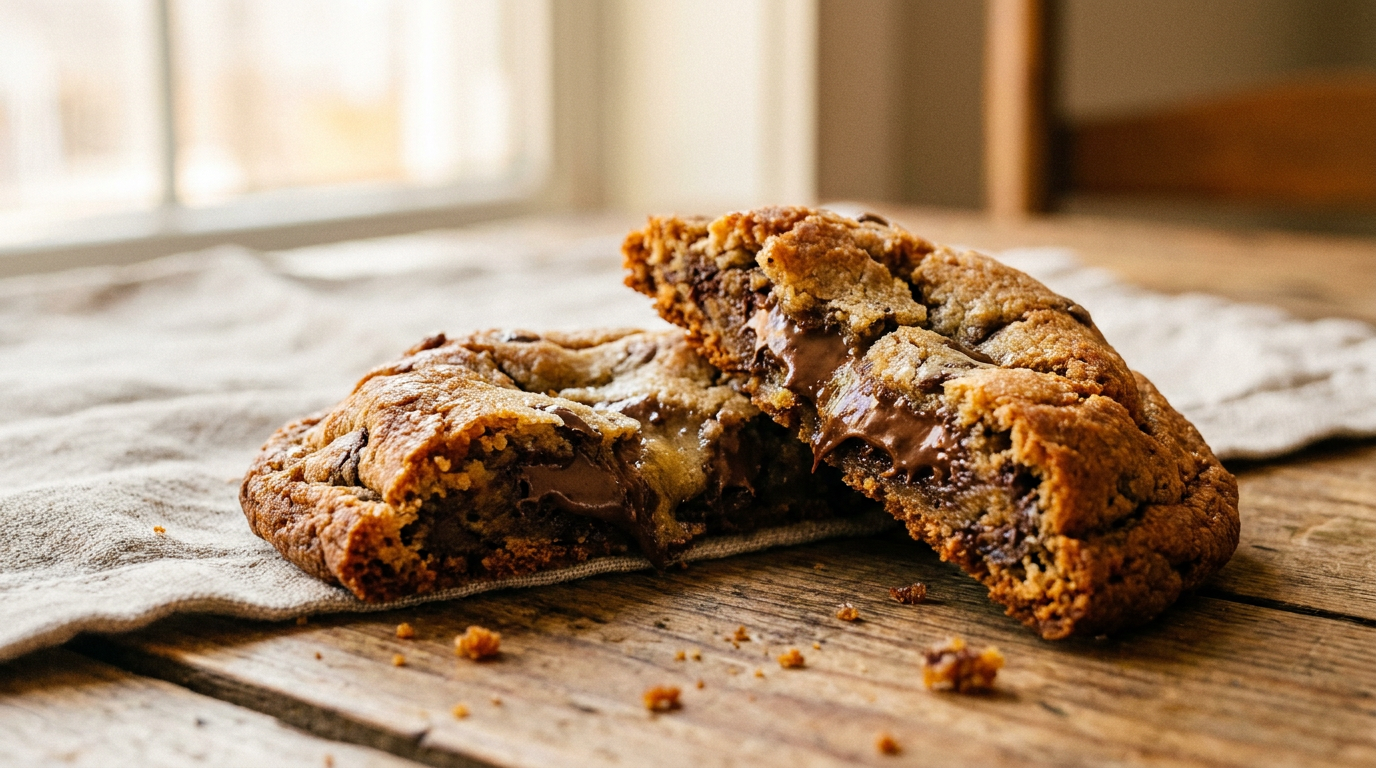
When the craving for a freshly baked chocolate chip cookie hits, the instinct is to mix the dough and slide it immediately into the oven. The kitchen fills with the scent of butter and sugar, and within fifteen minutes, warm cookies are ready to eat. But according to culinary scientists and professional bakers, rushing this process leaves the dough's true potential entirely untapped. The secret to a bakery-quality cookie—one with a deeply caramelized flavor, a chewy center, and perfectly crisped edges—is not a rare ingredient. It is simply time.[1][6]
The technique is known in professional kitchens as "ripening" or resting the dough. While it may seem like an unnecessary delay, resting cookie dough in the refrigerator for anywhere from 30 minutes to 72 hours fundamentally alters its chemistry. This resting period triggers a cascade of physical and chemical changes that transform a pale, flat, one-dimensional cookie into a complex, butterscotch-scented masterpiece.[1][3]
The first major transformation that occurs during a resting period is hydration. Unlike bread dough, which contains a significant amount of water, cookie dough is relatively dry. The bulk of its moisture comes from eggs and the small amount of water present in butter. Because eggs are viscous and thick, it takes time for the starches in the flour to fully absorb their moisture.[1]
When dough is baked immediately, the flour hasn't had a chance to fully hydrate. The resulting cookie often has a doughy, slightly powdery texture. However, when the dough rests in the refrigerator, the flour acts like a slow sponge, pulling in the moisture over several hours. This process dries out the dough overall, concentrating the remaining ingredients and yielding a more flavorful, cohesive structure that bakes up with a satisfyingly chewy center.[1][4]

Hydration also plays a critical role in controlling how much the cookie spreads in the oven. Because the resting process absorbs excess free moisture, the dough becomes firmer and less prone to melting into a puddle on the baking sheet. For bakers struggling with flat, conjoined cookies, allowing the flour to fully hydrate is often the missing variable.[4][5]
The second immediate benefit of chilling dough is fat solidification. Most drop cookie recipes rely on a high percentage of butter. When dough is mixed at room temperature—or worse, in a warm kitchen—the butter becomes incredibly soft. If that warm dough goes straight into a hot oven, the butter melts rapidly, long before the flour and egg proteins have a chance to set and build a structural scaffolding.[1][5]
By chilling the dough, the butter is forced to re-solidify. When cold dough hits the hot oven, the fat takes significantly longer to melt. This delay gives the edges of the cookie time to set and bake before the center collapses outward. A quick 30-minute stint in the refrigerator is usually enough to firm up the fat and prevent excessive spreading, making it the bare minimum rest time recommended by most recipe developers.[1][3]
When cold dough hits the hot oven, the fat takes significantly longer to melt.
But preventing spread is only the beginning. The true magic of resting cookie dough—the reason experts advocate for 24 to 72 hours of chilling—lies in enzymatic breakdown. As the dough sits in the refrigerator, naturally occurring enzymes in the flour, primarily amylase, begin to break down complex carbohydrates into simple sugars.[2][4]

This enzymatic activity is the culinary equivalent of aging a fine steak. The longer the dough rests, the more simple sugars are produced. These simple sugars are highly reactive and play a starring role in the Maillard reaction—the chemical process responsible for browning and the development of complex, savory, and roasted flavor compounds in cooked food.[2][6]
Because a rested dough contains a higher concentration of simple sugars, it browns faster and more evenly in the oven. The edges develop a deep, golden-brown caramelization, while the interior retains a rich, butterscotch-like flavor that simply cannot be achieved with freshly mixed dough. J. Kenji López-Alt, a prominent food scientist and author, conducted extensive tests on cookie dough and concluded that an overnight rest is the single most important step for upgrading a cookie's texture and taste.[2][5]
The timeline for resting dough offers different rewards at different stages. At 30 minutes, the primary benefit is structural: the fat has chilled, and the cookies will hold their shape. At 24 hours, the chemical transformation is well underway, resulting in noticeable improvements in browning and a deeper, more complex flavor profile. This 24-hour mark is widely considered the sweet spot for home bakers balancing quality with impatience.[1][3]
Pushing the rest time to 48 or 72 hours continues to enhance the flavor, pushing the notes further into toffee and butterscotch territory. King Arthur Baking has even experimented with resting dough for up to 10 days, noting continuous shifts in flavor. However, most experts agree that after 72 hours, the returns begin to diminish, and the dough risks drying out entirely or absorbing off-flavors from the refrigerator.[1][3]

Interestingly, this "secret" technique is not a modern culinary invention. Ruth Wakefield, the creator of the original Toll House chocolate chip cookie, explicitly wrote in her historic cookbook that the dough should be chilled overnight. Over the decades, as convenience baking became the norm, this crucial instruction was quietly edited out of the recipe printed on the back of chocolate chip bags.[1][6]
One practical challenge of resting dough is that a 24-hour chill turns the mixture into a rock-hard block, making it nearly impossible to scoop. To circumvent this, professional bakers recommend portioning the dough into individual balls immediately after mixing, while it is still soft and pliable. The pre-scooped balls can then be placed in an airtight container or tightly wrapped on a baking sheet to rest in the fridge.[3][6]
Baking temperature also interacts closely with rested dough. A cooler oven, around 300°F, allows the cookie to dry out slowly and bake evenly, resulting in a paler, puffier cookie. A hotter oven, around 350°F to 375°F, shocks the cold dough, rapidly setting the edges for a crispy exterior while leaving the center gooey and underbaked. Adjusting the temperature allows bakers to fine-tune the final texture of their ripened dough.[2][5]
Ultimately, the science of resting cookie dough proves that baking is as much about patience as it is about precision. By understanding the mechanisms of hydration, fat solidification, and enzymatic breakdown, home bakers can elevate a simple drop cookie into a deeply flavorful, texturally perfect dessert. The hardest part is simply waiting for the chemistry to do its work.[4][6]
How we got here
0–30 Minutes
Flour begins to hydrate and butter solidifies, preventing the cookie from spreading excessively in the oven.
2–12 Hours
Hydration completes, drying out the dough and concentrating the flavors of the vanilla, salt, and sugar.
24 Hours
Enzymatic breakdown accelerates, converting complex starches into simple sugars for enhanced browning.
48–72 Hours
Flavor complexity peaks, developing deep butterscotch and toffee notes before returns begin to diminish.
Viewpoints in depth
Culinary Scientists
Advocate for extended resting times to maximize chemical flavor development.
Food scientists and rigorous recipe developers view the 24- to 72-hour resting period as a non-negotiable step for a perfect cookie. They point to the enzymatic breakdown of starches into simple sugars as the primary driver of complex, butterscotch-like flavors. From this perspective, baking dough immediately is a missed opportunity, as the Maillard reaction cannot reach its full potential without the increased concentration of simple sugars that only time can provide.
Practical Home Bakers
Prioritize texture control and convenience over maximum flavor extraction.
For many everyday bakers, the primary goal of chilling dough is structural rather than chemical. A 30- to 60-minute rest in the refrigerator is often viewed as the ideal compromise. This brief chill is sufficient to solidify the butter and hydrate the flour just enough to prevent the cookies from spreading into a thin, conjoined puddle on the baking sheet. While they acknowledge the flavor benefits of a multi-day rest, practical bakers often weigh the craving for a warm cookie against the diminishing returns of a 72-hour wait.
Recipe Developers
Focus on ingredient ratios and temperature as the foundation of cookie structure.
While acknowledging the benefits of resting, some baking experts emphasize that time cannot fix a fundamentally flawed recipe. If a dough contains too much sugar, too much butter, or insufficient flour, it will spread excessively regardless of how long it sits in the fridge. These developers focus on precise ratios and oven temperature calibration—such as baking at 300°F for a thicker, paler cookie versus 375°F for a crispy-edged one—viewing the resting period as an enhancer rather than a cure-all.
What we don't know
- Whether resting times beyond 72 hours offer any discernible flavor benefits before the dough begins to dry out.
- Exactly how different brands and protein levels of all-purpose flour alter the hydration timeline.
- The precise degree to which resting impacts non-butter fats, such as shortening or vegan butter alternatives.
Key terms
- Ripening
- The professional baking term for allowing dough to rest in the refrigerator to develop flavor and texture.
- Hydration
- The process by which dry ingredients, like flour, absorb moisture from wet ingredients, like eggs and butter.
- Enzymatic Breakdown
- The chemical process where naturally occurring enzymes in flour break down complex carbohydrates into simple sugars.
- Maillard Reaction
- A chemical reaction between amino acids and reducing sugars that gives browned food its distinctive flavor.
- Caramelization
- The browning of sugar, a process used extensively in cooking for the resulting sweet nutty flavor and brown color.
Frequently asked
Should I scoop the dough before or after resting it?
It is highly recommended to scoop the dough into individual balls immediately after mixing. Once chilled for 24 hours, the dough becomes rock-hard and very difficult to portion.
Can I rest the dough for longer than three days?
While some bakers experiment with resting dough for up to 10 days, most experts agree that flavor peaks around 72 hours. After that, the dough risks drying out or absorbing refrigerator odors.
Does resting work for all types of cookies?
Resting is most beneficial for high-fat, high-sugar drop cookies like chocolate chip or sugar cookies. Delicate, heavily aerated cookies like macarons or meringues rely on different chemical structures and should not be rested in the same way.
Can I freeze the dough instead of resting it in the fridge?
Freezing is excellent for long-term storage, but it halts the enzymatic breakdown process. For the best flavor, let the dough rest in the refrigerator for 24 hours before transferring it to the freezer.
Sources
Source coverage
6 outlets
3 viewpoints surfaced






[1]The KitchnPractical Home Bakers
What Does Ripening Cookie Dough Mean? And Should I Be Doing It?
Read on The Kitchn →[2]Serious EatsCulinary Scientists
The Science Behind Chocolate Chip Cookies
Read on Serious Eats →[3]King Arthur BakingRecipe Developers
3 Reasons to Always Chill Cookie Dough Before Baking
Read on King Arthur Baking →[4]Bon AppétitPractical Home Bakers
Does Letting Cookie Dough Rest Actually Help Them Taste Better?
Read on Bon Appétit →[5]Food52Recipe Developers
Why are My Cookies Flat? - How to Fix Cookies That Spread Too Much
Read on Food52 →[6]Factlen Editorial TeamCulinary Scientists
Synthesis by Factlen editorial team
Read on Factlen Editorial Team →
Every angle. Every day.
Get food drink stories with full source coverage and perspective breakdowns delivered to your inbox.