
Bolivian President Declares State of Emergency, Deploys Military to Clear 50-Day Blockades
President Rodrigo Paz has authorized the military to dismantle nationwide roadblocks that have paralyzed the economy and caused severe food and fuel shortages.
By Factlen Editorial Team
- The Government & Supporters
- Argues that the state of emergency is a necessary measure to restore order, protect the economy, and ensure the delivery of essential goods.
- Protesters & MAS Loyalists
- Views the government's austerity measures as an attack on the working class and demands the president's resignation.
- Affected Civilians
- Exhausted by the 50-day paralysis, this group prioritizes a return to normalcy and the restoration of basic food and medical supplies.
What's not represented
- · Healthcare workers managing supply shortages
- · Commercial truck drivers stranded on highways
Why this matters
The crisis threatens to topple Bolivia's first non-socialist government in two decades. The ongoing blockades have already cost the economy billions and led to at least 17 deaths due to medical supply disruptions, making this a critical turning point for the nation's stability.
Key points
- President Rodrigo Paz declared a 90-day state of emergency to clear nationwide roadblocks that have paralyzed Bolivia for 50 days.
- The military has been deployed to support police in dismantling barricades and restoring the flow of food, fuel, and medicine.
- The crisis began when the government cut fuel subsidies to address a severe deficit, sparking protests from unions and Indigenous groups.
- While the main labor union agreed to a truce on Friday, rural factions loyal to the former MAS government refused to lift over 40 major roadblocks.
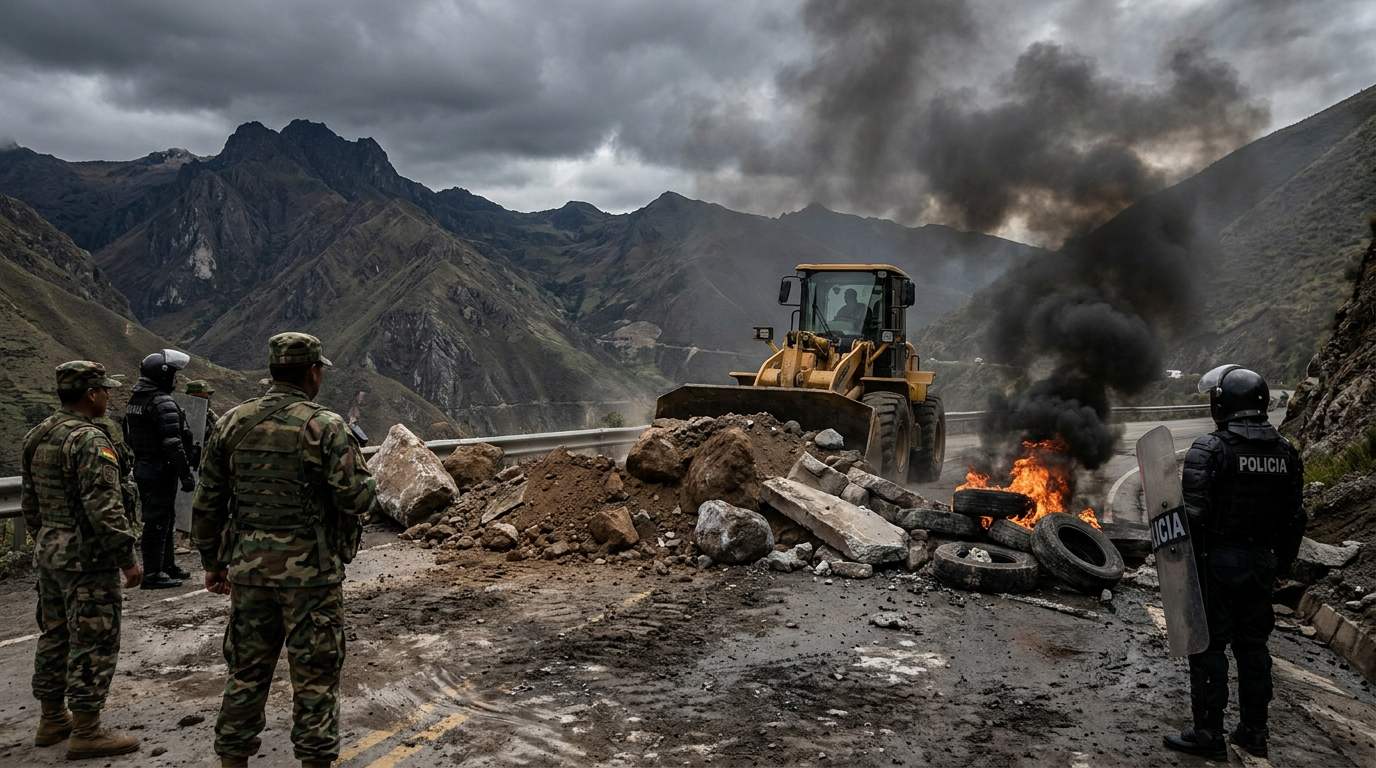
Bolivian President Rodrigo Paz declared a 90-day state of emergency on Saturday, authorizing the immediate deployment of the armed forces and heavy machinery to dismantle nationwide anti-government roadblocks that have paralyzed the Andean nation for nearly two months. The sweeping decree marks a dramatic escalation in a 50-day standoff between the centrist government and a formidable coalition of labor unions, Indigenous groups, and coca farmers. For weeks, these demonstrators have choked off the country's primary transit arteries, utilizing rubble, felled trees, and debris to effectively sever major cities from their supply lines. The military's intervention represents a critical juncture for Bolivia, as the administration moves to forcefully reclaim control over a rapidly deteriorating security and economic landscape.[1][2][3]
In a predawn televised address to the nation, President Paz outlined the parameters of the emergency measure, emphasizing that the military would operate in a supporting role to the national police to reopen highways and restore public order. The decree grants the government broad constitutional authority to clear the barricades, though Paz explicitly stated that the measure does not suspend due process rights or fundamental civil liberties. "This is not a state of emergency to restrict people's lives," Paz told the public, seeking to reassure citizens wary of military overreach. "It is a state of emergency to give freedom back to the people, to free Bolivia from those who use political conflict to block roads and harm the population." The president warned that those who continue to violently disrupt the nation's infrastructure would face the full force of the law.[2][3][4]
The roots of the current crisis trace back to the administration's aggressive economic reforms, specifically the abrupt cancellation of long-standing fuel subsidies. Paz, who inherited a severely depleted central bank and a worsening dollar crunch, implemented the austerity measures to shrink the national deficit amid ongoing negotiations with the International Monetary Fund. While the government argued the cuts were a necessary, albeit painful, step to stabilize the economy, the immediate spike in living costs triggered widespread outrage. Despite subsequent efforts by the administration to stabilize fuel prices and roll back certain unpopular land reforms, the initial protests quickly metastasized into a broader anti-government movement, with demonstrators demanding sweeping wage increases, an immediate end to dollar shortages, and the president's resignation.[4][6]

The physical manifestation of this discontent has been a network of heavily fortified blockades, many orchestrated by rural associations and political factions loyal to former leftist President Evo Morales and his Movement Toward Socialism (MAS) party. These barricades have effectively isolated the administrative capital of La Paz and other major urban centers, triggering acute shortages of essential goods. Supermarket shelves have been stripped bare, and hospitals have reported critical deficits of oxygen and medical supplies. The human toll of the standoff has been devastating; authorities report that at least 17 people have died, primarily patients who were trapped in transit and unable to reach medical facilities. Additionally, violent clashes between dynamite-wielding protesters and riot police have resulted in at least 365 arrests and dozens of severe injuries.[1][2][4]
These barricades have effectively isolated the administrative capital of La Paz and other major urban centers, triggering acute shortages of essential goods.
The emergency declaration was issued just hours after the government appeared to make a significant breakthrough at the negotiating table. On Friday evening, Paz signed a tentative agreement with the Bolivian Workers' Confederation (COB), the country's largest and most influential labor union. In exchange for a firm commitment from the administration to halt the privatization of state-owned enterprises and to engage in further economic dialogues, the COB leadership agreed to end their participation in the demonstrations and called for the blockades to be lifted. The pact was initially viewed as a crucial de-escalation, offering a potential off-ramp for a crisis that has cost the Bolivian economy billions of dollars in lost trade and productivity.[3][4][6]
However, the COB agreement failed to pacify the more hardline elements of the protest movement. Indigenous groups and rural coca farmers, particularly those concentrated in the central region of Cochabamba, explicitly rejected the compromise. Arguing that the union leadership had capitulated, these factions vowed to maintain their positions until President Paz formally steps down. By Saturday morning, more than 40 major roadblocks remained heavily fortified, manned by demonstrators who refused to recognize the Friday pact. The persistence of these blockades, which continue to strand hundreds of commercial transport trucks and tanker vehicles, ultimately forced the administration's hand, prompting the transition from negotiation to military enforcement.[2][3][4]

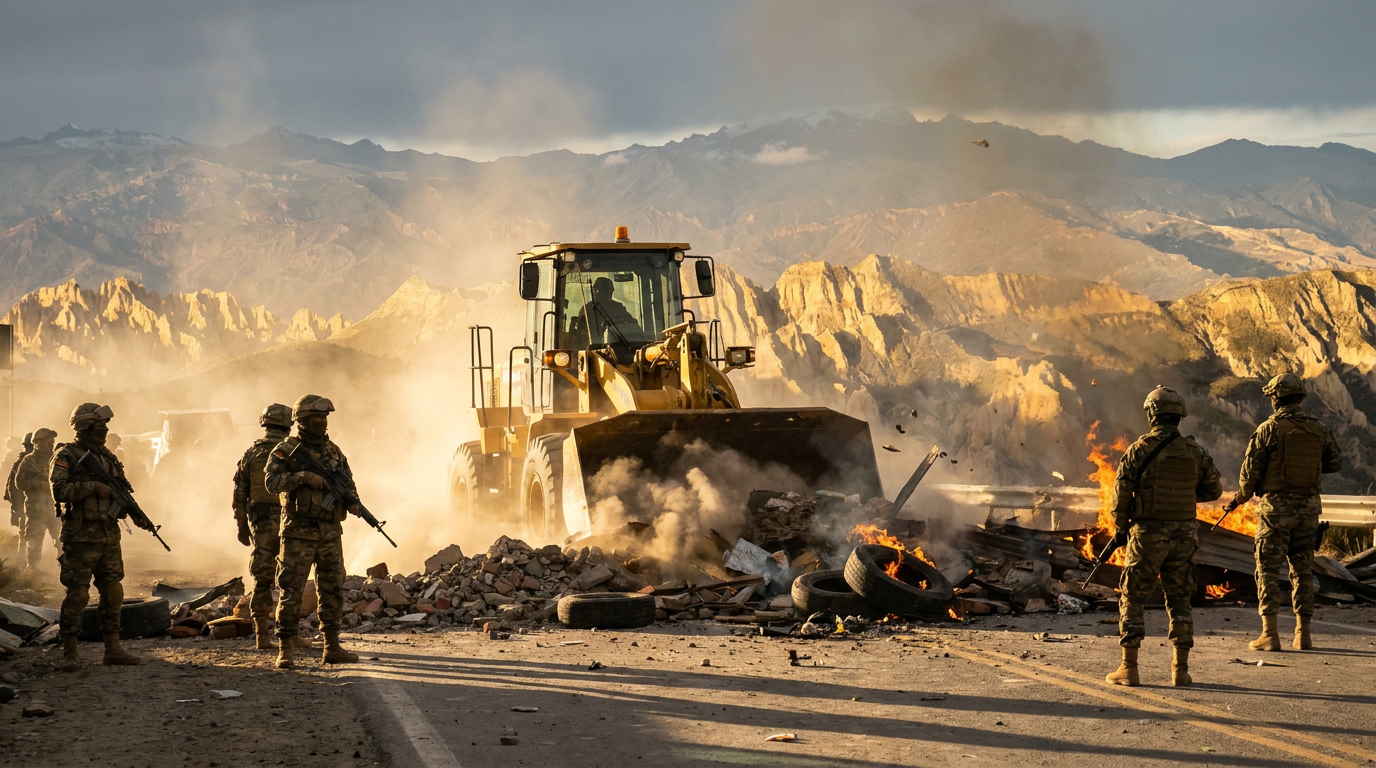
Within hours of the emergency decree, the visual landscape of Bolivia's major cities began to shift as the military mobilized. In La Paz, heavily armed military police and naval personnel established perimeters around the presidential palace, while tactical police units took up positions in the city's main squares. In the neighboring city of El Alto, AFP reporters witnessed convoys of soldiers and police escorting heavy bulldozers as they systematically dismantled barricades. The response from the local population highlighted the deep fatigue caused by the 50-day paralysis; some residents openly applauded the security forces, with one shopkeeper expressing relief that the suffocating restrictions on free movement and commerce were finally being lifted.[3][5]
The deployment of the military represents a massive political gamble for Paz, who took office in November as Bolivia's first non-socialist leader in nearly two decades. While the intervention addresses the immediate logistical strangulation of the country, it risks further inflaming tensions with MAS loyalists who view the government as illegitimate. Under the Bolivian constitution, the president is required to formally notify Congress of the state of emergency within 24 hours of its issuance. The legislature, which remains deeply divided, then has up to 72 hours to either approve or reject the measure. The impending congressional vote will serve as a critical test of Paz's political survival and will likely dictate whether Bolivia steps back from the brink or plunges deeper into civil conflict.[3][4][6]
How we got here
Nov 2025
Rodrigo Paz takes office, ending nearly 20 years of uninterrupted rule by the Movement Toward Socialism (MAS) party.
Early May 2026
The government abruptly cancels long-standing fuel subsidies to address a growing national deficit.
May–June 2026
Protesters erect nationwide blockades, leading to severe shortages of food, fuel, and medicine.
June 19, 2026
President Paz signs a tentative agreement with the main labor union to halt privatization in exchange for lifting the blockades.
June 20, 2026
As rural groups reject the union deal and maintain over 40 roadblocks, Paz declares a 90-day state of emergency.
Viewpoints in depth
The Government's Stance
President Paz and his administration view the blockades as an organized attempt to destabilize the country's democracy and economy.
For the centrist administration, the 50-day protest movement has evolved from a legitimate grievance over fuel subsidies into a coordinated political siege. Officials argue that the roadblocks are no longer about economic policy, but are instead a deliberate strategy by MAS loyalists to topple Bolivia's first non-socialist government in two decades. By choking off fuel, food, and medical supplies, the government contends that the protesters are holding the civilian population hostage. Consequently, the administration views the 90-day state of emergency not as an authoritarian crackdown, but as a constitutional necessity to restore freedom of movement, stabilize a hemorrhaging economy, and prevent further loss of life due to medical supply chain failures.
Protesters & MAS Loyalists
Demonstrators argue the government's austerity measures are devastating the working class and demand an immediate change in leadership.
The coalition of unions, Indigenous groups, and coca farmers driving the blockades view President Paz's economic reforms as a direct assault on Bolivia's most vulnerable populations. The abrupt cancellation of long-standing fuel subsidies, combined with a severe dollar shortage, has drastically increased the cost of living. For these groups, many of whom remain fiercely loyal to former President Evo Morales, the government's actions represent a betrayal of the social welfare policies that defined the previous two decades. They reject the recent compromise brokered by the central labor union as a capitulation, arguing that only Paz's resignation and a complete reversal of the IMF-aligned austerity measures can resolve the underlying economic injustices.
Affected Civilians
Caught in the crossfire, ordinary citizens are increasingly desperate for a return to normalcy and the restoration of basic services.
Beyond the political maneuvering, millions of Bolivians have spent the last two months enduring severe daily hardships. In major cities like La Paz and El Alto, the blockades have translated into empty supermarket shelves, skyrocketing prices for whatever goods remain, and a terrifying lack of medical oxygen in local hospitals. For this demographic, ideological battles over subsidies and political control have taken a backseat to the immediate need for survival. The visible relief and applause from some residents as military bulldozers cleared barricades in El Alto underscores a deep, widespread fatigue. Many citizens are willing to accept the heavy-handed state of emergency if it means they can finally return to work, restock their pantries, and access healthcare.
What we don't know
- Whether the Bolivian Congress will approve or reject the state of emergency decree within the required 72-hour window.
- How the hardline protest factions will respond to the military's forceful dismantling of their barricades.
- Whether the government will be able to stabilize the economy and address the underlying dollar and fuel shortages in the near term.
Key terms
- Movement Toward Socialism (MAS)
- The left-wing political party of former President Evo Morales, which governed Bolivia for nearly two decades before the current administration.
- Bolivian Workers' Confederation (COB)
- The central trade union federation in Bolivia, which recently reached a tentative agreement with the government to ease tensions.
- State of Emergency
- A governmental declaration that temporarily grants the military and police expanded powers to restore public order and clear infrastructure.
- International Monetary Fund (IMF)
- A major financial agency of the United Nations that the Bolivian government is currently negotiating with to stabilize its economy.
Frequently asked
Why are people protesting in Bolivia?
Protests erupted after the government abruptly cut long-standing fuel subsidies to shrink the national deficit. Demonstrators are demanding wage increases, an end to dollar shortages, and the president's resignation.
How have the blockades affected the country?
The 50-day blockades have isolated major cities, causing acute shortages of food, fuel, and medicine. The disruptions have cost the economy billions and led to at least 17 deaths.
What does the state of emergency do?
It grants the military broad constitutional authority to support the police in clearing roadblocks and restoring order for up to 90 days, though the government claims civil liberties remain intact.
Did the government try to negotiate?
Yes, the president signed a deal with the country's main labor union on Friday to halt the privatization of state companies, but rural and Indigenous groups rejected the compromise.
Sources
Source coverage
6 outlets
3 viewpoints surfaced






[1]The GuardianProtesters & MAS Loyalists
Bolivian president declares state of emergency and deploys military to quell anti-government protests
Read on The Guardian →[2]AP NewsAffected Civilians
Bolivia's president declares a state of emergency as road blockades choke supplies
Read on AP News →[3]Global NewsThe Government & Supporters
Bolivia declares state of emergency, deploys military to quell protests
Read on Global News →[4]CBC NewsThe Government & Supporters
Bolivia's president declares emergency over blockade crisis, paving way to deploy military
Read on CBC News →[5]Jerusalem PostThe Government & Supporters
Bolivia's Paz declares state of emergency over blockade crisis, paving way to deploy military
Read on Jerusalem Post →[6]ReutersAffected Civilians
Bolivia's Paz declares state of emergency over blockade crisis, paving way to deploy military
Read on Reuters →
More in news politics
See all 6 stories →Bolivia Crisis
Bolivian President Declares State of Emergency, Deploys Military to Clear Protest Blockades
6 sources
U.S.-Iran Talks
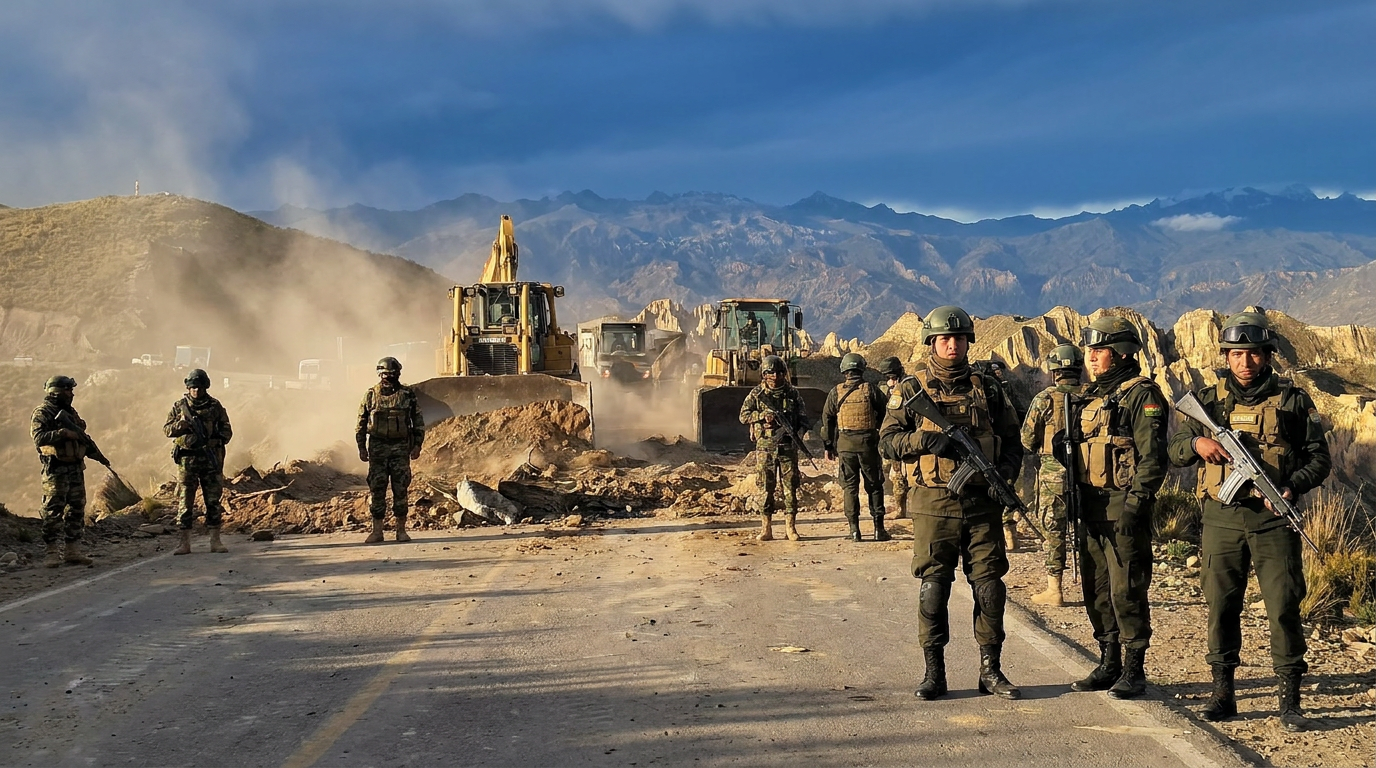
Inside the High-Stakes U.S.-Iran Peace Talks in Switzerland
7 sources
U.S.-Iran Talks
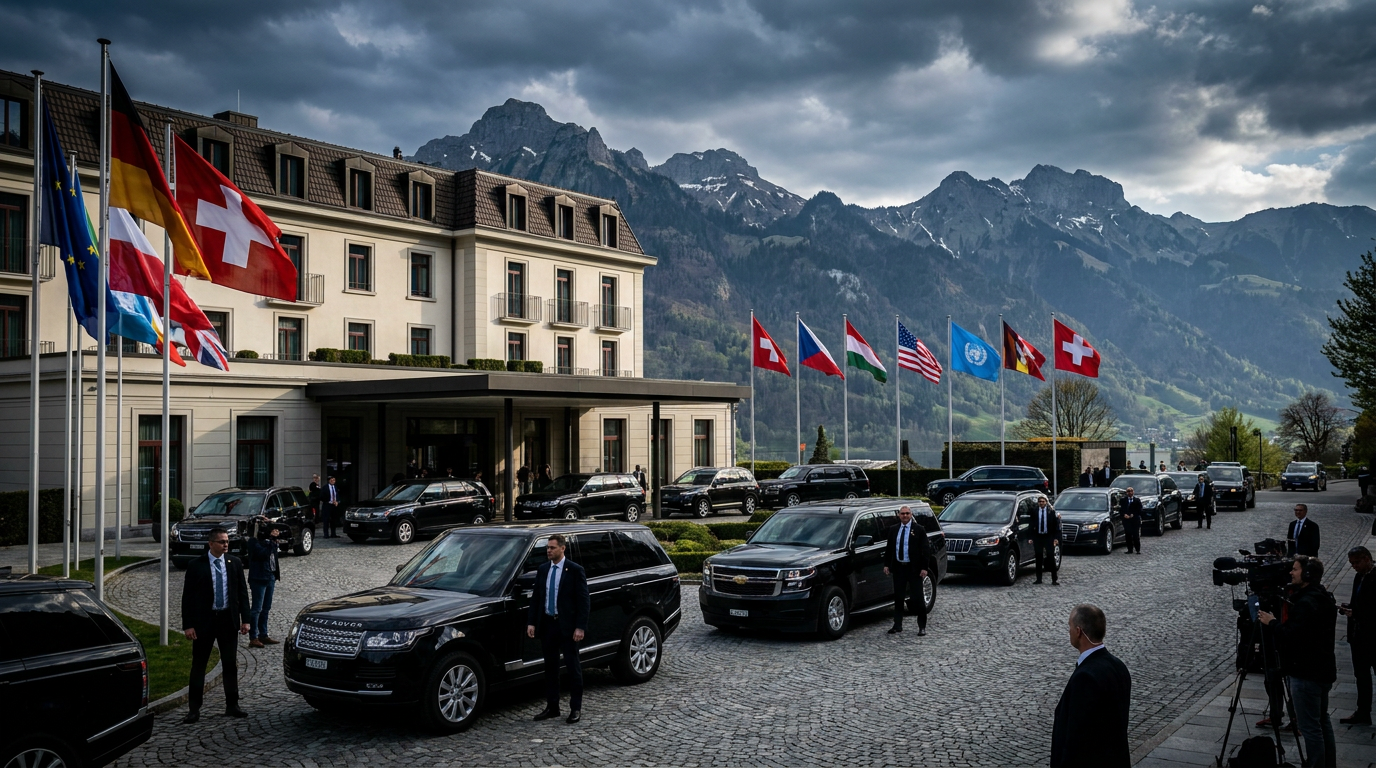
U.S. and Iran Open High-Stakes Negotiations in Switzerland Amid Regional Flare-Ups
8 sources
UK Politics
UK Prime Minister Keir Starmer Expected to Resign Amid Historic Labour Rebellion
8 sources
Every angle. Every day.
Get news politics stories with full source coverage and perspective breakdowns delivered to your inbox.