
How Decentralized Social Media and the Fediverse Actually Work
Open protocols like ActivityPub and the AT Protocol are dismantling the 'walled garden' era of social media. By separating user identity from corporate servers, decentralized networks give users permanent ownership of their data and social graphs.
By Factlen Editorial Team
- Open Web Advocates
- Prioritize censorship resistance and the use of established, open standards like ActivityPub.
- Protocol Pragmatists
- Focus on scalability, account portability, and user experience over pure decentralization.
- Commercial Integrators
- View open protocols as a feature to enhance existing massive platforms and drive engagement.
- Web3 Proponents
- Value on-chain identity, monetization, and tokenized ownership.
What's not represented
- · Regulatory Bodies
- · Mainstream Content Creators
Why this matters
For the first time in a decade, users are gaining the ability to own their digital identities and move their followers between platforms. This architectural shift prevents tech giants from locking users into proprietary algorithms or unilaterally deleting their social graphs.
Key points
- Decentralized social media uses open protocols to let independent servers communicate, much like email.
- The W3C's ActivityPub standard powers the 'Fediverse,' connecting platforms like Mastodon and Meta's Threads.
- Bluesky's AT Protocol introduces Decentralized Identifiers (DIDs), allowing users to migrate their accounts between servers without losing followers.
- Decentralized architecture unbundles content hosting from curation, letting users choose their own recommendation algorithms.
- The shift prevents tech giants from locking users into proprietary ecosystems or unilaterally deleting their social graphs.
For over a decade, the social internet has been defined by "walled gardens"—closed ecosystems where a single corporate entity controls the servers, the algorithms, and the user data. If you build an audience on one platform, you cannot take those followers with you to a competitor. But a fundamental architectural shift is currently rewiring how the web operates, moving power away from centralized platforms and back into the hands of users.[8]
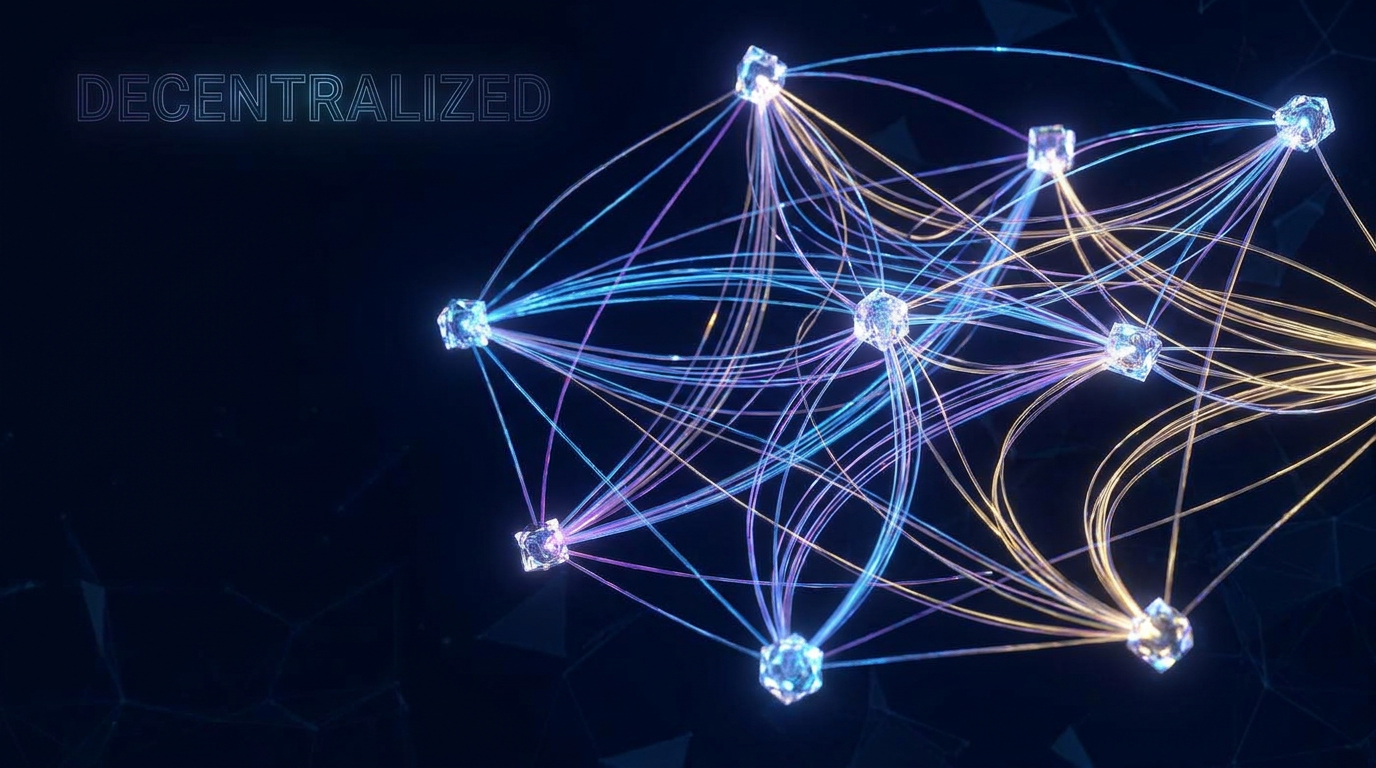
This shift is known as decentralized social media, or the "Fediverse." Rather than relying on a single company's proprietary database, decentralized networks operate on open protocols that allow independent servers to communicate with one another. The concept is analogous to email: a user with a Gmail account can seamlessly send a message to a user with a Yahoo account because both services use the same underlying protocol.[3][5]
Decentralized social networks apply this interoperability to public posts, likes, and follows. If two platforms share the same protocol, a user on Platform A can follow and interact with a user on Platform B without ever creating an account on the second service. This model eliminates the "lock-in" effect that has historically kept users tethered to platforms they no longer enjoy simply because their social graph is trapped there.[4][5]
The most widely adopted standard powering this movement is ActivityPub. Officially recommended by the World Wide Web Consortium (W3C) in 2018, ActivityPub provides a standardized client-to-server API for creating content and a federated server-to-server API for delivering notifications. It serves as the defining technical foundation of the Fediverse, powering independent networks like Mastodon and Pixelfed.[1]

Under the ActivityPub model, data is structured using the ActivityStreams format, categorizing information into "Actors" (users), "Objects" (posts or images), and "Activities" (actions like creating or liking an object). Every actor has a cryptographic inbox and outbox; when a user publishes a post, their server pushes that activity from their outbox to the inboxes of their followers across the federated network.[1]
For years, ActivityPub was largely the domain of privacy advocates and tech enthusiasts. That changed dramatically when Meta launched Threads and committed to integrating the platform with the Fediverse. By mid-2024, Meta began allowing users who opted into "fediverse sharing" to broadcast their posts to Mastodon and view replies from other servers directly within the Threads app.[3]
This integration represents an unprecedented milestone: a major tech conglomerate with hundreds of millions of users voluntarily adopting an open, interoperable standard. While the integration remains iterative—certain reply features and cross-server interactions are still being refined—it signals that the era of strictly isolated social networks is beginning to fracture.[3]
This integration represents an unprecedented milestone: a major tech conglomerate with hundreds of millions of users voluntarily adopting an open, interoperable standard.
However, ActivityPub is not the only protocol vying to define the future of the open social web. Bluesky, originally incubated within Twitter, has developed a competing standard called the Authenticated Transfer Protocol (AT Protocol). While ActivityPub focuses on exchanging discrete documents and activities between servers, the AT Protocol is designed around semantic data exchange and account portability.[2][6]
The AT Protocol addresses a critical vulnerability in early federated networks: server dependence. On Mastodon, if the administrator of a user's specific server decides to shut it down, the user can lose their handle and data. The AT Protocol solves this by utilizing Decentralized Identifiers (DIDs)—cryptographic URLs that secure a user's account independently of their hosting provider.[2][7]

Because identity is separated from the hosting server, a Bluesky user can migrate their entire account—including their handle, followers, and post history—to a different Personal Data Server (PDS) without requiring permission or assistance from their original host. This cryptographic ownership ensures that users maintain true sovereignty over their digital presence.[2][4]
To achieve global scale, the AT Protocol employs a "big world with small world fallbacks" architecture. Instead of every small server constantly pinging every other server, the network utilizes large relay infrastructure (Big Graph Services) to aggregate updates from thousands of personal servers into a massive, network-wide firehose.[2][6]
This layered approach allows the AT Protocol to support millions of concurrent users with the speed and reliability of a centralized platform, while still allowing individuals to self-host their data if they choose. However, architectural analysts note that this design introduces its own trade-offs, as the ecosystem currently relies heavily on Bluesky's centralized relay infrastructure to function efficiently.[2][6]
Beyond data ownership, decentralized protocols are revolutionizing content curation. In traditional walled gardens, a proprietary, opaque algorithm dictates what users see, optimizing for engagement and advertising revenue. Decentralized platforms unbundle the hosting of content from the curation of content.[2][4]

On networks utilizing the AT Protocol, users can subscribe to custom "feed generators" built by third-party developers. A user might choose a chronological feed for news, a strictly moderated feed for professional networking, and an algorithmically sorted feed for entertainment—swapping between them seamlessly. This modular approach to algorithms returns editorial control to the individual.[2][8]
The transition to a decentralized web is not without friction. Federated networks face ongoing challenges regarding content moderation, as the lack of a central authority makes it difficult to enforce uniform safety standards across independent servers. Additionally, achieving the seamless user experience that mainstream audiences expect requires complex engineering that hides the cryptographic plumbing from everyday view.[6][7]
Despite these hurdles, the momentum behind open social protocols is accelerating. As users increasingly demand control over their digital identities and tech giants begin bridging their platforms to the Fediverse, the foundational infrastructure of the internet is being rebuilt. The result is a more resilient, user-centric web where connection is a public utility rather than a corporate asset.[4][8]
How we got here
Jan 2018
The W3C officially publishes ActivityPub as a recommended web standard.
Oct 2022
Bluesky introduces the AT Protocol, focusing on cryptographic identity and account portability.
Jul 2023
Meta launches Threads and announces future plans to integrate with the Fediverse.
Feb 2024
Bluesky opens federation, allowing independent Personal Data Servers to connect to its network.
Jun 2024
Meta expands Threads' Fediverse integration, allowing users to see and like cross-server replies.
Viewpoints in depth
Open Web Advocates
Prioritize censorship resistance and the use of established, open standards like ActivityPub.
This camp views the W3C-backed ActivityPub standard as the definitive future of the internet. They argue that true decentralization requires a federated model where anyone can spin up a server and join the network without relying on corporate infrastructure. They are often skeptical of large tech companies adopting these protocols, fearing 'embrace, extend, and extinguish' tactics, but celebrate the core mechanism that prevents any single entity from dictating global moderation policies.
Protocol Pragmatists
Focus on scalability, account portability, and user experience over pure decentralization.
Engineers and developers in this camp, often aligned with Bluesky's AT Protocol, argue that early federated networks failed to reach mainstream audiences because they were too complex and lacked true account portability. They advocate for a 'big world' architecture that uses centralized relays to handle massive data firehoses, arguing that users care more about owning their identity (via DIDs) and having a fast, seamless app experience than they do about running their own personal servers.
Commercial Integrators
View open protocols as a feature to enhance existing massive platforms and drive engagement.
Represented by platforms like Meta's Threads, this viewpoint sees Fediverse integration as a strategic advantage rather than an ideological crusade. By adopting ActivityPub, commercial platforms can offer users the illusion of freedom while still retaining them within a polished, ad-supported ecosystem. They argue that without the massive user bases of corporate platforms, decentralized protocols would remain niche academic exercises.
What we don't know
- Whether Meta will fully open Threads to two-way Fediverse integration, or keep it limited to basic cross-posting.
- How decentralized networks will sustainably fund the massive server and relay infrastructure required to host billions of users.
- If mainstream users will actually utilize account portability, or simply default to the largest, most convenient hosting providers.
Key terms
- Fediverse
- A portmanteau of 'federated universe,' referring to the collection of independent social networks that can communicate with each other.
- ActivityPub
- An open, decentralized social networking protocol standardized by the W3C, used by platforms like Mastodon and Threads.
- AT Protocol
- The Authenticated Transfer Protocol, a decentralized networking framework developed by Bluesky that emphasizes account portability.
- Decentralized Identifier (DID)
- A cryptographically secure, verifiable digital identity that is independent of any specific platform or server.
- Personal Data Server (PDS)
- In the AT Protocol, the specific server that hosts a user's account, data, and cryptographic keys.
Frequently asked
Can I move my Instagram followers to Mastodon?
Not currently. While Threads is integrating with Mastodon via ActivityPub, this only allows cross-platform posting and replying. True account portability, where you move your actual follower graph, is a feature of the newer AT Protocol used by Bluesky.
Do I have to run my own server to use decentralized social media?
No. The vast majority of users join existing servers hosted by organizations or communities. Running your own server is an option for tech-savvy users who want total control, but it is never a requirement.
How do decentralized networks handle hate speech?
Moderation is handled at the server level. Each server administrator sets their own rules and can block (or 'defederate' from) other servers that allow toxic content. Users can also subscribe to third-party moderation lists to filter their own feeds.
Sources
Source coverage
8 outlets
4 viewpoints surfaced







[1]W3COpen Web Advocates
ActivityPub Specification
Read on W3C →[2]BlueskyProtocol Pragmatists
The AT Protocol
Read on Bluesky →[3]9to5MacCommercial Integrators
Meta enhances Threads fediverse integration
Read on 9to5Mac →[4]Coinbase InstituteWeb3 Proponents
Decentralized Social Media Explained
Read on Coinbase Institute →[5]Built InOpen Web Advocates
What Is Decentralized Social Media?
Read on Built In →[6]SoftwareSeniProtocol Pragmatists
AT Protocol Architecture Analysis
Read on SoftwareSeni →[7]OneKeyOpen Web Advocates
The Future of Decentralized Social Media
Read on OneKey →[8]Factlen Editorial TeamProtocol Pragmatists
Synthesis by Factlen editorial team
Read on Factlen Editorial Team →
Every angle. Every day.
Get technology stories with full source coverage and perspective breakdowns delivered to your inbox.