
The Digicam Revival: Why Gen Z is Trading Smartphones for 20-Year-Old Digital Cameras
A cultural backlash against AI-perfected smartphone photography has sparked a massive resurgence in early-2000s point-and-shoot cameras. Driven by Gen Z, the trend highlights the unique hardware characteristics of legacy CCD sensors and a growing desire for creative friction.
By Factlen Editorial Team
- Cultural Analysts
- Argue the trend is an emotional rejection of AI-perfected smartphone imagery in favor of authenticity.
- Technical Purists
- Focus on the unique hardware characteristics of legacy CCD sensors and their film-like color rendition.
- Industry Observers
- View the resurgence through the lens of market dynamics, secondhand sales, and shifting consumer hardware demands.
What's not represented
- · Smartphone Camera Engineers
- · Professional Commercial Photographers
Why this matters
The resurgence of obsolete camera technology signals a broader cultural shift away from frictionless, AI-optimized digital experiences. It demonstrates that younger generations are actively seeking out tangible, imperfect tools to reclaim authenticity in how they document their lives.
Key points
- Gen Z creators are driving a massive resurgence in the popularity of early-2000s digital point-and-shoot cameras.
- The trend is largely a reaction against the hyper-processed, AI-perfected images produced by modern smartphones.
- Vintage cameras utilize legacy CCD sensors, which handle light and color in a way that closely mimics analog film.
- The secondhand market for these obsolete devices has exploded, with prices for popular models doubling or tripling.
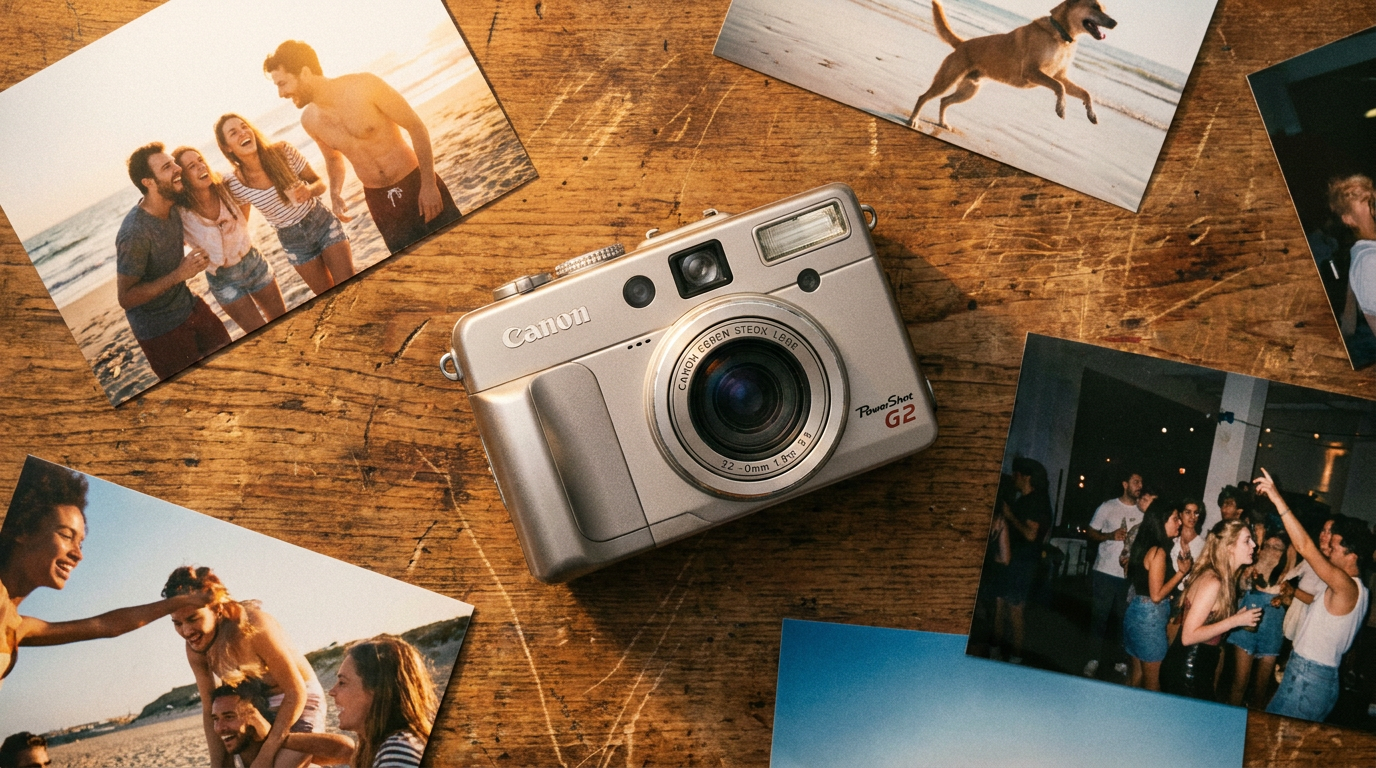
In an era where the average smartphone packs billions of operations per second into a multi-lens computational photography engine, a curious rebellion is unfolding. Across global fashion capitals and suburban high schools alike, Generation Z is deliberately leaving their modern devices in their pockets. Instead, they are reaching for chunky, silver, five-megapixel point-and-shoot cameras manufactured two decades ago. The "digicam" revival has transformed obsolete early-2000s electronics into highly coveted cultural artifacts, sparking a massive surge in the secondhand market and fundamentally challenging the tech industry's relentless march toward optical perfection.[1][4]
The economic footprint of this nostalgia is staggering. Resale platforms have watched demand for vintage compact cameras skyrocket, with searches for refurbished models jumping by over 50% in recent months. Devices like the Sony Cyber-shot, Canon PowerShot, and Nikon Coolpix—once destined for e-waste recycling bins—are now commanding premium prices, sometimes doubling or tripling their original retail value. This purchasing power has even begun to reverse a decade-long decline in the dedicated camera market, signaling to manufacturers that a significant demographic is actively seeking hardware that operates entirely outside the modern smartphone ecosystem.[3][7]
To understand the digicam's appeal, one must look at what it replaces. For the last ten years, smartphone manufacturers have engaged in an arms race of computational photography. Modern devices utilize artificial intelligence to automatically brighten shadows, smooth skin textures, sharpen edges, and balance exposures before the user even views the image. While technically impressive, this aggressive processing has inadvertently created a visual monoculture. Every photo is perfectly lit, infinitely sharp, and entirely devoid of the happy accidents that once defined amateur photography.[1][5]
The digicam acts as a tiny chaos machine that disrupts this sterile perfection. With their weak flashes, slow autofocus, and limited dynamic range, these older cameras routinely produce blown-out highlights, motion blur, and unpredictable color shifts. What engineers spent twenty years trying to eliminate as technical flaws, a new generation of creators now embraces as markers of authenticity. In a social media landscape saturated with hyper-polished, cinematic content, a slightly grainy, overexposed flash photo feels intimate, human, and refreshingly un-optimized.[1][5]

However, the phenomenon is not driven purely by aesthetic nostalgia; there is a fundamental hardware difference at the heart of the digicam look. The vast majority of digital cameras produced between the late 1990s and the late 2000s were built around CCD (Charge-Coupled Device) sensors. This legacy technology captures light globally across the entire pixel array, converting photons to electrical charges in a sequential process that acts almost like a digital strip of film. It is a radically different architecture from the sensors found in modern devices.[2][6][8]
However, the phenomenon is not driven purely by aesthetic nostalgia; there is a fundamental hardware difference at the heart of the digicam look.
Today, virtually all smartphones and modern mirrorless cameras utilize CMOS (Complementary Metal-Oxide-Semiconductor) sensors. CMOS technology won the industry's format war because it allows each pixel to process its own signal independently. This makes CMOS sensors incredibly fast, highly efficient, and capable of handling complex tasks like 4K video recording and rapid burst photography. By contrast, older CCD sensors are notoriously power-hungry—sometimes drawing up to 100 times more energy than a comparable CMOS chip—and are practically useless for modern videography.[2][8]
Yet, what CCD sensors lack in speed and efficiency, they make up for in character. Because of the way they globally capture and transfer light, CCD sensors are legendary among technical enthusiasts for their color integrity and tonal finesse. They handle highlight roll-off and skin tones with a gentle, organic gradation that closely mimics analog film. When combined with the specific JPEG processing engines of the early 2000s, these sensors produce a rich, saturated color science that modern CMOS cameras often aggressively clean away in their pursuit of clinical accuracy.[6][8]
Beyond the silicon, the digicam revival is deeply rooted in the psychology of friction. Smartphones have made photography entirely frictionless—users can snap a hundred burst photos in seconds, instantly review them on a high-definition screen, and immediately broadcast them to the world. This seamlessness has arguably devalued the individual image. A vintage point-and-shoot reintroduces deliberate limitations. With tiny storage cards and sluggish operation, the user is forced to slow down, compose carefully, and accept the result without the safety net of endless retakes.[4][6][7]

This intentionality changes the relationship between the photographer and the subject. When a smartphone is pointed at a group of friends, the immediate instinct is to pose, review, and critique the outcome. The digicam, with its low-resolution screen and lack of immediate editing tools, removes the pressure of instant digital performance. It shifts the focus away from content creation for an external audience and back toward the simple, private act of memory preservation. The resulting images feel less like a broadcast and more like a keepsake.[1][5]
The trend also represents a quiet revolt against the relentless upgrade cycle of modern consumer electronics. For years, the tech industry has sold the premise that newer is inherently better, pushing consumers to upgrade their devices annually for marginal improvements in megapixel counts and algorithmic processing. By finding immense creative value in twenty-year-old hardware, young photographers are proving that compelling visual art does not require the latest specifications. It is a democratization of style that relies on taste rather than purchasing power.[3][5]
Naturally, the tech industry is already attempting to commodify this cultural shift. App developers are flooding app stores with filters designed to mimic the CCD aesthetic, adding artificial grain, light leaks, and date stamps to smartphone photos. However, purists argue that software emulation misses the point. A filter can replicate the visual output, but it cannot replicate the tactile experience of sliding open a plastic lens cover, waiting for a xenon flash to charge, and engaging with a dedicated, single-purpose machine.[1][4][7]

Whether the digicam remains a permanent fixture in youth culture or eventually fades as a passing vintage fad remains to be seen. What is clear, however, is that the movement has successfully challenged the definition of a "good" photograph. By rejecting the AI-smoothed, perfectly balanced output of modern devices, a new generation has reclaimed the right to be imperfect. In doing so, they have reminded the photography world that the most powerful images are rarely the ones with the highest resolution; they are the ones that make us feel something real.[5][7][8]
How we got here
Late 1990s
The first consumer digital point-and-shoot cameras utilizing CCD sensors enter the mass market.
Mid 2000s
CMOS sensor technology begins to rapidly improve, offering better battery life and video capabilities.
2010s
Smartphones equipped with advanced CMOS sensors and computational photography largely decimate the compact camera market.
2022–2023
TikTok trends romanticizing the 'Y2K aesthetic' spark a renewed interest in vintage digital cameras among Gen Z.
2024–2025
Secondhand platforms report massive spikes in searches for refurbished digicams, driving up prices significantly.
2026
The digicam revival solidifies as a broader cultural movement rejecting AI-perfected smartphone imagery.
Viewpoints in depth
Cultural Analysts' view
A rejection of the frictionless, hyper-processed smartphone era.
For cultural critics, the digicam revival is less about the cameras themselves and more about what they represent: a rebellion against the visual monoculture created by modern smartphones. As computational photography has advanced, devices now automatically smooth skin, balance lighting, and sharpen edges, resulting in a sterile perfection that many young creators find alienating. By embracing the harsh flashes, blown-out highlights, and unpredictable focus of early-2000s point-and-shoots, users are actively choosing authenticity over optimization. The friction of using a dedicated device—with limited storage and no instant social media connectivity—forces a slower, more intentional approach to capturing memories.
Technical Purists' view
The hardware architecture of legacy CCD sensors produces a genuinely unique aesthetic.
While casual users may be drawn to the nostalgia, technical purists emphasize that the 'digicam look' is rooted in actual hardware differences. The CCD (Charge-Coupled Device) sensors used in early digital cameras capture light globally, processing color and tonal gradations in a way that closely mimics analog film. Although the industry abandoned CCDs in favor of CMOS sensors due to the latter's superior speed, video capabilities, and energy efficiency, CMOS technology often produces a more clinical, digital image. Enthusiasts argue that the specific highlight roll-off and rich color science of a vintage CCD sensor simply cannot be perfectly replicated by modern smartphone software filters.
Industry Observers' view
A surprising market correction driven by Gen Z purchasing power.
Market analysts are watching the digicam trend closely as it disrupts long-held assumptions about consumer electronics. For years, the narrative dictated that smartphones would entirely cannibalize the compact camera market. Instead, Gen Z buyers have flooded the secondhand market, driving up prices for obsolete 2000s hardware and creating scarcity for models that were once considered e-waste. This unexpected demand is sending a clear signal to manufacturers: there is a viable, lucrative market for dedicated, single-purpose photography devices that operate outside the connected smartphone ecosystem, prompting speculation about a potential revival of new compact camera production.
What we don't know
- Whether major camera manufacturers will release new, affordable compact cameras specifically designed to emulate the CCD aesthetic.
- If the digicam trend will endure as a permanent cultural shift or eventually be fully absorbed by advanced smartphone software filters.
Key terms
- CCD (Charge-Coupled Device)
- An older type of digital image sensor that captures light globally across the entire array, known for rich color reproduction but high power consumption.
- CMOS (Complementary Metal-Oxide-Semiconductor)
- The modern standard for image sensors, where each pixel processes its own signal independently, allowing for high speed and low light efficiency.
- Digicam
- A colloquial term for early 2000s compact digital point-and-shoot cameras, now highly sought after for their distinct visual aesthetic.
- Computational Photography
- The use of artificial intelligence and software processing in modern smartphones to automatically enhance, brighten, and sharpen images.
- Highlight Roll-off
- The way a camera sensor transitions from the brightest parts of an image to pure white, often smoother and more gradual on older CCD sensors.
Frequently asked
Why are old digital cameras suddenly so expensive?
A massive surge in demand driven by Gen Z creators has depleted the secondhand market, causing prices for once-cheap 2000s point-and-shoots to double or triple.
Do CCD sensors actually take better photos than smartphones?
Technically no. Smartphones have vastly superior resolution and dynamic range. However, CCD sensors handle color and highlights in a way that mimics analog film, which many users prefer stylistically.
Can I just use a smartphone filter to get the digicam look?
While apps can simulate grain and color shifts, they cannot fully replicate the physical flash falloff, lens imperfections, and highlight roll-off of a genuine vintage camera.
Why did the camera industry stop using CCD sensors?
CCD sensors were incredibly power-hungry and struggled with video recording. The industry shifted to CMOS sensors because they are faster, more energy-efficient, and better suited for hybrid photo-video devices.
Sources
Source coverage
8 outlets
3 viewpoints surfaced








[1]ElleCultural Analysts
Why Are Digicams Suddenly Cool Again? Maybe We're Just Tired Of AI-Perfect Photos
Read on Elle →[2]SlashGearTechnical Purists
Why are old digital cameras popular again: CCD vs CMOS
Read on SlashGear →[3]Y.M. CinemaIndustry Observers
Understanding Gen-Z's Role in the Market Recovery
Read on Y.M. Cinema →[4]DPReviewIndustry Observers
Gen Z digital camera revival analysis
Read on DPReview →[5]Gear FocusCultural Analysts
The Camera You Threw Away Is Now the Most Interesting Camera
Read on Gear Focus →[6]Dutch ThriftTechnical Purists
The Return of the CCD Sensor
Read on Dutch Thrift →[7]Eric Kim PhotographyCultural Analysts
The Resurgence of Point-and-Shoot Cameras: Why Compacts Are Shaping Photography's Future
Read on Eric Kim Photography →[8]Alt Buzz ArchivesTechnical Purists
CCD vs CMOS: The Ultimate Camera Sensor Debate
Read on Alt Buzz Archives →
Every angle. Every day.
Get culture stories with full source coverage and perspective breakdowns delivered to your inbox.