
The End of the 'Forever Chemical' Wrapper: How Fast Food is Redesigning Packaging for 2026
Driven by strict new regulations and consumer demand, the fast-food industry is rapidly phasing out PFAS chemicals in favor of cutting-edge biodegradable, compostable, and edible packaging.
By Factlen Editorial Team
- Material Innovators
- Scientists and startups developing bio-based, edible, and circular packaging solutions.
- Corporate Operations
- Fast-food giants implementing sustainable packaging at a massive global scale.
- Regulatory & Compliance
- Authorities and analysts enforcing strict bans on forever chemicals in food contact materials.
What's not represented
- · Franchise Owners managing the localized costs of transitioning to new packaging materials.
- · Waste Management Facilities handling the influx of new compostable materials.
Why this matters
Billions of fast-food meals are served globally each year. Eliminating toxic 'forever chemicals' and petroleum-based plastics from these wrappers represents a massive reduction in global pollution and human chemical exposure.
Key points
- Strict EU regulations taking effect in August 2026 ban PFAS 'forever chemicals' in food packaging.
- Major fast-food chains are hitting 2025 targets to use 100% renewable or recycled packaging materials.
- Water-based dispersion coatings are replacing toxic chemicals to keep paper wrappers grease-resistant.
- Scientists have developed edible, biodegradable wrappers made from milk proteins and seaweed.
- New technologies can convert food waste into nanocellulose to create transparent, smart packaging.
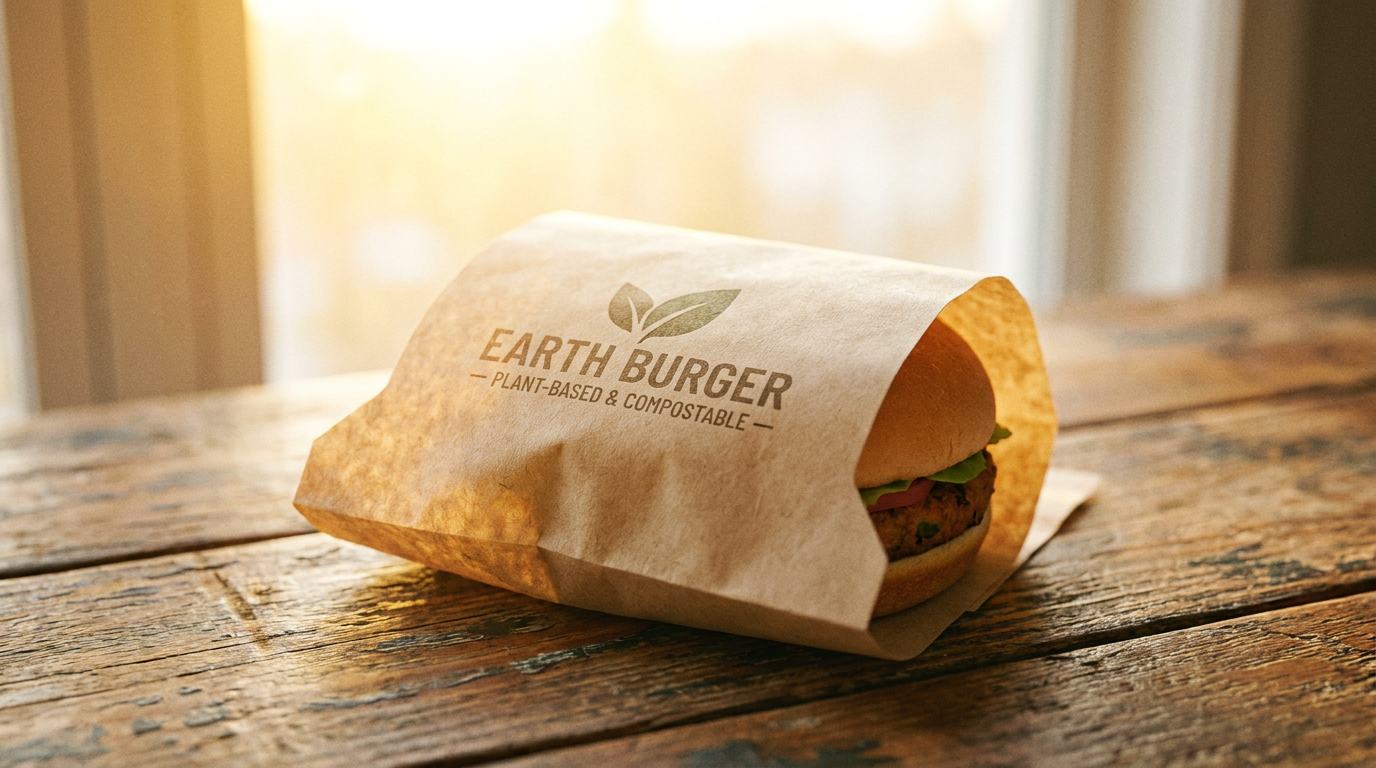
The satisfying crinkle of a fast-food burger wrapper has long hidden a microscopic problem. For decades, the paper that kept grease off your hands and moisture locked inside relied heavily on per- and polyfluoroalkyl substances—a class of synthetic compounds better known as PFAS, or "forever chemicals."[1]
These chemicals are legendary for their ability to repel oil and water, making them the invisible heroes of the modern drive-thru. But their chemical bonds are so incredibly strong that they refuse to break down in the natural environment, accumulating over time in soil, water systems, and human bodies.[1]
Now, in 2026, the fast-food industry is undergoing a massive material revolution. Driven by sweeping new regulations and ambitious corporate sustainability targets, the era of the PFAS-laced wrapper is ending, replaced by a wave of biodegradable, compostable, and even edible packaging.[8]
The primary catalyst for this rapid shift is regulatory pressure. In the European Union, the Packaging and Packaging Waste Regulation (PPWR) imposes strict limits on the presence of PFAS in any food-contact packaging, taking full legal effect in August 2026.[1]
Under these new EU rules, packaging cannot exceed 25 parts per billion for any individual PFAS compound. This hard deadline has sent ripples through global supply chains, forcing multinational restaurant chains to standardize their packaging across borders to remain compliant and avoid massive fines.[1]

In North America, state-level bans have similarly accelerated the transition. With regulatory momentum building globally, the market for PFAS-free aqueous food packaging coatings is booming, projected to reach $453 million this year as suppliers race to meet the surging demand.[2]
Major fast-food corporations have been preparing for this moment for years. McDonald's, the world's largest restaurant chain, set a landmark goal to source 100 percent of its guest packaging from renewable, recycled, or certified sources by the end of 2025.[6]
Burger King has made similar commitments, aiming to eliminate single-use plastics and rely entirely on sustainable sources for its packaging. The chain has even piloted reusable packaging systems in select cities, partnering with circular economy platforms to test deposit-based cups and containers.[7]
But replacing PFAS is a complex scientific challenge. How do you stop a hot, greasy burger from turning a paper wrapper into a soggy, structurally compromised mess without using fluorine-based chemicals?[8]
How do you stop a hot, greasy burger from turning a paper wrapper into a soggy, structurally compromised mess without using fluorine-based chemicals?
The immediate, scalable solution has been water-based dispersion coatings. These advanced aqueous barriers are applied directly to paperboard and wraps, providing robust resistance against grease and moisture while ensuring the packaging remains fully recyclable within standard paper recovery systems.[1][2]
Beyond these drop-in replacements, material scientists are developing radical new alternatives. Researchers at the USDA's Agricultural Research Service have engineered a biodegradable, edible film made entirely from casein, a naturally occurring milk protein.[3]
This casein-based wrap is a marvel of bioengineering. Testing shows it is up to 500 times better at sealing off food from oxygen than traditional petroleum-based plastics, which not only eliminates plastic waste but significantly extends the shelf life of the food it protects.[3]

Because the casein film is entirely edible, it can be infused with vitamins, flavors, or colors. It can even be formed into single-serve pouches for instant coffee or soup that simply dissolve in hot water, leaving zero trace behind.[3][4]
Other innovators are turning to the ocean for solutions. Startups are harvesting farmed seaweed to create transparent wrappers for burgers and sandwiches. These seaweed films naturally contain fiber and minerals, dissolve in warm water, and can sit on a shelf for two years without the need for chemical preservatives.[4]
Meanwhile, researchers are finding ways to turn the food industry's own waste into its packaging. Food scientists have developed processes that use microorganisms to convert organic food waste into nanocellulose—a tiny, flexible fiber ideal for creating transparent cling films.[5]
This nanocellulose technology embraces a true circular economy. By embedding pH-responsive compounds into the material, scientists can even create "smart packaging" that changes color to indicate the freshness of the food inside, helping to reduce food waste at the consumer level.[5]

Despite these incredible breakthroughs, the industry transition is not without hurdles. A major point of confusion for both consumers and businesses is the distinction between "compostable" and "PFAS-free."[1]
Historically, some molded fiber bowls and compostable containers still relied on PFAS coatings to prevent leaks. Today, environmental advocates and regulators are demanding strict material declarations, ensuring that packaging is not only bio-based but verifiably free of forever chemicals so it doesn't leave toxic residue in the soil when it breaks down.[1]
The sheer scale of the fast-food industry means that even incremental material changes have a colossal environmental impact. With billions of meals served globally each year, the elimination of petroleum-based plastics and toxic chemicals from this supply chain represents a massive victory for public health.[6]
As 2026 unfolds, the drive-thru is becoming an unexpected testing ground for the future of material science. The next time you unwrap a fast-food burger, the paper holding it might just be as organic—and as innovative—as the food itself.[8]

How we got here
2018
McDonald's announces its goal to source 100% of guest packaging from renewable or recycled sources by 2025.
2021
Burger King pilots the Loop reusable packaging system in select global cities.
2024
Major packaging suppliers launch advanced water-based dispersion coatings to replace PFAS.
2025
The market for PFAS-free aqueous food packaging coatings surpasses $415 million.
August 2026
The EU's strict PPWR limits on PFAS in food-contact packaging officially take effect.
Viewpoints in depth
Material Scientists
Focusing on bio-based innovation to replace synthetic chemicals.
Researchers argue that the future of packaging lies in materials that actively benefit the environment or the consumer. By utilizing agricultural byproducts, milk proteins, and seaweed, scientists aim to create wrappers that not only eliminate toxic waste but can actually extend the shelf life of food or be safely consumed.
Fast-Food Corporations
Balancing sustainability targets with operational scale and cost.
For massive global chains, the challenge is logistics and performance. A wrapper must perform flawlessly across thousands of locations, holding in hot grease without failing. Corporations emphasize that transitioning to PFAS-free and renewable materials requires massive supply chain overhauls, but they view it as essential for long-term brand trust and regulatory compliance.
Environmental Regulators
Enforcing strict chemical limits to protect public health and ecosystems.
Regulators, particularly in the European Union, take a hardline approach to 'forever chemicals.' They argue that voluntary corporate goals are insufficient, necessitating strict legal limits like the 25 parts-per-billion threshold. Their focus is on ensuring that 'compostable' claims are backed by verifiable, PFAS-free material declarations.
What we don't know
- Whether local municipal composting facilities will be able to handle the massive influx of new bio-based packaging materials.
- How the increased cost of advanced biodegradable materials will impact menu prices for consumers in the long term.
Key terms
- PFAS
- Per- and polyfluoroalkyl substances, a group of synthetic chemicals known as 'forever chemicals' because they do not easily break down in the environment.
- Aqueous Dispersion Coating
- A water-based liquid barrier applied to paper packaging to resist grease and moisture without using harmful chemicals.
- Casein
- A protein found in milk that scientists are using to create highly effective, biodegradable, and edible food films.
- Nanocellulose
- Microscopic fibers extracted from plant matter or food waste that can be woven into strong, flexible, and transparent packaging materials.
- Circular Economy
- An economic system aimed at eliminating waste by continually reusing, recycling, or safely composting materials.
Frequently asked
What are PFAS and why are they in wrappers?
PFAS are synthetic 'forever chemicals' historically used in fast-food wrappers to repel grease and water, preventing the paper from becoming soggy.
Are edible wrappers safe to eat?
Yes, wrappers made from materials like casein (milk protein) or seaweed are entirely food-safe, biodegradable, and sometimes even contain added vitamins or minerals.
Does 'compostable' mean a package is PFAS-free?
Not necessarily. Historically, some molded fiber and compostable containers used PFAS coatings for grease resistance, which is why new regulations require explicit PFAS-free certifications.
When does the EU ban on PFAS in packaging start?
The European Union's Packaging and Packaging Waste Regulation (PPWR) strict limits on PFAS in food-contact packaging take full effect in August 2026.
Sources
Source coverage
8 outlets
3 viewpoints surfaced






[1]TraceXTechRegulatory & Compliance
What the 2026 EU PFAS restrictions mean for food packaging
Read on TraceXTech →[2]Fortune Business InsightsCorporate Operations
PFAS-Free Food Packaging Market Size and Future Outlook
Read on Fortune Business Insights →[3]USDA Agricultural Research ServiceMaterial Innovators
That's a Wrap: Edible Food Wraps from ARS
Read on USDA Agricultural Research Service →[4]News-MedicalMaterial Innovators
Edible Pouch Packaging for Food Applications—A Review
Read on News-Medical →[5]Waste360Material Innovators
Scientists claim they have found a way to convert food waste into biodegradable plastic wraps
Read on Waste360 →[6]McDonald's CorporationCorporate Operations
McDonald's Announces Goals to Improve Packaging
Read on McDonald's Corporation →[7]InterpackCorporate Operations
Burger King Invests in Sustainability
Read on Interpack →[8]Factlen Editorial TeamRegulatory & Compliance
Synthesis by Factlen editorial team
Read on Factlen Editorial Team →
Every angle. Every day.
Get food drink stories with full source coverage and perspective breakdowns delivered to your inbox.