
Iran Threatens Strait of Hormuz Closure as US and Iranian Delegations Arrive in Switzerland for Emergency Talks
Iran has threatened to close the Strait of Hormuz following deadly Israeli strikes in Lebanon, sending global oil markets into turmoil. US and Iranian delegations have arrived in Switzerland for high-stakes emergency talks aimed at averting a broader regional war.
By Factlen Editorial Team
- US Administration
- Focuses on deterring Iranian aggression while seeking a diplomatic off-ramp to avoid economic fallout.
- Iranian Leadership
- Views the closure threat as necessary leverage to halt Israeli operations in Lebanon and force US concessions.
- Global Energy Markets
- Primarily concerned with the uninterrupted flow of crude oil and the devastating inflationary impact of a Hormuz blockade.
- Israeli Defense Establishment
- Prioritizes neutralizing immediate security threats on its northern border, regardless of broader geopolitical ripple effects.
What's not represented
- · Lebanese Civilians
- · Commercial Shipping Operators
Why this matters
The Strait of Hormuz is the world's most critical oil chokepoint, handling roughly 20% of global petroleum consumption. A prolonged closure would trigger severe energy shortages and price spikes worldwide, while the emergency talks in Switzerland represent the last diplomatic off-ramp before a direct military confrontation.
Key points
- Iran has threatened to block the Strait of Hormuz in response to Israeli strikes in Lebanon.
- US Vice President JD Vance and an Iranian delegation are in Switzerland for emergency negotiations.
- Global oil prices surged past $115 per barrel as markets priced in the risk of supply disruptions.
- The US Navy's Fifth Fleet has increased its readiness posture in the Persian Gulf.
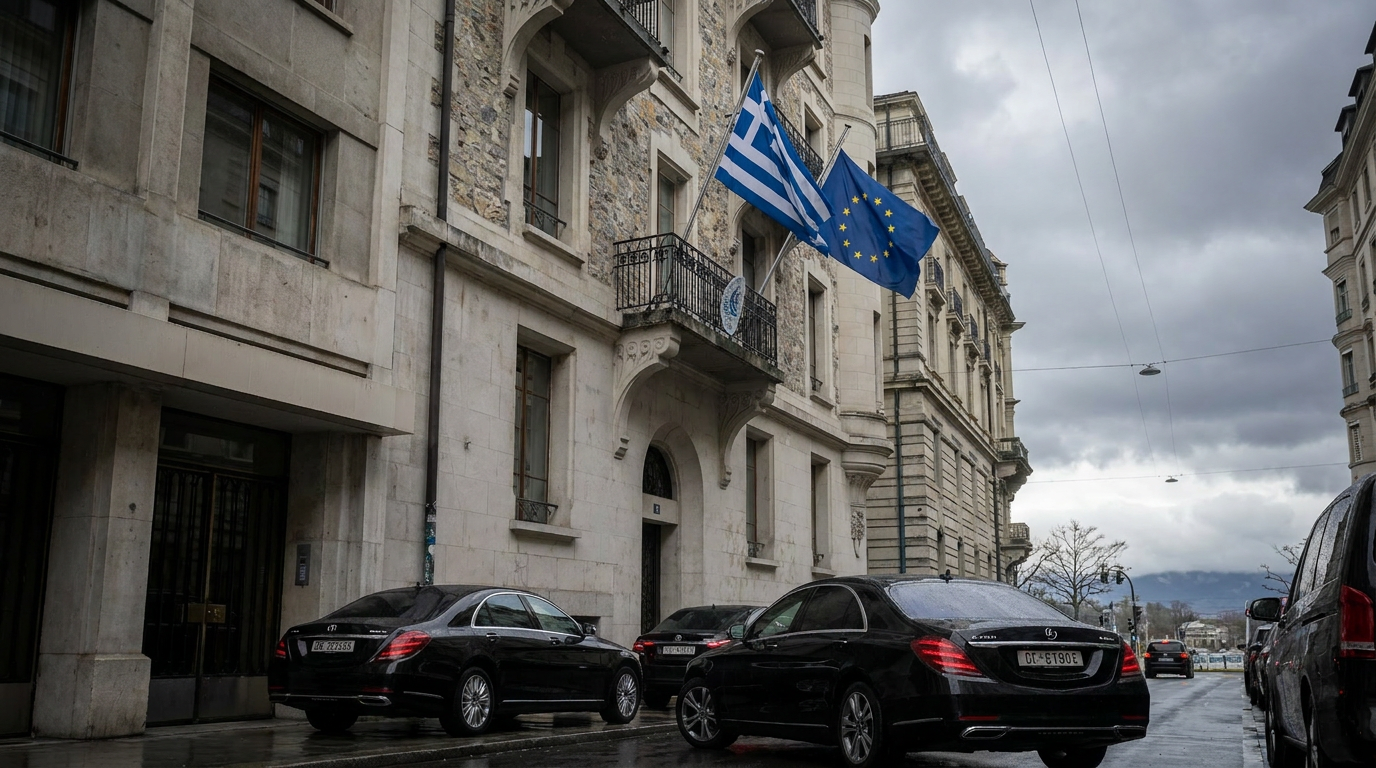
The global economy is bracing for a severe energy shock after Iran threatened to close the Strait of Hormuz, a critical maritime chokepoint, in retaliation for deadly Israeli airstrikes in Lebanon. The ultimatum has triggered an immediate diplomatic scramble, with US Vice President JD Vance and a high-level Iranian delegation arriving in Switzerland for emergency talks aimed at averting a broader regional war. The convergence of US and Iranian officials in Geneva marks the most significant direct or indirect diplomatic engagement between the two nations since the crisis began.[1][2][4]
The catalyst for the sudden escalation was a series of intense Israeli military operations in southern Lebanon, which local authorities and regional media report killed at least 16 people. The Israel Defense Forces confirmed the strikes, stating they successfully targeted entrenched Hezbollah militant infrastructure and weapons depots that posed an imminent threat to northern Israeli communities. However, Tehran, which serves as Hezbollah's primary financial and military backer, viewed the operation as a red line, prompting the immediate threat to maritime traffic in the Persian Gulf.[1][5][6]
The economic stakes of the standoff are difficult to overstate. The Strait of Hormuz, a narrow waterway between Oman and Iran, is the world's most important oil transit chokepoint. Roughly 20 percent of total global petroleum consumption—amounting to over 20 million barrels per day—passes through the strait. Energy markets reacted violently to the news, with Brent crude surging past $115 per barrel in early trading as traders priced in the risk of a prolonged supply disruption.[3][7]

In Washington, the Trump administration has adopted a dual-track approach, combining severe economic warnings with rapid diplomatic intervention. Vice President Vance's dispatch to Switzerland underscores the urgency the White House places on stabilizing energy markets ahead of the summer driving season. US officials have publicly warned that any attempt to block international shipping lanes will be met with a decisive response, though the administration is clearly prioritizing a negotiated de-escalation to prevent a spike in domestic inflation.[4][5]
In Washington, the Trump administration has adopted a dual-track approach, combining severe economic warnings with rapid diplomatic intervention.
The structure of the talks in Switzerland remains fluid. It is not yet clear whether US and Iranian officials will meet face-to-face or rely on Swiss intermediaries to shuttle proposals between separate rooms, a format frequently used in past negotiations. The Iranian delegation arrived with a mandate to demand an immediate cessation of Israeli operations in Lebanon as a precondition for guaranteeing the safety of commercial shipping in the Gulf.[1][2]
For Israel, the diplomatic maneuvering in Geneva is secondary to its immediate security imperatives. Israeli defense officials maintain that their operations in Lebanon are non-negotiable and necessary to dismantle Hezbollah's offensive capabilities. The Israeli government has signaled it will not be constrained by Iranian threats to global shipping, placing the burden on the international community to manage Tehran's retaliatory measures.[5][6]
The US Navy's Fifth Fleet, headquartered in Bahrain, has reportedly heightened its readiness posture in response to the Iranian threats. The fleet is responsible for ensuring the free flow of commerce in the region and routinely escorts commercial vessels through the strait during periods of high tension. Military analysts note that while Iran possesses the naval mines, fast-attack craft, and anti-ship missiles necessary to disrupt traffic, a sustained blockade would invite an overwhelming military response from a US-led coalition.[3][7]

European leaders have expressed deep alarm over the escalating rhetoric, urging maximum restraint from all parties. The European Union, already grappling with energy supply chain realignments, is particularly vulnerable to a Middle Eastern oil shock. Diplomatic channels between Brussels, Washington, and Tehran are operating around the clock to support the Swiss mediation efforts and find a face-saving off-ramp for the Iranian leadership.[4][5]
The coming days will be critical in determining whether the crisis spirals into a kinetic conflict or recedes into a tense standoff. Energy analysts warn that even if the strait remains open, the elevated risk premium will likely keep oil prices artificially high for the foreseeable future. As delegations settle into their Geneva hotels, the global economy effectively hangs on the outcome of closed-door negotiations between two deeply distrustful adversaries.[2][7]

How we got here
Recent Days
Israel conducts intense military operations against Hezbollah targets in southern Lebanon, killing at least 16.
24 Hours Ago
Iran announces it will close the Strait of Hormuz if Israeli operations in Lebanon do not cease.
12 Hours Ago
Global oil markets react violently, with Brent crude spiking past $115 per barrel.
Today
US and Iranian delegations arrive in Switzerland to begin emergency diplomatic talks.
Viewpoints in depth
US Administration's View
Balancing economic stability with regional deterrence.
The White House views the Iranian threat as a critical danger to both global economic stability and domestic political fortunes ahead of the summer driving season. By dispatching high-level officials to Geneva, the administration is signaling a willingness to find a diplomatic off-ramp. However, US defense officials maintain that any physical attempt to mine the strait or harass commercial shipping will trigger a swift military response to restore freedom of navigation.
Iranian Leadership's View
Using asymmetric economic leverage to protect regional allies.
Tehran recognizes that it cannot match the conventional military power of the US or Israel, making the Strait of Hormuz its most potent asymmetric weapon. Iranian officials argue that threatening the global energy supply is the only effective way to force the international community to restrain Israeli operations against Hezbollah in Lebanon. The delegation in Geneva is likely using the threat of $150 oil as leverage to extract security guarantees.
Global Markets' View
Pricing in the worst-case scenario for energy supply chains.
Energy analysts and commodity traders are treating the standoff with extreme caution, noting that even a partial or temporary closure of the strait would have cascading effects on global inflation. The market consensus is that while a full blockade is militarily difficult for Iran to sustain, the mere threat drastically increases insurance premiums for shipping companies and forces a structural repricing of crude oil worldwide.
What we don't know
- Whether the US and Iranian delegations will meet face-to-face or rely entirely on Swiss intermediaries.
- How long Israel plans to continue its military operations in southern Lebanon.
- The specific threshold of Iranian action that would trigger a direct US military response in the Gulf.
Key terms
- Strait of Hormuz
- A narrow maritime chokepoint between Oman and Iran that connects the Persian Gulf to the Gulf of Oman and the Arabian Sea.
- Brent Crude
- A major trading classification of sweet light crude oil that serves as a benchmark price for purchases of oil worldwide.
- Fifth Fleet
- The US Navy fleet responsible for naval forces in the Persian Gulf, Red Sea, Arabian Sea, and parts of the Indian Ocean.
Frequently asked
Why is Iran threatening to close the Strait of Hormuz?
Iran issued the threat in retaliation for recent Israeli military strikes in southern Lebanon that killed at least 16 people, viewing the operations against its ally Hezbollah as a red line.
How much oil goes through the Strait of Hormuz?
Roughly 20% of the world's total petroleum consumption, or more than 20 million barrels per day, passes through the narrow waterway.
What is the US doing in response?
The US has sent Vice President JD Vance to Switzerland for emergency talks with an Iranian delegation, while simultaneously heightening the readiness of the US Navy's Fifth Fleet in the region.
Sources
Source coverage
7 outlets
4 viewpoints surfaced






[1]Al JazeeraIranian Leadership
Iran war live: Vance heads to Switzerland; Israel kills 16 in Lebanon
Read on Al Jazeera →Iranian delegation arrives in Switzerland for US peace talks
Read on Al Jazeera →[3]ReutersGlobal Energy Markets
Oil surges past $115 as Iran threatens Strait of Hormuz blockade
Read on Reuters →[4]Fox NewsUS Administration
VP Vance lands in Geneva for high-stakes showdown with Iranian delegation
Read on Fox News →[5]The GuardianGlobal Energy Markets
Global alarm as Iran threatens vital oil chokepoint following deadly Lebanon strikes
Read on The Guardian →[6]Times of IsraelIsraeli Defense Establishment
IDF confirms strikes on Hezbollah targets in Lebanon, 16 reported dead
Read on Times of Israel →[7]BloombergGlobal Energy Markets
Energy markets brace for worst-case scenario as Hormuz closure looms
Read on Bloomberg →
Every angle. Every day.
Get news politics stories with full source coverage and perspective breakdowns delivered to your inbox.