
Vance Heads to Switzerland for Iran Peace Talks as Tehran Threatens to Close Strait of Hormuz
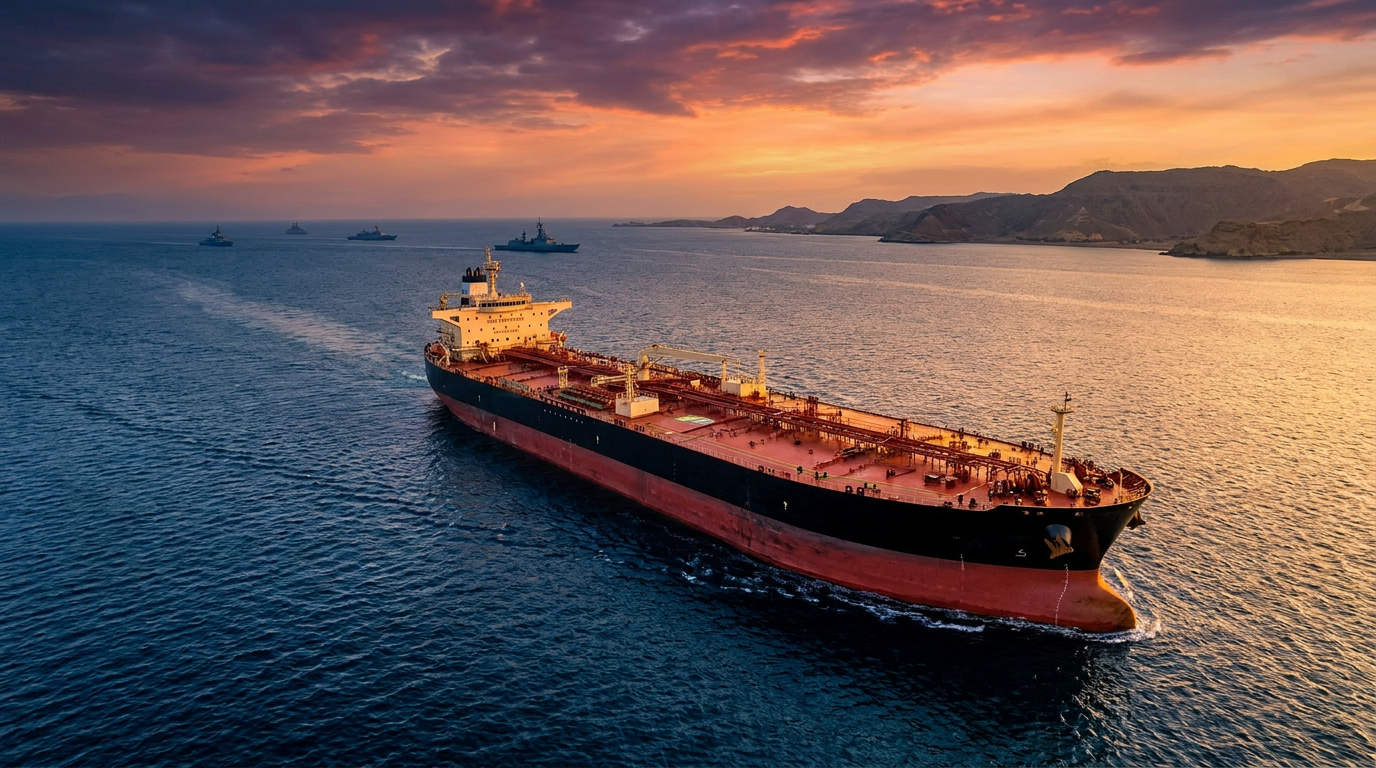
U.S. Vice President JD Vance has departed for Switzerland to begin high-stakes peace negotiations with Iran, even as Tehran announced it was closing the Strait of Hormuz over ongoing Israeli strikes in Lebanon. U.S. officials dispute the closure, stating that millions of barrels of oil continue to flow through the critical waterway.
By Factlen Editorial Team
- U.S. Negotiators
- Focused on enforcing the interim agreement, keeping shipping lanes open, and advancing nuclear talks.
- Iranian Leadership
- Demanding an immediate halt to Israeli operations in Lebanon as a precondition for broader peace.
- Regional Mediators
- Working to keep both sides at the table and prevent the interim agreement from collapsing.
- Global Shipping & Energy
- Monitoring the Strait of Hormuz closely, prioritizing the safe transit of commercial vessels and oil.
What's not represented
- · Lebanese Civilians
- · Israeli Military Command
- · European Energy Importers
Why this matters
The Strait of Hormuz is the world's most critical oil chokepoint, handling roughly one-fifth of global seaborne crude. If peace talks collapse and the waterway is genuinely blockaded, the resulting shock to global energy markets would immediately spike gas prices and drive inflation across the U.S. economy.
Key points
- Vice President JD Vance arrived in Switzerland for technical peace talks with Iranian officials.
- Iran's military announced it was closing the Strait of Hormuz over ongoing Israeli strikes in Lebanon.
- U.S. Central Command disputed the closure, reporting 17 million barrels of oil transited safely on Saturday.
- The negotiations aim to finalize a 14-point memorandum of understanding signed earlier in the week.
- Mediators from Pakistan and Qatar are facilitating the discussions at the Bürgenstock resort.
After a brief period of diplomatic whiplash, high-stakes negotiations between the United States and Iran are back on track in Switzerland, even as military posturing threatens to derail the fragile peace framework. U.S. Vice President JD Vance departed Joint Base Andrews on Saturday afternoon, leading an American delegation to the Bürgenstock resort near Lucerne. Hours later, an Iranian negotiating team—led by parliamentary Speaker Mohammad Bagher Qalibaf and Foreign Minister Abbas Araghchi—touched down in Zurich. The convergence of the two delegations marks the first major diplomatic test of the 14-point memorandum of understanding signed electronically earlier in the week by President Donald Trump and Iranian President Masoud Pezeshkian, an interim deal designed to halt hostilities and open a 60-day window for a permanent settlement.[1][3][6]
But the diplomatic progress was nearly overshadowed by a sudden escalation in the Persian Gulf. Early Saturday, Iran's Khatam al-Anbiya Central Headquarters—the highest-level joint military command of the Iranian Armed Forces—announced that it was closing the Strait of Hormuz to all vessel traffic. In a starkly worded statement, the military command cited the "continuous and relentless violations of the ceasefire by the Zionist regime in southern Lebanon" as a clear breach of the interim agreement's first clause. The command framed the closure as the "first step" in responding to what it characterized as a failure by the United States to enforce the terms of the memorandum, warning that further measures would follow if Israeli strikes did not cease.[5][7]
The Trump administration immediately disputed Tehran's claims of a blockade, pointing to uninterrupted maritime traffic. Speaking to reporters before boarding Air Force Two, Vice President Vance stated flatly that the U.S. was seeing no evidence of a closure, noting that 16 million barrels of oil had moved through the waterway the previous day. U.S. Central Command reinforced that assessment, confirming that 55 merchant ships carrying more than 17 million barrels of oil had safely transited the strait on Saturday. Independent commodity tracking firms corroborated the military's account, with Kpler reporting that at least 20 ships had crossed the strategic chokepoint despite the Iranian military's declarations.[1][2]

The core friction threatening the peace talks stems from the ongoing conflict in Lebanon, which has become inextricably linked to the broader U.S.-Iran detente. The first clause of the memorandum of understanding explicitly calls for an immediate and permanent termination of military operations on all fronts, specifically naming Lebanon. However, the fighting between Israel and Hezbollah has continued unabated. Over the weekend, Israeli airstrikes in southern Lebanon killed at least 16 people, while Hezbollah continued to launch retaliatory rockets. Israel, which currently occupies parts of southern Lebanon, has maintained that it will not withdraw its forces, setting up a direct collision with the terms Tehran believes it secured in the interim deal.[4][5]
The core friction threatening the peace talks stems from the ongoing conflict in Lebanon, which has become inextricably linked to the broader U.S.-Iran detente.
By threatening the world's most critical energy chokepoint, Iran is effectively testing whether Washington has the leverage—or the willingness—to restrain Israeli military operations. A Hezbollah official indicated that Tehran had informed the militant group that the Strait of Hormuz would remain contested until Israel publicly committed to a comprehensive ceasefire and a full withdrawal from Lebanese territory. The Islamic Revolutionary Guard Corps amplified the pressure on Saturday evening, issuing a direct warning to commercial vessels to avoid approaching the strait or risk having their security jeopardized, a move designed to spook maritime insurers and energy markets even if a physical blockade has not yet materialized.[3][7]
The task of untangling this web of proxy conflicts now falls to the negotiators assembling in Switzerland. The technical talks, which are being facilitated by mediators from Pakistan and Qatar, will take place in a discreet setting designed to insulate the diplomats from the immediate pressures of the battlefield. The U.S. delegation includes special envoys Steve Witkoff and Jared Kushner, who arrived in Switzerland ahead of the Vice President to lay the groundwork for the discussions. Swiss officials confirmed that preparatory work was already underway, emphasizing their commitment to providing a reliable back-channel for the historic negotiations.[1][6]

Vice President Vance outlined a dual mandate for the American delegation, telling reporters that the talks would focus squarely on Iran's nuclear program and the Lebanon ceasefire. Vance acknowledged that he would only be on the ground for "a day or two" to kick off the process, leaving technical teams to navigate the grueling details over the remainder of the 60-day window established by the memorandum. The administration's goal is to translate the broad strokes of the interim agreement into a binding, verifiable treaty that permanently unfreezes billions in Iranian assets in exchange for the dismantling of Tehran's nuclear enrichment capabilities and a cessation of proxy warfare.[1][6]
The economic stakes of the summit are monumental, with global energy markets watching the Strait of Hormuz with mounting anxiety. President Trump has injected his own leverage into the dynamic, threatening to impose American tolls on commercial shipping through the waterway if a final settlement is not reached within the 60-day timeframe. Meanwhile, U.S. intelligence agencies have reportedly warned the administration that Israeli Prime Minister Benjamin Netanyahu remains intent on continuing military operations in Lebanon, a posture that could fracture the U.S.-Iran negotiations before they yield a permanent breakthrough.[2][6]

Recognizing the urgency of the Lebanon crisis, mediators have adjusted the summit's agenda on the fly. An emergency session dedicated specifically to the Israel-Hezbollah conflict has been added to the first day of the peace talks, marking a notable shift in U.S. strategy by allowing a third-party conflict to take center stage in bilateral negotiations. As the delegations settle in at the Bürgenstock resort, the challenge will be keeping the broader framework for peace intact while the very conditions that prompted the agreement continue to burn on the ground.[3]
How we got here
Wednesday
President Trump and Iranian President Pezeshkian electronically sign a 14-point memorandum of understanding to halt hostilities.
Thursday
Planned talks in Switzerland are abruptly postponed amid renewed fighting between Israel and Hezbollah in Lebanon.
Saturday Morning
Iran's military announces the closure of the Strait of Hormuz, citing ceasefire violations.
Saturday Afternoon
U.S. CENTCOM confirms 17 million barrels of oil safely passed through the Strait, disputing Iran's blockade claim.
Saturday Evening
Vice President JD Vance and the Iranian delegation arrive in Switzerland to begin technical negotiations.
Viewpoints in depth
U.S. Administration's View
The U.S. is focused on enforcing the interim agreement and keeping global shipping lanes open.
American negotiators view the memorandum of understanding as a binding framework that must be adhered to while technical details are ironed out. Vice President Vance and U.S. Central Command have aggressively pushed back on Iran's claims of a blockade, using real-time shipping data to reassure global energy markets. The administration's primary goal is to separate the localized conflict in Lebanon from the broader strategic objective of dismantling Iran's nuclear program and securing a permanent peace treaty.
Iran's Military Command
Tehran views the Lebanon ceasefire as an inextricable part of the peace deal and is using the Strait as leverage.
For Iran's Khatam al-Anbiya Central Headquarters and the Islamic Revolutionary Guard Corps, the interim agreement is already being violated by ongoing Israeli military operations against Hezbollah. By threatening the Strait of Hormuz, Tehran is applying maximum pressure on Washington, testing whether the U.S. has the political will to force Israel into a comprehensive ceasefire. Iranian officials have warned that if the U.S. cannot deliver on the Lebanon clause, the entire memorandum of understanding will collapse.
Global Energy Markets
Commodity traders remain skeptical of both Iranian threats and U.S. assurances until a permanent deal is signed.
Energy analysts and maritime insurers are caught in the crossfire of the diplomatic posturing. While tracking firms confirm that oil is still flowing through the Strait of Hormuz, the IRGC's explicit warnings to commercial vessels have spiked anxiety. Markets are pricing in the risk that a breakdown in the Swiss talks could lead to a physical blockade, which would instantly sever a fifth of the world's oil supply and trigger a global economic shock.
What we don't know
- Whether Iran will escalate its naval posture in the Strait of Hormuz if Israeli strikes in Lebanon continue.
- How the U.S. delegation plans to address Iran's demands regarding Israel's military operations.
- Whether the 60-day window for technical talks will result in a permanent agreement or a collapse of the interim MoU.
Key terms
- Strait of Hormuz
- A narrow, strategically critical waterway between the Persian Gulf and the Gulf of Oman, through which roughly 20% of the world's oil passes.
- Memorandum of Understanding (MoU)
- The interim 14-point agreement signed by the U.S. and Iran to halt military operations and open a 60-day window for permanent peace talks.
- Khatam al-Anbiya Central Headquarters
- The highest-level joint military command of the Iranian Armed Forces, responsible for coordinating major operations.
Frequently asked
Why is JD Vance in Switzerland?
Vice President Vance is leading the U.S. delegation in high-level technical peace talks with Iran, aimed at finalizing a permanent agreement to end hostilities.
Is the Strait of Hormuz actually closed?
While Iran's military announced a closure, U.S. Central Command and commodity tracking firms report that commercial shipping and oil tankers are still transiting the waterway safely.
What does Lebanon have to do with the U.S.-Iran deal?
The interim agreement included a ceasefire on all fronts, including Lebanon. Iran claims ongoing Israeli strikes against Hezbollah are a violation of the deal, while Israel maintains it will not withdraw its forces.
Sources
Source coverage
7 outlets
4 viewpoints surfaced







[1]Fox NewsU.S. Negotiators
Vance departs for Switzerland as Iran negotiations continue
Read on Fox News →[2]The Washington PostGlobal Shipping & Energy
Iran says it is closing Strait of Hormuz, testing fragile agreement with U.S.
Read on The Washington Post →[3]CBS NewsU.S. Negotiators
Vance heads to Switzerland Saturday to begin negotiations with Iran
Read on CBS News →[4]Al JazeeraIranian Leadership
Iran war live: Vance heads to Switzerland; Israel kills 16 in Lebanon
Read on Al Jazeera →[5]The HinduIranian Leadership
West Asia war LIVE updates - June 20, 2026
Read on The Hindu →[6]Radio Free Europe/Radio LibertyRegional Mediators
US-Iran Talks Revived As Vance Heads To Switzerland For High-Stakes Push
Read on Radio Free Europe/Radio Liberty →[7]CTV NewsIranian Leadership
Iran says it closed Strait of Hormuz ahead of Switzerland talks
Read on CTV News →

More in news politics
See all 6 stories →Strait of Hormuz
Iran Threatens Strait of Hormuz Closure as US and Iranian Delegations Arrive in Switzerland for Emergency Talks
7 sources
Geneva Summit
U.S. and Iranian Delegations Open High-Stakes Peace Talks in Switzerland
6 sources
Digital Provenance
Fact-Checking the AI Election: The Evidence Behind Deepfake Detection and Content Watermarking
8 sources

Strait of Hormuz
Iran Moves to Block Strait of Hormuz as US Delegation Arrives in Switzerland for Emergency Talks
8 sources
Every angle. Every day.
Get news politics stories with full source coverage and perspective breakdowns delivered to your inbox.