
The Science of the Snatch: Why Everyday Athletes Are Turning to Olympic Weightlifting
Once reserved for elite competitors, the highly technical Olympic lifts are being adopted by recreational athletes to build explosive power, preserve fast-twitch muscle fibers, and increase bone density.
By Factlen Editorial Team
- Sports Scientists
- Focuses on the biomechanical efficiency, peak power output, and neural adaptations required to perform the lifts.
- Longevity Advocates
- Views the sport primarily as a tool for preserving fast-twitch muscle fibers, increasing bone density, and preventing age-related decline.
- Traditional Strength Coaches
- Emphasizes the steep learning curve of the full lifts and advocates for using partial movements to safely train power in general populations.
What's not represented
- · Physical Therapists
- · Youth Sports Coaches
Why this matters
Understanding the mechanics of Olympic weightlifting demystifies a sport that builds unparalleled explosive power, offering a blueprint for anyone looking to preserve mobility, bone health, and dynamic strength as they age.
Key points
- Olympic weightlifting consists of two highly technical movements: the snatch and the clean and jerk.
- The lifts require the rapid recruitment of fast-twitch muscle fibers to generate immense peak power.
- Recreational athletes are adopting the sport to improve functional longevity and dynamic strength.
- The high-impact nature of the lifts provides a potent stimulus for increasing bone mineral density.
- Due to a steep learning curve, proper coaching and mobility assessments are essential for safety.
- Partial movements like clean pulls offer similar explosive benefits with lower technical barriers.
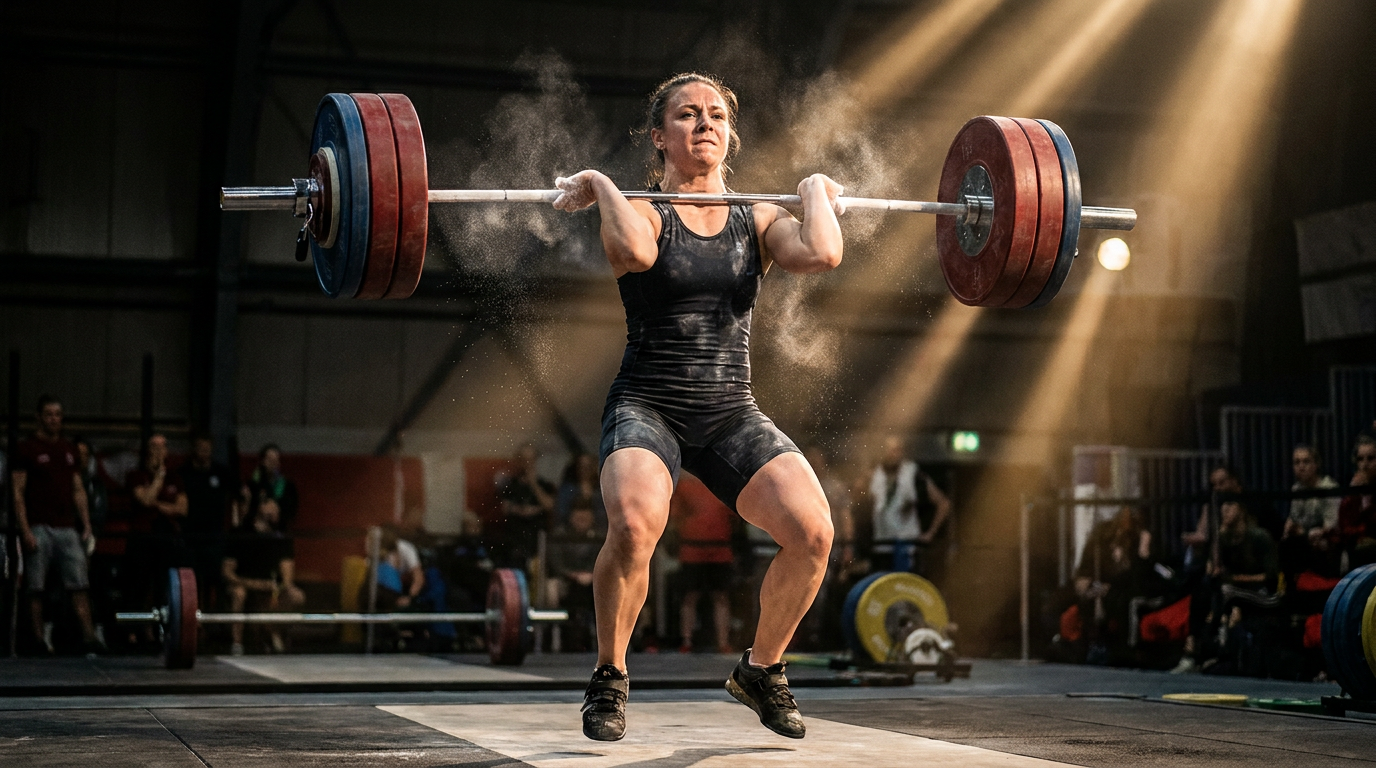
Olympic weightlifting is often misunderstood as a pure test of brute force, a spectacle of massive individuals hoisting bending barbells overhead. In reality, the sport is an intricate display of physics, timing, and biomechanical efficiency. At the elite level, it requires a symphony of muscular coordination that produces the highest peak power outputs of any human athletic endeavor. Yet, beyond the Olympic platform, these highly technical movements—the snatch and the clean and jerk—are experiencing a renaissance among recreational athletes and longevity seekers.[1]
The appeal lies in the unique physiological adaptations the sport demands. Unlike traditional powerlifting, which focuses on absolute strength through relatively slow movements like the squat and deadlift, Olympic weightlifting is defined by velocity. The goal is to accelerate a heavy mass so rapidly that it becomes momentarily weightless, allowing the lifter to pull themselves underneath it. This requires the rapid recruitment of fast-twitch muscle fibers, specifically the Type IIx fibers, which are crucial for explosive movement but are typically the first to atrophy as humans age.[2][6]
To understand the benefits, one must first dissect the mechanics of the lifts, starting with the snatch. The snatch is a continuous movement that takes the barbell from the floor to a locked-out position overhead in a fraction of a second. Biomechanists divide this movement into distinct phases, beginning with the first pull. Here, the lifter breaks the bar from the floor, maintaining a constant back angle while pushing through the legs. It is a controlled, relatively slow movement designed to position the body for the explosive phase to come.[2][4]

The magic happens during the transition and the second pull. As the bar passes the knees, the lifter rapidly re-bends their knees, bringing the torso upright and sliding the bar into the power position at the upper thigh or hip crease. Then comes the triple extension—the simultaneous, violent extension of the hips, knees, and ankles. This is the engine of Olympic weightlifting. The force generated during this microsecond propels the bar upward, creating peak power outputs that can exceed 10,000 watts in elite super-heavyweight lifters.[2][5]
Once the bar reaches its maximum velocity and begins its brief ballistic flight, the lifter's job fundamentally changes. They must instantly transition from pulling the bar upward to pulling their own body downward. This phase, known as the third pull or the catch, requires profound mobility. The lifter drops into a rock-bottom overhead squat, catching the bar with locked arms while absorbing downward forces that can equal two and a half times their own body weight. The margin for error is measured in millimeters; if the bar is slightly forward or backward, the lift is lost.[2][4]
The clean and jerk, the second of the two contested Olympic lifts, is a two-part movement that allows for significantly heavier weights to be lifted overhead. The clean mirrors the snatch in its initial pulling mechanics but ends with the lifter catching the barbell on their anterior deltoids—the front of the shoulders—in a deep front squat position. Because the grip is narrower and the bar does not have to travel as high as it does in the snatch, athletes can typically clean roughly twenty percent more weight than they can snatch, making it the ultimate test of absolute power.[4]

The clean and jerk, the second of the two contested Olympic lifts, is a two-part movement that allows for significantly heavier weights to be lifted overhead.
After recovering from the clean, the lifter prepares for the jerk—the phase that drives the bar overhead. Rather than pressing the weight with upper-body strength, the jerk relies on the legs and the elastic properties of the barbell. The lifter performs a short, rapid dip, storing elastic energy in their tendons, and then violently drives upward. As the heavy bar bends and whips upward, the lifter uses that momentum to push themselves down, typically splitting their legs into a deep lunge to catch the bar with straight arms before recovering to a standing position.[2][5]
For decades, these movements were largely confined to specialized weightlifting clubs and Eastern European sports academies. However, the rise of functional fitness and CrossFit in the early 21st century democratized the sport, introducing the barbell to millions of everyday athletes. Suddenly, accountants and teachers were learning the hook grip and practicing triple extension. This mass adoption has provided sports scientists with a vast new demographic to study, revealing that the benefits of weightlifting extend far beyond athletic performance.[1][3]
One of the most significant findings relates to bone mineral density. According to Wolff's Law, bone adapts to the loads under which it is placed. The high-impact, load-bearing nature of the snatch and the clean and jerk provides a potent stimulus for osteogenesis, which is the process of bone formation. Studies published in sports medicine journals have shown that competitive weightlifters possess some of the highest bone mineral densities recorded among athletes, significantly outpacing runners, swimmers, and even traditional bodybuilders.[3]
This osteogenic effect is particularly relevant for aging populations. As humans age, the risk of osteopenia and osteoporosis increases dramatically, leading to frailty and a higher incidence of fractures. By incorporating modified weightlifting movements—such as power cleans or high pulls—older adults can subject their skeletal systems to the necessary mechanical stress to maintain or even increase bone mass. The dynamic nature of the lifts also improves proprioception and balance, directly combating the physical decline associated with aging and providing a buffer against debilitating falls.[3][6]

Furthermore, Olympic weightlifting is a profound stimulus for the central nervous system. The lifts require immense inter-muscular coordination, forcing the brain to fire motor units synchronously and at maximum speed. This neural drive improves overall movement efficiency. For aging adults, preserving this neural efficiency is just as critical as preserving muscle mass. The ability to generate force quickly—power—is what prevents a stumble from becoming a catastrophic fall. Weightlifting trains the body to react rapidly and forcefully, keeping the nervous system sharp and responsive.[5][6]
Despite these benefits, the barrier to entry remains high. Olympic weightlifting is arguably the most technically demanding strength sport in existence. A novice can learn to perform a passable deadlift in a single session, but mastering the snatch can take years of dedicated practice. This steep learning curve requires significant mobility in the ankles, hips, thoracic spine, and shoulders. Without adequate range of motion, attempting the full lifts can lead to compensatory movement patterns and potential injury, making proper assessment a prerequisite for participation.[1][5]
Consequently, traditional strength coaches often emphasize the importance of regressions and partial movements. Not everyone needs to perform a full squat snatch to reap the benefits of triple extension. Exercises like the clean pull, the push press, or the hang power snatch offer the explosive benefits of the sport while requiring less technical proficiency and mobility. Proper coaching is paramount; the complexity of the lifts means that self-teaching via online videos often leads to ingrained technical flaws that are difficult to unlearn and can limit long-term progress.[1][5]

Ultimately, the science of Olympic weightlifting reveals a discipline that is as much about neurological efficiency and skeletal health as it is about moving heavy iron. By demanding speed, mobility, and absolute precision, the snatch and the clean and jerk offer a unique physiological stimulus. As the fitness industry continues to shift its focus from mere aesthetics to functional longevity, the barbell—once the exclusive domain of elite competitors—is increasingly being recognized as a vital tool for lifelong physical resilience and dynamic strength.[1][3][6]
How we got here
1896
Weightlifting is included in the first modern Olympic Games in Athens, though without weight classes.
1972
The clean and press is removed from Olympic competition due to judging difficulties, leaving only the snatch and the clean and jerk.
2000
Women's weightlifting makes its official debut at the Sydney Olympic Games.
2010s
The rise of functional fitness programs introduces Olympic weightlifting to millions of recreational athletes worldwide.
Viewpoints in depth
Sports Scientists' view
Focuses on the biomechanics and neural drive required to maximize power output.
For biomechanists and sports scientists, the Olympic lifts represent the pinnacle of human power production. They study the precise angles of the first pull, the velocity of the bar during triple extension, and the synchronous firing of motor units. Their research demonstrates that the snatch and clean and jerk train the central nervous system to recruit muscle fibers more rapidly than almost any other activity, making these lifts invaluable for athletes in sports requiring sprinting, jumping, or sudden changes of direction.
Longevity Advocates' view
Highlights the sport's ability to combat age-related physical decline.
Medical researchers and longevity experts view the barbell as a prescription for aging. They focus on the sport's ability to combat sarcopenia (muscle loss) and osteopenia (bone loss). Because the lifts require the body to absorb force dynamically, they stimulate bone remodeling far more effectively than low-impact exercises. Furthermore, by preserving Type IIx fast-twitch muscle fibers, weightlifting helps older adults maintain the reactive power necessary to catch themselves during a trip, significantly reducing the risk of catastrophic falls.
Traditional Strength Coaches' view
Advocates for a pragmatic approach to the steep technical requirements of the sport.
While acknowledging the immense benefits of the lifts, many traditional strength and conditioning coaches caution against rushing into the full movements. They point out that the average adult often lacks the thoracic and ankle mobility required to safely catch a heavy barbell in a deep overhead squat. Instead, these coaches advocate for regressions—using exercises like the hang clean, high pull, or push press. This approach allows athletes to train explosive hip extension and reap the physiological rewards without the high risk of injury associated with poor mobility.
What we don't know
- The exact minimum effective dose of weightlifting required to maintain bone density in aging populations.
- How long-term participation in recreational weightlifting compares to traditional resistance training for joint longevity.
- The optimal age for youth athletes to begin specializing in the highly technical Olympic lifts.
Key terms
- Triple Extension
- The simultaneous and explosive extension of the hip, knee, and ankle joints, which generates the upward power in weightlifting.
- Hook Grip
- A specialized grip where the lifter wraps their fingers over their thumb on the barbell, providing a much stronger hold during explosive pulls.
- Type IIx Muscle Fibers
- The fastest-twitch muscle fibers in the human body, responsible for short, explosive bursts of power, which tend to decline with age if not trained.
- Wolff's Law
- A medical principle stating that bone in a healthy person will adapt to the loads under which it is placed, becoming denser and stronger.
- Sarcopenia
- The age-related loss of skeletal muscle mass and strength, which explosive resistance training helps to mitigate.
Frequently asked
Are Olympic lifts safe for beginners?
Yes, provided they are taught by a qualified coach. Beginners typically start with a PVC pipe or an empty barbell to master the complex mechanics before adding weight.
Do I need special shoes for weightlifting?
While not strictly mandatory for beginners, weightlifting shoes have a raised, solid heel that significantly improves ankle mobility and stability during the deep squats required for the catch phase.
What is the difference between powerlifting and weightlifting?
Powerlifting consists of the squat, bench press, and deadlift, focusing on absolute strength. Olympic weightlifting consists of the snatch and the clean and jerk, focusing on explosive power and velocity.
Can older adults start Olympic weightlifting?
Yes. Many older adults participate in masters weightlifting. Coaches often use modified versions of the lifts, like power cleans or pulls, to provide the bone-density benefits without requiring extreme mobility.
Sources
Source coverage
6 outlets
3 viewpoints surfaced






[1]Factlen Editorial TeamTraditional Strength Coaches
Synthesis by Factlen editorial team
Read on Factlen Editorial Team →[2]Journal of Strength and Conditioning ResearchSports Scientists
Biomechanical Analysis of the Snatch and Clean & Jerk
Read on Journal of Strength and Conditioning Research →[3]Sports MedicineLongevity Advocates
Olympic Weightlifting for Bone Mineral Density and Aging
Read on Sports Medicine →[4]International Weightlifting Federation
Technical Rules and Biomechanics of Weightlifting
Read on International Weightlifting Federation →[5]National Strength and Conditioning AssociationSports Scientists
Power Development through Weightlifting Movements
Read on National Strength and Conditioning Association →[6]Frontiers in PhysiologyLongevity Advocates
Fast-Twitch Muscle Fiber Preservation in Masters Weightlifters
Read on Frontiers in Physiology →

Every angle. Every day.
Get sports stories with full source coverage and perspective breakdowns delivered to your inbox.