
Iran Moves to Block Strait of Hormuz as US Delegation Arrives in Switzerland for Emergency Talks
Tehran has announced the closure of the critical Strait of Hormuz in response to Israeli military operations in Lebanon, sending global energy markets into turmoil. In a bid to avert a broader regional war and global economic shock, US Vice President JD Vance and an Iranian delegation have arrived in Geneva for high-stakes emergency negotiations.
By Factlen Editorial Team
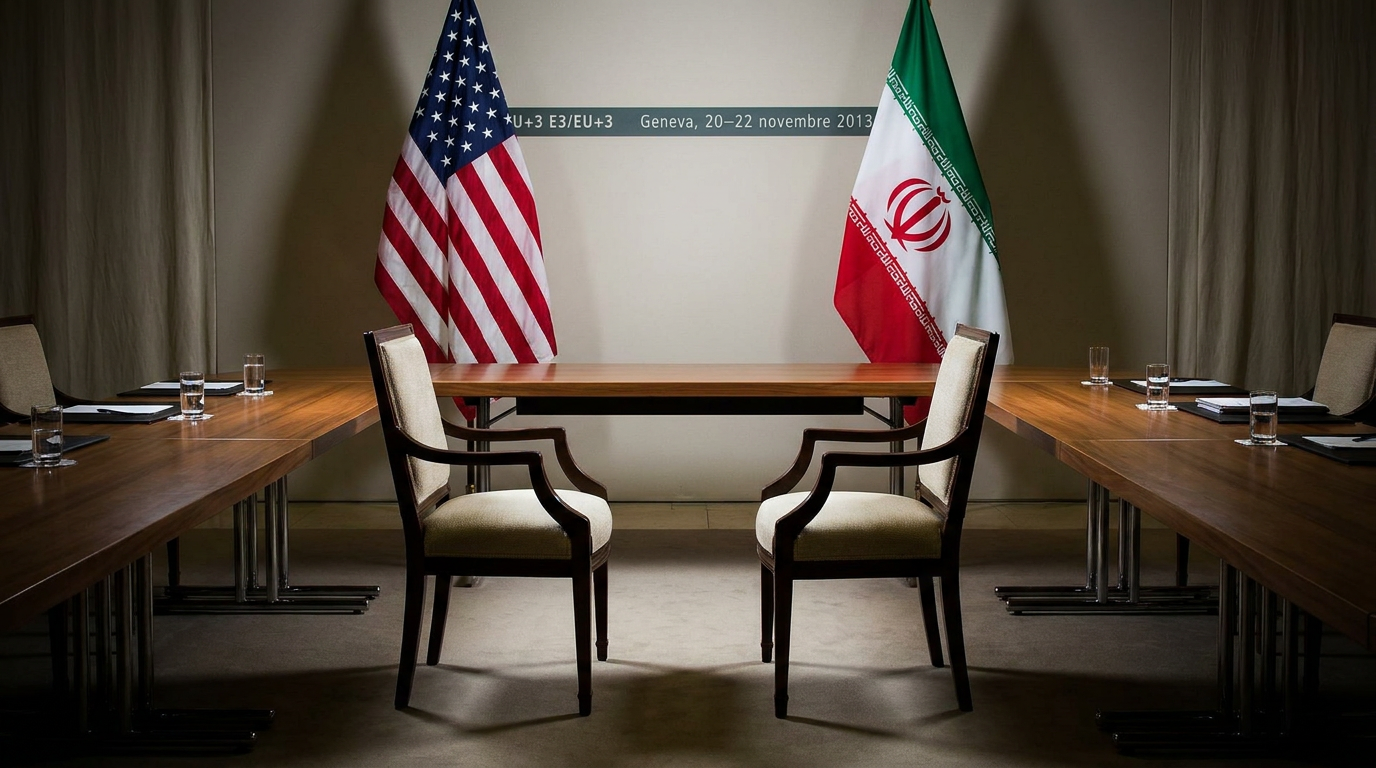
- US & Allied Policymakers
- Views the closure as an illegal disruption of global commerce that must be resolved diplomatically to avoid a wider war.
- Global Energy Markets
- Focused entirely on the severe inflationary risks and supply chain breakdowns a prolonged closure will cause.
- Iranian Leadership
- Frames the strait closure as a legitimate asymmetric response to Israeli military actions in Lebanon.
What's not represented
- · Asian energy importers highly reliant on the strait
- · Lebanese civilians affected by the precipitating conflict
Why this matters
The Strait of Hormuz facilitates roughly 20% of the world's global oil consumption. A sustained closure would trigger a severe global energy shock, spiking gasoline prices, accelerating inflation, and potentially forcing direct US military intervention to reopen the shipping lanes.
Key points
- Iran announced it is moving to close the Strait of Hormuz in retaliation for Israeli operations in Lebanon.
- US Vice President JD Vance and an Iranian delegation have arrived in Geneva for emergency negotiations.
- The Strait of Hormuz facilitates roughly 20% of global oil consumption.
- Brent crude oil prices surged past $128 per barrel immediately following the threat.
- A sustained closure would severely impact Asian economies and threaten global inflation.
The global energy market faces its most severe disruption in decades following Iran's announcement that it is moving to close the Strait of Hormuz. The dramatic escalation comes in direct retaliation for recent Israeli military operations in Lebanon, which reportedly killed 16 people and significantly degraded local infrastructure.[1]
In a rapid diplomatic response aimed at averting a full-scale regional war, emergency negotiations have been convened in Geneva, Switzerland. US Vice President JD Vance has arrived to lead the American delegation, marking the highest-level direct engagement between Washington and Tehran in years.[1][5]
An Iranian delegation has also touched down in the Swiss city, signaling that while Tehran is flexing its military leverage, it remains open to a negotiated off-ramp. The talks are expected to center on de-escalating the Lebanon conflict in exchange for keeping the vital maritime chokepoint open to commercial shipping.[2][6]
To understand the gravity of the crisis, one must look at the geography of the Strait of Hormuz. The waterway, which separates Iran and Oman, connects the Persian Gulf to the Gulf of Oman and the Arabian Sea. At its narrowest point, the strait is just 21 miles wide, with the designated shipping lanes in each direction measuring only two miles across.[7]

This narrow passage is the world's most important oil chokepoint. Approximately 21 million barrels of oil transit the strait every day, representing roughly 20% of global petroleum liquids consumption. Any disruption here sends immediate, unavoidable shockwaves through the global economy.[3][7]
The economic fallout was instantaneous. Brent crude, the international benchmark, surged past $128 per barrel within hours of the announcement. Energy analysts warn that a sustained closure could push prices significantly higher, threatening to reignite global inflation just as central banks were beginning to stabilize interest rates.[3][4]

The mechanism of closure is a critical point of concern for military planners. Iran does not need to physically block the entire 21-mile width with a wall of ships to halt commercial transit. The deployment of naval mines, the use of anti-ship cruise missiles stationed along the Iranian coast, and harassment by Islamic Revolutionary Guard Corps (IRGC) fast-attack craft are sufficient to make maritime insurance premiums prohibitively expensive.[7][8]
The mechanism of closure is a critical point of concern for military planners.
Once commercial insurers refuse to cover oil tankers transiting the strait, the flow of oil effectively stops, regardless of whether a physical blockade is perfectly maintained. This asymmetric capability allows Tehran to exert massive economic pressure without necessarily engaging in major naval battles with Western powers.[4]
The United States maintains a robust military presence in the region, primarily through the Navy's Fifth Fleet headquartered in nearby Bahrain. The Fifth Fleet's stated mission includes ensuring the free flow of commerce in regional waterways, setting the stage for a potential standoff.[5]

However, military experts note that while the US Navy could theoretically escort flagged tankers through the strait, doing so under active Iranian missile threat would risk a direct military confrontation. The Trump administration has historically favored "maximum pressure" economic tactics but has also expressed a strong desire to avoid entangling the US in new Middle Eastern wars, explaining the urgent dispatch of Vice President Vance to Geneva.[5][6]
The immediate trigger for this crisis lies hundreds of miles away in the Levant. Israel's ongoing military campaign in Lebanon, aimed at degrading Hezbollah's capabilities, has crossed what Tehran considers a red line, prompting Iran to activate its ultimate economic lever.[1]
Iranian state media has framed the Hormuz closure not as an act of unprovoked aggression, but as a necessary measure to "secure regional waters" and impose costs on Israel and its Western backers for the operations in Lebanon.[8]
This linkage creates a complex diplomatic puzzle for the negotiators in Switzerland. The US delegation must find a way to address Iran's leverage over the global economy without appearing to dictate terms to Israel regarding its northern border security, a needle that will be incredibly difficult to thread.[6]
Asian economies are watching the Geneva talks with acute anxiety. China, India, Japan, and South Korea are the primary destinations for oil flowing out of the Persian Gulf. Unlike the United States, which has significant domestic oil production, these manufacturing powerhouses are highly vulnerable to a prolonged Hormuz shutdown and have limited strategic reserves to weather a long-term crisis.[4]

The coming days will test whether the threat of mutual economic destruction is enough to force a diplomatic breakthrough. If the Geneva talks collapse, the world faces the very real prospect of a militarized chokepoint, soaring energy costs, and a rapidly expanding conflict in the Middle East.[3][5]
How we got here
Recent Weeks
Israel escalates military operations in Lebanon targeting Hezbollah infrastructure.
June 20, 2026
Israeli strikes in Lebanon reportedly kill 16 people, crossing an Iranian red line.
June 21, 2026
Iran announces its intention to close the Strait of Hormuz to commercial shipping.
June 21, 2026
US and Iranian delegations arrive in Geneva, Switzerland, for emergency de-escalation talks.
Viewpoints in depth
The US Administration's View
Washington seeks to prevent a global economic shock without being drawn into a direct Middle Eastern war.
For the US administration, the primary goal is ensuring the free flow of global commerce and preventing a massive inflationary spike that could damage the domestic economy. By sending Vice President Vance to Geneva, the administration is signaling a preference for high-level diplomacy over immediate military confrontation. However, US officials maintain that the Fifth Fleet is prepared to defend commercial shipping if negotiations fail, balancing the desire to avoid war with the necessity of keeping the chokepoint open.
Tehran's View
Iran views the strait as its ultimate strategic lever to deter attacks on its regional allies.
Iranian leadership considers the operations against Hezbollah in Lebanon as an unacceptable escalation by Israel. By threatening the Strait of Hormuz, Tehran is demonstrating its ability to impose severe, immediate costs on the global economy—and by extension, on Israel's Western allies. Iranian state media frames this not as an act of aggression, but as a defensive measure to secure regional waters and force the international community to rein in Israeli military actions.
Global Energy Importers' View
Market analysts and importing nations are focused entirely on the catastrophic economic risks of a prolonged closure.
For nations like China, India, Japan, and South Korea, the geopolitical nuances of the Lebanon conflict are secondary to the existential threat of an energy cutoff. These manufacturing hubs rely heavily on Persian Gulf oil and lack the domestic production to offset a 21-million-barrel-per-day deficit. Energy markets are pricing in a severe risk premium, warning that even a partial or temporary closure will disrupt supply chains, spike transportation costs, and trigger a new wave of global inflation.
What we don't know
- Whether Iran has already begun physically mining the strait or deploying fast-attack craft to block ships.
- What specific concessions the US is willing to offer regarding Israel's operations in Lebanon.
- How long commercial shipping companies will wait before officially halting all transit through the region.
Key terms
- Strait of Hormuz
- A strategically vital, 21-mile-wide waterway connecting the Persian Gulf to the Gulf of Oman, through which a fifth of the world's oil passes.
- Brent Crude
- The major trading classification of sweet light crude oil that serves as a major benchmark price for purchases of oil worldwide.
- Fifth Fleet
- The US Navy fleet responsible for naval forces in the Persian Gulf, Red Sea, Arabian Sea, and parts of the Indian Ocean.
- Chokepoint
- A narrow geographical feature, such as a strait, that forces shipping traffic into a tight, easily disrupted space.
Frequently asked
What is the Strait of Hormuz?
It is a narrow waterway between Iran and Oman that connects the Persian Gulf to the open ocean. It is the world's most important oil chokepoint.
Why is Iran threatening to close it?
Tehran announced the closure in direct retaliation for recent Israeli military operations in Lebanon, which reportedly killed 16 people.
How much oil passes through the strait?
Approximately 21 million barrels of oil transit the strait daily, accounting for roughly 20% of global petroleum consumption.
Why is JD Vance in Switzerland?
The US Vice President is leading an American delegation in emergency talks with Iranian officials in Geneva to negotiate an end to the crisis.
Sources
Source coverage
8 outlets
3 viewpoints surfaced







[1]Al JazeeraIranian Leadership
Iran war live: Vance heads to Switzerland; Israel kills 16 in Lebanon
Read on Al Jazeera →Iranian delegation arrives in Switzerland for US peace talks
Read on Al Jazeera →[3]ReutersUS & Allied Policymakers
Oil surges past $120 as Iran threatens Strait of Hormuz closure
Read on Reuters →[4]BloombergGlobal Energy Markets
Global supply chains brace for impact as Hormuz shipping halts
Read on Bloomberg →[5]Fox NewsUS & Allied Policymakers
VP Vance lands in Geneva for high-stakes talks with Iranian officials
Read on Fox News →[6]The New York TimesUS & Allied Policymakers
In Geneva, Vance Faces a Diplomatic Tightrope Over Middle East Conflict
Read on The New York Times →[7]BBC NewsGlobal Energy Markets
What is the Strait of Hormuz and why does it matter?
Read on BBC News →[8]IRNAIranian Leadership
Tehran vows to secure regional waters against Zionist aggression
Read on IRNA →

More in news politics
See all 5 stories →Election Integrity
The Evidence Pack: How Accurate Are Open-Source Deepfake Detectors in 2026?
7 sources

Strait of Hormuz
Iran Threatens Strait of Hormuz Closure as US and Iranian Delegations Arrive in Switzerland for Emergency Talks
7 sources
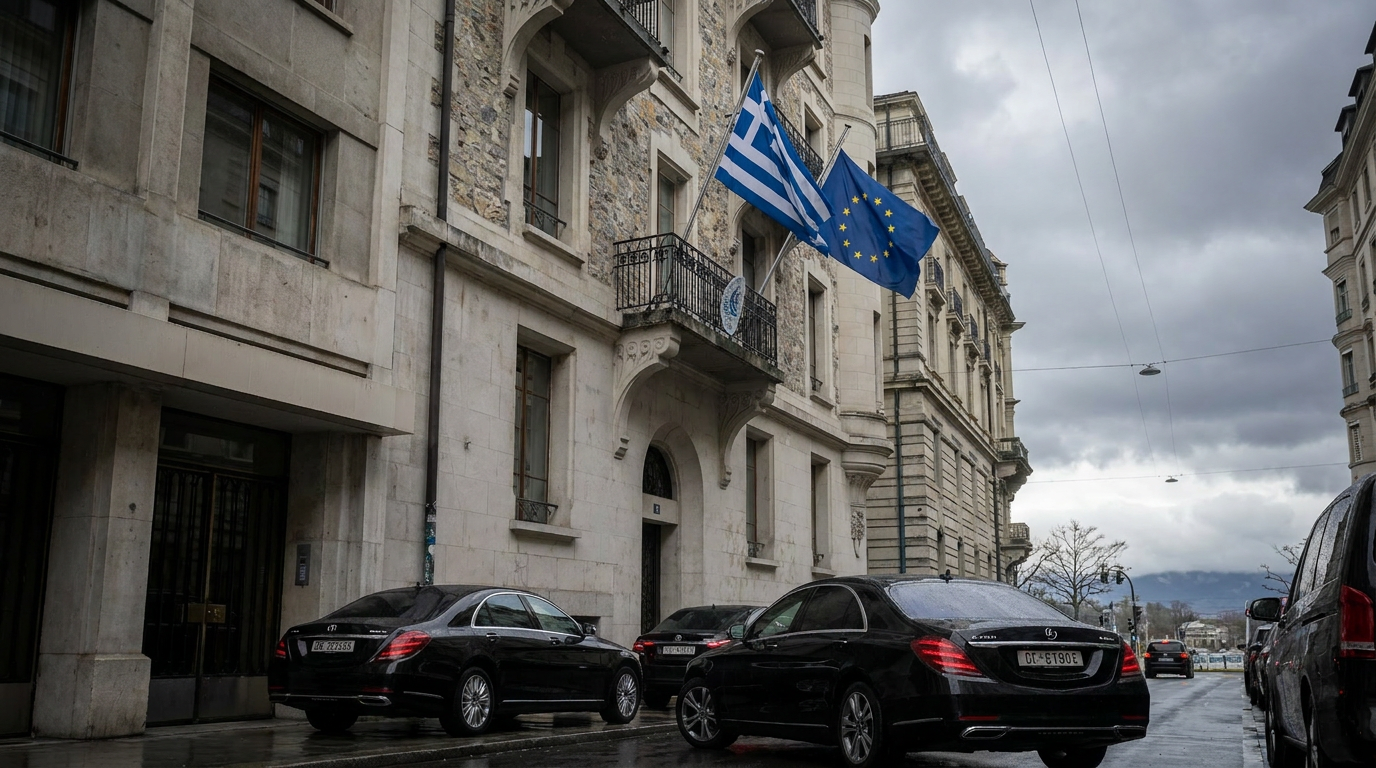
Geneva Summit
U.S. and Iranian Delegations Open High-Stakes Peace Talks in Switzerland
6 sources
Every angle. Every day.
Get news politics stories with full source coverage and perspective breakdowns delivered to your inbox.