
Beyond the Vistas: How National Parks Are Saving Natural Silence and Dark Skies
A new wave of sensory conservation is protecting the acoustic environments and nocturnal landscapes of America's public lands, ensuring visitors can still experience pristine quiet and star-filled skies.
By Factlen Editorial Team
- Acoustic Ecologists & Researchers
- Focus on gathering baseline data, utilizing machine learning, and measuring the precise impacts of noise and light pollution on ecosystems.
- Conservation Advocates
- Emphasize the need for strict protections, airspace regulations, and infrastructure retrofits to preserve the sensory wilderness.
- Park Management
- Balance the mandate to protect natural and cultural resources with the logistical challenges of managing millions of annual visitors.
- Astrotourism Enthusiasts
- Value the human experience of awe, seeking out certified dark sky and quiet parks for recreation, photography, and psychological restoration.
What's not represented
- · Gateway community business owners who may face costs associated with retrofitting town lighting to meet Dark Sky standards.
- · Commercial air tour operators whose flight paths are restricted by noise mitigation efforts over national parks.
Why this matters
As urban noise and light pollution expand, true silence and pristine night skies are becoming increasingly rare resources. Understanding where and how these sensory environments are protected allows travelers to experience a deeper, more restorative connection to nature.
Key points
- Sensory conservation aims to protect the acoustic and nocturnal environments of public lands from encroaching noise and light pollution.
- The NPS Natural Sounds and Night Skies Division uses hidden microphones and machine learning to analyze park soundscapes.
- Quiet Parks International certifies locations that can maintain strict 15-minute noise-free intervals, such as Glacier National Park.
- Over 45 National Park Service sites have achieved International Dark Sky status by retrofitting lighting to reduce light pollution.
- August 2026 offers exceptional stargazing conditions due to a rare overlap of three meteor showers peaking during a new moon.
- Protecting natural quiet is vital for wildlife, as noise pollution disrupts mating calls, navigation, and predator-prey dynamics.
When we imagine the American wilderness, we typically conjure visual postcards: the towering granite of Yosemite, the geothermal vividness of Yellowstone, or the vast canyons of the Southwest. But a growing movement within conservation science argues that a true wilderness experience is defined just as much by what we hear and what we see after the sun goes down. In 2026, the frontier of public land stewardship is sensory conservation—a concerted effort to protect the fragile acoustic environments and nocturnal landscapes of our national parks.[7]
The urgency behind this movement is driven by the steady encroachment of modern development. More than 80 percent of Americans now live under light-polluted skies, and human-made noise from commercial flights, highways, and industrial extraction frequently bleeds into protected boundaries. In response, the National Park Service’s Natural Sounds and Night Skies Division (NSNSD) has quietly become one of the most vital, if under-the-radar, conservation outfits in the federal government, tasked with measuring and mitigating these invisible pollutants.[1][7]
To protect a soundscape, scientists must first understand it. This monumental task is anchored by the Protected Areas Research Collaborative (PARC) Listening Lab, which relocated to the University of Vermont. Here, researchers analyze thousands of hours of audio recorded by microphones hidden deep within park interiors. These devices capture everything from the slap of a beaver’s tail in Voyageurs National Park to the distant rumble of high-altitude jets over the Grand Canyon.[1][2]

Acoustic technicians at the Listening Lab don't just listen; they look at sound. Using visual representations called spectrograms, students and researchers categorize audio into roughly 100 different codes, distinguishing between the howl of a coyote, the rustle of wind, and the mechanical hum of a distant engine. Because only about 2.5 percent of the massive acoustic data troves can be manually reviewed, the lab is increasingly turning to machine learning models to process the backlog, allowing park managers to establish baseline profiles of natural quiet.[2]
This data is crucial for the emerging "Quiet Parks" movement, spearheaded by organizations like Quiet Parks International (QPI). Founded by acoustic ecologist Gordon Hempton, QPI operates on the premise that natural silence is an endangered resource that requires explicit protection. The organization's benchmark for a pristine soundscape is remarkably strict: a location must consistently offer 15-minute "noise-free intervals" over multiple consecutive mornings, completely devoid of human-made sound.[3]
This data is crucial for the emerging "Quiet Parks" movement, spearheaded by organizations like Quiet Parks International (QPI).
Achieving this standard is incredibly difficult in the modern world, making the few certified locations highly coveted. Glacier National Park earned the first U.S. Wilderness Quiet Park designation in 2022, followed by the Boundary Waters Canoe Area Wilderness in Minnesota. In the Boundary Waters, a million acres of glacier-carved lakes benefit from a unique airspace reservation that prohibits flights below 4,000 feet, allowing the natural quiet to stretch not just for minutes, but for hours.[3][5]

The preservation of quiet is not merely an aesthetic luxury for human visitors; it is a matter of ecological survival. Wildlife depends on clean acoustic environments to communicate, navigate, and survive. Excessive noise pollution masks the mating calls of amphibians and birds, disrupts the hunting patterns of predators like owls, and forces prey animals to spend more energy on high alert. By protecting the soundscape, parks are actively protecting the biodiversity within them.[1][3]
Parallel to the quest for quiet is the fight to save the stars. Just as QPI certifies acoustic purity, DarkSky International awards designations to parks that actively preserve their nocturnal environments. Over 45 National Park Service sites have achieved International Dark Sky status by retrofitting their infrastructure with shielded, low-temperature lighting and committing to public astronomy education. These efforts ensure that the Milky Way remains a visible, awe-inspiring fixture of the park experience.[1][7]
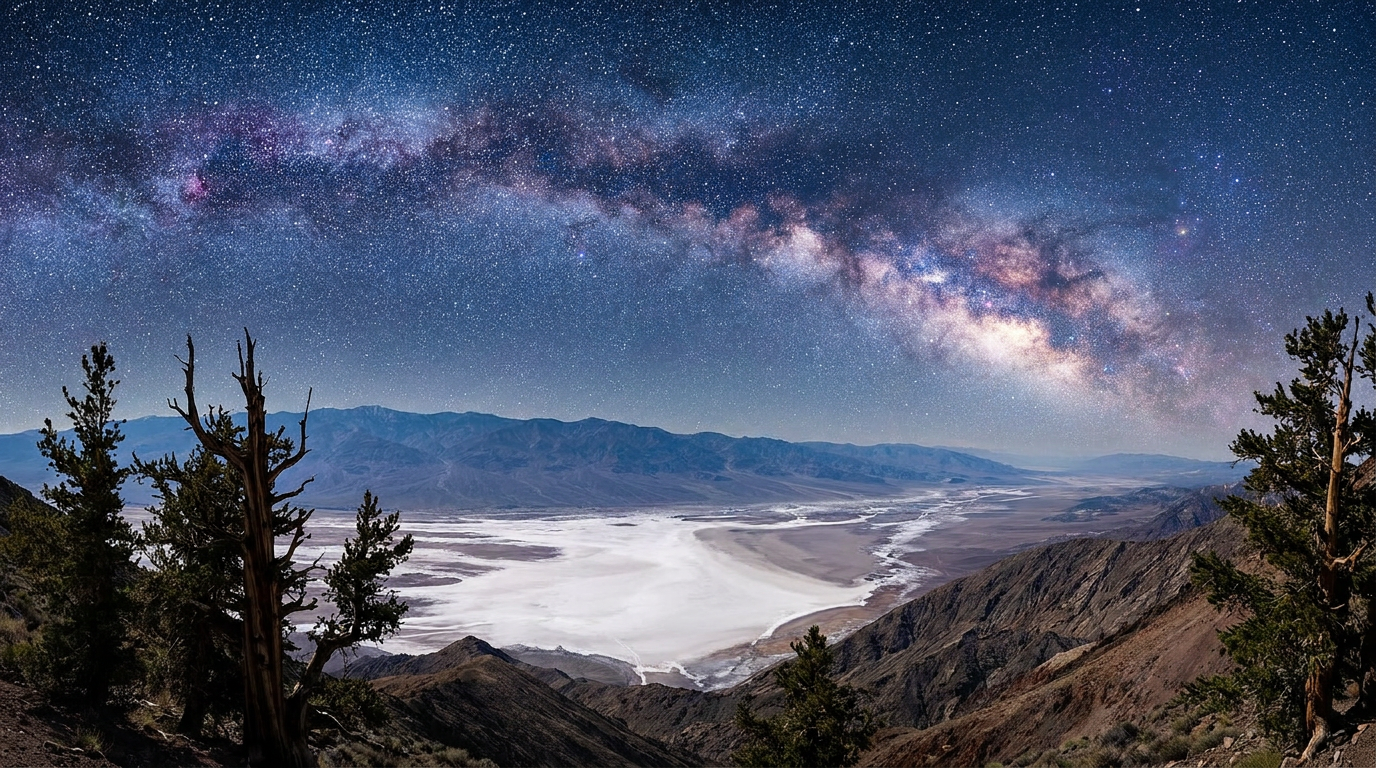
The quality of a dark sky is often measured using the Bortle Scale, a nine-level numeric system where Class 1 represents the darkest, most pristine skies on Earth. Death Valley National Park, designated as a Gold Tier Dark Sky Park, consistently achieves Bortle Class 1 and 2 ratings. Its combination of low elevation, famously dry desert air, and vast distance from major urban centers makes it one of the premier stargazing destinations on the planet.[4][6]

For astrotourism enthusiasts, 2026 is shaping up to be an extraordinary year to visit these dark sky sanctuaries. A rare convergence of celestial events will occur in late July and August, as three meteor showers—the Alpha Capricornids, Southern Delta Aquariids, and Perseids—overlap. Most notably, the Perseid peak on August 12 and 13 will coincide perfectly with a new moon, eliminating lunar glare and allowing viewers in dark parks to see up to 90 meteors per hour.[6]
The push for sensory conservation is also inspiring grassroots action at the local level. Organizations like the Badlands National Park Conservancy are actively raising funds to replace aging light fixtures in and around the South Dakota park with DarkSky-approved alternatives. Their goal is to secure official certification for the park's 244,000 acres, ensuring that the 7,500 stars visible on a clear night remain unobscured for future generations.[7]

Ultimately, the protection of natural sounds and dark skies taps into a profound human need. In an era defined by constant digital connectivity and sensory overload, the ability to stand in a completely silent forest or beneath a canopy of unpolluted stars offers a rare psychological reset. By expanding our definition of conservation to include the acoustic and the nocturnal, national parks are ensuring that these landscapes remain spaces of genuine transformation.[3][7]
How we got here
2001
The National Park Service begins systematically measuring night sky brightness across its park units.
2019
Quiet Parks International is launched to advocate for and certify naturally quiet places around the globe.
2022
Glacier National Park becomes the first location in the United States to be certified as a Wilderness Quiet Park.
2023
The Boundary Waters Canoe Area Wilderness is awarded Wilderness Quiet Park status.
2025
The Protected Areas Research Collaborative (PARC) Listening Lab relocates to the University of Vermont to expand acoustic research.
August 2026
A rare convergence of three meteor showers peaks during a new moon, offering prime dark sky viewing.
Viewpoints in depth
Acoustic Ecologists
Scientists view soundscapes as critical data sets that reveal the hidden health of an ecosystem.
For researchers at institutions like UVM's Listening Lab, sound is a diagnostic tool. By analyzing thousands of hours of audio through spectrograms and machine learning, they can track biodiversity, monitor the presence of invasive species, and quantify the exact footprint of human encroachment. They argue that without establishing baseline acoustic profiles, park managers cannot effectively protect wildlife that relies on sound for mating, navigation, and survival.
Conservation Advocates
Advocates push for strict regulatory boundaries to protect sensory wilderness from industrial and commercial intrusion.
Groups like Quiet Parks International and Save the Boundary Waters view sensory pollution as an existential threat to the concept of wilderness. They advocate for aggressive interventions, such as airspace reservations to block low-flying aircraft, bans on motorized watercraft, and strict lighting ordinances in gateway communities. For these advocates, the goal is to secure formal, legal recognition of natural quiet and darkness as resources just as vital as clean water or old-growth timber.
Astrotourism Enthusiasts
Visitors seek out protected sensory environments for psychological restoration and recreation.
A growing segment of the traveling public specifically plans trips around sensory experiences rather than visual landmarks. Astrotourists flock to Gold Tier Dark Sky Parks like Death Valley to witness celestial events like the 2026 Perseid meteor shower without the interference of lunar or artificial light. For these visitors, the appeal of sensory conservation lies in the profound psychological benefits of experiencing true silence and awe-inspiring night skies, offering a necessary antidote to modern urban life.
What we don't know
- How rapidly machine learning models will be able to accurately process the 97.5% of unreviewed acoustic data currently held by the National Park Service.
- Whether proposed federal budget cuts will impact the funding and operational capacity of the NPS Natural Sounds and Night Skies Division.
- How expanding commercial air travel and drone usage will affect the ability of wilderness areas to maintain their noise-free interval certifications in the future.
Key terms
- Acoustic Ecology
- The scientific study of the relationship between living beings and their environment, mediated through sound.
- Bortle Scale
- A nine-level numeric scale that measures the night sky's brightness and the astronomical observability of celestial objects.
- Soundscape
- The total acoustic environment of a place as perceived by humans, encompassing both natural and human-made sounds.
- Noise-Free Interval (NFI)
- A continuous period of time during which only natural sounds are audible, used as a primary metric for quiet park certification.
- Spectrogram
- A visual representation of the spectrum of frequencies of a sound signal as it varies with time, used by researchers to analyze park audio.
Frequently asked
What makes a location an official 'Quiet Park'?
Quiet Parks International certifies areas that meet strict acoustic benchmarks, such as consistently maintaining 15-minute noise-free intervals over multiple consecutive days without any human-made sound.
Why is August 2026 special for stargazing?
Three meteor showers overlap in late July and August. The most active shower, the Perseids, peaks on August 12-13 during a new moon, meaning there will be no lunar glare to obscure the meteors.
How does noise pollution affect wildlife?
Human-made noise masks the natural sounds animals rely on to survive. It can disrupt mating calls, interfere with navigation, and make it harder for prey to hear approaching predators.
What is the Bortle Scale?
It is a nine-level numeric scale used by astronomers to measure the brightness of the night sky. Class 1 represents the darkest, most pristine skies, while Class 9 represents a brightly lit inner-city sky.
Sources
Source coverage
7 outlets
4 viewpoints surfaced







[1]National Park ServicePark Management
Natural Sounds and Night Skies Division
Read on National Park Service →[2]University of VermontAcoustic Ecologists & Researchers
What do our National Parks sound like? UVM's Listening Lab investigates acoustic data
Read on University of Vermont →[3]Quiet Parks InternationalConservation Advocates
Preserving the World's Quiet Places
Read on Quiet Parks International →[4]ForbesAstrotourism Enthusiasts
10 Best U.S. National Park Sites For Stargazing, According To Outforia Research
Read on Forbes →[5]Save the Boundary WatersConservation Advocates
Boundary Waters Canoe Area Wilderness awarded Wilderness Quiet Park
Read on Save the Boundary Waters →[6]Oasis at Death ValleyAstrotourism Enthusiasts
Death Valley is a Gold Tier Dark Sky National Park
Read on Oasis at Death Valley →[7]Factlen Editorial TeamAcoustic Ecologists & Researchers
Synthesis by Factlen editorial team
Read on Factlen Editorial Team →
Every angle. Every day.
Get travel stories with full source coverage and perspective breakdowns delivered to your inbox.