
Free Streaming Platforms Hit Historic Viewership Milestones as Consumers Combat Subscription Fatigue
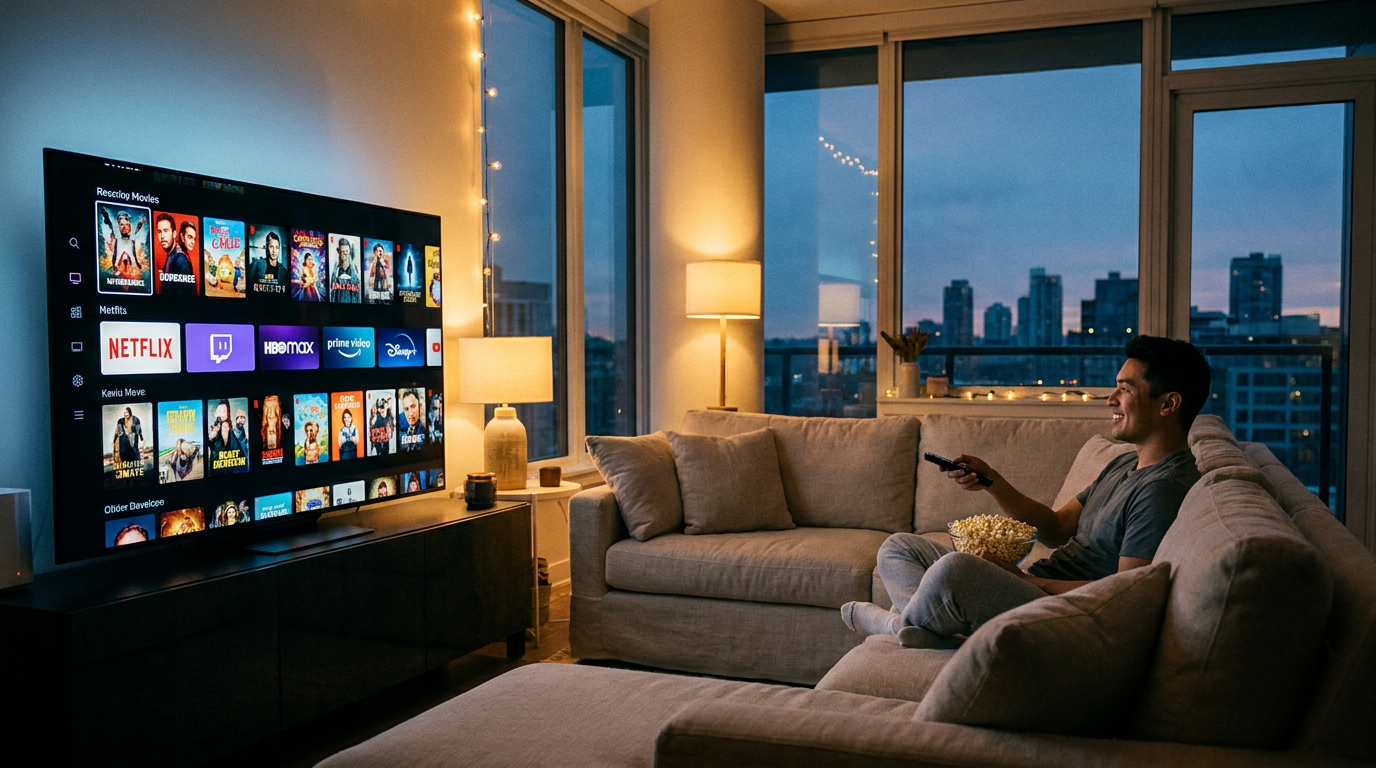
Free ad-supported streaming television (FAST) platforms like Tubi, The Roku Channel, and Pluto TV are capturing record shares of total TV viewership in 2026. Driven by budget-conscious households and Gen Z's preference for nostalgic content, free streaming has become a foundational part of the modern entertainment landscape.
By Factlen Editorial Team
- Value-Conscious Consumers
- Households seeking to reduce their monthly entertainment bills without sacrificing quality.
- Gen Z Audiences
- Younger viewers who prioritize community, nostalgia, and frictionless access.
- Platform Operators
- The companies building and monetizing the free streaming ecosystem.
- Advertisers
- Brands seeking targeted reach and lower ad clutter compared to linear TV.
What's not represented
- · Traditional Cable Providers
- · Independent Filmmakers
Why this matters
As the cost of paid streaming bundles continues to rise, the maturation of free platforms provides consumers with a high-quality, zero-cost alternative. This shift is saving households money while forcing the entire entertainment industry to prioritize accessible, user-friendly viewing experiences.
Key points
- Free ad-supported streaming television (FAST) platforms are projected to reach over 131 million US viewers in 2026.
- The Roku Channel, Tubi, and Pluto TV are now individually capturing larger shares of total television viewing than several major paid subscription services.
- Gen Z is a major driver of FAST growth, drawn to the platforms for 'comfort viewing' of nostalgic 2000s and 2010s shows.
- Free platforms are keeping ad loads significantly lower than traditional cable, improving the viewer experience while maintaining advertiser value.
In mid-2026, the streaming wars have produced a surprising victor: free television. Driven by widespread subscription fatigue and household budget discipline, Free Ad-Supported Streaming Television (FAST) platforms are hitting historic viewership milestones. Services like Tubi, The Roku Channel, and Pluto TV are collectively reshaping how audiences consume entertainment, proving that the future of television might look remarkably similar to its ad-supported past, only delivered over the internet.[1][8]
Recent data underscores the massive scale of this shift. Industry analysts at MNTN Research project that FAST platforms will reach 131.4 million viewers in the United States by the end of 2026. In early 2026, Nielsen’s Gauge report revealed that The Roku Channel captured 2.9% of all streaming viewership, outpacing Tubi at 2.2% and Pluto TV at 2.1%. These figures place the top free platforms ahead of several major paid subscription services, marking a watershed moment for the ad-supported model.[2][6][8]
For years, consumers have voiced frustration over the fragmentation and rising costs of paid streaming. As platforms continuously hiked prices and cracked down on password sharing, households found themselves paying cable-like prices for a disjointed digital experience. Free streaming has emerged as the antidote. Industry observers note that free services are no longer perceived as a secondary tier of low-quality reruns; instead, they have become the foundational layer of home entertainment for families exercising budget discipline.[1]

The user experience on modern FAST platforms has also evolved dramatically. Unlike the clunky interfaces of the early streaming era, today’s free platforms offer a seamless hybrid of vast on-demand libraries and scheduled, linear "channels" that mimic the lean-back experience of traditional TV surfing. Samsung TV Plus, which surpassed 100 million monthly active users globally in early 2026, integrates its free channels directly into the operating systems of its smart TVs, entirely removing the friction of downloading separate apps.[1][7][8]
Surprisingly, the demographic driving the most aggressive growth in free streaming is not older cord-cutters, but Gen Z. A 2026 cultural insights report from Tubi—which also boasts over 100 million monthly active users—found that younger audiences are flocking to free platforms for what they describe as "comfort viewing." For a generation raised on algorithmic social media feeds, the curated, low-stakes environment of a free streaming channel offers a welcome respite.[3][5]
Surprisingly, the demographic driving the most aggressive growth in free streaming is not older cord-cutters, but Gen Z.
Content strategy has shifted to meet this younger audience where they are. Research indicates that 72% of Gen Z viewers actually prefer content from the 2000s and 2010s over brand-new releases. Platforms have capitalized on this nostalgia boom; Pluto TV recently expanded its slate of millennial and Gen Z favorites, adding dedicated channels for shows like The 100 and My Wife and Kids. This dynamic proves that platforms do not necessarily need billion-dollar original fantasy series to capture and hold viewer attention.[3][5]

To keep audiences engaged across these massive content libraries, platform operators are increasingly deploying advanced artificial intelligence. Historically, streaming viewers have spent up to 20 minutes endlessly scrolling to find something to watch. Roku predicts that AI-driven recommendations will drastically reduce this search time in 2026, creating a highly personalized experience that surfaces relevant shows the moment a user turns on their television.[4]
As viewership surges, advertising dollars are rapidly following. However, platforms are being careful not to repeat the mistakes of traditional broadcast television. Research shows that FAST viewers typically experience only about one-third of the ad load of an equivalent cable audience. This reduced clutter creates a far less intrusive experience for the viewer while simultaneously making the commercial breaks more valuable and memorable for the advertisers.[4][6]

The normalization of ad-supported streaming is forcing the entire industry to recalibrate. With major paid platforms like Prime Video and Netflix heavily pushing their own ad-supported tiers, the stigma once associated with watching commercials has effectively vanished. Analysts predict that by the end of 2026, nearly 100% of streaming audiences will encounter video ads in some form, cementing the hybrid model as the industry standard.[2][4]
Ultimately, the explosive rise of FAST represents a massive win for consumer choice and accessibility. By blending the effortless, lean-back nature of old-school television with the vast, on-demand libraries of the digital era—all without adding another monthly bill—the industry has finally delivered the sustainable entertainment ecosystem that viewers have been demanding for years.[1][3]
How we got here
2014
Pluto TV launches, pioneering the modern free ad-supported streaming television (FAST) model.
2020
Tubi is acquired by Fox Corporation, signaling major broadcast network investment in free streaming.
May 2021
Nielsen launches The Gauge, establishing a benchmark for tracking the shift from traditional TV to streaming.
2024
Major paid platforms like Prime Video introduce mandatory ad tiers, blurring the lines between premium and ad-supported viewing.
Early 2026
FAST platforms reach historic viewership milestones, with top free services individually capturing over 2% of all US television usage.
Viewpoints in depth
Value-Conscious Consumers
Households seeking to reduce their monthly entertainment bills without sacrificing quality.
For many viewers, the streaming revolution ultimately recreated the expensive cable bundles they tried to escape. This camp views FAST platforms as a necessary market correction. By offering zero-cost entry and simplified discovery, free streaming has transitioned from a secondary option to the foundational layer of their home entertainment, allowing them to selectively pay for only one or two premium services.
Gen Z Audiences
Younger viewers who prioritize community, nostalgia, and frictionless access.
Unlike older demographics who view free streaming as a replacement for cable, Gen Z approaches FAST platforms as destinations for 'comfort viewing.' Research shows a strong preference for 2000s and 2010s library content. For this group, the appeal lies in the communal experience of rediscovering older shows and the frictionless nature of platforms that don't require a credit card to join.
Platform Operators
The companies building and monetizing the free streaming ecosystem.
Operators like Roku, Fox, and Paramount see FAST as the ultimate growth engine in a maturing streaming market. Their focus is on improving the user experience through AI-driven content recommendations and expanding their libraries with both nostalgic hits and targeted original programming. They argue that by keeping ad loads lighter than traditional cable, they can retain viewers while generating massive programmatic ad revenue.
What we don't know
- Whether the current low ad loads on free platforms will increase as operating costs and content licensing fees rise.
- How traditional paid streaming giants will adjust their pricing models if free platforms continue to capture larger shares of total screen time.
Key terms
- FAST
- Free Ad-Supported Streaming Television, a model that provides viewers with free content subsidized by commercial breaks.
- AVOD
- Advertising-Based Video on Demand, where users select specific movies or shows to watch for free with ads.
- Linear Channels
- Streaming feeds that run on a set schedule, mimicking the experience of flipping through traditional cable TV channels.
- Subscription Fatigue
- Consumer frustration and financial strain caused by needing to pay for multiple different streaming services to access desired content.
- Cord-Cutting
- The trend of viewers canceling their traditional cable or satellite television subscriptions in favor of internet-based streaming.
Frequently asked
What is a FAST platform?
FAST stands for Free Ad-Supported Streaming Television. It includes platforms like Tubi, Pluto TV, and The Roku Channel that offer free movies and shows supported by commercial breaks.
Why are free streaming services growing so fast?
Consumers are experiencing subscription fatigue from the rising costs of paid platforms. FAST services provide a budget-friendly alternative with vast libraries of content.
Do free streaming platforms have original content?
Yes. While they rely heavily on older, nostalgic library titles, platforms like Tubi and The Roku Channel are increasingly investing in original movies and series to attract viewers.
Are there as many ads on free streaming as on regular cable?
No. Research indicates that FAST viewers typically experience about one-third of the ad load compared to traditional cable television, making the experience less intrusive.
Sources
Source coverage
8 outlets
4 viewpoints surfaced








[1]ForbesValue-Conscious Consumers
The Streaming Growth Story Hiding In Plain Sight
Read on Forbes →[2]TV TechAdvertisers
Nielsen: Streaming Reaches Historic TV Viewing Milestone
Read on TV Tech →[3]Tubi CorporateGen Z Audiences
Tubi Unveils Annual Insights Report: The Stream 2026
Read on Tubi Corporate →[4]Roku AdvertisingPlatform Operators
Streaming in 2026: Roku's 5 predictions for the year ahead
Read on Roku Advertising →[5]Media Play NewsGen Z Audiences
Pluto TV Expands Content Slate Targeting Viewers Ages 18-34
Read on Media Play News →[6]MNTN ResearchAdvertisers
FAST Will Reach 131.4 Million US Viewers in 2026
Read on MNTN Research →[7]Samsung NewsroomPlatform Operators
Samsung TV Plus Kicks Off 2026 with More Than 100 Million Monthly Active Users
Read on Samsung Newsroom →[8]Cord Cutters NewsValue-Conscious Consumers
The Roku Channel is The Most Watched Free Streaming Service Beating Tubi & Pluto TV
Read on Cord Cutters News →


Every angle. Every day.
Get entertainment stories with full source coverage and perspective breakdowns delivered to your inbox.