
Inside Formula 1's 2026 Revolution: Active Aero, Sustainable Fuel, and the 50/50 Engine
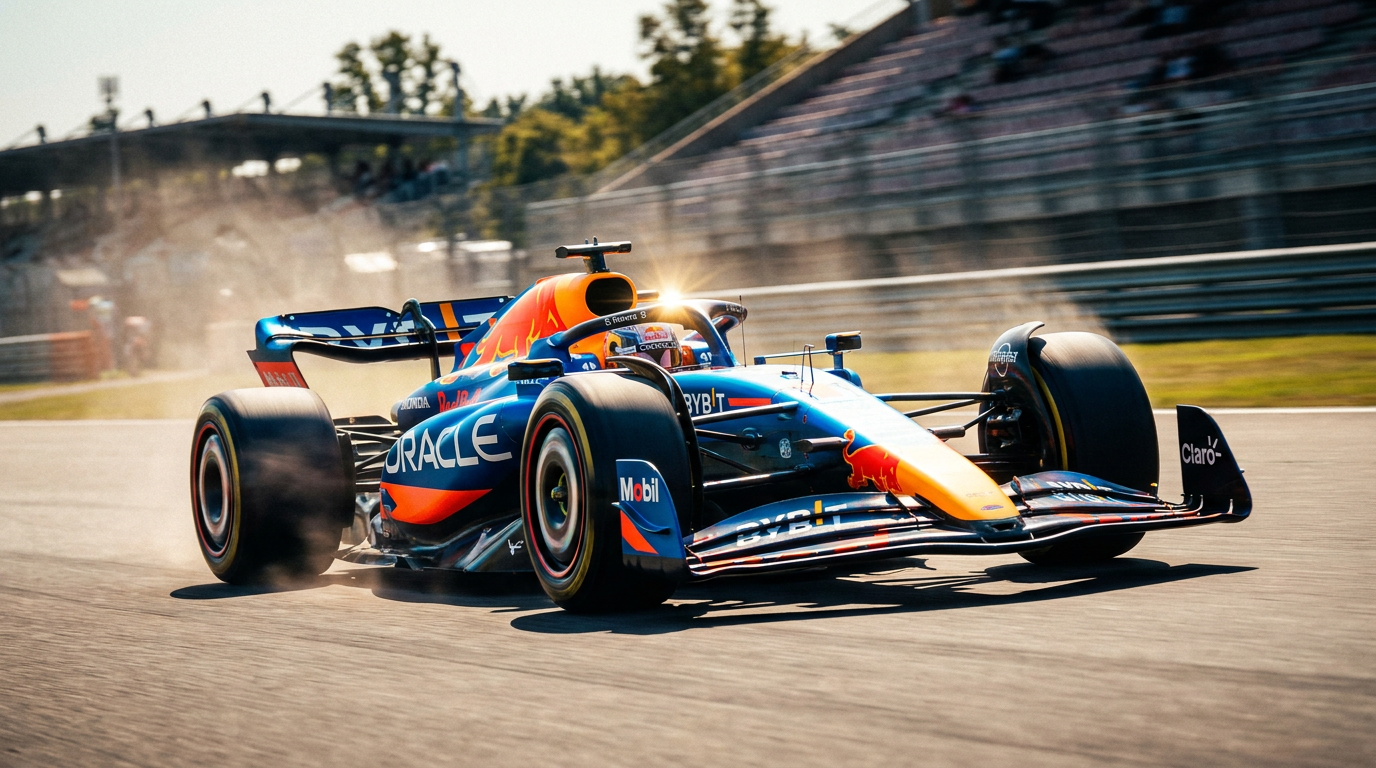
Formula 1 has introduced its most radical technical reset in decades, debuting smaller cars, active aerodynamics, and a 50/50 electric-combustion power split. The 2026 regulations aim to deliver closer racing while serving as a high-speed laboratory for 100% sustainable fuels.
By Factlen Editorial Team
- Automotive Manufacturers
- Value F1 as a high-speed R&D lab for hybrid systems and synthetic fuels that can be applied to consumer road cars.
- Aerodynamics & Chassis Engineers
- Focused on the technical challenge of balancing drag reduction, active aero, and energy regeneration within a lighter chassis.
- Drivers & Racing Purists
- Prioritize the on-track product, valuing the lighter, nimbler cars and the strategic depth of manual energy deployment.
What's not represented
- · Grassroots Motorsport Organizers
- · Fossil Fuel Industry Analysts
Why this matters
The 2026 regulations transform Formula 1 from a pure entertainment spectacle into a high-stakes proving ground for the global energy transition. The sustainable fuels and advanced hybrid systems developed for these cars are designed to eventually trickle down to everyday road vehicles, proving that green technology does not require sacrificing performance.
Key points
- The 2026 F1 regulations introduce a 50/50 power split between the combustion engine and the electric motor.
- Cars now run on 100% advanced sustainable 'drop-in' fuels engineered to be carbon-neutral.
- The Drag Reduction System (DRS) has been replaced by Active Aerodynamics on both the front and rear wings.
- A new 'Manual Override' system gives trailing drivers an electrical power boost to aid overtaking.
- The cars are 30 kilograms lighter, 100 millimeters narrower, and feature a shorter wheelbase for better agility.
The 2026 Formula 1 season is officially underway, and the cars lining up on the grid look, sound, and behave fundamentally differently than their predecessors. This year marks the introduction of the most comprehensive technical reset in the sport's modern history, touching every single aspect of how the vehicles are engineered and raced.[1][2]
Rather than tweaking existing rules, the FIA and Formula 1 have rewritten the rulebook from the ground up. The mandate was twofold: make the racing closer and more exciting for fans, and transform the sport into a legitimate, high-speed laboratory for global sustainability and automotive innovation.[2][3]
The result is a generation of cars that are smaller, lighter, and vastly more complex under the hood. To understand how the 2026 cars work is to understand the immediate future of high-performance automotive engineering, where aerodynamic efficiency and energy management dictate who stands on the podium.[2][7]
The most significant shift lies in the power unit. While the familiar 1.6-liter turbocharged V6 engine remains the beating heart of the car, its relationship with the vehicle's electrical system has been completely inverted to reflect a modern hybrid philosophy.[2][5]

In previous iterations, the internal combustion engine provided the vast majority of the car's horsepower, with the battery acting as a supplementary boost. Now, the regulations mandate a strict 50/50 power split between combustion and electric propulsion.[2][3]
To achieve this equilibrium, the electrical output from the Motor Generator Unit-Kinetic (MGU-K) has been nearly tripled. The system, which harvests energy under braking, now deploys a massive 350 kilowatts of electrical power, up from just 120 kilowatts in the previous generation.[5]
Simultaneously, the FIA eliminated the MGU-H—a highly complex, expensive, and road-irrelevant system that harvested energy from exhaust gases. Its removal simplifies the engine architecture, a strategic move that successfully lured new automotive giants like Audi and Ford into the sport for this new regulatory cycle.[3][5]
But the combustion engine itself is also breaking new ground. As of 2026, every Formula 1 car must run on 100% advanced sustainable fuel, a non-negotiable requirement that aligns with the championship's goal of achieving a net-zero carbon profile by 2030.[1][4]
These are not traditional fossil fuels. They are synthetic "drop-in" fuels engineered from municipal waste, non-food biomass, and atmospheric carbon capture. Because they pull carbon out of the environment during their creation, they are designed to be entirely carbon-neutral over their lifecycle.[4]

They are synthetic "drop-in" fuels engineered from municipal waste, non-food biomass, and atmospheric carbon capture.
Formula 1's goal is to prove that these advanced fuels can withstand the extreme stress of a 300 km/h Grand Prix without sacrificing a fraction of performance. If successful, the chemical formulas perfected on the track could eventually be scaled to decarbonize millions of existing internal combustion road cars that cannot easily be electrified.[1][4]
Beyond the engine, the 2026 cars have fundamentally changed how they interact with the air. For over a decade, Formula 1 relied on the Drag Reduction System (DRS)—a rear wing flap that opened on designated straights to give a trailing car a speed advantage and aid overtaking.[6]
DRS is now dead. In its place is a fully integrated "Active Aerodynamics" system that manipulates both the front and rear wings simultaneously, allowing the cars to dynamically shift their shape based on where they are on the circuit.[6][7]
Drivers now toggle between two distinct aerodynamic states. "Z-Mode" is the default setting, deploying high downforce to glue the car to the track through high-speed corners and heavy braking zones.[6]
When a driver hits a straight, they engage "X-Mode." The wings flatten out, shedding a massive 55% of the car's aerodynamic drag. This allows the cars to achieve blistering top speeds and conserve electrical energy, despite the reduced output from the combustion engine.[6][7]

Because X-Mode is available to all drivers on every straight, it cannot be used as an overtaking advantage. Instead, the FIA has introduced a new "Manual Override" system to facilitate passing and keep the racing spectacular.[6][8]
The override gives a trailing driver access to an extra burst of electrical energy—up to 350 kilowatts—at higher speeds, providing the crucial momentum needed to dive down the inside of a rival entering a braking zone.[6][8]
This has turned modern Formula 1 into a high-speed game of chess. Early races in 2026 have shown drivers alternating between phases of aggressive energy deployment and tactical regeneration, lifting and coasting to recharge their batteries for the next attack.[1]

To accommodate all this new technology without creating sluggish vehicles, the cars themselves have been put on a strict diet. The wheelbase has been shortened by 200 millimeters, the width narrowed by 100 millimeters, and the minimum weight dropped by 30 kilograms.[3][7]
The result is a nimbler, more agile machine that reverses a decade-long trend of increasingly bloated race cars, returning a sense of darting responsiveness to the drivers' hands.[7]

How we got here
August 2022
The FIA officially approves the 2026 power unit regulations, dropping the complex MGU-H system.
June 2024
The FIA unveils the first official renderings and chassis regulations for the smaller, lighter 2026 cars.
December 2025
Teams finalize their initial 2026 chassis designs as wind tunnel testing and simulator work ramps up.
March 2026
The new generation of cars makes its competitive debut at the season-opening Grand Prix.
Viewpoints in depth
The Engineers' Challenge
Integrating a massive electrical system while cutting weight is a monumental packaging puzzle.
For the engineers back at the factory, the 2026 regulations represent a brutal balancing act. Tripling the electrical output to 350 kilowatts requires significantly larger batteries and more robust cooling systems, both of which add weight. Yet, the FIA mandated a 30-kilogram reduction in the car's overall minimum weight. Teams have had to ruthlessly optimize their packaging, shrinking sidepods and tightening gearbox casings to hit the weight target without compromising the car's aerodynamic profile.
The Sustainability Mandate
Environmental technologists view the 2026 rules as a proof-of-concept for the broader transportation sector.
Formula 1 is using its massive global platform to prove that electrification is not the only path to a zero-carbon future. By demonstrating that synthetic, drop-in fuels can perform flawlessly under the extreme duress of a Grand Prix, the sport hopes to offer a lifeline to the millions of internal combustion engines still on the road. If the chemical formulas perfected on the track can be scaled affordably, F1's moonshot laboratory could genuinely accelerate the decarbonization of everyday transport.
The Drivers' Experience
Behind the wheel, the 2026 car requires a vastly different, highly tactical skill set.
Drivers are no longer just managing tire degradation; they are actively managing a complex electrical ecosystem. Because the combustion engine provides less overall power, drivers must constantly calculate the perfect moment to deploy their electrical energy and when to lift and coast to regenerate it. Combined with the need to manually toggle aerodynamic modes and deploy the overtaking override, the mental bandwidth required to pilot a 2026 car is higher than ever before.
What we don't know
- How the massive reliance on electrical regeneration will affect racing on high-speed tracks with few heavy braking zones.
- Whether the high cost of developing synthetic fuels will drop enough to make them viable for everyday consumers.
- Which of the six power unit manufacturers has found the most efficient interpretation of the new hybrid rules.
Key terms
- Active Aerodynamics
- Movable front and rear wings that dynamically adjust to reduce drag on straights and increase grip in corners.
- MGU-K
- Motor Generator Unit-Kinetic; a system that captures energy under braking and converts it into electrical power for acceleration.
- Drop-in Fuel
- A synthetic, carbon-neutral fuel designed to work in existing internal combustion engines without requiring modifications.
- X-Mode
- The low-drag aerodynamic configuration used by drivers on straights to maximize top speed.
- Z-Mode
- The high-downforce aerodynamic configuration used by drivers in corners to maximize grip.
- Manual Override
- A driver-activated system that deploys extra electrical energy to assist in overtaking a rival car.
Frequently asked
Are the 2026 F1 cars fully electric?
No. The cars use a hybrid power unit with a 50/50 split between a 1.6-liter turbocharged combustion engine and a powerful 350 kW electric motor.
Why did Formula 1 get rid of DRS?
DRS was replaced by Active Aerodynamics, which allows all cars to reduce drag on straights. Overtaking is now aided by a 'Manual Override' electrical boost instead of a rear wing flap.
What makes the new fuel sustainable?
The fuel is synthesized using carbon captured from the atmosphere, municipal waste, and non-food biomass, meaning it doesn't add new fossil carbon to the environment.
Are the 2026 cars faster than the previous generation?
While they have less overall downforce and rely more heavily on electrical energy, their massive 55% reduction in drag allows them to achieve similar, if not higher, top speeds on long straights.
Sources
Source coverage
8 outlets
3 viewpoints surfaced







[1]InfinitySport.asiaDrivers & Racing Purists
Formula 1's 2026 rules: new sustainability rules are changing the way races are won
Read on InfinitySport.asia →[2]MenWith.comDrivers & Racing Purists
Formula 1's 2026 rules usher in a new era with lighter, more agile cars
Read on MenWith.com →[3]GrandPrix247Automotive Manufacturers
Formula 1 2026 rules reset and the new battle for power
Read on GrandPrix247 →[4]DevStylerAutomotive Manufacturers
Why the 2026 Rules Matter: Sustainability as a Performance Challenge
Read on DevStyler →[5]RecrewitAerodynamics & Chassis Engineers
How F1 2026 regulations and technical rules will redefine Formula 1
Read on Recrewit →[6]RaceTeqAerodynamics & Chassis Engineers
F1 2026 regulations: Everything you need to know including DRS and active aero changes
Read on RaceTeq →[7]SilverstoneAerodynamics & Chassis Engineers
The FIA has revealed F1's latest set of regulations to be introduced for the 2026 season
Read on Silverstone →[8]ScuderiaFansDrivers & Racing Purists
Formula 1's 2026 rules: Essential new terms explained for fans
Read on ScuderiaFans →


Every angle. Every day.
Get sports stories with full source coverage and perspective breakdowns delivered to your inbox.