
Over 20 UFL Players Sign NFL Contracts, Proving Spring Football's Pipeline is Working
Following the 2026 UFL season, more than two dozen athletes have secured NFL contracts, validating the spring league's mission to provide players with a second chance at professional football.
By Factlen Editorial Team
- Spring League Advocates
- Believe the UFL has successfully established itself as an essential developmental league for professional football.
- NFL Front Offices
- View the UFL as a low-risk, cost-effective scouting pool to build out 90-man training camp rosters.
- Player Representatives
- Emphasize the resilience of the athletes and the life-changing nature of a second chance.
What's not represented
- · Players who were not invited to NFL workouts and are left waiting for another opportunity
- · College scouts who may see spring league veterans taking up developmental roster spots
Why this matters
The surge of NFL signings proves that spring football has finally established a sustainable, working pipeline for professional athletes. For fans, it means more underdog stories and higher-quality depth on their favorite NFL teams, while giving late-blooming players a genuine second chance at a life-changing career.
Key points
- Over 20 UFL players have signed NFL contracts following the conclusion of the 2026 spring season.
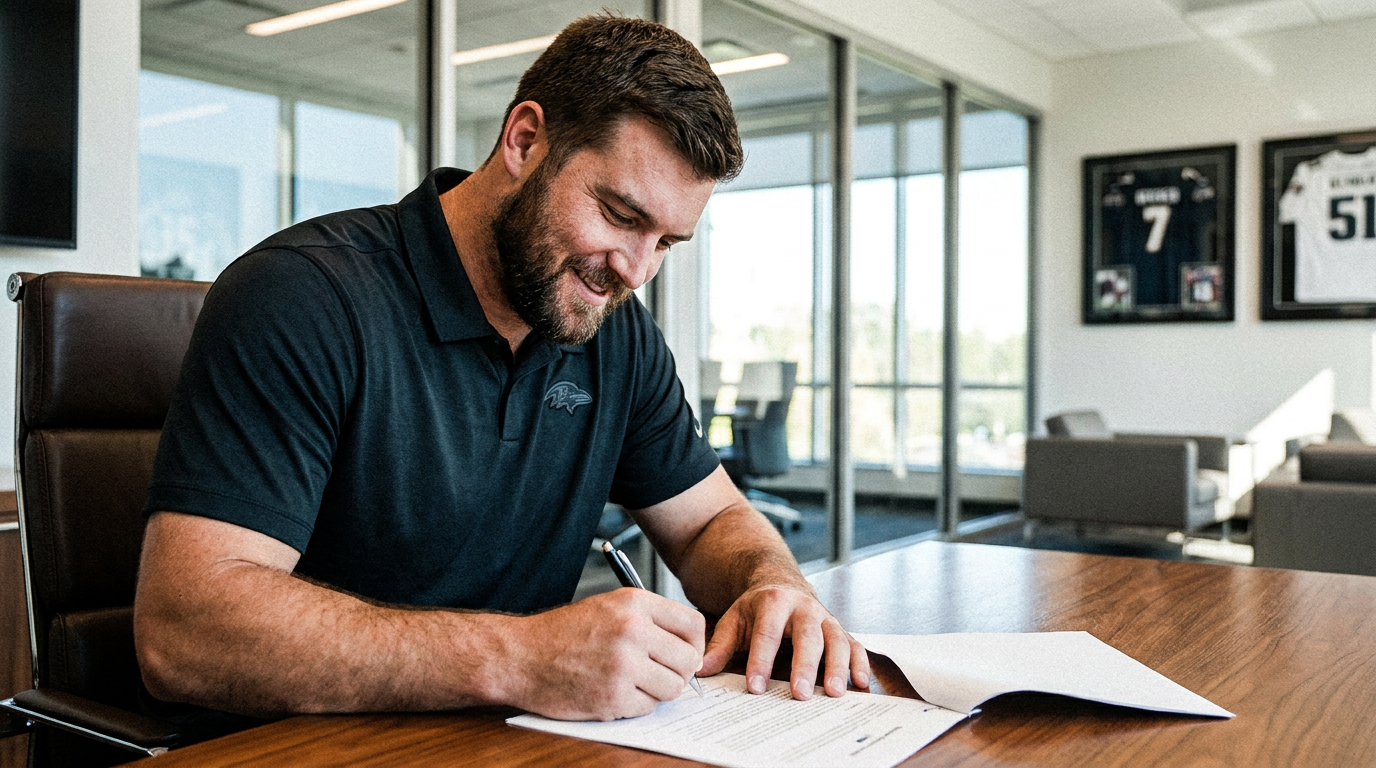
- Two-time UFL Offensive Player of the Year Hakeem Butler signed with the Denver Broncos after leading the league in receiving yards.
- NFL teams have requested 58 workout permissions for 40 different UFL players, using the spring league as a scouting pool.
- Players face steep odds to make final 53-man rosters but provide valuable depth and competition for NFL training camps.
- UFL teams retain the rights to these players if they are released by their NFL clubs.
The 2026 United Football League (UFL) season concluded with the Louisville Kings hoisting the United Bowl trophy in Washington, D.C., but for dozens of players, the most significant victories arrived in the days that followed. Within a week of the championship game, over 20 UFL standouts officially signed contracts with National Football League franchises, trading their spring uniforms for a coveted invitation to summer training camps. The rapid exodus of top talent from the spring league to the NFL highlights a shifting dynamic in professional football, where alternative leagues are no longer viewed as dead ends, but as vital launching pads for athletes seeking a second chance on the sport's biggest stage.[1][7]
The flurry of roster moves validates the core mission of the merged spring football league: serving as a legitimate developmental pipeline. According to the UFL's front office, NFL clubs have already requested 58 workout permissions involving 40 different players since the season ended, signaling a robust appetite for game-ready talent. Rather than relying solely on unproven collegiate rookies, NFL general managers are increasingly turning to the UFL to find battle-tested veterans who have spent the spring executing complex professional schemes. This pipeline provides a mutually beneficial ecosystem where the NFL gets immediate depth, and the UFL proves to future recruits that its platform can genuinely resurrect stalled careers.[1]
Leading the charge into the NFL is Hakeem Butler, the towering 6-foot-5 wide receiver who captured his second consecutive UFL Offensive Player of the Year award. Butler, who led the league with 641 receiving yards and averaged an explosive 22.1 yards per catch for the St. Louis Battlehawks, signed a contract with the Denver Broncos ahead of their mandatory minicamp. His combination of elite size and proven spring production made him one of the most highly sought-after free agents on the market, giving him a prime opportunity to compete in a crowded Denver wide receiver room under head coach Sean Payton.[3][5]

Butler's journey epitomizes the resilience required of fringe professional athletes who refuse to give up on their dreams. Originally selected as a fourth-round draft pick by the Arizona Cardinals in 2019, he suffered a severe broken hand that completely derailed his rookie season. After being waived, he spent years bouncing between various NFL practice squads and enduring stints in the Canadian Football League. It was his dominant, record-setting spring campaigns in St. Louis that finally put him back on the national radar, proving that sometimes all a player needs is consistent live-game repetitions to showcase their true potential.[3][5]
He isn't the only Battlehawk heading to the Rocky Mountains. Defensive back and return specialist Sean Fresch also signed with the Broncos after a standout season in St. Louis. Meanwhile, the Detroit Lions and New Orleans Saints have been among the most aggressive NFL suitors, each signing three UFL players in the opening wave of free agency. The Lions secured elusive wide receiver Tay Martin, while the Saints brought in quarterback Hunter Dekkers, demonstrating that front offices are looking for upgrades across all phases of the game, from special teams contributors to developmental signal-callers.[1][5]
He isn't the only Battlehawk heading to the Rocky Mountains.
The Dallas Cowboys also tapped heavily into the spring talent pool, signing wide receiver Denzel Mims, cornerback Ameer Speed, and offensive lineman Chris Glaser. For Mims, a former second-round pick by the New York Jets who struggled to find his footing in the intense media spotlight of his early career, the UFL provided a crucial reset. The spring league offered him the low-pressure environment and consistent targets needed to rebuild his confidence and catch the attention of Dallas's scouting department, proving that draft-day disappointments do not have to dictate the end of a professional journey.[2][4]

Defensive standouts are also reaping the rewards of their spring labor. Devonnsha Maxwell, a defensive tackle who spent two years dominating the trenches for the DC Defenders, signed a one-year deal with the Atlanta Falcons. Maxwell's story is particularly inspiring; he originally signed with the Cincinnati Bengals as an undrafted free agent in 2023 but suffered a devastating injury that kept him off the football field for nearly three years. His resurgence in the UFL, where he helped lead the Defenders to a championship appearance in 2025, perfectly illustrates the life-changing nature of the spring football platform.[6]
The transition from spring standout to NFL regular is notoriously difficult, and the athletes themselves are acutely aware of the challenges ahead. Analysts note that these players face steep odds—often estimated at around 15 percent—to survive final roster cuts and make a 53-man NFL roster in September. Initially, they are brought in to fill out 90-man training camp rosters, providing depth, absorbing practice snaps, and fostering intense competition at the bottom of the depth chart. Every day of training camp will be a high-stakes audition to prove they belong among the best in the world.[6]
However, the sheer volume of signings demonstrates that NFL general managers view the UFL as a high-quality, low-risk scouting ground that is vastly superior to traditional street free agency. Unlike college prospects adjusting to the speed of the pro game, UFL veterans have recent, high-definition tape competing against grown men. They are known commodities who are already in peak physical condition from their spring season. This readiness allows them to seamlessly integrate into summer minicamps without the steep learning curve that typically accompanies undrafted rookies.[4][6]

For the UFL, the exodus of its top talent is celebrated as a feature of the league's design, rather than a bug. League executives have openly embraced their role as a stepping stone, knowing that every player who successfully graduates to the NFL serves as a powerful recruiting tool. When college athletes or NFL castoffs see players like Hakeem Butler and Devonnsha Maxwell signing lucrative contracts, they are far more likely to view the UFL as a viable career move rather than a demotion.[1][7]
As NFL training camps officially open next month, these two dozen athletes will carry the banner for spring football into practice facilities across the country. Regardless of whether they ultimately make the final 53-man cut or find themselves returning to the UFL next spring, their journey stands as a powerful testament to perseverance and grit. They have proven that the dream of playing on Sundays is still very much alive, and that the UFL's foundational promise of providing a genuine second chance is finally delivering real, tangible results for athletes who refused to quit.[2]
How we got here
June 13, 2026
The Louisville Kings defeat the DC Defenders to win the 2026 UFL United Bowl championship.
June 15, 2026
The UFL officially opens its offseason signing period, allowing players to sign with NFL franchises.
June 16, 2026
The Denver Broncos announce the signing of two-time UFL Offensive Player of the Year Hakeem Butler.
June 18, 2026
The Dallas Cowboys sign three UFL veterans, bringing the total number of league-wide spring signings to over 20.
Viewpoints in depth
Spring League Advocates
Believe the UFL has successfully established itself as an essential developmental league for professional football.
Proponents of the UFL argue that the sheer volume of NFL signings proves the spring league's model is working. By providing high-level, live-game repetitions to players who were buried on practice squads or recovering from injuries, the UFL bridges the gap between college football and the NFL. They view the departure of their top stars not as a loss of talent, but as the ultimate validation of the league's purpose, which in turn helps recruit the next wave of athletes.
NFL Front Offices
View the UFL as a low-risk, cost-effective scouting pool to build out 90-man training camp rosters.
For NFL general managers and pro personnel directors, the UFL offers a unique evaluation tool. Unlike college prospects, spring league players have recent tape competing against grown men in professional schemes. Front offices utilize these signings to foster intense competition at the bottom of their 90-man training camp rosters. Even if most of these players do not make the final 53-man cut, they provide valuable depth and elevate the overall quality of summer practices without requiring significant financial guarantees.
Player Representatives
Emphasize the resilience of the athletes and the life-changing nature of a second chance.
Agents and player advocates focus on the human element of the pipeline. Many of these athletes endured severe injuries, draft-day disappointments, or years out of the sport entirely. Representatives highlight that while the statistical odds of surviving final roster cuts remain steep—often estimated at around 15 percent—the opportunity to simply get back into an NFL building is a monumental victory. The spring league tape gives these players the leverage to secure one more tryout that could change the trajectory of their careers.
What we don't know
- How many of the signed UFL players will survive final roster cuts and make a 53-man NFL roster in September.
- Whether any of these players will secure starting roles or significant playing time during the NFL regular season.
Key terms
- 90-man roster
- The expanded roster limit allowed for NFL teams during the offseason and training camp, before they must cut down to 53 players for the regular season.
- 53-man roster
- The final, official roster limit for an NFL team during the regular season.
- Minicamp
- Mandatory offseason practice sessions held by NFL teams in June to evaluate players and install playbooks before training camp.
- Practice squad
- A group of reserve players who practice with an NFL team but are not on the active game-day roster, often used for developmental purposes.
Frequently asked
How many UFL players have signed NFL contracts?
As of late June 2026, over 20 UFL players have officially signed contracts with NFL teams, with dozens more participating in private workouts.
Who was the most notable UFL player to sign?
Hakeem Butler, the two-time UFL Offensive Player of the Year who led the league with 641 receiving yards, signed with the Denver Broncos.
Will these players automatically make the NFL team?
No. They are signed to 90-man offseason rosters and will have to compete during training camp to earn a spot on the final 53-man regular-season roster.
What happens if a player is cut by their NFL team?
If a player is released by their NFL team, their original UFL team retains their rights, allowing them to return to the spring league for the following season.
Sources
Source coverage
7 outlets
3 viewpoints surfaced







[1]The UFLSpring League Advocates
Following Dynamic 2026 Season, 13 UFL Players Officially Signed To 7 Different NFL Rosters
Read on The UFL →[2]NFL.comNFL Front Offices
NFL roster cuts, signings, trades, and tryouts
Read on NFL.com →[3]NBC SportsPlayer Representatives
Broncos to sign UFL offensive player of the year Hakeem Butler
Read on NBC Sports →[4]Pro Football RumorsNFL Front Offices
Cowboys To Make Three UFL Signings, Place OL Matt Hennessy On IR
Read on Pro Football Rumors →[5]Mile High SportsPlayer Representatives
Denver Broncos sign former NFL WR, UFL standout Hakeem Butler
Read on Mile High Sports →[6]A to Z SportsPlayer Representatives
Former Cincinnati Bengals undrafted free agent signing Devonnsha Maxwell has found a new home in the NFL
Read on A to Z Sports →[7]UFL News HubSpring League Advocates
UFL Offseason Update: UFL surpasses over 20 NFL signings on 3rd day of offseason
Read on UFL News Hub →
Every angle. Every day.
Get sports stories with full source coverage and perspective breakdowns delivered to your inbox.