
Young Gut Microbiomes Reopen the Brain's 'Critical Period' of Neuroplasticity in Adult Mice
A landmark study reveals that transplanting the gut bacteria of young mice into adults strips away the molecular brakes on the visual cortex, allowing the aged brain to rewire itself like an infant's.
By Factlen Editorial Team
- Neuroplasticity & Aging Researchers
- Focuses on the brain's ability to rewire and the potential to reopen critical developmental periods.
- Microbiome Systems Biologists
- Emphasizes the biochemical communication of the gut-brain axis and the systemic role of bacteria.
- Clinical Translation Cautious
- Warns about the massive biological gap between murine models and safe human therapies.
What's not represented
- · Human clinical trial regulators
- · Patients with adult amblyopia
Why this matters
The discovery that gut bacteria control the brain's ability to rewire itself opens a radically new path for treating neurological conditions. If this mechanism translates to humans, it could lead to therapies that reverse cognitive decline, accelerate stroke recovery, and cure developmental vision disorders long after childhood.
Key points
- A new study reveals that transplanting the gut microbiome of young mice into adult mice reopens the brain's 'critical period' of neuroplasticity.
- The young microbiome allowed adult mice to successfully rewire their visual cortex to overcome a condition mimicking amblyopia, or lazy eye.
- RNA sequencing showed the young gut bacteria altered the expression of over 1,000 genes in the adult brain, including those controlling myelination.
- Administering antibiotics to deplete the microbiome completely blocked the brain's ability to initiate neuroplasticity, proving the gut's essential role.
- Previous studies have similarly shown that young microbiomes can reverse age-associated cognitive decline and improve spatial memory in older rodents.
- While promising, researchers caution that translating these murine findings into safe, targeted human therapies will require extensive clinical trials.
The human brain is a master of adaptation, but its greatest feats of rewiring are largely confined to childhood. This phenomenon, known as neuroplasticity, allows a child's brain to effortlessly learn languages, recover from injuries, and develop complex sensory networks.
During a specific developmental window called the "critical period," the brain is highly malleable. Once this window closes in adolescence, the neural circuits solidify. For decades, neurobiologists believed that reopening this window in adulthood was virtually impossible without invasive interventions.
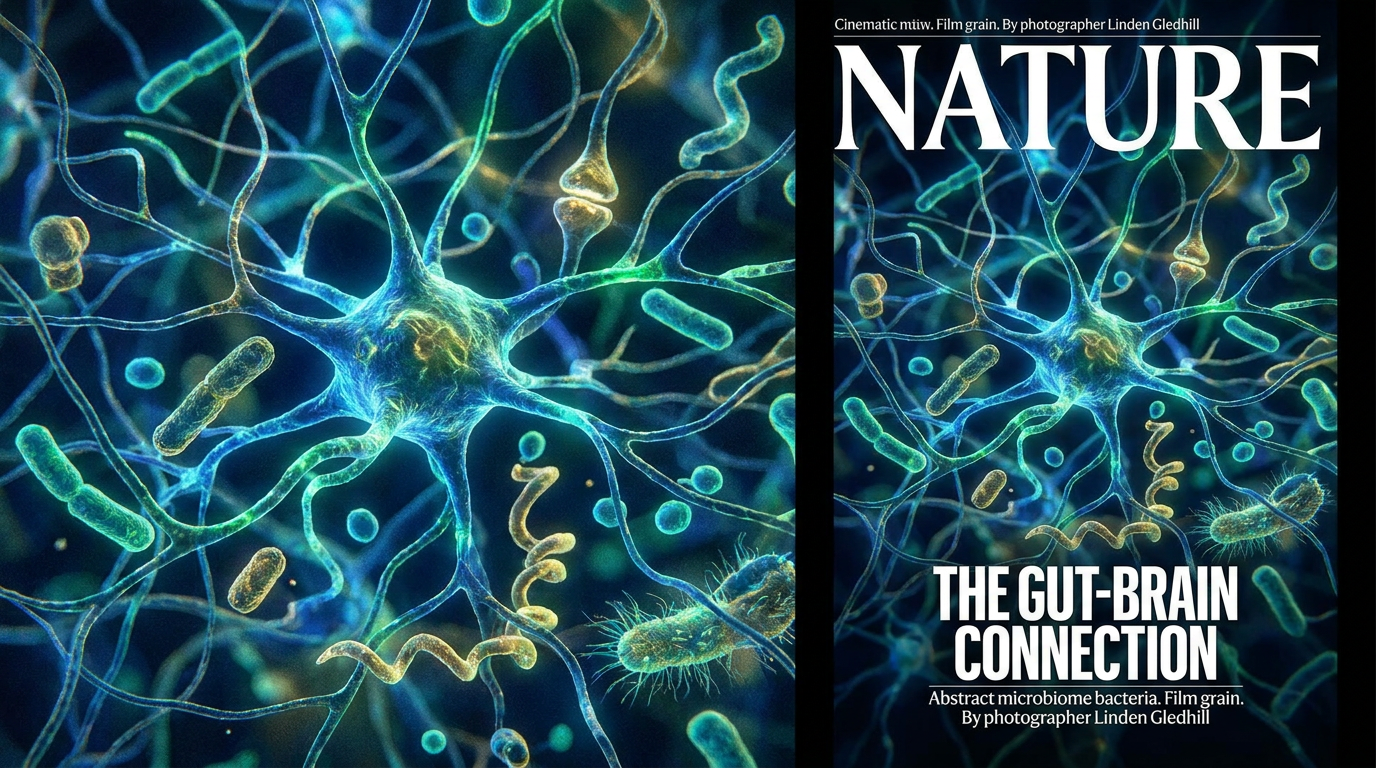
Now, an emerging body of evidence is challenging that dogma, pointing to an unexpected master regulator of brain age: the gut. A landmark 2026 study has demonstrated that transferring the gut microbiome of young mice into adult mice can successfully reopen the critical period of neuroplasticity, making the aged brain act young again.[1][7]
The research, led by Paola Tognini at the Sant'Anna School of Advanced Studies in Italy, focused on the visual cortex. The team sought to understand whether the microbial communities in the gastrointestinal tract dictate when the brain's developmental windows open and close.[1][2]

To test this, the researchers used a classic model of neuroplasticity: amblyopia, commonly known as lazy eye. In children, amblyopia is treated by placing a patch over the stronger eye, forcing the brain to forge new neural connections to the weaker eye. In adults, this treatment fails because the brain's plasticity has peaked and declined.[1][2]
Tognini's team temporarily sealed one eye of adult mice for three days. As expected, the control group of adult mice showed no evidence of neuroplasticity; their brains could no longer rewire to favor the open eye.[1][2]
However, the outcome changed dramatically when the researchers introduced a fecal microbiota transplant (FMT). They took the gut bacteria from 30-day-old mice and transplanted it into 4-month-old adult mice. When these FMT recipients had one eye sealed, their brains successfully rewired to respond more to the open eye—exhibiting the heightened plasticity normally reserved for infancy.[1][2]

The mechanism behind this rejuvenation lies in the intricate communication network known as the gut-brain axis. The microbiome does not merely digest food; it acts as an active endocrine organ, producing metabolites and signaling molecules that cross the blood-brain barrier and interact with the central nervous system.[6][7]
To uncover exactly how the young microbiome altered the adult brain, the researchers performed RNA sequencing on the visual cortex of the mice. The results were staggering. They found that more than 1,000 genes were expressed differently in the mice that received the young microbiome compared to the control group.[1][2]
To uncover exactly how the young microbiome altered the adult brain, the researchers performed RNA sequencing on the visual cortex of the mice.
Crucially, these genetic alterations included genes responsible for myelination—the process of wrapping nerves in a protective sheath—and the regulation of blood-brain barrier permeability. By modifying these fundamental structural components, the young gut bacteria effectively stripped away the molecular brakes that normally halt plasticity in adulthood.[1][2]
The researchers further proved the microbiome's necessity by administering a heavy cocktail of antibiotics to deplete the gut bacteria in another group of mice. Without a functioning microbiome, the mice exhibited dramatic alterations in gene expression and a complete failure to initiate neuroplasticity, confirming that these microbes are essential partners in neural circuit maturation.[1][2]

This breakthrough builds upon a growing foundation of evidence linking gut health to cognitive longevity. In 2021, a seminal study published in Nature Aging by researchers at University College Cork demonstrated that FMT from young mice could reverse age-associated cognitive decline in geriatric rodents, improving their spatial learning and memory.[3][6]
Subsequent research has reinforced this connection. A 2024 study in Aging and Disease found that transplanting the microbiome from young, exercise-trained mice into older mice not only improved cognitive function but also reduced neuroinflammation and enhanced long-term potentiation—a key cellular mechanism for learning and memory.[4]
"This study suggests that microbial communities may help regulate critical periods of brain development by defining when developmental windows of heightened plasticity open and close," noted Parisa Gazerani, a researcher at Oslo Metropolitan University who reviewed the findings. It reframes the microbiome from a passive passenger to an active developmental architect.[1][5]
Despite the profound implications, the leap from murine models to human therapies remains fraught with uncertainty. The human microbiome is vastly more complex than that of a laboratory mouse, influenced by decades of diet, environment, genetics, and lifestyle factors.[5][7]
Furthermore, while FMT is currently used in humans to treat severe Clostridioides difficile infections, it carries inherent risks. Transferring an entire microbial ecosystem can inadvertently introduce pathogens or trigger unintended immune responses, making widespread use for cognitive enhancement or neuroplasticity a distant prospect.[7]

Researchers must also determine whether reopening the critical period in humans is universally beneficial. The brain solidifies its circuits in adulthood for a reason—to maintain stability, retain long-term memories, and protect against sensory overload. Unlocking plasticity could theoretically destabilize established neural networks if not precisely controlled.[5][7]
Nevertheless, the discovery opens a tantalizing new frontier in neuroscience. If specific bacterial strains or the metabolites they produce can be isolated, scientists could potentially develop targeted "postbiotic" therapies. These drugs could mimic the effects of a young microbiome without the risks of a full fecal transplant.[6][7]
Such therapies could revolutionize the treatment of neurodevelopmental disorders like amblyopia, accelerate recovery from traumatic brain injuries and strokes, and potentially halt the cognitive decline associated with Alzheimer's disease and general aging.[1][7]
The realization that the brain's adaptability is tethered to the bacteria in our gut fundamentally alters our understanding of human biology. It suggests that the fountain of youth for the mind may not lie within the skull, but rather in the trillions of microbes residing in the digestive tract.[7]
How we got here
Early 20th Century
Neurobiologists establish the concept of a 'critical period' in visual development, showing that brain plasticity peaks in childhood and declines in adulthood.
August 2021
A landmark study in Nature Aging demonstrates that fecal microbiota transplants from young mice can reverse cognitive decline in older rodents.
Late 2024
Researchers find that transplanting the microbiome from exercise-trained young mice improves synaptic plasticity and spatial memory in aged recipients.
June 2026
A new study reveals that young gut bacteria can reopen the critical period for visual cortex plasticity in adult mice, offering a potential mechanism for treating amblyopia.
Viewpoints in depth
Neuroplasticity & Aging Researchers
Focuses on the brain's ability to rewire and the potential to reopen critical developmental periods.
This camp views the brain not as a static organ in adulthood, but as a highly adaptable network whose plasticity is actively suppressed by molecular brakes. By demonstrating that young gut microbiomes can strip away these brakes—altering over 1,000 genes related to myelination and the blood-brain barrier—these researchers argue that the 'critical period' of childhood can be artificially reopened. They see this mechanism as a revolutionary pathway to treat neurodevelopmental disorders like amblyopia, accelerate recovery from traumatic brain injuries, and reverse age-related cognitive decline.
Microbiome Systems Biologists
Emphasizes the biochemical communication of the gut-brain axis and the systemic role of bacteria.
Researchers in this camp focus on the 'how' of the gut-brain connection. They highlight that the microbiome acts as an active endocrine organ, producing short-chain fatty acids, neurotransmitter precursors, and immune-modulating signals that cross the blood-brain barrier. Rather than looking solely at the brain, they argue that cognitive aging is a systemic issue driven by dysbiosis in the gut. Their goal is to map exactly which bacterial strains and metabolites are responsible for neuroplasticity, paving the way for targeted 'postbiotic' therapies that mimic the benefits of a young microbiome.
Clinical Translation Cautious
Warns about the massive biological gap between murine models and safe human therapies.
While acknowledging the groundbreaking nature of the murine studies, this perspective emphasizes extreme caution regarding human application. Skeptics point out that the human microbiome is infinitely more complex than that of a lab mouse, shaped by decades of individualized diet, genetics, and environmental exposures. They warn that fecal microbiota transplants carry inherent risks of introducing pathogens or triggering severe immune responses. Furthermore, they raise theoretical concerns that artificially reopening neuroplasticity in human adults could inadvertently destabilize established neural networks, potentially threatening long-term memory retention and sensory stability.
What we don't know
- Whether the specific bacterial strains responsible for reopening neuroplasticity can be isolated into a safe, targeted pill or 'postbiotic'.
- If reopening the critical period of neuroplasticity in humans could inadvertently destabilize established neural networks or long-term memories.
- How long the rejuvenating effects of a young microbiome transplant last before the gut ecosystem reverts to its aged state.
Key terms
- Neuroplasticity
- The brain's ability to reorganize itself by forming new neural connections throughout life in response to learning or experience.
- Fecal Microbiota Transplant (FMT)
- The transfer of stool from a healthy donor into the gastrointestinal tract of a recipient to change their gut microbial composition.
- Critical Period
- A specific window in early development when the nervous system is especially sensitive to certain environmental stimuli and highly adaptable.
- Amblyopia
- A vision development disorder, commonly known as lazy eye, where the brain fails to properly process inputs from one eye.
- Myelination
- The process of forming a protective myelin sheath around nerves, which allows electrical impulses to transmit quickly and efficiently.
- Gut-Brain Axis
- The two-way biochemical signaling pathway between the gastrointestinal tract and the central nervous system.
Frequently asked
What is the gut-brain axis?
It is the bidirectional communication network linking the enteric nervous system in the gut with the central nervous system in the brain, utilizing hormones, immune signals, and bacterial metabolites.
What is amblyopia?
Commonly known as lazy eye, it is a neurodevelopmental disorder where the brain favors one eye over the other. It is typically only treatable during childhood when the brain is highly plastic.
Can a fecal transplant reverse human brain aging?
This is currently unknown. While studies have proven that young microbiomes can reverse cognitive decline and restore plasticity in mice, human trials are needed to ensure safety and efficacy.
How did the young microbiome change the older mice?
The young gut bacteria altered the expression of over 1,000 genes in the adult visual cortex, modifying nerve myelination and blood-brain barrier permeability to reopen the brain's ability to rewire itself.
Sources
Source coverage
7 outlets
3 viewpoints surfaced







[1]New ScientistClinical Translation Cautious
Faecal transplant makes the brains of old mice act young again
Read on New Scientist →[2]Sant'Anna School of Advanced StudiesNeuroplasticity & Aging Researchers
Gut microbiota manipulation restores visual cortex plasticity in adult mice
Read on Sant'Anna School of Advanced Studies →[3]Nature AgingNeuroplasticity & Aging Researchers
Microbiota from young mice reverses aging-associated impairments in cognitive and behavioral abilities
Read on Nature Aging →[4]Aging and DiseaseNeuroplasticity & Aging Researchers
Fecal Microbiota Transplantation from Young-Trained Donors Improves Cognitive Function in Old Mice Through Modulation of the Gut-Brain Axis
Read on Aging and Disease →[5]Oslo Metropolitan UniversityClinical Translation Cautious
Expert Commentary: Microbial communities and critical periods of brain development
Read on Oslo Metropolitan University →[6]University College CorkMicrobiome Systems Biologists
APC Microbiome Ireland: Gut-Brain Axis Research
Read on University College Cork →[7]Factlen Editorial TeamMicrobiome Systems Biologists
Synthesis by Factlen editorial team
Read on Factlen Editorial Team →
Every angle. Every day.
Get science stories with full source coverage and perspective breakdowns delivered to your inbox.