
Gut Microbes from Young Mice Restore Brain Plasticity in Older Adults
Fecal microbiota transplants from young mice allowed older mice to recover from a neurological condition normally only curable in childhood, revealing a powerful new link in the gut-brain axis.
By Factlen Editorial Team
- Neurobiologists
- Focus on the mechanism of reopening critical periods and the potential for stroke and injury recovery.
- Microbiome Researchers
- Emphasize the systemic power of gut bacteria and the need to isolate specific SCFA-producing strains.
- Clinical Skeptics
- Warn against premature human extrapolation and the severe dangers of unregulated DIY fecal transplants.
What's not represented
- · Ophthalmologists treating adult amblyopia
- · Stroke recovery patients
Why this matters
If the specific microbial signals that reopen brain plasticity can be isolated, it could revolutionize treatments for adult stroke recovery, traumatic brain injuries, and age-related cognitive decline.
Key points
- Fecal transplants from young mice restored juvenile brain plasticity in older mice.
- The older mice successfully recovered from amblyopia, a condition normally incurable in adulthood.
- Gut bacteria produce short-chain fatty acids that travel to the brain and alter gene expression.
- These fatty acids dissolve the molecular brakes that normally lock adult neural networks in place.
- Experts warn against DIY transplants, emphasizing the need to isolate the specific chemical signals.
The brain's ability to rewire itself—known as neuroplasticity—peaks during childhood and adolescence. This "critical period" allows young brains to effortlessly learn languages, adapt to new environments, and recover rapidly from injuries. As we age, molecular brakes lock these neural networks into place, trading flexibility for stability. For decades, neuroscientists believed this one-way street was strictly dictated by the brain's internal biological clock.[7]
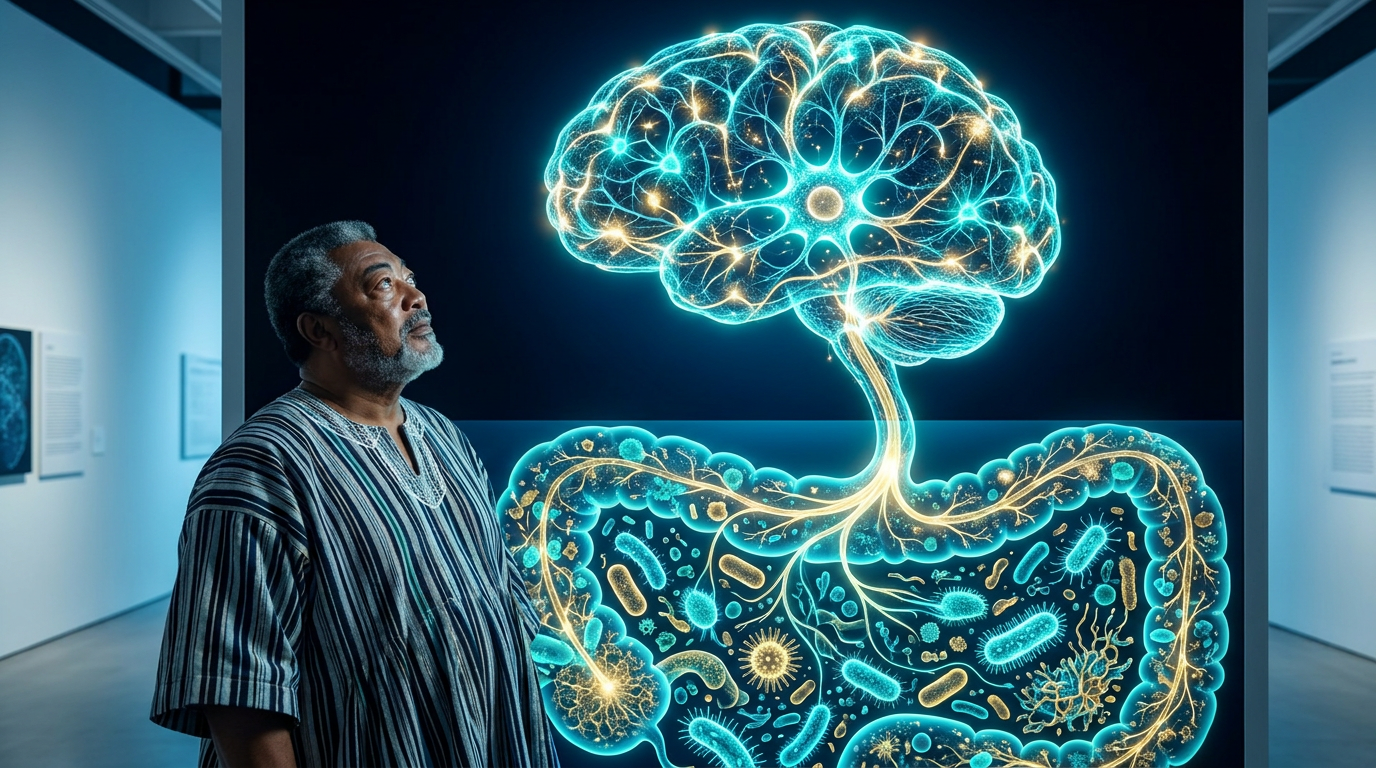
But a groundbreaking new study suggests the master switch for brain plasticity might actually reside in the gut. Researchers have demonstrated that transferring the intestinal microbiome of young mice into older mice effectively hits the rewind button on the aging brain. The procedure, known as a fecal microbiota transplant (FMT), allowed the older animals to regain youthful neural adaptability.[1][2]
To prove that the brain had genuinely regained its plasticity, the research team, led by scientists in Pisa, Italy, tested the mice on a condition called amblyopia, commonly known as "lazy eye." In both humans and mice, amblyopia occurs when the brain favors one eye over the other during early visual development. Crucially, it can typically only be cured if treated during the childhood critical period; once the brain matures, the neural pathways become too rigid to correct the imbalance.[1][2][4]
The results were striking. After receiving the gut microbes from younger donors, the older mice successfully recovered from amblyopia. Their visual cortexes had physically rewired themselves to process input from the weaker eye, a feat that is biologically impossible for a standard adult mouse. This provided undeniable functional proof that the juvenile microbiome is not just associated with youth, but actively drives the brain's capacity to change.[1][2][4][7]

How does a colony of bacteria in the digestive tract alter the physical architecture of the brain? The answer lies in the gut-brain axis, a complex chemical communication network connecting the enteric nervous system to the central nervous system. The researchers discovered that the young microbiome produces specific short-chain fatty acids (SCFAs) as a byproduct of digesting food.[2][5]
These SCFAs do not stay confined to the intestines. They seep into the bloodstream, travel up to the brain, and cross the blood-brain barrier. Once inside the brain, these microbial metabolites act as epigenetic modifiers. They interact directly with the DNA in brain cells, altering the expression of over 1,000 different genes in the visual cortex alone.[4][7]
Specifically, the fatty acids suppress the genes responsible for maintaining the extracellular matrix—a rigid, net-like structure that wraps around adult neurons and locks them in place. By dissolving these molecular brakes, the gut bacteria temporarily reopen the critical window of plasticity that normally slams shut after adolescence.[2][4][7]
By dissolving these molecular brakes, the gut bacteria temporarily reopen the critical window of plasticity that normally slams shut after adolescence.
This visual cortex breakthrough does not exist in a vacuum; it aligns with a surge of recent evidence linking the microbiome to systemic cognitive rejuvenation. A 2024 study published in Aging and Disease found that FMTs from young, physically active mice significantly improved spatial memory and cognitive function in geriatric mice. The older mice receiving the young microbes navigated mazes faster and showed reduced neuroinflammation in the hippocampus.[5]

The rejuvenating effects extend beyond the brain. Separate research demonstrated that young microbiomes also revitalize the gut itself. In older mice, a youthful microbial community boosted the activity of intestinal stem cells, helping the aging gut lining repair itself faster after damage. Together, these studies suggest that the microbiome acts as a systemic pacemaker for aging across multiple organs.[3][6]
Despite the profound implications, the evidence carries significant caveats. The most glaring limitation is that these findings are currently confined to murine models. Mice have vastly different metabolic rates, lifespans, and baseline microbial compositions than humans. While the fundamental mechanics of the gut-brain axis are conserved across mammals, translating these results directly to human neurology remains highly premature.[2][6][7]
Furthermore, the specific bacterial strains responsible for producing the plasticity-restoring fatty acids remain unidentified. A fecal transplant transfers an entire ecosystem of trillions of bacteria, viruses, and fungi. Until researchers can isolate the exact microbes or the specific chemical signals they produce, the therapy remains a blunt instrument.[2][3]
Because of this, clinical experts strongly warn against the rising trend of "do-it-yourself" fecal transplants. Unscreened FMTs carry severe risks, including the transfer of dangerous pathogens, antibiotic-resistant superbugs, or maladaptive metabolic traits like obesity. The goal of this research is not to promote raw transplants, but to map the chemical pathways for future, highly targeted drugs.[3][7]

If those specific short-chain fatty acids or the bacteria that produce them can be isolated, the therapeutic potential is staggering. Instead of a transplant, patients could take a "postbiotic" pill containing the active metabolites, or a targeted probiotic designed to colonize the gut and manufacture the chemicals on-site.[7]
The ultimate prize is not just curing lazy eye in adults, but revolutionizing how we treat severe neurological damage. If doctors can safely reopen the brain's critical period of plasticity, stroke victims could more easily remap lost motor functions to healthy brain regions. Patients with traumatic brain injuries could rebuild neural circuits that are currently considered permanently destroyed.[7]
For now, the Pisa study fundamentally rewrites our understanding of cognitive aging. It dismantles the dogma that the brain's loss of adaptability is an irreversible, localized process. Instead, our mental flexibility appears to be dynamically tethered to the microscopic ecosystems living in our digestive tracts—proving that we are, quite literally, only as young as our gut.[2][3][4][7]
How we got here
2010s
Researchers establish that the gut microbiome can influence mood and behavior via the gut-brain axis.
2021
Early studies show that environmental enrichment alters the microbiome and enhances visual plasticity in mice.
2024
Studies demonstrate that fecal transplants from young, active mice can improve spatial memory in older mice.
June 2026
Researchers prove that young microbiomes produce fatty acids that physically reopen closed plasticity windows in the adult brain.
Viewpoints in depth
Neurobiologists
Focus on the mechanism of reopening critical periods and the potential for stroke and injury recovery.
For neurobiologists, the most exciting aspect of this research is the mechanism of action. By proving that microbial metabolites can dissolve the extracellular matrix—the rigid net that locks adult neurons in place—the study provides a tangible chemical target for reopening the brain's critical periods. Researchers in this camp argue that if these pathways can be safely manipulated in humans, it could fundamentally change the prognosis for stroke victims and those with traumatic brain injuries, allowing adult brains to remap functions with the ease of a child.
Microbiome Researchers
Emphasize the systemic power of gut bacteria and the need to isolate specific SCFA-producing strains.
Microbiome researchers view this as ultimate validation of the gut-brain axis, proving that intestinal flora dictate far more than just digestion. However, their primary focus is now on isolation. Because a whole-community fecal transplant is a chaotic mix of trillions of organisms, these scientists are racing to identify the exact bacterial strains responsible for producing the plasticity-restoring short-chain fatty acids. Their goal is to move away from raw transplants and toward precision "postbiotics"—pills that deliver the exact chemical signals without the biological noise.
Clinical Skeptics
Warn against premature human extrapolation and the severe dangers of unregulated DIY fecal transplants.
While acknowledging the scientific breakthrough, clinical skeptics are highly concerned about the public's reaction to microbiome news. They emphasize the massive biological gap between mice and humans, noting that murine metabolic rates and baseline gut flora do not map perfectly to human biology. More urgently, they warn that headlines about "youthful poop" often drive desperate patients toward dangerous "do-it-yourself" fecal transplants. Unscreened procedures carry a high risk of transferring severe pathogens, antibiotic-resistant superbugs, or even maladaptive metabolic traits, making clinical oversight non-negotiable.
What we don't know
- Which specific bacterial strains are responsible for producing the plasticity-restoring fatty acids.
- Whether the exact same chemical mechanism governs critical periods in the human brain.
- How long the reopened window of plasticity lasts after the microbial intervention.
Key terms
- Amblyopia
- A vision development disorder, commonly known as lazy eye, where the brain fails to process inputs from one eye.
- Critical Period
- A specific window during early life when the brain is highly adaptable and easily rewired by experiences.
- Short-Chain Fatty Acids (SCFAs)
- Chemical byproducts produced by gut bacteria during the fermentation of dietary fiber, which can influence brain function.
- Extracellular Matrix
- A rigid, net-like structure that wraps around adult neurons, restricting their ability to form new connections.
Frequently asked
What is a fecal microbiota transplant?
A procedure that transfers the gut bacteria from a healthy donor into the gastrointestinal tract of a recipient to restore a healthy microbiome.
Can this cure lazy eye in human adults right now?
No. The research has only been proven in mice, and human trials are likely years away.
Should I try a DIY fecal transplant?
Absolutely not. Unscreened transplants can transfer dangerous pathogens, antibiotic-resistant bacteria, and cause severe infections.
Sources
Source coverage
7 outlets
3 viewpoints surfaced







[1]New ScientistMicrobiome Researchers
Faecal transplant makes the brains of old mice act young again
Read on New Scientist →[2]zuhd.newsMicrobiome Researchers
Gut Transplant Resets Aged Brains
Read on zuhd.news →[3]OkDiarioClinical Skeptics
You're only as old as the poop you pass: Poop from young mice reversed signs of age-related decline in older mice
Read on OkDiario →[4]bioRxivNeurobiologists
The Critical Period Microbiota Shape Brain Plasticity
Read on bioRxiv →[5]Aging and DiseaseMicrobiome Researchers
Fecal Microbiota Transplantation from Young-Trained Donors Improves Cognitive Function in Old Mice Through Modulation of the Gut-Brain Axis
Read on Aging and Disease →[6]mSystemsMicrobiome Researchers
Young gut microbiota transplantation improves the metabolic health of old mice
Read on mSystems →[7]Factlen Editorial TeamNeurobiologists
Synthesis by Factlen editorial team
Read on Factlen Editorial Team →
Every angle. Every day.
Get science stories with full source coverage and perspective breakdowns delivered to your inbox.