
The Science of Heart Rate Variability: How Your Body Measures Recovery
Once confined to elite sports labs, Heart Rate Variability (HRV) has become the definitive metric for measuring human recovery. By tracking the microscopic fluctuations between heartbeats, it reveals the hidden tug-of-war within the autonomic nervous system.
By Factlen Editorial Team
- Wearable Technology Advocates
- Focus on democratizing health data to drive daily behavioral nudges.
- Sports Physiologists
- Focus on using HRV to manage elite training loads and prevent overtraining.
- Clinical Skeptics
- Warn against over-indexing on daily fluctuations and the anxiety of health tracking.
What's not represented
- · Traditional strength coaches who rely on subjective 'rate of perceived exertion' (RPE) rather than biometric data.
- · Individuals with chronic illnesses or dysautonomia, for whom standard HRV baseline models may not accurately reflect daily readiness.
Why this matters
Understanding Heart Rate Variability transforms how we view rest. By quantifying the nervous system's hidden tug-of-war, HRV proves that recovery is not just 'taking a day off'—it is an active, measurable biological process essential for avoiding burnout and optimizing health.
Key points
- Heart Rate Variability (HRV) measures the microscopic time differences between consecutive heartbeats.
- A higher HRV indicates a strong parasympathetic nervous system, meaning the body is adaptable and well-recovered.
- Intense exercise, alcohol, poor sleep, and psychological stress all temporarily suppress HRV.
- Modern consumer wearables can track HRV with near-clinical accuracy, democratizing recovery data.
- Experts recommend focusing on 30-day baseline trends rather than reacting to a single day's score.
Millions of people now wake up, check their wrist or finger, and look at a single number to tell them how their body is doing. It is not their resting heart rate, nor is it their sleep duration. It is Heart Rate Variability (HRV), a metric that has migrated from elite sports science laboratories to consumer nightstands, fundamentally changing how we measure human recovery.[6]
HRV is the measure of the microscopic fluctuations in time between consecutive heartbeats. If a human heart beats 60 times a minute, it does not beat exactly once every second. The interval between beats might be 0.9 seconds, then 1.1 seconds, then 0.95 seconds. HRV quantifies this variance, usually measured in milliseconds.[2]
The concept is inherently counterintuitive. We tend to think of a healthy heart as a metronome, ticking with perfect, unyielding regularity. In reality, a perfectly steady heart rate is a biological red flag, often indicating severe stress, fatigue, or illness. High variability, conversely, means the cardiovascular system is highly responsive and adaptable to its environment.[1][6]
To understand why variability is desirable, one must look at the autonomic nervous system (ANS), the body's subconscious control center. The ANS is divided into two branches that are locked in a constant, dynamic tug-of-war over the heart muscle.[1][4]
The sympathetic nervous system acts as the body's accelerator. Responsible for the "fight or flight" response, it releases adrenaline, raises blood pressure, and increases heart rate to prepare for action. The parasympathetic nervous system acts as the brake. Governed largely by the vagus nerve, it drives the "rest and digest" state, slowing the heart down and facilitating recovery.[1][2]

HRV is the mathematical measurement of this tug-of-war. When you inhale, the sympathetic system slightly speeds up your heart; when you exhale, the parasympathetic system slows it down. A high HRV indicates that the parasympathetic "brake" is strong and actively modulating the heart, signaling that the body is in a state of rest and recovery.[2][6]
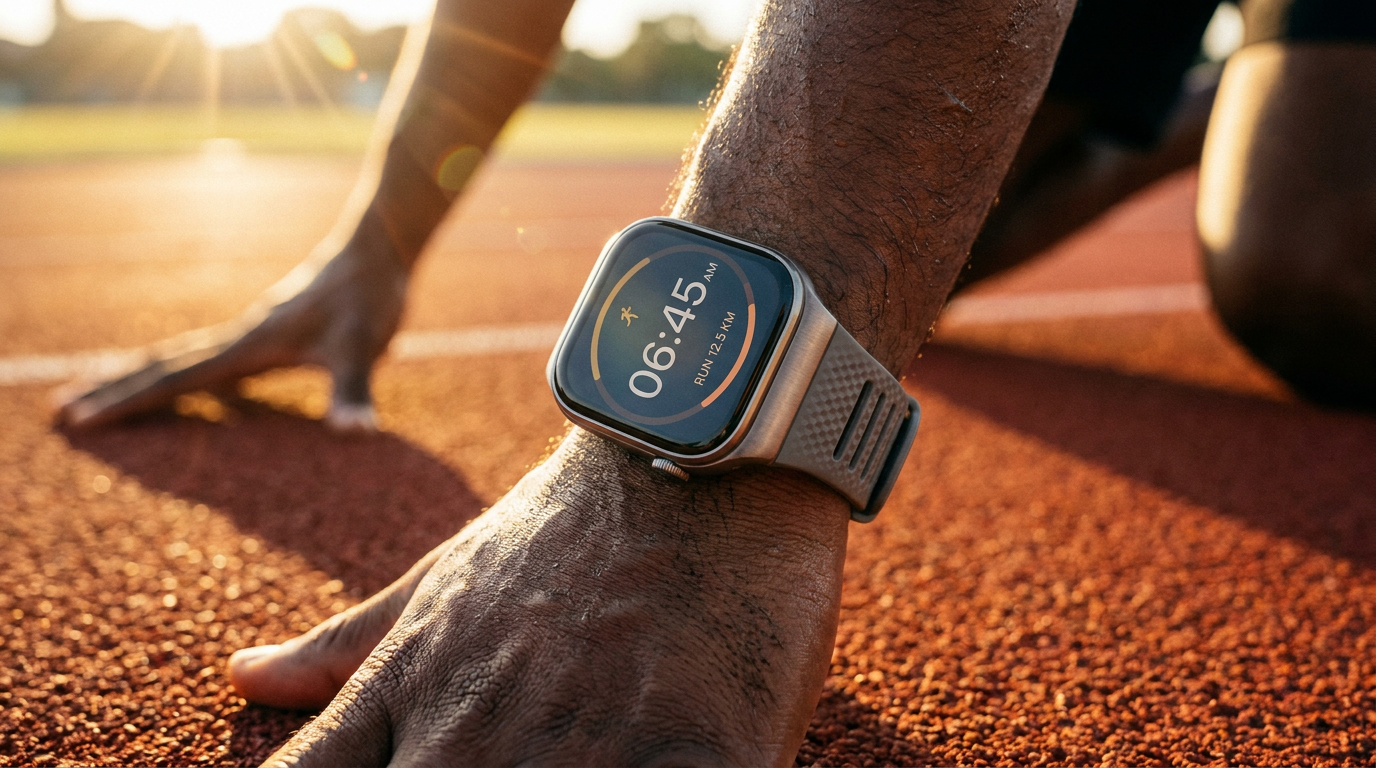
In the realm of sports science, this metric has become the gold standard for managing training loads. When an athlete completes a grueling high-intensity interval training (HIIT) session or a heavy weightlifting routine, their sympathetic nervous system dominates. The physical stress depresses their HRV significantly.[1][5][8]
In the realm of sports science, this metric has become the gold standard for managing training loads.
Research indicates that after intense exertion, it can take 48 to 72 hours for HRV to return to its baseline. During this suppressed window, the body is actively repairing micro-tears in muscle tissue, restoring glycogen, and clearing metabolic waste.[2]
If an athlete ignores this data and continues to push through a suppressed HRV day after day, they risk non-functional overreaching or full-blown overtraining syndrome. HRV acts as an early warning system, often dropping precipitously before physical symptoms like chronic fatigue, mood disturbances, or muscle soreness fully manifest.[1][4]
Historically, capturing this data required a clinical electrocardiogram (ECG) and a chest strap, limiting its use to professional athletes and cardiologists. Today, the landscape has been transformed by optical sensors—known as photoplethysmography (PPG)—embedded in smartwatches and smart rings, which measure the pulse wave of blood through the skin.[3][7]
The democratization of HRV tracking naturally raised questions about accuracy. However, a major systematic review and meta-analysis of 23 studies found that while portable devices have a small margin of absolute error compared to clinical ECGs, they are highly reliable for tracking daily trends and physiological changes.[3][10]

More recent validation studies have confirmed the efficacy of modern consumer hardware. A 2025 analysis of nocturnal wearables found that top-tier devices achieved a near-perfect concordance correlation coefficient (0.99) with gold-standard ECG chest straps, proving that wrist and finger-based optical sensors are more than capable of guiding recovery.[7]
Despite the accuracy of the hardware, physiologists emphasize that a single day's HRV score is relatively meaningless in isolation. The true value of the metric lies in establishing a rolling baseline—usually over 30 to 90 days—and watching for acute deviations from that personal norm.[5][6]
A sudden, sharp drop in HRV is rarely just about exercise. Because the autonomic nervous system responds to all forms of stress equally, lifestyle factors heavily influence the metric. Late-night meals, alcohol consumption, poor sleep architecture, and psychological strain—such as a demanding day at work or public speaking—can suppress parasympathetic activity just as severely as a heavy deadlift session.[2]
As HRV tracking becomes ubiquitous, the most common question users ask is how to "hack" or artificially increase their score. Because HRV is a holistic reflection of systemic health, there are no shortcuts. However, building foundational aerobic fitness through steady-state "Zone 2" endurance training is one of the most effective ways to raise a baseline over time.[2][6]

Another clinically proven method for acute improvement is HRV biofeedback. This practice involves slow, diaphragmatic breathing at a controlled respiratory rate of roughly five to six breaths per minute. This specific frequency manually stimulates the vagus nerve, engaging the parasympathetic brake and shifting the body out of sympathetic overdrive.[9]
Ultimately, Heart Rate Variability is a translation of the body's invisible internal state into a readable, actionable metric. By quantifying the delicate balance of the nervous system, it teaches us that recovery is not simply the absence of movement, but an active, measurable biological process that requires as much attention as the training itself.[1][6]
How we got here
1960s
HRV is first used clinically to monitor fetal distress and predict survival rates in cardiology patients.
1990s
Sports scientists begin using ECG-based HRV measurements to monitor overtraining in elite Olympic and endurance athletes.
2010s
The advent of optical PPG sensors allows consumer wearables to track heart rate, though early models struggle with the precision required for HRV.
2020s
Advanced algorithms and improved sensor fidelity turn consumer smartwatches and rings into highly accurate, ubiquitous HRV tracking tools.
Viewpoints in depth
Sports Physiologists
Focus on autonomic nervous system balance and preventing overtraining.
For sports scientists and elite coaches, HRV is primarily a load-management tool. Rather than adhering to rigid, pre-planned training calendars, they advocate for 'HRV-guided training.' If an athlete's morning HRV is significantly suppressed, the day's high-intensity workout is scrapped in favor of active recovery or rest. This camp emphasizes that pushing through a biologically fatigued state does not build fitness; it only deepens the recovery deficit and increases the risk of injury.
Wearable Technology Advocates
Focus on democratizing health data and driving behavioral change.
Proponents of the quantified-self movement view HRV as the ultimate behavioral nudge. By translating complex autonomic nervous system data into a simple morning 'readiness score,' wearables make invisible stressors visible. This camp argues that seeing the quantifiable impact of a late-night meal, alcohol, or poor sleep on one's HRV is often the catalyst required for individuals to make lasting, positive lifestyle changes.
Clinical Skeptics
Warn against over-indexing on daily fluctuations and single metrics.
While acknowledging the underlying science, some clinicians and psychologists warn of the 'nocebo effect'—where waking up to a low readiness score artificially induces anxiety and ruins a workout that might have otherwise been productive. This camp stresses that HRV is highly sensitive to minor variables like hydration or sleep position, and argues that users should focus strictly on 30-day rolling averages rather than letting a single day's score dictate their behavior.
What we don't know
- While we know HRV correlates with recovery, the exact physiological thresholds where a drop in HRV definitively predicts an athletic injury remain difficult to pinpoint.
- It is still debated whether 'HRV-guided training' is universally superior to traditional periodized training for strength and hypertrophy, as most research has focused on endurance sports.
Key terms
- Autonomic Nervous System (ANS)
- The part of the nervous system responsible for control of bodily functions not consciously directed, such as breathing, the heartbeat, and digestive processes.
- Sympathetic Nervous System
- The branch of the ANS that drives the 'fight or flight' response, increasing heart rate and preparing the body for physical exertion or stress.
- Parasympathetic Nervous System
- The branch of the ANS that drives the 'rest and digest' response, slowing the heart rate and facilitating recovery and cellular repair.
- Vagus Nerve
- The primary nerve of the parasympathetic nervous system, running from the brainstem to the abdomen, which acts as the main 'brake' on the heart rate.
- Photoplethysmography (PPG)
- An optical measurement technique used by smartwatches and rings to detect blood volume changes in the microvascular bed of tissue, used to calculate heart rate and HRV.
- Overtraining Syndrome
- A condition of chronic fatigue, underperformance, and burnout caused by an imbalance between intense training and inadequate recovery.
Frequently asked
What is a 'good' HRV score?
There is no universal 'good' score, as HRV is highly individualized and decreases naturally with age. A healthy score for one person might be 40ms, while for another it might be 100ms. The key is monitoring your own baseline and looking for positive or negative trends.
Why does alcohol lower my HRV?
Alcohol is a systemic toxin that forces the body to work overtime to metabolize it. This physical stress heavily activates the sympathetic nervous system and suppresses the parasympathetic 'rest' response, leading to a sharp drop in HRV.
Can I measure HRV at any time of day?
While you can, daytime measurements are heavily skewed by caffeine, stress, digestion, and movement. For accurate baseline tracking, experts recommend measuring HRV either continuously during sleep or immediately upon waking in a consistent posture.
Does a low HRV mean I am getting sick?
Not necessarily, but it is a strong indicator that your body is under systemic stress. A sudden, unexplained drop in HRV can sometimes precede the physical symptoms of a viral infection by 24 to 48 hours as the immune system mounts a response.
Sources
Source coverage
10 outlets
3 viewpoints surfaced










[1]National Institutes of HealthSports Physiologists
The role of heart rate variability in sports physiology
Read on National Institutes of Health →[2]Science for SportSports Physiologists
Heart Rate Variability (HRV)
Read on Science for Sport →[3]PubMedClinical Skeptics
The Accuracy of Acquiring Heart Rate Variability from Portable Devices: A Systematic Review and Meta-Analysis
Read on PubMed →[4]Frontiers in Sports and Active LivingSports Physiologists
Mapping HRV in sports science: from monitoring to machine learning
Read on Frontiers in Sports and Active Living →[5]KubiosWearable Technology Advocates
HRV Readiness Score - Monitor stress and recovery with HRV
Read on Kubios →[6]Factlen Editorial TeamWearable Technology Advocates
Synthesis by Factlen editorial team
Read on Factlen Editorial Team →[7]Scandinavian Journal of Medicine & Science in SportsWearable Technology Advocates
Validation of nocturnal resting heart rate and heart rate variability in consumer wearables
Read on Scandinavian Journal of Medicine & Science in Sports →[8]MediumWearable Technology Advocates
HRV: The Secret Weapon in Sports Science for Enhancing Athlete Performance
Read on Medium →[9]INSiGHT CLAClinical Skeptics
HRV Training and the Nervous System
Read on INSiGHT CLA →[10]ResearchGateClinical Skeptics
Can Wearable Devices Accurately Measure Heart Rate Variability? A Systematic Review
Read on ResearchGate →

Every angle. Every day.
Get fitness stories with full source coverage and perspective breakdowns delivered to your inbox.