
How Vertical Scrolling Webtoons Are Reshaping the Global Comic Industry
Optimized for smartphones and fueled by a lucrative creator economy, South Korean webtoons have evolved from a niche digital format into a $7.8 billion global entertainment powerhouse.
By Factlen Editorial Team
- Digital Platform Executives
- Focus on scalable technology, user engagement metrics, and the massive addressable market for IP adaptations.
- Independent Creators
- Appreciate the low barrier to entry and direct monetization, but face intense pressure from weekly production schedules.
- Traditional Publishers
- Value the artistry of print layouts but recognize the urgent need to adapt to digital-first consumption habits.
- Market Analysts
- Track the explosive compound annual growth rate and the shift in Gen Z entertainment spending.
What's not represented
- · Traditional comic book retailers
- · Japanese manga purists
Why this matters
The explosion of webtoons represents a fundamental shift in how the next generation consumes stories and how independent artists earn a living. For readers and creators alike, it proves that the smartphone screen has officially replaced the printed page as the center of the global comic book industry.
Key points
- The global webtoon market reached $7.8 billion in 2025 and is projected to grow to $28.6 billion by 2034.
- Vertical scrolling and full-color designs have optimized the comic reading experience for mobile-first Gen Z and Millennial audiences.
- A robust creator economy allows independent artists to monetize their work directly through paid early access, ads, and tipping.
- Webtoons have become a primary incubator for global entertainment, spawning hit anime and live-action streaming series.
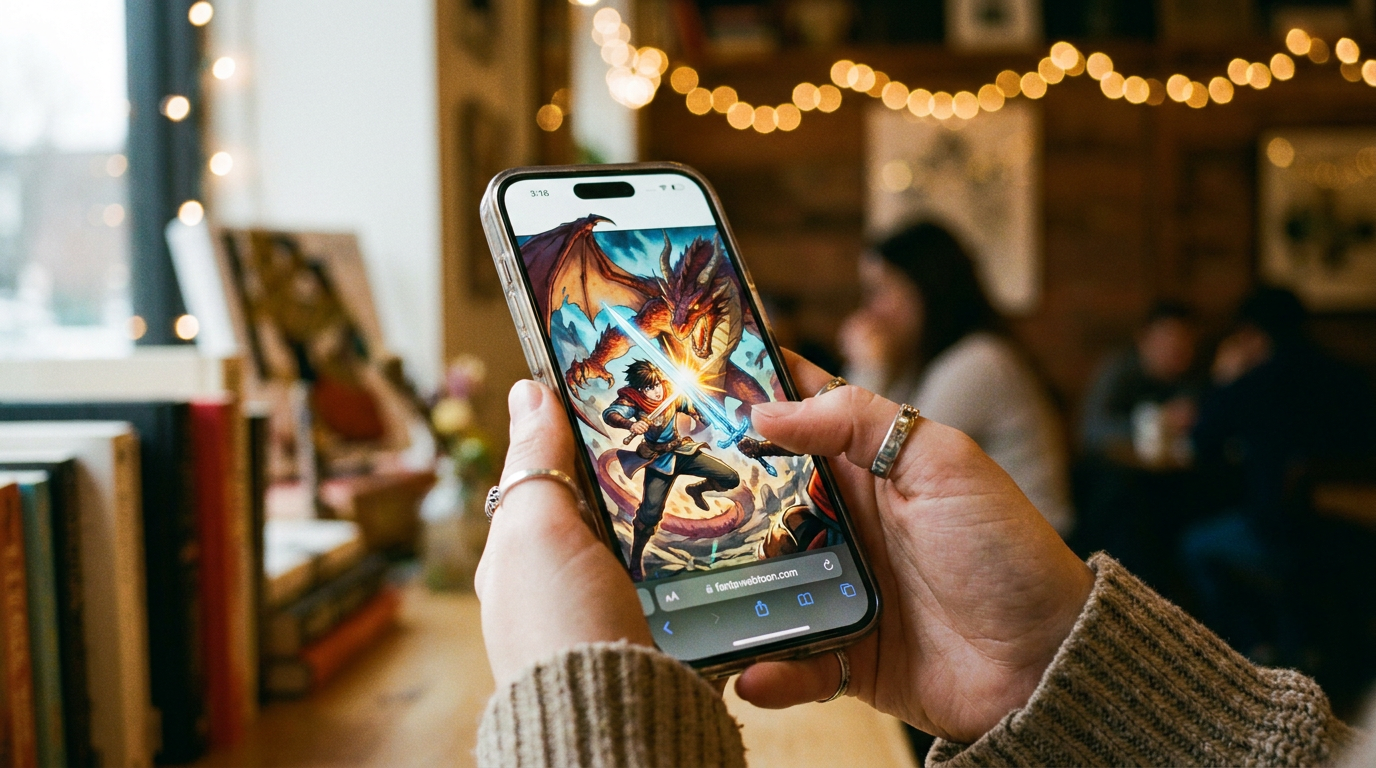
For decades, the global comic book industry was defined by the tactile experience of turning pages. Japanese manga and American superhero periodicals dominated the cultural landscape, relying on print distribution and intricate, multi-panel page layouts. But as reading habits have migrated to smartphones, a new format has quietly eclipsed traditional publishing. South Korean webtoons—vertically scrolling, full-color digital comics—have transformed from a regional novelty into a dominant global entertainment medium.[3][5]
The numbers illustrate a staggering shift in how younger generations consume visual storytelling. In 2025, the global webtoon market reached an estimated $7.8 billion, with projections suggesting it will expand to nearly $28.6 billion by 2034. WEBTOON Entertainment, the industry’s largest platform, recently reported 160 million monthly active users globally, dwarfing the readership of traditional print comic publishers. This explosive growth is not merely a change in distribution; it represents a fundamental reimagining of the comic book format for the mobile internet era.[2][4]
The secret to the webtoon’s success lies in its native digital architecture. Unlike traditional manga or Western comics, which are typically drawn for print and later digitized—often resulting in awkward zooming and panning on small screens—webtoons are born digital. Creators design their panels specifically for vertical scrolling. This continuous downward motion mimics the natural behavior of browsing social media feeds, creating a frictionless reading experience that feels intuitive to digital natives.[3][5]

This vertical format fundamentally alters the pacing and visual language of comics. Instead of a dense grid of panels, webtoon artists use the infinite vertical canvas to control timing. A long, empty scroll can build suspense before a dramatic reveal, while vibrant, full-color artwork pops against the backlit screens of modern smartphones. Because they are not constrained by the printing costs associated with color ink, creators can utilize lush palettes and dynamic lighting effects that are rare in traditional weekly manga.[3]
Beyond the reading experience, the webtoon boom is fueled by a robust, democratized creator economy. Platforms operate on a model similar to YouTube, where anyone with an internet connection can upload their stories. WEBTOON’s open platform, CANVAS, hosts tens of thousands of independent artists. If an amateur series gains enough traction and readership, the platform may offer the creator a professional contract, moving their title to the Originals banner and providing editorial support, marketing, and guaranteed minimum earnings.[1][6]
Monetization for these digital artists relies on a multi-pronged approach that bypasses traditional publishing gatekeepers. The primary revenue driver is paid content, most notably the Fast Pass system. While the latest chapters of a series are eventually released for free, dedicated fans can pay a small microtransaction to unlock upcoming episodes immediately. This model capitalizes on the binge-reading culture and the desire to avoid cliffhangers, accounting for roughly 80% of platform revenue.[1]
Monetization for these digital artists relies on a multi-pronged approach that bypasses traditional publishing gatekeepers.
Additional income streams include on-platform advertising and direct fan tipping systems, which have significantly increased creator payouts in recent years. According to recent financial disclosures, the average annual income for a professional WEBTOON creator sits around $48,000, while the top 100 creators on the platform earn an average of $1 million a year. While independent contractors must cover their own production costs—often hiring assistants to meet grueling weekly deadlines—the ceiling for financial success is unprecedented in the independent comic space.[1][6]

Another critical advantage webtoons hold over traditional manga is the speed of global localization. Historically, international fans of Japanese manga had to wait months or even years for official translations to be printed and shipped overseas, a delay that fueled massive piracy networks. Webtoon platforms, however, operate with a global-first mindset. Hit series are translated and published simultaneously in English, Spanish, Indonesian, and other languages, allowing fans worldwide to participate in the cultural conversation in real time.[3]
This massive, highly engaged global readership has turned webtoons into a goldmine for intellectual property adaptations. The comic platforms increasingly view themselves as modern entertainment incubators. When a series proves it can hold the attention of millions of weekly readers, it becomes a de-risked property for film and television studios. South Korea’s booming production sector has aggressively mined webtoons for source material, resulting in global streaming hits that dominate international charts.[1]
The adaptation pipeline has recently expanded into the anime industry, traditionally the exclusive domain of Japanese manga. High-profile webtoons such as Solo Leveling, Tower of God, and The God of High School have received lavish anime adaptations that trended worldwide, introducing millions of new viewers to the original digital comics. This cross-media synergy creates a powerful flywheel: a hit comic spawns a hit show, which in turn drives massive new readership back to the comic platform.[3]

The demographic data underscores why major entertainment conglomerates are paying close attention. More than 80% of webtoon readers belong to Generation Z and the Millennial cohort. These are mobile-first consumers who are notoriously difficult to reach through traditional media channels. By capturing their attention with serialized, visually engaging content, webtoon platforms have built highly valuable, sticky ecosystems that brands and advertisers are eager to tap into.[2][3]
However, the industry’s rapid ascent is not without significant friction. The most pressing existential threat is widespread content piracy. Despite the accessibility of official platforms, illegal aggregation sites frequently rip and translate premium chapters, diverting millions of readers and causing substantial revenue losses for both the platforms and the individual creators. Combating this digital piracy remains a constant, resource-intensive battle for the industry's major players.[4]
Furthermore, the relentless pace of digital publishing has sparked a reckoning regarding creator health and burnout. To maintain reader engagement and platform algorithms, professional artists are typically required to deliver a full-color, 60-to-80 panel chapter every single week. This grueling schedule often necessitates 80-hour workweeks, leading to widespread reports of physical strain and creative exhaustion among top-tier talent. The industry is currently grappling with how to balance its insatiable demand for content with sustainable working conditions.[7]

Despite these challenges, the trajectory of the vertical comic format appears unstoppable. Market analysts project that the true financial windfall lies not just in paid chapters, but in the broader exploitation of these digital universes. With an estimated $130 billion market opportunity in IP adaptations and advertising over the next decade, webtoons have proven that the future of the comic book industry isn't on a printed page—it's in the palm of your hand, waiting for the next scroll.[1][7]
How we got here
2004
WEBTOON is founded in South Korea, pioneering the digital scrolling format for comics.
2014
WEBTOON launches its English-language service, beginning its aggressive global expansion.
2019
The platform introduces its first US creator-monetization program, sparking the digital comic creator economy.
2024
WEBTOON Entertainment launches its IPO on the Nasdaq, signaling mainstream financial validation.
2025
The global webtoon market reaches $7.8 billion, driven by surging smartphone penetration and IP adaptations.
Viewpoints in depth
Digital Platform Executives
Focus on the scalable tech, user engagement, and the massive addressable market for IP adaptations.
For the leaders of tech-driven comic platforms, the webtoon format is primarily a highly scalable data engine. By offering free, accessible content, they can aggregate tens of millions of highly engaged Gen Z readers. This massive user base allows platforms to test intellectual property in real-time, identifying which stories have the highest retention rates before pitching them to streaming services for lucrative film and television adaptations.
Traditional Publishers
Value the artistry of print layouts but recognize the need to adapt to digital-first consumption habits.
Legacy comic and manga publishers acknowledge the explosive growth of webtoons but often emphasize the artistic compromises of the vertical format. They argue that traditional page layouts allow for more complex visual storytelling, intricate paneling, and a tactile reading experience. However, facing shrinking print revenues, many of these legacy houses are now reluctantly launching their own vertical-scrolling apps to capture the mobile-first audience.
Independent Creators
Appreciate the low barrier to entry and direct monetization, but face intense pressure from weekly production schedules.
For artists, the webtoon ecosystem represents both unprecedented opportunity and immense pressure. The democratization of publishing means creators no longer need a gatekeeper's approval to find an audience, and direct monetization tools like Fast Pass offer a viable path to a full-time income. Conversely, the algorithm's demand for a 60-panel, full-color chapter every single week has led to widespread reports of physical strain, forcing many to hire teams of assistants just to survive the schedule.
What we don't know
- Whether traditional Japanese manga publishers will fully pivot to vertical scrolling formats or maintain their focus on print-first layouts.
- How platforms will sustainably address the growing issue of creator burnout and the physical toll of weekly full-color deadlines.
- The long-term impact of AI-assisted drawing tools on the webtoon creator economy and platform compensation models.
Key terms
- Manhwa
- The Korean term for comics and print cartoons, now widely used globally to describe South Korean digital comics.
- Vertical Scrolling
- A digital reading format where users scroll down continuously to read, optimized for smartphone screens rather than traditional page-turning.
- Fast Pass
- A monetization feature that allows readers to pay a microtransaction to unlock and read upcoming comic chapters before their free public release date.
- CANVAS
- An open publishing platform by WEBTOON where amateur and independent creators can self-publish their comics.
Frequently asked
What is the difference between manga and manhwa?
Manga refers to Japanese comics, which are traditionally published in black-and-white print formats. Manhwa is the Korean term for comics, which today largely refers to full-color digital stories designed for vertical scrolling on smartphones.
How do webtoon creators make money?
Creators earn revenue through a combination of paid early-access chapters (Fast Pass), on-platform advertising, direct fan tipping, and lucrative licensing deals for television and film adaptations.
Do I need a publisher to create a webtoon?
No. Major platforms operate open-publishing tiers, allowing anyone to upload and share their comics independently. Successful amateur creators are often recruited into professional contracts by the platforms.
Sources
Source coverage
7 outlets
4 viewpoints surfaced






[1]ForbesDigital Platform Executives
What Is WEBTOON's Business Model?
Read on Forbes →[2]Market InteloMarket Analysts
Webtoon Market Outlook 2025-2034
Read on Market Intelo →[3]India TimesIndependent Creators
South Korean manhwa is dominating the digital comic scene
Read on India Times →[4]TechSci ResearchMarket Analysts
Global Webtoons Market
Read on TechSci Research →[5]AllKpopTraditional Publishers
Japanese Mangas are being eclipsed by Korean webtoons
Read on AllKpop →[6]Business WireDigital Platform Executives
WEBTOON Reveals On-Platform Payments to English-Language Creators Have Surpassed USD $27 Million Since 2020
Read on Business Wire →[7]Factlen Editorial TeamMarket Analysts
Synthesis by Factlen editorial team
Read on Factlen Editorial Team →


Every angle. Every day.
Get entertainment stories with full source coverage and perspective breakdowns delivered to your inbox.