
Gut Microbes From Young Mice Restore Brain Plasticity in Older Adults
A new study reveals that transplanting the gut microbiome of young mice into older adults reopens the brain's 'critical period' of adaptability. The breakthrough allowed adult mice to rewire their visual cortex, offering new insights into how the gut-brain axis controls neurological aging.
By Factlen Editorial Team
- Neuro-Microbiologists
- View the gut microbiome as a primary, manipulable driver of brain aging and development.
- Clinical Neurologists
- Urge caution regarding the massive biological gap between mouse models and human therapies.
- Therapeutic Developers
- Focus on isolating specific microbial chemicals rather than using whole fecal transplants.
What's not represented
- · Human clinical trial participants
- · Gastroenterologists treating C. difficile
Why this matters
If the mechanisms discovered in mice translate to humans, manipulating the gut microbiome could revolutionize how we treat stroke recovery, traumatic brain injuries, and developmental vision disorders that are currently considered permanent in adults.
Key points
- Researchers successfully reopened the brain's 'critical period' of plasticity in adult mice using a fecal microbiota transplant (FMT) from young donors.
- The adult mice regained the ability to rewire their visual cortex, overcoming a condition similar to human amblyopia (lazy eye).
- The young microbiome altered gene expression in the adult brains, specifically affecting myelination and the blood-brain barrier.
- While the animal data is groundbreaking, experts warn that translating raw fecal transplants to human neurological therapies carries significant complexity and risk.
The holy grail of neuroscience has long been the ability to reopen the "critical period"—the fleeting window in childhood when the brain is highly adaptable and can effortlessly wire new connections. Once this window closes, the adult brain becomes rigid, making it difficult to learn new languages, recover from strokes, or correct developmental vision disorders.[5]
Now, a striking new study suggests the key to unlocking this youthful brain plasticity might not reside in the brain at all, but in the gut. According to research published in June 2026, transplanting the gut microbiome of young mice into older adults successfully rewound the clock on the recipients' brains, allowing them to overcome a neurological condition that is typically only treatable in early life.[1][2]
The research, led by Paola Tognini at the Sant'Anna School of Advanced Studies in Pisa, Italy, focused on the visual cortex. The team used a classic model of neuroplasticity: amblyopia, commonly known as "lazy eye." In children, amblyopia can be treated by placing a patch over the stronger eye, forcing the brain to forge new neural pathways to the weaker eye.[1][2]

However, because neuroplasticity peaks at a young age and decreases as the brain naturally prunes unused connections during adolescence, patching is generally ineffective in adults. The adult brain simply resists the structural remodeling required to fix the visual imbalance.[1][2]
To test whether the microbiome influences this rigidity, the Italian researchers performed a fecal microbiota transplant (FMT). They took gut bacteria from 30-day-old mice—an age corresponding to the peak of their critical plasticity period—and transplanted it into 4-month-old adult mice, whose plasticity windows had firmly closed.[1][2]
The results were unprecedented. The adult mice that received the young microbiota demonstrated renewed neuroplasticity, successfully rewiring their visual cortices in response to the eye-shutting experiment. A control group that received transplants from other adult mice showed no such improvement, remaining neurologically rigid.[1][2]
The study authors noted that this is the first time an in vivo functional model has demonstrated that plasticity can be re-activated in a system that typically resists neural network remodeling during adulthood. The young microbiome effectively acted as a molecular time machine for the visual cortex.[2][5]

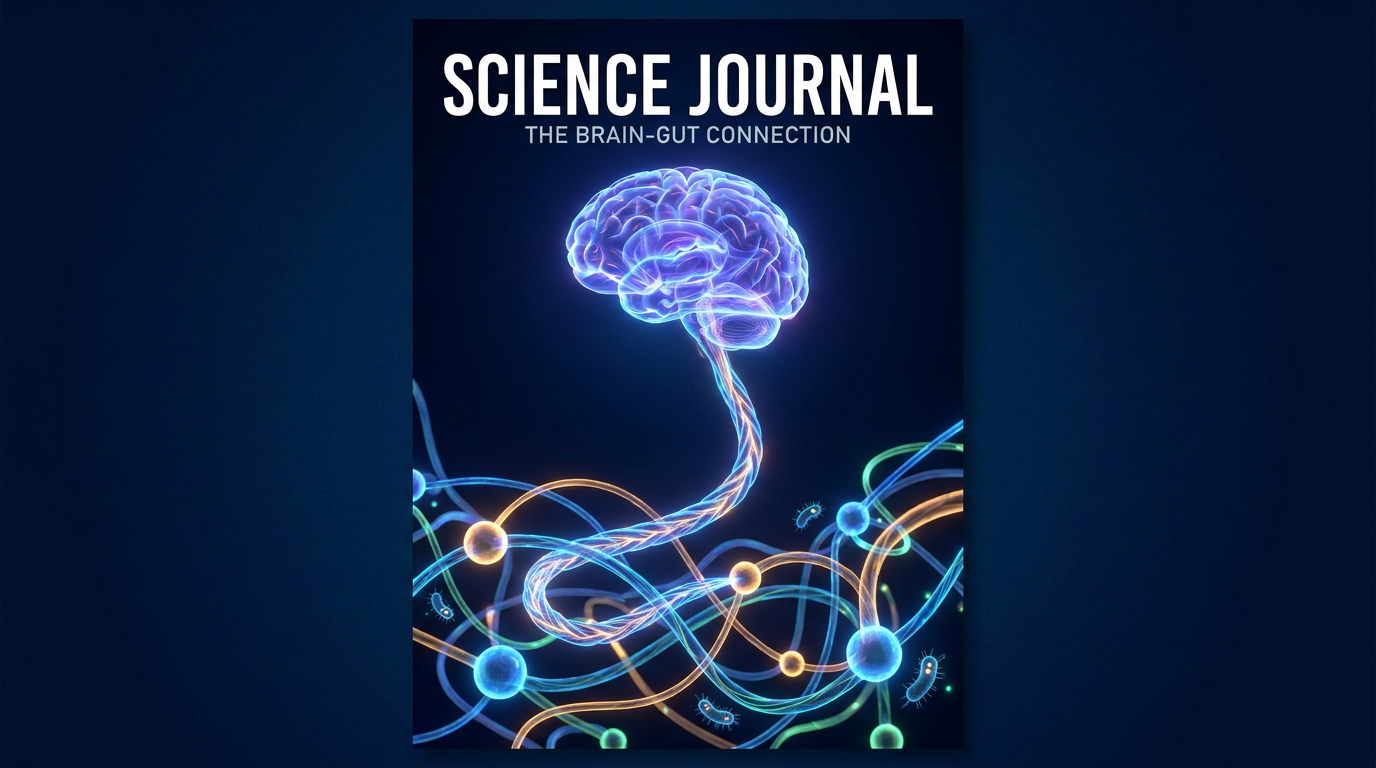
How does bacteria in the colon change the physical wiring of the brain? The answer lies in the gut-brain axis, a complex bidirectional communication network involving the vagus nerve, the immune system, and microbial metabolites.[3][5]
How does bacteria in the colon change the physical wiring of the brain?
When the researchers analyzed the brains of the recipient mice, they found profound transcriptional remodeling. The young microbiome altered the expression of genes related to myelination—the process where nerves are wrapped in a protective sheath—and the permeability of the blood-brain barrier.[1][2]
Furthermore, the team identified 11 specific bacterial taxa that were enriched in the young donors and successfully colonized the adult recipients. These "pro-plasticity" microbes likely produce specific short-chain fatty acids and other metabolites that cross the blood-brain barrier to signal neural networks to become adaptable again.[2][5]
While the visual cortex findings are novel, they build upon a growing mountain of evidence linking the microbiome to cognitive aging. In 2021, a landmark study published in Nature Aging by researchers at University College Cork demonstrated that FMT from young mice could reverse age-related cognitive decline in geriatric rodents, physically altering the hippocampus to resemble a younger brain.[4]

More recently, a January 2025 study in Aging and Disease showed that the benefits could be compounded by lifestyle. Researchers found that transplanting feces from young mice that exercised on treadmills into aged mice significantly improved the recipients' spatial memory and long-term potentiation—a cellular mechanism crucial for learning.[3]
Independent experts are hailing the new visual cortex data as a major conceptual shift. Parisa Gazerani, a researcher at Oslo Metropolitan University, noted that the gut microbiome appears to be an active developmental partner that helps shape neural circuit maturation alongside sensory experience, immune activity, and genetic programming.[1]
If these mechanisms translate to humans, the clinical implications are staggering. Beyond treating adult amblyopia, the ability to chemically reopen the brain's critical period could revolutionize rehabilitation for stroke victims, traumatic brain injury patients, and those suffering from neurodegenerative diseases.[1][5]
However, the translational gap between mice and humans remains a significant hurdle. The human microbiome is vastly more complex, shaped by decades of diverse diets, environmental exposures, and genetics. What works in a controlled laboratory setting with genetically identical mice eating standardized chow may not easily replicate in human patients.[5]

Furthermore, raw fecal transplants carry inherent risks, including the potential transfer of undetected pathogens or unintended metabolic traits. The medical community views FMT as a blunt instrument—effective for severe gut infections like C. difficile, but too unpredictable for routine neurological therapies.[5]
The ultimate goal is not to perform fecal transplants for brain health, but to isolate the specific mechanisms at play. By identifying the exact pro-plasticity bacterial strains or the specific metabolites they produce, pharmaceutical companies could develop targeted postbiotics or live biotherapeutics.[2][5]
For now, the research provides a profound new lens through which to view human development and aging. The brain's rigidity is not solely a one-way street dictated by time and genetics; it is an ongoing dialogue with the trillions of microbes residing in our gut.[5]

How we got here
August 2021
Researchers demonstrate that FMT from young mice reverses cognitive decline in the hippocampus of geriatric mice.
January 2025
A study shows that gut microbes from exercising young mice significantly improve spatial memory in aged recipients.
June 10, 2026
Researchers publish data showing young FMT reinstates visual cortex plasticity in adult mice, overcoming amblyopia-like conditions.
June 19, 2026
The findings gain wider attention, highlighting the microbiome's role as an active partner in brain development.
Viewpoints in depth
Neuro-Microbiologists
View the gut microbiome as a primary, manipulable driver of brain aging and development.
Researchers in this camp argue that the brain does not age in isolation. By demonstrating that the gut microbiome dictates the opening and closing of the brain's 'critical periods,' they position the gut-brain axis as the most promising frontier for treating neurological decline. They point to consistent data across multiple studies showing that young microbiomes can restore memory, long-term potentiation, and visual cortex rewiring in aged animal models.
Clinical Neurologists
Urge caution regarding the massive biological gap between mouse models and human therapies.
While acknowledging the elegance of the mouse studies, clinical neurologists warn against premature hype. The human brain and microbiome are exponentially more complex than those of laboratory mice, which live in sterile environments and eat identical diets. Clinicians emphasize that reopening a critical period in a human brain could have unpredictable consequences, and that raw fecal transplants carry too many infection risks to be used for non-gastrointestinal conditions.
Therapeutic Developers
Focus on isolating the specific chemicals rather than using whole fecal transplants.
For pharmaceutical researchers, the raw fecal transplant is merely a proof of concept. Their goal is to identify the exact 'pro-plasticity' bacterial strains or the specific short-chain fatty acids they produce. By isolating these mechanisms, they hope to develop standardized, FDA-approvable postbiotics or live biotherapeutics that can trigger brain plasticity without the risks associated with transferring undefined biological matter.
What we don't know
- Whether the specific 'pro-plasticity' bacteria identified in mice exist or function similarly in the human gut.
- How long the restored neuroplasticity lasts after the microbiome transplant is completed.
- If manipulating the microbiome can safely reopen plasticity without causing unintended side effects, such as maladaptive neural connections.
Key terms
- Fecal Microbiota Transplant (FMT)
- The transfer of gut bacteria and other microbes from a healthy donor into a recipient to restore or alter the microbiome.
- Neuroplasticity
- The brain's ability to physically reorganize its neural networks in response to learning, experience, or injury.
- Critical Period
- A specific window during early development when the brain is highly adaptable and easily molded by environmental inputs.
- Amblyopia
- Commonly known as lazy eye, a neurodevelopmental disorder where the brain fails to fully process inputs from one eye.
- Gut-Brain Axis
- The two-way biochemical communication network connecting the gastrointestinal tract and the central nervous system.
- Short-Chain Fatty Acids (SCFAs)
- Metabolites produced by gut bacteria during the fermentation of fiber, known to influence brain health and inflammation.
Frequently asked
Can a fecal transplant improve human memory?
Currently, there is no clinical evidence that FMT improves memory in humans. While studies in mice are promising, the human microbiome and brain are vastly more complex.
How does the gut communicate with the brain?
The gut and brain communicate via the gut-brain axis, utilizing the vagus nerve, immune system signaling, and chemical byproducts like short-chain fatty acids that cross the blood-brain barrier.
Why is amblyopia hard to treat in adults?
Amblyopia is typically treated in childhood when the brain's 'critical period' of plasticity is open. In adults, the brain's neural networks are more rigid and resist rewiring.
Will doctors start using FMT for brain injuries?
Not in its raw form. Researchers hope to identify the specific bacteria or chemicals responsible for plasticity to create targeted, safer drugs rather than using whole fecal transplants.
Sources
Source coverage
5 outlets
3 viewpoints surfaced




[1]New ScientistTherapeutic Developers
Faecal transplant makes the brains of old mice act young again
Read on New Scientist →[2]bioRxivNeuro-Microbiologists
Transplantation of a 'young' microbiota was sufficient to reinstate experience-dependent plasticity in the adult visual cortex
Read on bioRxiv →[3]Aging and DiseaseNeuro-Microbiologists
Fecal Microbiota Transplantation from Young-Trained Donors Improves Cognitive Function in Old Mice Through Modulation of the Gut-Brain Axis
Read on Aging and Disease →[4]Nature AgingNeuro-Microbiologists
Microbiota from young mice reverses aging-associated differences in cognitive and immune functions
Read on Nature Aging →[5]Factlen Editorial TeamClinical Neurologists
Synthesis by Factlen editorial team
Read on Factlen Editorial Team →
Every angle. Every day.
Get science stories with full source coverage and perspective breakdowns delivered to your inbox.