
H5N1 Bird Flu Reaches Every Continent as Australia Confirms First Mainland Case
A migratory seabird in Western Australia has tested positive for the highly pathogenic H5N1 avian influenza, marking the virus's arrival on the world's final uninfected continent and triggering a national wildlife emergency.
By Factlen Editorial Team
- Australian Government & Biosecurity
- Focused on containment, agricultural protection, and monitoring, viewing the arrival as inevitable but manageable through strict biosecurity protocols.
- Conservationists & Wildlife Experts
- View the arrival as a catastrophic ecological event, demanding immediate funding to build species resilience and prevent unprecedented local extinctions.
- Regional Neighbors
- Operating on high alert, viewing Australia's breach as a warning that their own geographic isolation will not protect them indefinitely.
What's not represented
- · Australian poultry farmers facing potential economic devastation
- · Indigenous land managers overseeing remote coastal ecosystems
Why this matters
The arrival of H5N1 in Australia removes the world's last major geographic sanctuary for avian life. If the virus establishes itself in native populations, it could trigger catastrophic extinctions among Australia's unique wildlife and severely disrupt the region's agricultural sector.
Key points
- Australia has confirmed its first mainland case of H5N1 bird flu in a migratory brown skua.
- The detection means the highly pathogenic virus has now reached every continent on Earth.
- The virus has not yet been detected in Australia's poultry or agriculture sector.
- Conservationists are calling it a 'genuine wildlife emergency' and demanding $200 million in federal funding.
- New Zealand is now on high alert, preparing for the virus's likely arrival via migratory birds.
Australia has confirmed its first mainland case of the highly pathogenic H5N1 avian influenza, a grim milestone that means the deadly virus has now reached every continent on Earth.[1][2]
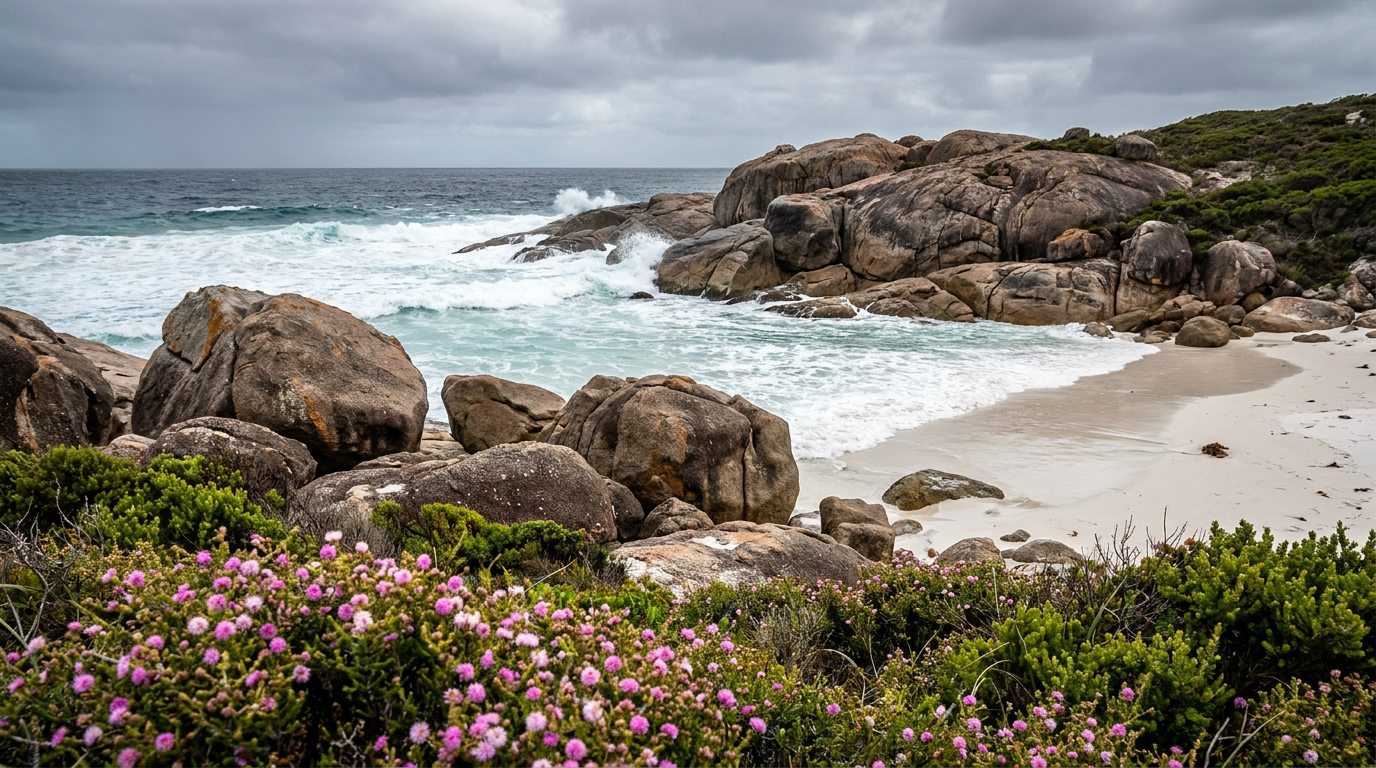
The virus was detected in a migratory brown skua found sick on a remote beach in Western Australia's Cape Le Grand National Park, roughly 700 kilometers southeast of Perth. The bird was isolated but died shortly after, and initial tests on a second bird—a giant northern petrel found in the same area—have returned a suspected positive result.[4][7]
Until this weekend, Australia stood as the world's final geographic fortress against the clade 2.3.4.4b strain of H5N1, which has decimated global wildlife populations since its emergence in 2020. The virus had previously reached the Australian sub-Antarctic territory of Heard Island in late 2025, but the mainland had remained untouched.[1][3][7]

Prime Minister Anthony Albanese addressed the nation from Sydney, pledging that the federal government would do "whatever we can" to restrict the spread of the virus. Agriculture Minister Julie Collins confirmed that biosecurity measures are being tightened along the coasts, though she noted that the virus has not yet been detected in Australia's poultry or broader agriculture sector.[1][7]
"We all knew we couldn't be bird flu-free forever," Collins stated, acknowledging the inevitability of migratory birds carrying the pathogen across the ocean.[1]
"We all knew we couldn't be bird flu-free forever," Collins stated, acknowledging the inevitability of migratory birds carrying the pathogen across the ocean.
For conservationists, the detection is a worst-case scenario realized. The Invasive Species Council immediately declared the situation a "genuine wildlife emergency," warning that it could become the most complex ecological crisis in the nation's history.[2][5]
Dr. Carol Booth, the council's principal policy analyst, emphasized that Australian native species have no natural immunity to the virus. "We could see vast numbers of deaths, multiple outbreaks at once, dozens and potentially hundreds of species affected, local extinctions and grave endangerment of species that are already on the edge," Booth warned.[5][6]

To combat the impending crisis, conservation groups are demanding the Albanese government urgently invest $200 million in a national wildlife resilience package. This funding would be directed toward strengthening native species populations before large-scale outbreaks occur, primarily by restoring habitats and reducing pressure from invasive predators.[6]
The ripple effects of the Australian detection are already being felt across the Tasman Sea. New Zealand, which has also avoided the highly pathogenic strain, is now on high alert. Biosecurity Minister Andrew Hoggard stated that while geographical isolation has bought the country time, agencies are working closely with local councils and the agricultural industry to prepare for the virus's likely arrival.[4]
"It is a timely reminder that it takes all of us to be prepared for the arrival of a virus we can't control the spread of," Hoggard said, noting that once H5N1 enters wild bird populations, it becomes virtually impossible to eradicate.[4]

Globally, the H5N1 strain has killed hundreds of millions of birds and has increasingly spilled over into mammalian populations, infecting marine mammals in South America, polar bears in the Arctic, and dairy cattle in the United States. While human infections remain rare, the virus's ability to mutate and cross species barriers keeps global health authorities on edge.[1][3][5]
In the immediate term, Australian authorities are urging the public to remain vigilant. Beachgoers and wildlife carers are instructed to avoid touching sick or dead birds, record their locations, and immediately contact the national emergency animal disease hotline as the country braces for the ecological battle ahead.[4][6]
How we got here
1996
HPAI H5N1 clade is first detected in a goose in China.
2020
A new, highly pathogenic variant emerges and begins spreading rapidly across Europe, Africa, and Asia.
Late 2025
The virus is detected on Heard Island, an Australian sub-Antarctic territory, killing elephant seal pups.
June 14, 2026
A sick brown skua is found at Cape Le Grand National Park in Western Australia.
June 20, 2026
Australian authorities confirm the bird tested positive for H5N1, marking the virus's arrival on every continent.
Viewpoints in depth
Australian Government & Biosecurity
Focused on containment, agricultural protection, and monitoring.
Federal and state authorities view the arrival of H5N1 as an inevitable consequence of global migratory patterns, but one that can be managed through strict biosecurity protocols. Their immediate priority is shielding the multi-billion-dollar poultry and agriculture sectors from infection. By tightening coastal monitoring and deploying rapid response teams, the government aims to isolate the virus in wild populations and prevent it from crossing into commercial flocks or human populations.
Conservationists & Wildlife Experts
View the arrival as a catastrophic ecological event demanding immediate funding.
Ecologists and conservation groups argue that Australia is entirely unprepared for the devastation H5N1 will bring to its unique, highly endemic fauna. Because native birds have zero natural immunity to the clade 2.3.4.4b strain, experts warn of unprecedented mass mortality events and the potential extinction of already vulnerable species. They are demanding a $200 million federal investment to build species resilience by restoring habitats and aggressively culling invasive predators before the virus takes hold.
Regional Neighbors
Operating on high alert, viewing Australia's breach as a warning.
For New Zealand, Australia's confirmation shatters the illusion that geographic isolation provides permanent safety. Biosecurity officials in Wellington are using the Australian outbreak as a final warning to prepare their own agricultural sectors and local councils. They acknowledge that once the virus enters wild migratory pathways, border controls are useless, shifting their strategy entirely toward domestic readiness and rapid response.
What we don't know
- Whether the virus has already spread to other wild bird populations along the Australian coast.
- If the suspected second case in the giant northern petrel will be confirmed as the same highly pathogenic strain.
- How quickly the virus might migrate eastward toward more densely populated avian breeding grounds.
Key terms
- H5N1
- A highly pathogenic strain of avian influenza that causes severe disease and high mortality rates in birds.
- Clade 2.3.4.4b
- The specific genetic variant of the H5N1 virus responsible for the unprecedented global outbreak that began in 2020.
- Brown Skua
- A large, migratory seabird known for its predatory and scavenging habits, identified as the first confirmed mainland Australian case.
- Biosecurity
- Procedures and measures designed to protect populations against harmful biological or biochemical substances, including infectious diseases.
Frequently asked
Is it safe to eat chicken and eggs in Australia?
Yes. The virus has not been detected in Australia's poultry or agriculture sector, and authorities are closely monitoring farms.
Can humans catch H5N1?
Human infections are rare and usually occur only after close, prolonged contact with infected animals, but health authorities monitor the virus closely due to its potential to mutate.
What should I do if I find a dead bird?
Authorities urge the public not to touch sick or dead wildlife. Instead, record the location and report it to the national emergency animal disease hotline.
Sources
Source coverage
7 outlets
3 viewpoints surfaced







[1]Fox NewsAustralian Government & Biosecurity
H5N1 bird flu confirmed in Australia for the first time, meaning virus has now reached every continent
Read on Fox News →[2]The GuardianConservationists & Wildlife Experts
Australia news live: arrival of H5N1 bird flu a 'genuine wildlife emergency', experts say
Read on The Guardian →[3]Al JazeeraAustralian Government & Biosecurity
Australia pledges action on H5N1 after bird flu case confirmed
Read on Al Jazeera →[4]1NewsRegional Neighbors
NZ 'well prepared' for bird flu as H5N1 detected in Australia
Read on 1News →[5]SBS NewsConservationists & Wildlife Experts
It's killed birds, people and Australia is bracing for an outbreak. Could H5N1 get here?
Read on SBS News →[6]Invasive Species CouncilConservationists & Wildlife Experts
Invasive Species Council calls for $200m wildlife resilience package after H5N1 detection
Read on Invasive Species Council →[7]Syrian Arab News AgencyAustralian Government & Biosecurity
Australia confirms first case of H5N1 bird flu as virus reaches every continent
Read on Syrian Arab News Agency →

More in news politics
See all 6 stories →Strait of Hormuz
Iran Threatens Strait of Hormuz Closure as US and Iranian Delegations Arrive in Switzerland for Emergency Talks
7 sources

Geneva Summit
U.S. and Iranian Delegations Open High-Stakes Peace Talks in Switzerland
6 sources

Digital Provenance
Fact-Checking the AI Election: The Evidence Behind Deepfake Detection and Content Watermarking
8 sources

Strait of Hormuz
Iran Moves to Block Strait of Hormuz as US Delegation Arrives in Switzerland for Emergency Talks
8 sources

Every angle. Every day.
Get news politics stories with full source coverage and perspective breakdowns delivered to your inbox.