
US and Iran Sign Interim Peace Deal to Reopen Strait of Hormuz, but 60-Day Clock Hits Early Snag
A 14-point memorandum of understanding halts the 110-day war and lifts the US naval blockade, sending oil prices tumbling. However, planned technical talks in Switzerland have already been delayed amid friction over Lebanon.
By Factlen Editorial Team
- US Administration
- Views the interim deal as a necessary step to end a costly war, reopen the Strait of Hormuz, and stabilize the global economy.
- Iranian Leadership
- Focuses on immediate sanctions relief and oil export waivers, while signaling long-term intentions to control the Strait.
- Global Markets & Maritime Industry
- Relieved by the resumption of oil traffic and falling crude prices, but remains cautious about the fragile 60-day timeline.
What's not represented
- · Lebanese civilians affected by the ceasefire terms
- · Oman and Gulf states tasked with co-managing the Strait
Why this matters
The reopening of the Strait of Hormuz immediately lowers global oil prices and eases inflation pressures that have battered consumers for months. However, the fragile 60-day window means the threat of renewed conflict—and another energy shock—remains high if negotiations collapse.
Key points
- The US and Iran signed a 14-point interim peace deal to halt their 110-day war.
- The agreement immediately lifts the US naval blockade and reopens the Strait of Hormuz.
- Iran receives immediate economic relief through US waivers for crude oil exports.
- A 60-day window has been established to negotiate a final deal on Iran's nuclear program.
- Planned technical talks in Switzerland hit a snag over Israel's ongoing operations in Lebanon.
- Global oil prices plunged below $79 a barrel following the deal's announcement.
The 110-day war between the United States and Iran has reached a fragile pause. Following months of devastating conflict that choked off global energy supplies, the two nations have signed the "Islamabad Memorandum of Understanding"—a 14-point interim peace agreement designed to halt hostilities and reopen the Strait of Hormuz.[4][7]
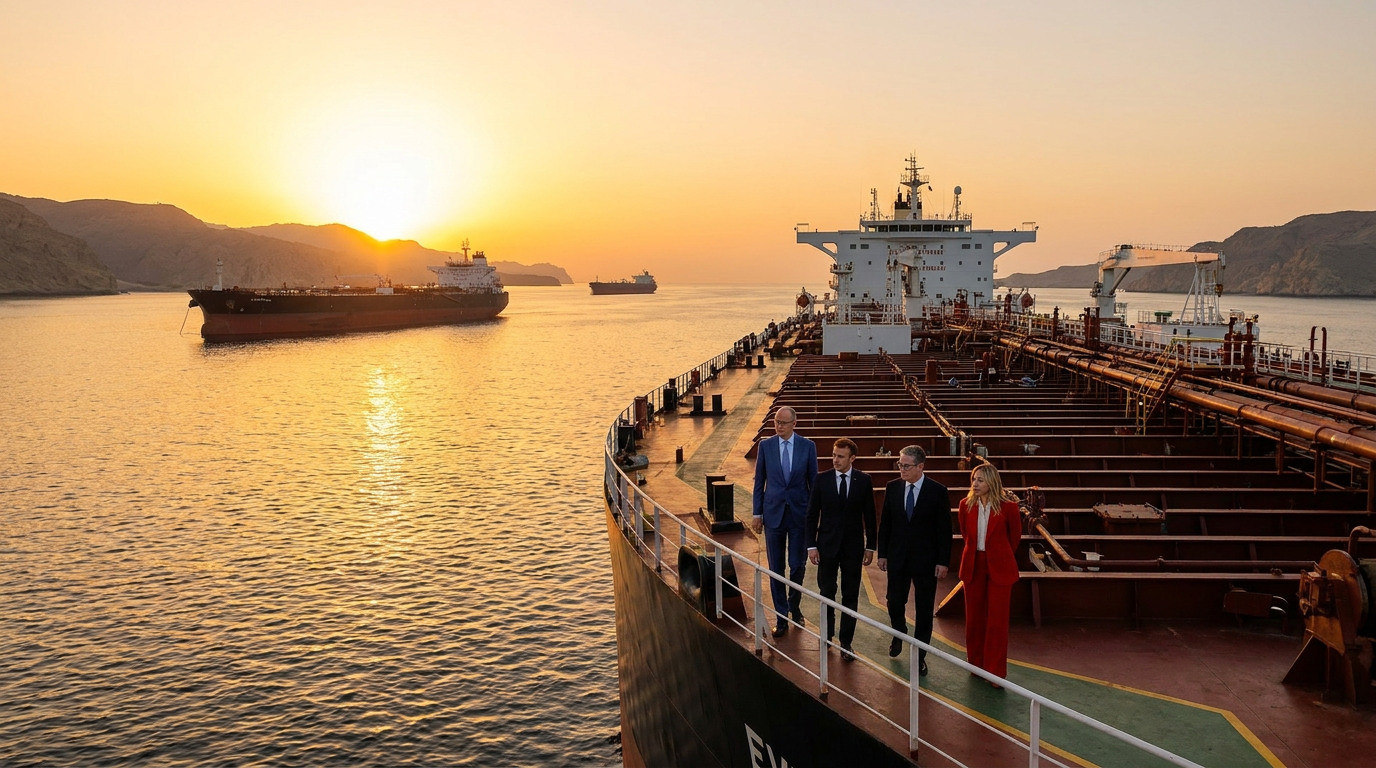
The immediate economic stakes are massive. The Strait of Hormuz is a critical maritime chokepoint that handles approximately 20% of the world's petroleum supply. Its closure in late February sent shockwaves through the global economy, fueling inflation and market panic.[8]
Following the deal's announcement, global markets breathed a collective sigh of relief. Brent crude oil prices plunged below $79 a barrel, erasing months of war-driven premiums, while European and US equities rallied on the prospect of stabilized energy costs.[1][8]
The core mechanism of the interim deal involves synchronized, immediate concessions. The United States has officially lifted its naval blockade on all maritime traffic entering and exiting Iranian ports. In exchange, Iran has agreed to immediately reopen the Strait of Hormuz to commercial vessels.[3][4]

Crucially, the agreement grants Iran immediate economic relief. The US Treasury Department is mandated to issue waivers for the export of Iranian crude oil, petroleum products, and associated banking services. This allows Tehran to resume selling oil on the global market while the broader framework is negotiated.[4][7]
However, the memorandum is not a final peace treaty. Instead, it establishes a 60-day window for direct negotiations to resolve the conflict's most intractable issues, including the future of Iran's nuclear program and the unfreezing of Iranian assets.[4][7]
The agreement explicitly calls for the "immediate and permanent termination of military operations on all fronts, including in Lebanon." This clause effectively requires Iran to rein in Hezbollah, the Tehran-backed militant group that has been engaged in intense cross-border fighting with Israel.[4][6]
Yet, the 60-day clock has already hit a significant snag. Vice President JD Vance, tapped to lead the US negotiating team, was scheduled to fly to Obbürgen, Switzerland, to begin technical talks with his Iranian counterparts. That trip was abruptly delayed on Thursday evening.[2][5]

Vice President JD Vance, tapped to lead the US negotiating team, was scheduled to fly to Obbürgen, Switzerland, to begin technical talks with his Iranian counterparts.
The delay reportedly stems from Iranian protests over Israel's continued military operations in southern Lebanon. Iranian officials have indicated that their full compliance with the memorandum—particularly regarding the Strait of Hormuz—is contingent on Israel halting its campaign against Hezbollah.[5][6]
Israel, which is not a signatory to the US-Iran deal, has fiercely criticized the agreement. Israeli officials view the memorandum as a capitulation that provides Tehran with a financial windfall while leaving Hezbollah's military infrastructure intact on Israel's northern border.[3][6]
The Israeli pushback prompted a sharp rebuke from the US administration. Vice President Vance warned Israeli leaders to "wake up and smell the reality," emphasizing that the United States remains Israel's only powerful ally and that the deal was necessary to avoid a global economic catastrophe.[3]
Meanwhile, the maritime industry is navigating the newly reopened waters with cautious optimism. While US Central Command confirmed the cessation of blockade enforcement, tanker operators remain wary of the estimated 80 mines that still need to be cleared from the central route of the Strait.[6]

Furthermore, the long-term status of the Strait remains contested. The memorandum stipulates that Iran must ensure toll-free passage for commercial vessels for the next 60 days. However, Iranian Parliament Speaker Mohammad Bagher Ghalibaf has publicly stated that Iran intends to charge "service fees" once the fee-free period expires.[4][8]
The 60-day negotiation window will also address a proposed $300 billion regional fund for Iran's reconstruction and economic development. The US has indicated it will not directly invest in the fund, leaving the financial burden to regional partners and private investors—a prospect that remains highly uncertain.[6][7]
The most critical unresolved issue is Iran's nuclear program. The memorandum freezes Iran's nuclear weapons development, but Tehran has yet to agree to ship out its stockpile of highly enriched uranium, which is reportedly buried under the rubble of previous US military strikes.[5][6]

The International Atomic Energy Agency (IAEA) has welcomed the interim deal, with Director General Rafael Mariano Grossi stating that the "technical work can start for real." However, verifying Iran's compliance will require unprecedented access to its nuclear facilities, a persistent sticking point in past negotiations.[3]
As the 60-day countdown begins, the global economy has received a vital lifeline. Yet, the delayed Swiss talks and the ongoing friction over Lebanon underscore the fragility of the ceasefire. The path from an interim memorandum to a permanent peace agreement remains fraught with geopolitical landmines.[1][2]
How we got here
Feb 28, 2026
The US-Iran conflict begins, leading to the closure of the Strait of Hormuz and a global energy crisis.
June 17, 2026
The US and Iran sign the 14-point Islamabad Memorandum of Understanding to halt hostilities.
June 18, 2026
US Central Command officially lifts the naval blockade on all maritime traffic entering and exiting Iranian ports.
June 19, 2026
Planned technical talks in Switzerland hit a snag as Vice President JD Vance delays his trip amid regional friction.
Viewpoints in depth
The US Administration's View
The White House prioritizes ending the economic hemorrhage and stabilizing global energy markets.
For the US administration, the interim deal is a necessary pragmatic step to halt a 110-day war that was devastating the global economy. By securing the immediate reopening of the Strait of Hormuz, the administration aims to lower inflation and stabilize oil prices. Officials argue that granting temporary oil waivers is a worthwhile trade-off to bring Iran to the negotiating table for a permanent settlement regarding its nuclear program.
The Iranian Leadership's View
Tehran views the deal as a victory that shatters the US blockade and restores its oil revenue.
Iranian officials are framing the Islamabad Memorandum as a strategic win that forces the US to lift its naval blockade and grant immediate sanctions relief. While agreeing to a 60-day toll-free period in the Strait of Hormuz, Iranian leaders have explicitly stated their intention to assert long-term sovereignty over the waterway by eventually charging 'service fees.' Furthermore, Tehran is using its leverage to demand that Israel halt its military operations in Lebanon.
The Israeli Government's View
Israel sees the memorandum as a dangerous capitulation that empowers its regional adversaries.
Israeli leaders are fiercely critical of the interim agreement, arguing that it provides Tehran with a massive financial windfall without dismantling its proxy networks. Israel is particularly alarmed by the clause demanding an end to military operations in Lebanon, which it views as an unacceptable constraint on its ability to neutralize Hezbollah. The resulting friction has led to unusually public rebukes between Washington and Jerusalem.
What we don't know
- Whether Iran will actually attempt to charge tolls in the Strait of Hormuz after the 60-day window expires.
- If Israel will agree to halt its military operations in Lebanon to satisfy the terms of the US-Iran memorandum.
- How the proposed $300 billion regional reconstruction fund for Iran will be financed.
- Whether Tehran will ultimately agree to ship its highly enriched uranium out of the country.
Key terms
- Strait of Hormuz
- A narrow, strategically critical waterway between the Persian Gulf and the Gulf of Oman, through which approximately 20% of the world's oil supply passes.
- Naval Blockade
- A military operation in which ships are used to prevent vessels from entering or leaving a country's ports; the US lifted its blockade on Iran as part of the deal.
- Sanctions Waiver
- A temporary exemption granted by the US government allowing Iran to sell crude oil and petroleum products without facing financial penalties.
- Highly Enriched Uranium
- Uranium that has been processed to a purity level capable of being used in nuclear weapons, a key focus of the upcoming 60-day negotiations.
Frequently asked
What is the Islamabad Memorandum of Understanding?
It is a 14-point interim peace agreement signed by the US and Iran to halt their 110-day war, lift the US naval blockade, and reopen the Strait of Hormuz.
Will Iran charge tolls for ships in the Strait of Hormuz?
The deal requires Iran to allow toll-free passage for 60 days. However, Iranian officials have stated they intend to charge 'service fees' once this period expires.
Why were the Swiss technical talks delayed?
Vice President JD Vance delayed his trip to Switzerland after Iran reportedly stalled sending its delegation in protest of Israel's ongoing military operations in Lebanon.
Does this deal permanently end Iran's nuclear program?
No. The agreement freezes nuclear weapons development and opens a 60-day window to negotiate a final, permanent settlement regarding Iran's nuclear capabilities.
Sources
Source coverage
8 outlets
3 viewpoints surfaced








[1]BloombergGlobal Markets & Maritime Industry
US-Iran MOU Soothes Market Stress: Markets Snapshot
Read on Bloomberg →[2]CNBCGlobal Markets & Maritime Industry
U.S.-Iran accord hits early snag after Swiss talks fail to proceed as planned
Read on CNBC →[3]The Washington PostUS Administration
Vance slams Israeli reaction to Iran deal as U.S. military lifts blockade
Read on The Washington Post →[4]The GuardianIranian Leadership
US-Iran deal takeaways: reopening the strait of Hormuz, waived oil sanctions and Lebanon
Read on The Guardian →[5]Associated PressUS Administration
Vance delays trip to Switzerland to lead new US talks with Iran on its nuclear program
Read on Associated Press →[6]CBS NewsIranian Leadership
Live Updates: U.S.-Iran deal signing sets stage for nuclear negotiations, but Vance did not travel Thursday night for talks
Read on CBS News →[7]The Japan TimesIranian Leadership
Iran to gain major financial relief under interim deal with U.S.
Read on The Japan Times →[8]ICISGlobal Markets & Maritime Industry
Oil prices fall after US, Iran sign interim peace agreement
Read on ICIS →


Every angle. Every day.
Get business stories with full source coverage and perspective breakdowns delivered to your inbox.