
The Science of Regrowing Teeth: How a New Antibody Drug Aims to Replace Dental Implants
A Japanese biotechnology startup has advanced an experimental drug into Phase II clinical trials that blocks a specific protein to awaken dormant tooth buds, offering a biological alternative to artificial implants.
By Factlen Editorial Team
- Regenerative Researchers
- Scientists focused on the biological potential of unlocking dormant developmental pathways.
- Practicing Dentists
- Clinicians who balance the excitement of future therapies with the immediate needs of patients.
- Bioethics & Accessibility Advocates
- Voices concerned with the equitable distribution of advanced medical breakthroughs.
What's not represented
- · Health Insurance Providers
- · Dental Implant Manufacturers
Why this matters
Tooth loss affects hundreds of millions of adults globally, currently requiring invasive and expensive artificial replacements. A biological drug that regenerates natural teeth would fundamentally transform dental care, shifting the industry from mechanical restoration to true biological healing.
Key points
- Japanese biotech Toregem BioPharma has advanced its experimental tooth-regrowing drug, TRG-035, into Phase II clinical trials.
- The intravenous antibody works by blocking USAG-1, a protein that naturally suppresses dormant tooth buds in the human jaw.
- Phase I safety trials concluded in early 2026 with no serious adverse events reported among the 30 adult male participants.
- While promising, a commercially available biological alternative to dental implants is likely still years away from reaching neighborhood clinics.
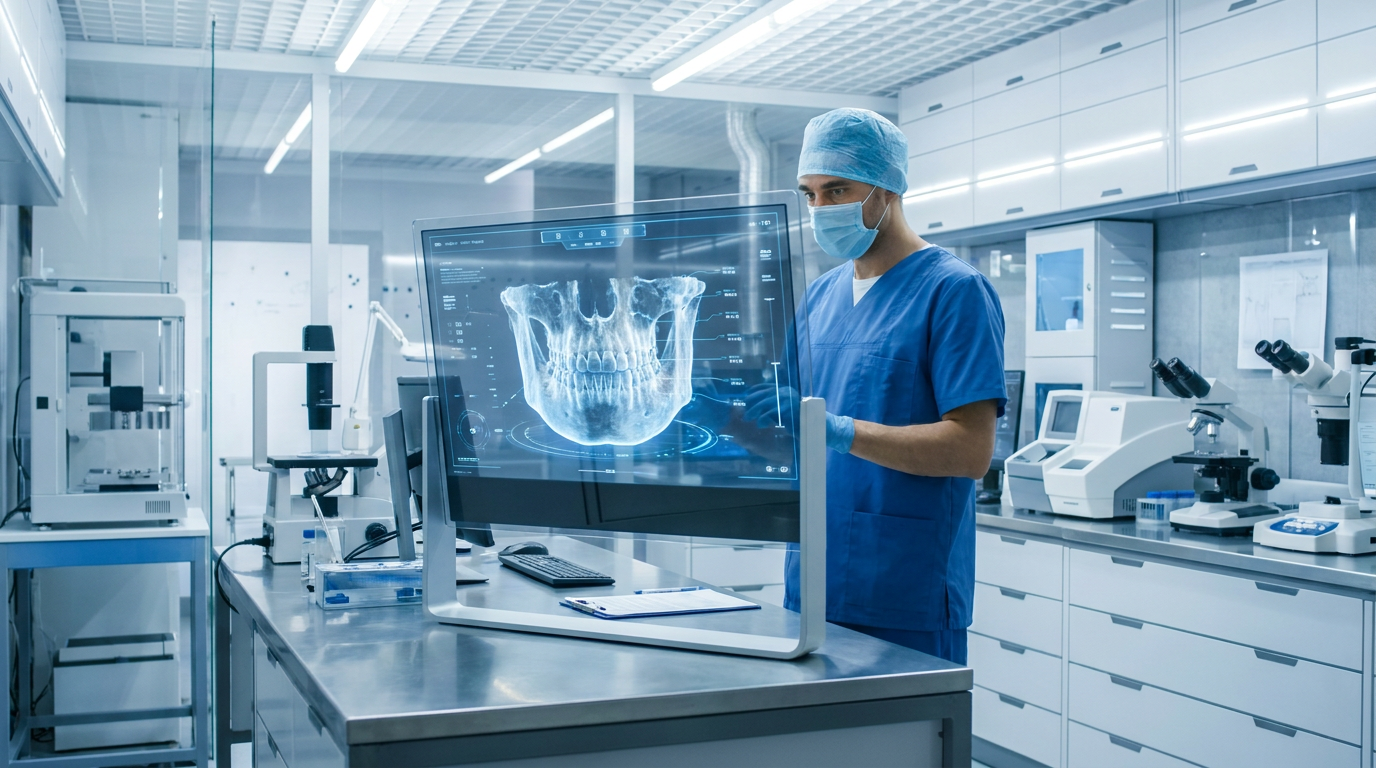
For decades, the loss of a permanent tooth has presented a permanent mechanical problem requiring a mechanical solution. Patients have had to rely on artificial replacements—ranging from removable dentures and fixed bridges to surgically embedded titanium implants. While modern dental prosthetics are highly effective at restoring basic chewing function and aesthetic appearance, they remain fundamentally artificial. They cannot replicate the biological complexity, sensory feedback, or physiological remodeling capabilities of a living, natural tooth. Furthermore, implants require sufficient jawbone density to anchor properly, a condition that often deteriorates after prolonged tooth loss. But human biology might hold a dormant backup plan that could render these artificial solutions obsolete. A new frontier in regenerative medicine is rapidly moving from theoretical animal models to human clinical trials, aiming to achieve what was once considered science fiction: regrowing natural teeth directly from within the patient's own jawbone.[3][6][7][8]
At the center of this groundbreaking research is a Japanese biotechnology startup named Toregem Biopharma, alongside an experimental intravenous antibody drug candidate known as TRG-035. Founded by dentist-researchers from Kyoto University, the company has spent years translating laboratory discoveries into viable clinical therapies. In June 2026, the Kyoto University spin-out announced a significant milestone, revealing it had raised an additional $5.3 million in funding. This capital injection brought the company's total funding to over $29 million and provided the necessary resources to advance TRG-035 into Phase II clinical trials. If this experimental therapy ultimately proves successful in human subjects, it would become the world's first drug-based biological alternative to dental implants, fundamentally transforming the landscape of restorative dentistry.[2][4][8]
The foundational science behind the TRG-035 drug hinges on the manipulation of a specific protein known as USAG-1, or uterine sensitization-associated gene-1. In the broader animal kingdom, many vertebrates—such as sharks, alligators, and certain species of rodents—possess the remarkable ability to regenerate their teeth continuously throughout their lifespans. Humans, however, typically lose this regenerative capacity entirely after their permanent adult set of teeth arrives during childhood and adolescence. Researchers investigating this evolutionary divergence discovered that the USAG-1 protein acts as a biological brake in the human body. It actively suppresses dormant "tooth buds"—the cellular precursors to fully formed teeth—that remain hidden within the human jawbone, preventing them from developing into new dental structures even when a permanent tooth is lost.[1][3]

By understanding the suppressive role of this protein, scientists hypothesized a novel therapeutic pathway: if they could administer an antibody that specifically targets and blocks the USAG-1 protein, they could effectively release this biological brake. Doing so would theoretically awaken the dormant tooth buds, allowing the body's natural developmental pathways to resume and construct a new tooth from scratch. A landmark 2021 study published in the journal Science Advances proved this concept definitively in animal models. Researchers demonstrated that mice suffering from congenital tooth agenesis—a genetic condition that causes them to be born missing several teeth—successfully grew new, fully functional teeth when treated with the USAG-1 blocking antibody. The newly formed teeth exhibited natural enamel, dentin, and root structures, providing the crucial proof-of-concept needed to advance the research toward human applications.[1][4]
Transitioning a therapy from successful mouse models to human applications requires a rigorous, multi-stage process of safety testing and clinical validation. To that end, Phase I clinical trials for TRG-035 officially commenced in late 2024 at Kyoto University Hospital. This initial safety trial enrolled a highly specific cohort: 30 healthy adult men between the ages of 30 and 64, each of whom was missing at least one permanent tooth. The experimental drug was administered intravenously, with researchers closely monitoring the participants for any signs of toxicity, adverse immune reactions, or unintended side effects. As of early 2026, the data collection phase for this initial trial concluded with highly encouraging results. No serious adverse events were reported among the participants, providing the critical safety clearance required to move forward into efficacy testing.[2][5]
Transitioning a therapy from successful mouse models to human applications requires a rigorous, multi-stage process of safety testing and clinical validation.
With the safety profile established, the upcoming Phase II clinical trials will pivot to testing the drug's actual effectiveness in stimulating tooth growth. These trials will focus specifically on patients suffering from congenital edentulism, a rare genetic condition where individuals are born missing six or more permanent teeth. By targeting this specific population, researchers can establish a clear genetic baseline to measure the drug's regenerative capabilities without the confounding variables of gum disease or physical trauma. For these patients, who often face a lifetime of complex and painful reconstructive surgeries starting from a young age, a biological therapy could offer a life-altering alternative to decades of prosthetic management.[2][3][4][8]

If TRG-035 proves successful in generating new teeth for patients with congenital agenesis, the long-term vision is far more expansive. Researchers ultimately hope to expand the drug's application to treat the general population, offering a biological solution for the millions of adults who suffer from tooth loss caused by severe decay, advanced periodontal disease, or physical accidents. The implications for public health are staggering. Globally, severe tooth loss affects a substantial portion of the aging population, leading to nutritional deficiencies, cognitive decline, and a significantly reduced quality of life. A simple intravenous treatment that could restore a natural bite would represent one of the most significant medical breakthroughs of the 21st century.[2][3][8]
While targeted antibody therapies like TRG-035 are capturing global headlines, they are not the only approach being explored in the quest for dental regeneration. The broader field of tissue engineering is also advancing rapidly, utilizing the body's own stem cells to rebuild damaged dental structures from the inside out. Dental pulp stem cells (DPSCs), which are found inside the soft, vascular tissue of existing teeth, possess the unique biological ability to differentiate into odontoblasts—the specialized cells responsible for producing dentin. Because these cells are easily accessible from extracted wisdom teeth or naturally shed baby teeth, they offer a highly promising and ethically sound source for regenerative therapies.[6][7]
Researchers are currently experimenting with sophisticated biocompatible scaffolds, which are 3D structures made of natural collagen or synthetic polymers. By seeding these scaffolds with DPSCs and specific growth factors, scientists can implant them into the jawbone to act as a biological blueprint. As the stem cells multiply and differentiate, they gradually replace the dissolving scaffold with living dental tissue, guiding the cellular growth into the precise shape and structure of a natural tooth. While still largely confined to laboratory settings and animal models, this tissue engineering approach offers a complementary pathway to the antibody-driven regeneration pioneered by Toregem Biopharma.[6][7]

Despite the immense promise of these regenerative technologies, practicing dentists and medical researchers urge the public to maintain realistic expectations regarding timelines. A commercially available, FDA-approved tooth-regrowing drug is highly unlikely to reach neighborhood dental clinics before the end of the decade. Significant scientific and regulatory hurdles remain to be cleared. Beyond securing approvals and conducting long-term safety monitoring, scientists must ensure that a regenerated tooth can perfectly integrate with the jawbone's complex biomechanics. A new tooth must establish secure connections with local blood vessels and periodontal ligaments to achieve natural strength, stability, and sensory function—a delicate biological dance that clinical trials have yet to fully validate in humans.[2][6][7]
Furthermore, bioethicists and healthcare advocates are already raising questions about the eventual accessibility of these advanced therapies. When a tooth regeneration drug finally reaches the commercial market, it will likely carry a premium price tag, potentially limiting access to wealthy patients while lower-income populations continue to rely on traditional dentures. Ensuring that insurance providers recognize regenerative dentistry as a necessary medical intervention, rather than an elective cosmetic procedure, will be a crucial battleground in the coming years. Until those economic and regulatory frameworks are established, the benefits of this scientific breakthrough may remain unevenly distributed.[8]

For the foreseeable future, titanium implants and advanced prosthetics will remain the undisputed gold standard for tooth replacement. Patients currently suffering from tooth loss are strongly advised by dental professionals not to delay necessary restorative treatments in the hope of waiting for a miracle drug. Yet, the successful completion of Phase I trials for TRG-035 marks a historic milestone in regenerative medicine. It represents a fundamental paradigm shift in how the medical community views tooth loss—no longer as a permanent mechanical deficit, but as a biological process that can finally be restarted.[2][3][7][8]
How we got here
2021
A landmark study in Science Advances demonstrates that blocking the USAG-1 protein regrows teeth in mice.
Late 2024
Phase I clinical trials for the TRG-035 antibody begin at Kyoto University Hospital to test safety in healthy adult men.
Early 2026
Phase I data collection concludes with no serious adverse events reported.
June 2026
Toregem BioPharma raises an additional $5.3 million to launch Phase II efficacy trials for patients with congenital tooth agenesis.
Viewpoints in depth
Regenerative Researchers
Scientists focused on the biological potential of unlocking dormant developmental pathways.
Researchers in this camp view the USAG-1 antibody as a paradigm shift in developmental biology. They argue that because humans retain the genetic blueprint and dormant tooth buds necessary for odontogenesis, tooth loss should be treated as a reversible biological suppression rather than a permanent structural deficit. Their focus is on proving that targeted protein inhibition can safely reawaken these pathways without triggering uncontrolled cellular growth elsewhere in the body.
Practicing Dentists
Clinicians who balance the excitement of future therapies with the immediate needs of patients.
While optimistic about the long-term potential of regenerative medicine, practicing dentists emphasize that titanium implants and modern prosthetics remain the standard of care. They caution against patients delaying necessary extractions or restorative work in hopes of a 'miracle drug' that is still years away from commercial availability. Furthermore, they note that a regenerated tooth must perfectly integrate with the complex biomechanics of the jaw, a hurdle that clinical trials have yet to fully address.
Bioethics & Accessibility Advocates
Voices concerned with the equitable distribution of advanced medical breakthroughs.
Advocates in this space warn that when tooth regeneration therapies finally reach the market, they will likely carry exorbitant price tags. They argue that because severe tooth loss disproportionately affects lower-income populations with limited access to preventative dental care, a breakthrough drug might initially only benefit wealthy patients. They are pushing for early policy discussions on how to ensure insurance coverage and equitable access for advanced regenerative treatments.
What we don't know
- Whether the newly regenerated teeth will perfectly integrate with the jawbone's complex biomechanics and nerve networks in human subjects.
- How much the therapy will cost once it reaches the commercial market, and whether insurance providers will cover it.
- If the drug will be equally effective for older adults who have lost teeth due to severe periodontal disease rather than genetic conditions.
Key terms
- USAG-1
- A protein that acts as a biological brake, suppressing the development of dormant tooth buds in humans.
- Congenital tooth agenesis
- A genetic condition where individuals are born missing one or more permanent teeth.
- Odontogenesis
- The biological process of tooth development, from the initial cellular stages to the eruption of the tooth.
- Dental pulp stem cells (DPSCs)
- Stem cells found inside the soft tissue of teeth that have the ability to develop into dentin-producing cells.
- Biocompatible scaffold
- A 3D structure made of natural or synthetic materials used to support and guide the growth of new tissue.
Frequently asked
Is the tooth regrowth drug available now?
No. The drug is currently entering Phase II clinical trials in Japan and is not expected to be commercially available before the end of the decade.
Who will the Phase II trials test the drug on?
The upcoming trials will focus on patients with congenital edentulism, a rare genetic condition where individuals are born missing six or more permanent teeth.
Could this eventually replace dental implants?
If successful in broader clinical trials, researchers hope the therapy could eventually treat general tooth loss caused by decay or trauma, offering a biological alternative to implants.
How is the drug administered?
In the Phase I trials, the TRG-035 antibody was administered intravenously.
Sources
Source coverage
8 outlets
3 viewpoints surfaced







[1]Science AdvancesRegenerative Researchers
Anti–USAG-1 therapy for tooth regeneration through enhanced BMP signaling
Read on Science Advances →[2]DocTrust Medical NewsPracticing Dentists
Tooth Regrowth Drug TRG-035 Enters Phase II: What's Actually Proven in 2026
Read on DocTrust Medical News →[3]Oral Sphere JournalRegenerative Researchers
USAG-1 and Regenerative Dentistry: Mechanisms & Trials
Read on Oral Sphere Journal →[4]Toregem BiopharmaRegenerative Researchers
TRG-035 Clinical Pipeline and Development
Read on Toregem Biopharma →[5]Kyoto University HospitalRegenerative Researchers
Phase I/II Clinical Trials for Tooth Regeneration Therapy
Read on Kyoto University Hospital →[6]National Institutes of HealthRegenerative Researchers
Stem cells and tissue engineering in dental regeneration
Read on National Institutes of Health →[7]American Dental AssociationPracticing Dentists
Regenerative Dentistry and Stem Cell Therapy
Read on American Dental Association →[8]Factlen Editorial TeamBioethics & Accessibility Advocates
Synthesis by Factlen editorial team
Read on Factlen Editorial Team →
More in health
See all 8 stories →Regenerative Medicine
A Japanese Biotech Company is Advancing Human Trials for a Tooth-Regrowing Drug
6 sources
Exercise Mimetics
The Evidence for 'Exercise in a Pill': How AMPK Activators Are Rewiring Longevity Science
7 sources
Exercise Mimetics
The Science of Exercise Mimetics: How Researchers Are Bottling the Benefits of a Workout
7 sources
Dementia Research
Common Shingles Vaccine Linked to 24% Lower Dementia Risk in Major Study
6 sources

Every angle. Every day.
Get health stories with full source coverage and perspective breakdowns delivered to your inbox.