
How Open-Source Intelligence (OSINT) is Empowering Citizens to Verify the News
Once the exclusive domain of spy agencies, open-source intelligence tools are now being used by journalists and everyday internet users to debunk misinformation, track environmental damage, and verify global events.
By Factlen Editorial Team
- OSINT Practitioners
- Advocates for radical transparency who believe open data is the ultimate defense against disinformation.
- Media Literacy Educators
- Academics and educators focused on integrating verification skills into public education.
- Privacy & Ethics Advocates
- Experts who warn about the unintended consequences of democratizing intelligence-gathering tools.
- Intelligence Analysts
- Security professionals who view open-source intelligence as a highly cost-effective supplement to classified methods.
What's not represented
- · Authoritarian Governments
- · Corporate Entities Subject to OSINT Scrutiny
Why this matters
In an era of deepfakes and viral misinformation, the ability to independently verify claims is no longer just for journalists. Understanding how open-source intelligence works empowers everyday readers to navigate the internet critically and confidently.
Key points
- Open-source intelligence (OSINT) uses publicly available data like satellite imagery and social media to verify global events.
- Tools once exclusive to spy agencies are now accessible to journalists and everyday citizens.
- Geolocation and metadata analysis allow investigators to definitively debunk geographical and chronological disinformation.
- The democratization of OSINT is shifting media literacy from passive consumption to active verification.
- Ethical concerns remain regarding the risks of doxxing, amateur misidentification, and vicarious trauma among researchers.
Intelligence gathering was once the exclusive domain of state spy agencies, reliant on classified satellites, covert operatives, and intercepted communications. Today, the landscape of information has fundamentally shifted. The proliferation of smartphones, social media, and open data has democratized the ability to uncover hidden truths. This shift has given rise to Open-Source Intelligence (OSINT)—the practice of collecting and analyzing publicly available information to produce actionable insights. What was once considered the least glamorous discipline of military intelligence has become arguably the most transformative force in modern investigative journalism and citizen media literacy.[6]
The core premise of OSINT is both simple and revolutionary: the evidence needed to verify global events is often already hiding in plain sight. Every day, billions of internet-connected devices capture videos, images, and data points. By combining this user-generated content with publicly accessible tools—such as commercial satellite imagery, flight tracking databases, and corporate registries—investigators can reconstruct events with astonishing accuracy. This methodology bypasses the need for anonymous sources or leaked classified documents, relying instead on data that anyone with an internet connection can theoretically access and verify.[2][6]
The modern OSINT movement was largely pioneered by organizations like Bellingcat, founded in 2014 by Eliot Higgins. Operating initially from his home in England, Higgins demonstrated that a small network of online investigators could produce intelligence-grade analysis. Bellingcat's early work on the Syrian civil war and the downing of Malaysia Airlines Flight 17 (MH17) over Ukraine proved that open-source methods could identify perpetrators and trace weapon systems long before official commissions released their findings. By making their research methods verifiable and replicable, they established a new standard for evidence-based reporting.[1][2]

The OSINT toolkit is vast and continuously evolving. Social media platforms serve as the richest initial sources of data, capturing raw, unfiltered moments from conflict zones, protests, and natural disasters. However, finding the data is only the first step; the true skill lies in verification. Investigators use reverse image searches to ensure a photo hasn't been recycled from a past event, and they extract metadata to confirm when and how a file was created. This rigorous authentication process is crucial in an era where misinformation and out-of-context media can spread globally in minutes.[3][6][7]
Geolocation is perhaps the most iconic OSINT technique. When a video surfaces claiming to show a specific event, analysts dissect the visual clues within the frame. They look at the angle of shadows to determine the time of day, identify distinct architectural features, and match the topography against satellite imagery from platforms like Google Earth or Sentinel Hub. By triangulating these data points, investigators can definitively prove whether a video was filmed where the uploader claims it was, effectively neutralizing geographical disinformation.[3][4]
Beyond visual media, OSINT relies heavily on public registries and tracking data to follow the money and monitor logistics. Flight and ship tracking platforms, such as ADS-B Exchange and MarineTraffic, allow researchers to monitor the movements of oligarchs' yachts, military transport planes, and sanctions-busting cargo ships in real time. Meanwhile, investigative consortiums utilize international corporate registries to trace shell companies, uncover hidden offshore accounts, and expose high-level corruption. This data-driven approach turns abstract allegations of financial crimes into concrete, documented trails of accountability that authorities can no longer ignore.[6]

Beyond visual media, OSINT relies heavily on public registries and tracking data to follow the money and monitor logistics.
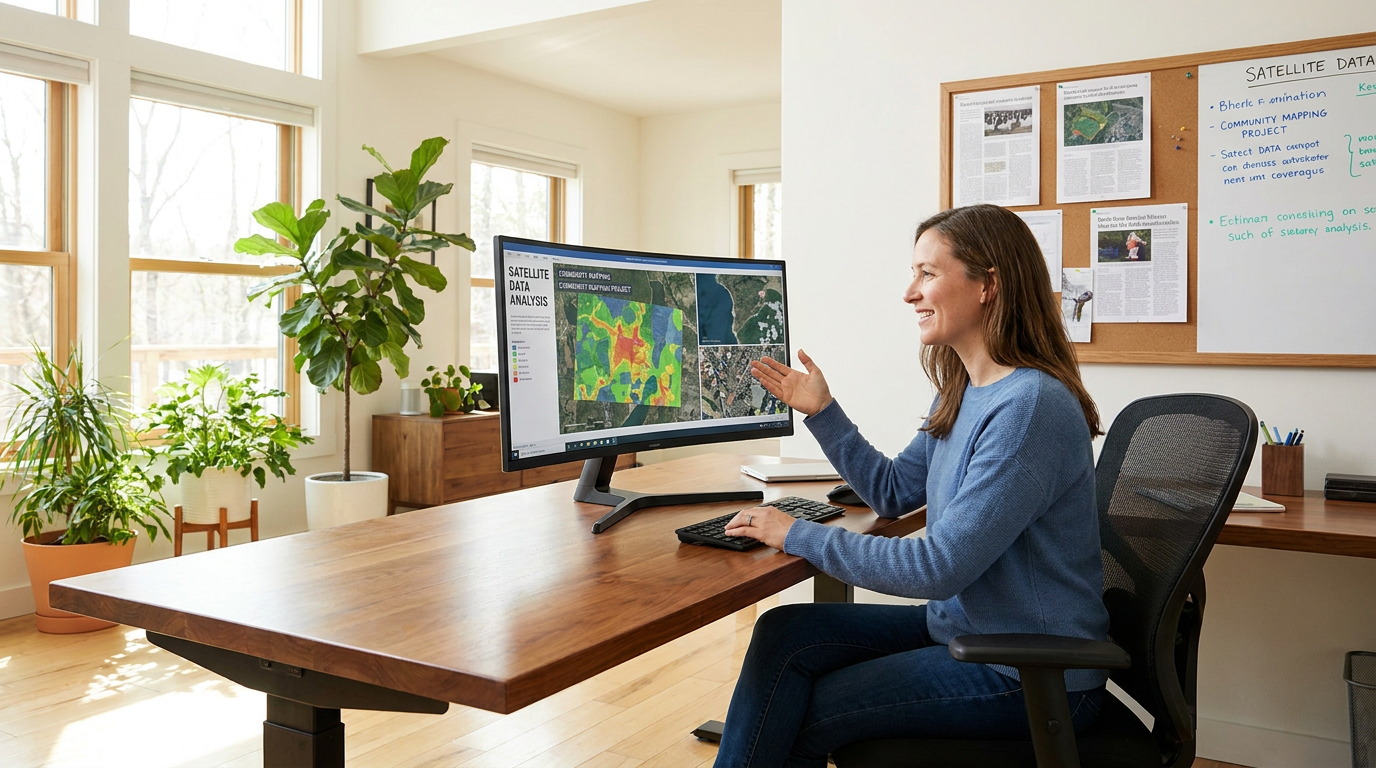
While OSINT is frequently associated with conflict reporting and global security, its applications are rapidly expanding into environmental monitoring and local civic accountability. Citizens and local journalists are increasingly using satellite data to reveal the progression of industrial pollution, illegal logging, and toxic spills in areas where official records are either non-existent or actively suppressed by authorities. When a local government claims a development project is on schedule, or a corporation insists it is complying with environmental regulations, public sensor data and spatial analysis tools allow everyday citizens to verify those claims independently.[4][6]
This democratization of investigative tools represents a significant evolution in media literacy. Historically, media literacy focused on teaching the public to critically evaluate the messages produced by traditional mass media. Today, the focus is shifting toward active verification. Instead of passively consuming news or waiting for institutional fact-checkers to debunk a viral claim, internet users are learning the skills to investigate the primary evidence themselves. This proactive approach empowers citizens to navigate a polluted information ecosystem with greater confidence.[6][9]
The integration of OSINT into mainstream journalism is also accelerating. A recent survey by the European Journalism Centre found that nearly 60 percent of data journalists now use OSINT tools to verify sources, images, or videos. Furthermore, 72 percent of these users rely heavily on public government data and reports, highlighting the critical role that open-data portals play in facilitating transparency. By authenticating user-generated content before publication, newsrooms are leveraging OSINT to maintain credibility and trust with their audiences.[7]

However, the OSINT ecosystem is not without its challenges and ethical dilemmas. The sheer volume of raw data requires rigorous filtering, and the decentralized nature of crowd-sourced investigations can sometimes lead to misidentification or the spread of unverified theories by amateur sleuths. Furthermore, the tools used to expose corruption or war crimes can be weaponized by malicious actors to dox vulnerable individuals or fuel targeted harassment campaigns. Establishing ethical guidelines and standardized methodologies remains an ongoing priority for the community.[5][6][8]
There is also a significant, often overlooked psychological toll associated with conducting open-source investigations. Analysts and citizen volunteers who spend hours scrutinizing graphic, unfiltered footage from conflict zones or documenting human rights abuses are highly susceptible to vicarious trauma. The indirect, repeated exposure to the suffering of others can lead to severe burnout, anxiety, and long-term mental health challenges. In response, leading OSINT organizations are beginning to develop specific protocols, mandatory breaks, and robust psychological support systems to protect the well-being of their researchers.[2]
Looking ahead, the rise of generative artificial intelligence presents both a threat and an opportunity for the OSINT community. As AI tools become capable of producing hyper-realistic fake images, audio, and video en masse, the traditional markers of authenticity will be tested. In response, OSINT practitioners are developing new forensic techniques to detect AI manipulation, analyzing pixel-level inconsistencies and synthetic artifacts. The collaborative, transparent nature of open-source intelligence will likely serve as the primary defense against this next generation of digital deception.[2][3]

Ultimately, the true power of open-source intelligence lies not just in the sophisticated technology, but in its fundamentally collaborative ethos. It replaces the traditional journalistic model of fierce competition and exclusive, anonymous sources with a culture of radical transparency, shared methodology, and peer review. By equipping a global network of journalists, academic researchers, and everyday citizens with the tools to uncover and verify the truth, open-source intelligence is actively building a more resilient, democratic, and accountable information landscape for the future.[2][4]
How we got here
2014
Eliot Higgins founds Bellingcat, popularizing the use of open-source intelligence in civilian investigative journalism.
2018
OSINT techniques are used to identify the suspects in the poison attack on Russian spy Sergei Skripal.
2022
The invasion of Ukraine triggers a massive surge in citizen OSINT, with volunteers tracking military movements and documenting war crimes.
2024
A European Journalism Centre survey reveals that nearly 60% of data journalists now rely on OSINT tools to verify sources and media.
Viewpoints in depth
OSINT Practitioners
Advocates for radical transparency who believe open data is the ultimate defense against disinformation.
For investigative networks and citizen journalists, the core philosophy of OSINT is that the truth is already out there, waiting to be assembled. They argue that traditional journalism's reliance on anonymous sources is increasingly outdated when primary evidence—satellite imagery, flight logs, and social media metadata—is publicly accessible. By making their methodologies completely transparent and replicable, practitioners believe they can build a more resilient, trust-based information ecosystem where anyone can verify the facts for themselves.
Privacy & Ethics Advocates
Experts who warn about the unintended consequences of democratizing intelligence-gathering tools.
While acknowledging the power of OSINT to expose corruption and war crimes, ethics advocates highlight significant risks. The same tools used to track oligarchs can be weaponized by malicious actors to dox vulnerable individuals or stalk private citizens. Furthermore, the decentralized nature of crowd-sourced investigations can lead to dangerous misidentifications by amateur sleuths, as seen in various high-profile online witch hunts. There is also growing concern over 'vicarious trauma'—the psychological toll inflicted on volunteers who spend hours analyzing graphic or disturbing open-source footage.
Media Literacy Educators
Academics and educators focused on integrating verification skills into public education.
Educators view OSINT not just as a tool for elite journalists, but as a fundamental civic skill for the 21st century. They argue that traditional media literacy—which often focuses on identifying bias in news articles—is no longer sufficient in an era of deepfakes and algorithmic feeds. By teaching students and the general public how to perform reverse image searches, check metadata, and geolocate videos, educators aim to create a proactive citizenry capable of independently debunking viral misinformation before it spreads.
What we don't know
- How effectively OSINT methodologies will scale to combat the incoming wave of hyper-realistic, AI-generated deepfakes.
- Whether social media platforms will continue to allow open access to their data, or if API restrictions will hinder future open-source investigations.
Key terms
- OSINT (Open-Source Intelligence)
- The collection and analysis of publicly available data—such as social media, satellite imagery, and public records—to produce actionable intelligence.
- Geolocation
- The process of identifying the real-world geographic location of an object or event depicted in a photo or video by analyzing visual clues and cross-referencing maps.
- Metadata
- Hidden data embedded within a digital file, such as a photograph, that can reveal information about when, where, and how the file was created.
- Vicarious Trauma
- The psychological distress and emotional residue caused by indirect exposure to traumatic events, often experienced by analysts reviewing graphic open-source footage.
- Grey Literature
- Research and reports produced by organizations outside of traditional commercial or academic publishing channels, such as government white papers or NGO reports.
Frequently asked
Is open-source intelligence the same as hacking?
No. OSINT relies entirely on publicly available, legally accessible information. Hacking involves illegally breaching private networks or bypassing security systems to steal classified or private data.
Can anyone learn how to use OSINT tools?
Yes. Many of the most powerful OSINT tools, such as Google Earth, reverse image search engines, and public flight trackers, are free and accessible to anyone with an internet connection.
How does OSINT help combat AI deepfakes?
Investigators use OSINT techniques to analyze the metadata of suspected deepfakes, reverse-search the origins of the imagery, and look for physical inconsistencies—like incorrect shadows or impossible geography—that AI models often generate.
What is the biggest risk of citizen OSINT investigations?
The primary risks are misidentification by untrained amateurs, the potential for doxxing innocent individuals, and the psychological toll of viewing traumatic footage during investigations.
Sources
Source coverage
10 outlets
4 viewpoints surfaced










[1]Upgrade DemocracyOSINT Practitioners
Bellingcat: OSINT methods explainer
Read on Upgrade Democracy →[2]Pmayr BlogOSINT Practitioners
We are Bellingcat and the OSINT method
Read on Pmayr Blog →[3]MediumOSINT Practitioners
Uncovering Hidden Clues: An OSINT Approach to Image Investigation
Read on Medium →[4]Goethe-InstitutMedia Literacy Educators
Inside Bellingcat's OSINT Training
Read on Goethe-Institut →[5]Bridgewater State UniversityPrivacy & Ethics Advocates
Policy Considerations of Open-Source Intelligence
Read on Bridgewater State University →[6]Model DiplomatOSINT Practitioners
From Spycraft to Citizen Investigation
Read on Model Diplomat →[7]European Journalism CentreMedia Literacy Educators
OSINT usage in modern journalism
Read on European Journalism Centre →[8]European UnionPrivacy & Ethics Advocates
OSINT and open data portals: a powerful alliance
Read on European Union →[9]National Institutes of HealthMedia Literacy Educators
Media literacy interventions: A meta-analysis
Read on National Institutes of Health →[10]Factlen Editorial TeamIntelligence Analysts
Synthesis by Factlen editorial team
Read on Factlen Editorial Team →
Every angle. Every day.
Get meta stories with full source coverage and perspective breakdowns delivered to your inbox.