
The Evidence Pack: How Upzoning and Zoning Reforms Are Stabilizing City Rents
A growing body of peer-reviewed research from Minneapolis to Auckland confirms that legalizing denser housing significantly boosts supply and curtails rent growth.
By Factlen Editorial Team
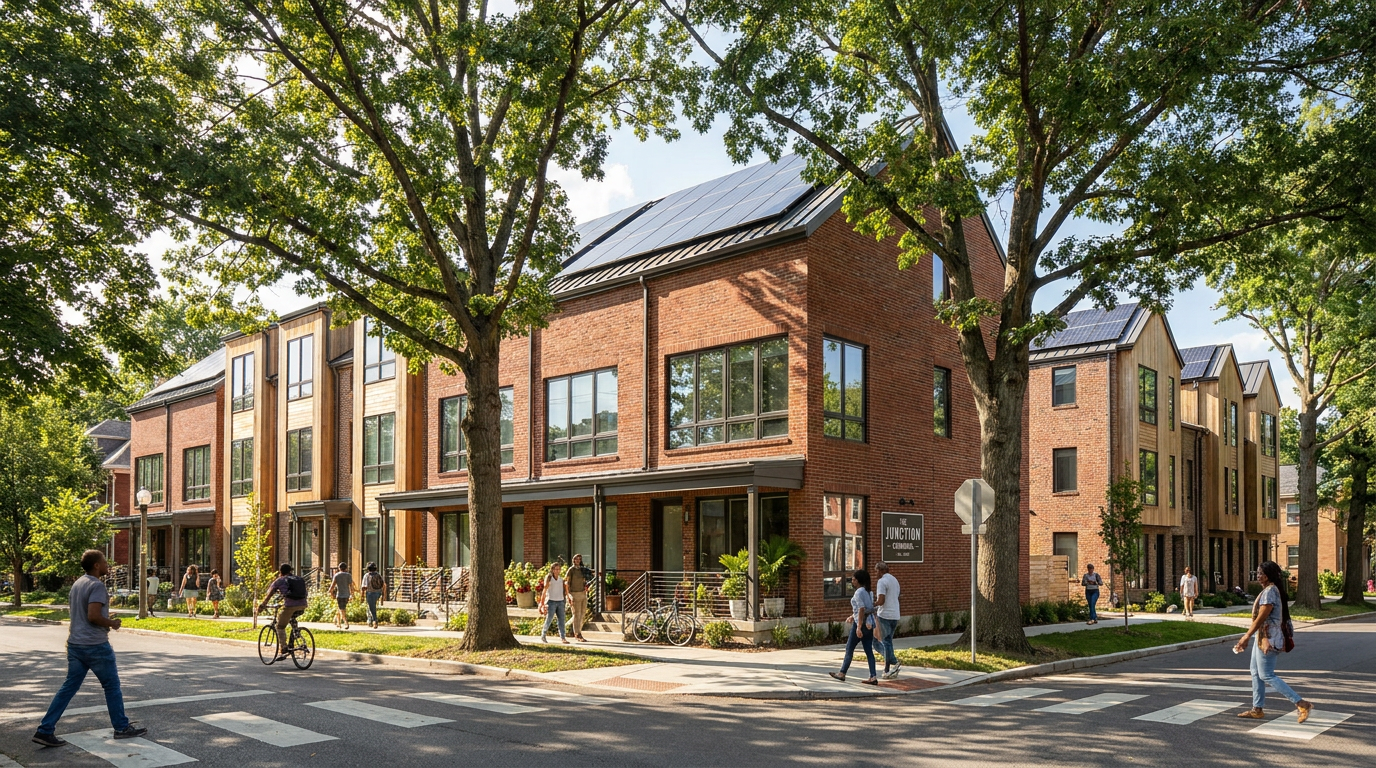
- Urban Economists & Planners
- Argue that upzoning is the most effective structural tool to increase housing supply and stabilize regional rents over the long term.
- Supply Skeptics & Tenant Advocates
- Warn that upzoning can inflate short-term land values and spur localized gentrification if not paired with strict affordable housing mandates.
- Housing Policy Analysts
- Emphasize a blended approach, noting that while zoning reform is essential, it must be combined with subsidies and demand-side interventions to protect vulnerable populations.
What's not represented
- · Incumbent Single-Family Homeowners
- · Real Estate Developers
- · Construction Trade Unions
Why this matters
Housing is the largest single expense for most families, and skyrocketing rents have driven a nationwide affordability crisis. The emerging evidence that zoning reform actually works offers a proven, replicable blueprint for cities to lower living costs and build more inclusive communities.
Key points
- Minneapolis rents grew at just 1.8% annually from 2020 to 2025 following the abolition of single-family-exclusive zoning.
- A synthetic control study found Minneapolis renters saved up to 34% compared to what they would have paid without the reforms.
- Auckland's 2016 upzoning reform generated nearly 27,000 additional building consents, doubling its prior construction rate.
- While upzoning increases overall supply, researchers note it must be paired with subsidies to protect the lowest-income renters from short-term displacement.
The housing affordability crisis is frequently framed as an intractable economic force, but a growing body of empirical research suggests it is largely a manufactured problem. For decades, restrictive land-use regulations and single-family zoning laws have artificially capped the number of homes that can be built in high-demand urban areas. Now, as a handful of pioneering cities reverse these restrictions—a process known as upzoning—economists are gathering hard data on the results. The evidence pack is solidifying: allowing more diverse, denser housing types directly correlates with stabilized rents and increased housing abundance. By tracking permit data, land values, and rent growth across multiple continents, researchers are replacing ideological debates with peer-reviewed certainty.[7]
The most closely watched experiment in housing policy is currently unfolding in the American Midwest. In 2018, Minneapolis made national headlines by passing the Minneapolis 2040 Plan, becoming the first major municipality in the United States to effectively abolish single-family-exclusive zoning. The comprehensive policy allowed duplexes and triplexes to be built on lots previously restricted to single-family homes, while simultaneously eliminating parking minimums and aggressively upzoning transit corridors. Five years after implementation, the empirical data reveals a striking departure from national housing trends, offering a robust test case for supply-side economics.[1][3]
The strongest evidence for the policy’s success comes from a 2025 study conducted by economists at Middlebury College, which rigorously quantified the reform's impact on housing costs. Between 2020 and 2025, actual rents in Minneapolis grew at an annual rate of just 1.8 percent—a figure well below the rate of inflation and significantly lower than the national average. To isolate the policy's specific effect, the researchers utilized a "synthetic control" method, comparing Minneapolis to a weighted, data-driven composite of 83 similar metropolitan areas.[3]
The results of the synthetic control analysis were stark. The Middlebury researchers found that without the 2040 Plan, renters in Minneapolis would be paying between 17.5 and 34 percent more for housing today. Similarly, home prices were estimated to be 16 to 34 percent lower than they would have been in the counterfactual scenario. The study noted that the treatment effect was most pronounced for smaller, more modestly priced homes and condominiums, exactly the type of "missing middle" housing the zoning reform was designed to encourage.[3]

While the macroeconomic victory appears clear, transparent uncertainty remains regarding the exact variables driving the rent stabilization. A 2025 analysis by the Federal Reserve Bank of Minneapolis corroborates the slowing rent growth but introduces a vital caveat. The bank's researchers suggest that a pandemic-era demand shock—specifically, a temporary out-migration and shift in renter preferences in 2020—also played a significant role in cooling the local market. This makes it difficult to attribute 100 percent of the price stabilization strictly to the new housing supply generated by the 2040 Plan.[5]
However, the Middlebury study directly addressed this demand-shock hypothesis by controlling for post-2020 population growth. When the researchers limited their donor pool to cities that experienced similarly moderate population changes during the pandemic, the rent divergence between actual Minneapolis and its synthetic peers actually widened. This robust statistical check reinforces the conclusion that regulatory reform, rather than just shifting demand, was the primary driver of the city's unique housing affordability.[3]
However, the Middlebury study directly addressed this demand-shock hypothesis by controlling for post-2020 population growth.
Beyond the United States, international data provides even stronger, large-scale evidence for the upzoning mechanism. In 2016, Auckland, New Zealand, upzoned approximately three-quarters of its residential land to combat severe housing shortages and skyrocketing prices. A landmark peer-reviewed study published in the Journal of Urban Economics analyzed the short-run impacts of Auckland's sweeping reform. The researchers found that the policy generated an additional 26,903 building consents by 2021, effectively doubling the city's prior baseline rate of housing construction.[2]
This surge in construction added more than 5 percent to Auckland's total dwelling stock in just five years, a massive injection of supply for a major metropolitan area. Crucially, the researchers accounted for "displacement effects"—the possibility that construction merely shifted from non-upzoned neighborhoods to upzoned areas without increasing the overall total. Through rigorous partial identification modeling, they confirmed that the net increase in housing supply was genuine, statistically robust, and directly attributable to the relaxed zoning regulations.[2]

The Urban Institute recently aggregated similar findings across major American markets, concluding that large-scale upzoning consistently leads to meaningful growth in local housing supply when applied correctly. In New York City, for instance, the number of residential units on upzoned parcels grew by up to 8 percent within seven years of regulatory changes. The institute's research highlights that developers are highly responsive to lifted density caps, provided the underlying market demand is strong enough to justify the cost of new construction.[4]
Yet, the evidence also surfaces important nuances regarding where and how upzoning is applied, revealing areas where the policy's impact is weaker. Upzoning in weak-market neighborhoods, or areas lacking baseline economic demand, often fails to trigger a construction boom. Developers still require financial viability to break ground, meaning that simply changing the legal zoning code on paper does not magically manifest new apartment buildings if the local economics do not support the investment.[4]
Furthermore, some tenant advocates and urban researchers raise valid, evidence-backed concerns about localized gentrification and short-term displacement. A study published in Frontiers in Sustainable Cities examining New York City's 2002–2010 rezonings found that while upzoning increased overall density and urban greening, it also correlated with increased land values in specific tracts. Because upzoning increases the theoretical development capacity of a parcel, the land itself becomes more valuable to speculators almost immediately.[6]

If new housing supply takes years to materialize due to construction timelines or financing hurdles, incumbent renters in older buildings can face short-term price pressures before the broader regional market cools. Because of this lag between land valuation and actual housing abundance, urban economists increasingly argue that upzoning is a necessary but insufficient condition for total housing equity. The Pew Charitable Trusts notes that while land-use reforms moderate costs for middle-income households, targeted subsidies and inclusionary zoning are still required to protect the lowest-income residents.[1][6]
Despite these vital caveats, the macroeconomic consensus is rapidly solidifying: cities that legalize more housing build more housing, and cities that build more housing experience slower rent growth. As the empirical evidence pack grows, the "supply skepticism" that once dominated local city council meetings is facing a formidable wall of peer-reviewed data. For policymakers willing to weather the political friction of zoning reform, the blueprint for a more affordable, abundant urban future is no longer theoretical—it is a proven, replicable reality.[7]

How we got here
2016
Auckland, New Zealand, implements a sweeping unitary plan, upzoning approximately three-quarters of its residential land.
Dec 2018
The Minneapolis City Council passes the 2040 Plan, becoming the first major U.S. city to vote to end single-family-exclusive zoning.
Jan 2020
The Minneapolis 2040 Plan officially takes effect, legalizing duplexes and triplexes citywide.
2023
Peer-reviewed research confirms Auckland's upzoning doubled its prior rate of housing construction.
2025
A Middlebury College study reveals Minneapolis rents grew at just 1.8% annually over five years, significantly below national averages.
Viewpoints in depth
Urban Economists & Planners
The macroeconomic view that housing operates on fundamental laws of supply and demand.
This camp relies heavily on aggregate permit data and regional rent indices to prove that housing abundance lowers costs. They argue that restrictive zoning artificially caps supply, forcing high-income earners to outbid lower-income residents for older housing stock. By legalizing denser developments like triplexes and mid-rise apartments, they contend that cities can absorb population growth without displacing incumbent residents. Their primary evidence stems from broad, city-wide analyses like those conducted in Auckland and Minneapolis, which show clear correlations between upzoning, increased construction, and stabilized rents.
Supply Skeptics & Tenant Advocates
The neighborhood-level view focusing on immediate land valuation and displacement risks.
Rather than looking at region-wide averages, this perspective focuses on the hyper-local impacts of rezoning. They point out that when a city upzones a specific neighborhood, the land instantly becomes more valuable to developers, which can incentivize landlords to sell or redevelop existing affordable units. They argue that the 'filtering' process—where new luxury housing eventually becomes affordable—takes too long to help current low-income renters. Consequently, they advocate for mandatory inclusionary zoning, rent control, and robust tenant protections to be implemented alongside any density increases.
What we don't know
- Exactly how much of the rent stabilization in Minneapolis was driven by the 2040 Plan versus pandemic-era shifts in renter demand.
- Whether the long-term filtering effects of new market-rate housing will be sufficient to house the lowest-income residents without additional government subsidies.
- How upzoning policies will perform in persistently weak-market cities where developers lack the financial incentive to build regardless of zoning laws.
Key terms
- Upzoning
- A change in zoning codes that increases the allowed density or height of buildings on a given parcel of land.
- Synthetic Control Method
- A statistical technique used to evaluate policy impacts by comparing the treated city to a weighted combination of untreated cities that closely resemble it.
- Missing Middle Housing
- A range of multi-unit or clustered housing types, such as duplexes, townhomes, and courtyard apartments, that fall between single-family homes and mid-rise apartment buildings.
- Inclusionary Zoning
- Municipal policies that require a given share of new construction to be affordable by people with low to moderate incomes.
- Displacement Effect
- In urban economics, the phenomenon where new development forces incumbent residents to move due to rising local costs or building demolition.
Frequently asked
What exactly is upzoning?
Upzoning is the process of changing local land-use regulations to allow for denser or taller housing developments, such as legalizing duplexes on lots previously restricted to single-family homes.
Did Minneapolis ban single-family homes?
No. The Minneapolis 2040 Plan abolished single-family-exclusive zoning, meaning property owners are now allowed to build duplexes or triplexes on their land, but they can still choose to build or maintain single-family homes.
Does building new luxury housing lower rents?
Evidence suggests that building market-rate housing helps stabilize regional rents by absorbing demand from higher-income renters, preventing them from bidding up the prices of older, more affordable housing stock.
Can upzoning cause gentrification?
In some cases, upzoning can increase local land values and create short-term displacement pressures in specific neighborhoods, which is why many analysts recommend pairing zoning reform with affordable housing subsidies.
Sources
Source coverage
7 outlets
3 viewpoints surfaced




[1]The Pew Charitable TrustsHousing Policy Analysts
Minneapolis Land Use Reforms Offer a Blueprint for Housing Affordability
Read on The Pew Charitable Trusts →[2]Journal of Urban EconomicsUrban Economists & Planners
The impact of upzoning on housing construction in Auckland
Read on Journal of Urban Economics →[3]Middlebury CollegeUrban Economists & Planners
Zoning Reforms and Housing Affordability: Evidence from the Minneapolis 2040 Plan
Read on Middlebury College →[4]Urban InstituteUrban Economists & Planners
How Upzoning Affects Housing Supply
Read on Urban Institute →[5]Federal Reserve Bank of MinneapolisHousing Policy Analysts
Unpacking supply and demand in rent trends since the Minneapolis 2040 Plan
Read on Federal Reserve Bank of Minneapolis →[6]Frontiers in Sustainable CitiesSupply Skeptics & Tenant Advocates
In the zone: the effects of 2002–2010 upzoning on urban life in New York City
Read on Frontiers in Sustainable Cities →[7]Factlen Editorial TeamHousing Policy Analysts
Synthesis by Factlen editorial team
Read on Factlen Editorial Team →

Every angle. Every day.
Get real estate stories with full source coverage and perspective breakdowns delivered to your inbox.