
The Revival of 'Third Places': How Communities Are Rebuilding Social Infrastructure
As the loneliness epidemic peaks, urban planners and citizens are reclaiming 'third places'—informal gathering spots outside of home and work—to restore public health and community bonds.
By Factlen Editorial Team
- Urban Planners & Sociologists
- Focuses on how zoning laws, the built environment, and commercial development dictate social interaction.
- Public Health Advocates
- Views informal social spaces as critical medical infrastructure necessary to combat the loneliness epidemic.
- Community Organizers
- Emphasizes grassroots, low-cost micro-communities and recurring local events over large-scale commercial venues.
What's not represented
- · Rural residents lacking commercial density
- · Low-income workers without leisure time
Why this matters
The disappearance of informal gathering spaces is actively fueling a global loneliness epidemic that carries severe physical and mental health consequences. Rebuilding this social infrastructure is critical not just for neighborhood vitality, but for improving baseline population health and individual well-being.
Key points
- Third places are informal public gathering spots separate from home and work, essential for community building.
- The decline of these spaces is linked to suburbanization, car-centric zoning, and the rise of digital socialization.
- Public health officials warn that the loss of social infrastructure is a primary driver of the loneliness epidemic.
- Strong social ties fostered in third places can increase an individual's survival likelihood by up to 50 percent.
- Communities are reviving third places through grassroots 'micro-communities' like repair cafes and urban run clubs.
- Public libraries remain one of the most critical, free-to-access third places in modern urban environments.
In an era defined by unprecedented digital connectivity, modern society is grappling with a profound paradox: people have never been more isolated. Across the United States and much of the developed world, a quiet crisis of disconnection has taken root, manifesting in rising rates of anxiety, depression, and a pervasive sense of alienation. For years, the cultural narrative suggested that making friends as an adult was simply a matter of personal effort or overcoming social awkwardness. However, a growing consensus among sociologists and urban planners points to a structural failure rather than a personal one. Modern life has systematically dismantled the default physical spaces where casual, low-pressure human connection historically flourished. As communities recognize the severe toll of this isolation, a grassroots movement is emerging in 2026 to reclaim and rebuild the physical environments that foster human bonds.[9]
The missing ingredient in the modern social diet is not a lack of desire for connection, but the absence of dedicated spaces designed to facilitate it. For decades, neighborhoods naturally provided venues for casual hangouts, post-work routines, and the kind of semi-regular gatherings that build trust over time. Today, those default spaces have largely vanished, replaced by the efficiency of food delivery, remote work, and algorithmic entertainment. The realization that community requires physical proximity has sparked a powerful lifestyle shift. Instead of seeking out massive, life-altering social overhauls, people are increasingly turning to "micro-communities"—small, recurring groups built around shared activities that offer consistent, low-stakes interaction. This shift represents a fundamental recognition that human beings require a specific type of environment to thrive, one that exists entirely outside the demands of domestic life and economic productivity.[7][9]
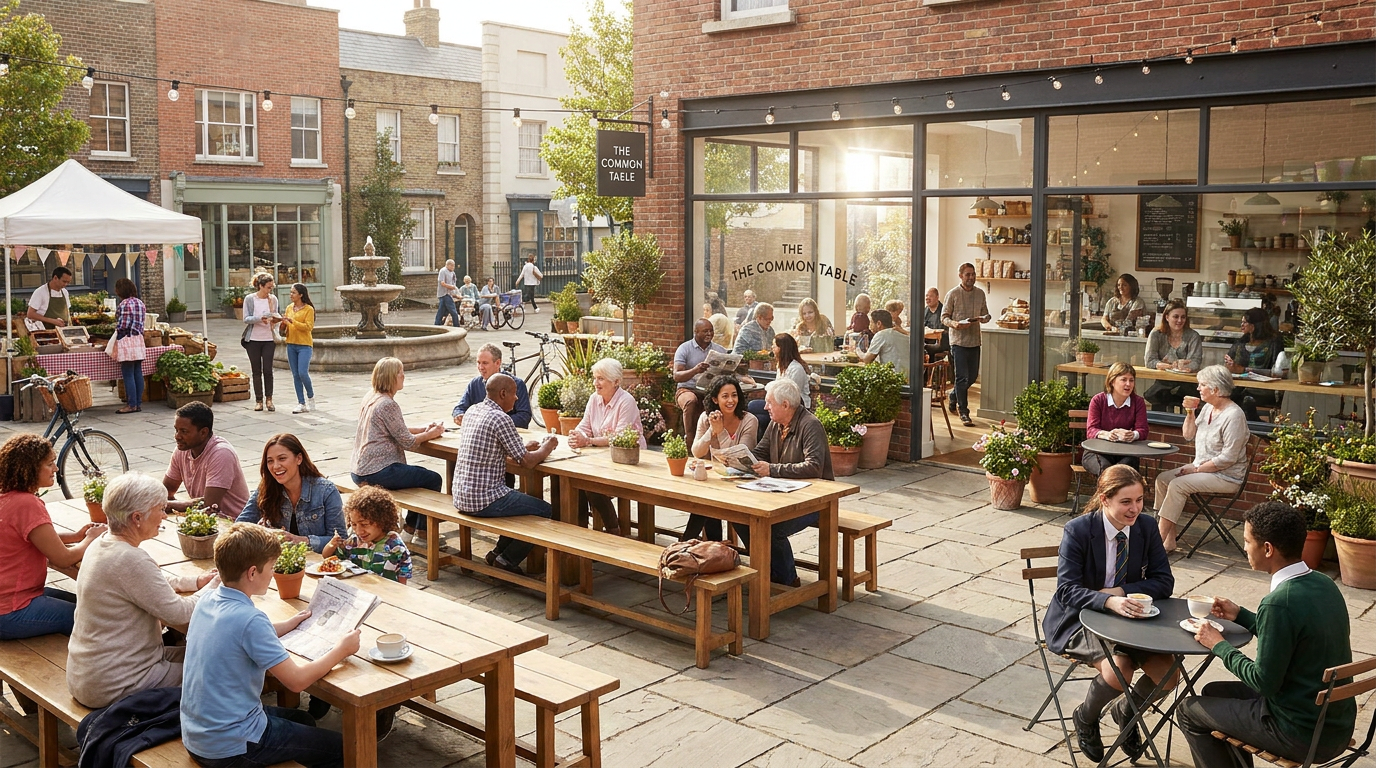
To understand this revival, it is necessary to look back to a framework established nearly four decades ago. In 1989, American sociologist Ray Oldenburg coined the term "third place" in his seminal book, The Great Good Place. Oldenburg proposed that a healthy, balanced life requires active engagement in three distinct realms. The "first place" is the home, representing family and private life. The "second place" is the workplace or school, characterized by structured duties, hierarchies, and performance expectations. The "third place," Oldenburg argued, is the essential anchor of community life. It is a generic designation for a wide variety of public spaces that host regular, voluntary, and informal gatherings of individuals. These are the spaces where people go simply to exist in the company of others, free from the obligations of their primary and secondary environments.[1][3]

A genuine third place is defined by a specific set of characteristics that distinguish it from a mere commercial venue. First and foremost, it operates as neutral ground; individuals can come and go as they please without needing an invitation or a specific reason to be there. These spaces are inherently accessible and relatively inexpensive, ensuring that financial barriers do not prevent regular attendance. Crucially, third places function as social levelers. Inside a true third place, an individual's socioeconomic status, job title, or background ceases to matter, allowing people from vastly different walks of life to interact as equals. The primary activity in these environments is informal conversation, accompanied by a sense of warmth, playfulness, and belonging. They are, as some urban commentators describe them, the "living rooms" of society.[2][6]
Historically, third places have been the bedrock of civic engagement and cultural exchange. In 17th-century England, the explosion of coffeehouses provided a sober, stimulating environment where citizens could debate politics and share news, laying the early groundwork for democratic discourse. The ancient Greek agora served a similar function, blending commerce with intense social and philosophical interaction. In more recent American history, the neighborhood diner, the local barbershop, and the community recreation center served as the vital connective tissue of towns and cities. These spaces provided a reliable backdrop for the serendipitous encounters and casual conversations that transform a group of strangers into a cohesive, resilient community.[9]
The decline of these essential spaces was not accidental, but the result of decades of shifting urban design and economic priorities. The post-World War II boom in suburbanization prioritized private, single-family homes and car-centric infrastructure over walkable, mixed-use neighborhoods. Strict zoning laws frequently banned commercial establishments from residential areas, forcing citizens to drive to massive, impersonal shopping malls or big-box stores that offered consumerism without community. Simultaneously, the rapid rise of digital technology and social media shifted the locus of interaction from the physical square to the virtual feed. The final, devastating blow arrived with the COVID-19 pandemic, which forced the prolonged closure of cafes, libraries, and community centers, severing the remaining fragile threads of in-person social infrastructure.[6]
The public health consequences of this vanishing social infrastructure have been severe and measurable. During and after the pandemic lockdowns, healthcare professionals recorded unprecedented spikes in anxiety, depression, and substance abuse. A 2024 report by the American Psychiatric Association found that 25 percent of US residents felt significantly lonelier than they did prior to the pandemic, while earlier Gallup polling indicated that nearly 40 percent of young adults felt lonely for a large portion of their day. Researchers at Drexel University, investigating the urban context of Philadelphia, found a direct correlation between a lack of access to quality third places and profound feelings of social isolation among city residents. The loss of these spaces is no longer viewed merely as a cultural shift, but as a driving force behind a recognized public health epidemic.[3][4]
The public health consequences of this vanishing social infrastructure have been severe and measurable.
The medical community now understands that isolation inflicts a physical toll comparable to chronic disease. Disconnection from society elevates cortisol levels, disrupts sleep, and raises the risk of cognitive decline and premature mortality. Conversely, robust social infrastructure acts as a powerful protective factor. A widely cited meta-analysis of health outcomes revealed that strong social relationships are associated with a roughly 50 percent increased likelihood of survival over time compared to weaker social ties. This staggering statistic underscores why public health officials and medical anthropologists are increasingly prescribing community engagement alongside traditional medical interventions. Restoring access to informal gathering spaces is now considered one of the most effective, scalable strategies for combating the heightened mental health crisis and improving baseline population health.[7][9]

Recognizing the stakes, communities in 2026 are actively engineering a revival of the third place, often through the creation of "micro-communities." These grassroots initiatives bypass the need for massive urban redevelopment by focusing on consistent, localized gatherings. Repair cafes, where neighbors gather to fix clothes, bicycles, and small appliances, have surged in popularity, blending sustainability with skill-sharing and conversation. Urban run clubs, community gardens, and adult field trips offer structured but low-pressure environments where strangers can interact around a shared focal point. The success of these micro-communities lies in their recurring nature; meeting weekly or biweekly creates the familiarity necessary to transform casual acquaintances—what sociologists call "weak ties"—into a reliable support network.[7]
This grassroots momentum is being matched by shifts in formal urban design and commercial architecture. Developers and city planners are increasingly recognizing that livability depends heavily on community attachment. In San Francisco, historic institutions like the South End Rowing Club demonstrate the enduring appeal of spaces where physical activity is secondary to the social bonding that occurs in the saunas and locker rooms. Meanwhile, new commercial developments are pivoting away from purely transactional retail toward hybrid social models. Modern food halls, such as Saluhall in San Francisco, are designed specifically to encourage lingering, offering free Wi-Fi, ample communal seating, and diverse food options to recreate the bustling, inclusive atmosphere of a traditional public square.[1][2]

However, the modern revival of third places is not without friction, particularly concerning commercialization and accessibility. Traditional third places often served geographic communities where diversity occurred naturally through proximity. Today, the rise of hobbyism and specialized interests means many new spaces cater to specific subcultures or demographics, potentially reducing cross-cultural interaction. Furthermore, as urban redevelopment and gentrification accelerate, longtime residents frequently watch their affordable, mom-and-pop neighborhood hubs get priced out and replaced by high-end cafes or boutique fitness studios. Urban sociologists warn that if a third place requires a significant financial transaction to participate, it fails its primary mandate of being a neutral, accessible leveler for all members of the public.[2][3]
In the face of commercial pressures, the public library has emerged as one of the most resilient and vital third places in modern society. Far from being quiet repositories for books, contemporary libraries have evolved into dynamic, multi-use community hubs. At institutions like Boston University's Mugar Memorial Library, the space accommodates study sessions, club meetings, pop-up services, and casual socializing, often remaining open 24 hours a day. Because they are entirely free and open to everyone, libraries fill the critical gaps in civic infrastructure. They offer a rare environment where individuals are treated as citizens rather than consumers, providing warmth, safety, and the opportunity for serendipitous connection without the expectation of spending money.[3]

The necessity of these spaces is particularly acute for younger generations, who are navigating an increasingly digitized and isolated adolescence. The recent phenomenon of "teen takeovers"—where large groups of young people coordinate flash-mob-style meetups at malls or city centers—is viewed by experts not merely as a nuisance, but as a desperate symptom of lost social infrastructure. Teenagers possess a profound developmental need for personal connection and autonomy, yet they have very few designated, safe spaces to socialize outside of school and home. Research indicates that when children and adolescents are provided with accessible third places, such as after-school programs, skateparks, or community centers, they exhibit significantly better academic, behavioral, and social outcomes, gaining confidence and a broader consciousness of the world.[8]
At the other end of the demographic spectrum, third places are proving equally vital for the aging population. A recent study conducted in Stockholm, Sweden, examined the impact of the built environment on older adults living in ordinary housing. The research demonstrated that accessible local third places—particularly those that facilitate walking, offer food, and provide community programming—are crucial resources for mitigating loneliness among seniors. When municipalities invest in the management and service mentality of these spaces, they create environments where older adults feel safe, seen, and at home. These findings highlight that third places are not just amenities for the young and mobile, but essential components of healthy aging and allowing seniors to age in place with dignity.[5]
Ultimately, the revival of the third place represents a profound course correction in how modern society values human connection. The loneliness epidemic has made it abundantly clear that digital networks cannot replace the psychological and physiological benefits of physical proximity. Whether through a grassroots mending circle, a bustling municipal library, or a thoughtfully designed urban park, the spaces between home and work are where the actual fabric of society is woven. Investing in these inclusive, vibrant environments is no longer just an exercise in urban beautification; it is a critical public health imperative. By prioritizing the architecture of community, society can begin to heal its fractures and ensure that no one has to navigate the complexities of modern life entirely alone.[4][9]
How we got here
1989
Sociologist Ray Oldenburg coins the term 'third place' in his book 'The Great Good Place'.
2020-2021
The COVID-19 pandemic forces the closure of public gathering spaces, severely accelerating the global loneliness epidemic.
2023
The U.S. Surgeon General officially declares loneliness and isolation a public health epidemic.
2025-2026
A grassroots revival of 'micro-communities' and hybrid urban spaces emerges as citizens actively seek to rebuild in-person social networks.
Viewpoints in depth
Urban Planners & Sociologists
Focuses on how zoning laws, the built environment, and commercial development dictate social interaction.
This camp argues that the loneliness epidemic is fundamentally a structural failure of the built environment. They point to post-WWII suburbanization and strict zoning laws that separated residential areas from commercial hubs, effectively outlawing the natural, walkable third places that historically anchored neighborhoods. For these experts, the solution lies in mixed-use zoning, pedestrian-friendly infrastructure, and designing public spaces that prioritize human connection over vehicular efficiency and pure consumerism.
Public Health Advocates
Views informal social spaces as critical medical infrastructure necessary to combat the loneliness epidemic.
Medical professionals and health researchers approach third places through the lens of mortality and mental well-being. Citing data that equates the physical toll of prolonged isolation to chronic disease, this group argues that community centers, parks, and cafes are as essential to public health as hospitals. They advocate for 'social prescribing'—where doctors recommend community engagement alongside traditional treatments—and push for municipal funding to ensure vulnerable populations, particularly the elderly and adolescents, have access to safe gathering spaces.
Community Organizers
Emphasizes grassroots, low-cost micro-communities and recurring local events over large-scale commercial venues.
Grassroots organizers and local advocates caution against relying solely on commercial developers to solve the social deficit. They highlight the risk of gentrification, where traditional, affordable third places are replaced by high-end venues that price out longtime residents. Instead, this camp champions 'micro-communities'—repair cafes, tool libraries, and neighborhood run clubs—that require minimal infrastructure but deliver high-impact, recurring social interaction. They argue that true community is built through shared, accessible activities rather than passive consumption.
What we don't know
- How the widespread shift to remote work will permanently alter the geographic distribution and financial viability of neighborhood third places.
- Whether commercial hybrid spaces, like modern food halls, can genuinely replicate the cross-cultural mixing of traditional, low-cost public squares.
- The long-term impact of digital-first socialization on Generation Alpha's ability to utilize physical community spaces.
Key terms
- Third Place
- A sociological term for an informal public gathering space separate from the two usual social environments of home and the workplace.
- Micro-community
- A small, recurring social group built around a specific activity or shared interest, designed to foster consistent, low-pressure interaction.
- Social Infrastructure
- The physical places and organizations that shape the way people interact and build community networks.
- Weak Ties
- Casual acquaintances or informal social connections that, while not deep friendships, significantly contribute to a person's sense of belonging and well-being.
Frequently asked
What exactly is a third place?
Coined by sociologist Ray Oldenburg, a third place is an informal, accessible gathering spot outside of home (first place) and work (second place) where people connect.
Why did third places disappear?
A combination of suburban sprawl, car-centric zoning laws, the rise of digital socialization, and the economic fallout of the COVID-19 pandemic led to their decline.
How do third places impact mental health?
Research shows that regular access to community spaces reduces anxiety, depression, and loneliness by fostering casual social ties and a sense of belonging.
Are third places always commercial businesses?
No. While cafes and diners are common, public libraries, parks, community centers, and places of worship serve as vital non-commercial third places.
Sources
Source coverage
9 outlets
3 viewpoints surfaced









[1]Smithsonian MagazineCommunity Organizers
The Importance of Third Places for Community Building
Read on Smithsonian Magazine →[2]ArchDailyUrban Planners & Sociologists
Third Places in the United States: Commercialized or Community-Centered?
Read on ArchDaily →[3]Boston UniversityUrban Planners & Sociologists
Why Is Everybody Talking About “Third Places” Right Now?
Read on Boston University →[4]Drexel UniversityPublic Health Advocates
No place like third place: investigating the relationship between loneliness and third places in Philadelphia
Read on Drexel University →[5]ResearchGatePublic Health Advocates
The Potential of 'Third Place' in Mitigating Loneliness Among Older Adults
Read on ResearchGate →[6]Brookings InstitutionUrban Planners & Sociologists
Third places at risk
Read on Brookings Institution →[7]Wild HeartsCommunity Organizers
Why “micro-communities” are the lifestyle trend that actually sticks
Read on Wild Hearts →[8]Newport HealthcarePublic Health Advocates
What Is a 'Third Place' for Social Connection?
Read on Newport Healthcare →[9]Factlen Editorial TeamCommunity Organizers
Synthesis by Factlen editorial team
Read on Factlen Editorial Team →
Every angle. Every day.
Get lifestyle stories with full source coverage and perspective breakdowns delivered to your inbox.