
Stablecoins Quietly Overhaul Global Remittances, Slashing Cross-Border Fees Under 1%
Major payment networks and money transfer operators have integrated blockchain rails in 2026, compressing international transfer fees and settlement times for millions of users in developing markets.
By Factlen Editorial Team
- Payment Innovators
- Companies building the rails view stablecoins as the inevitable upgrade to an outdated correspondent banking system.
- Macroeconomic Regulators
- Monetary authorities recognize the efficiency gains but warn of systemic risks and shadow dollarization.
- Market Analysts
- Financial observers tracking the shift from speculative crypto trading to real-world utility.
What's not represented
- · Traditional correspondent banks losing revenue to blockchain settlement
- · Local money transfer operators in developing nations
Why this matters
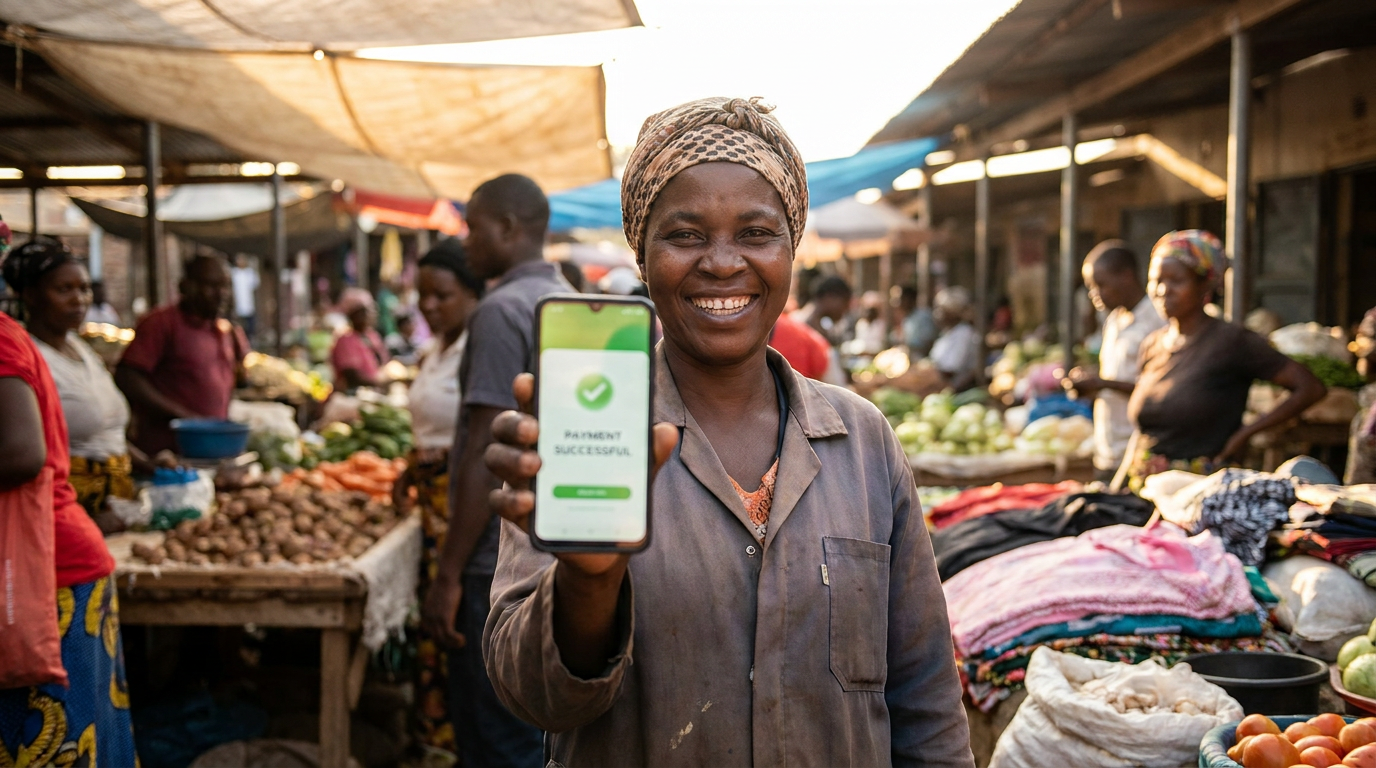
For decades, migrant workers and international businesses have lost billions to the slow, expensive correspondent banking system. The mainstream integration of stablecoins is finally delivering near-instant, low-cost global money transfers, keeping more wealth in the hands of the families who need it most.
Key points
- Stablecoins are transitioning from crypto trading tools to mainstream cross-border payment infrastructure.
- Legacy remittance fees average 6.49%, while stablecoin-routed transfers cost less than 1%.
- Major operators like MoneyGram, Western Union, and Visa have integrated blockchain settlement rails.
- The EU's MiCA regulation has provided the legal clarity necessary for institutional adoption.
- Central banks warn that widespread use of dollar-pegged tokens could accelerate dollarization in developing nations.
In mid-2026, the cryptocurrency sector is quietly achieving its oldest, most elusive promise: fixing the global remittance system. While public attention remains fixated on Bitcoin's price swings and artificial intelligence investments, stablecoins—digital tokens pegged to fiat currencies like the U.S. dollar—have transitioned from speculative trading tools into production-grade financial infrastructure.[1][7]
The shift is monumental for the $132 billion global remittance market. For decades, migrant workers and international businesses have relied on a patchwork of correspondent banks and legacy money transfer operators, enduring slow settlement times and exorbitant costs.[5][6]
Now, the landscape has fundamentally altered. Legacy giants including MoneyGram, Western Union, Visa, and Mastercard have fully integrated stablecoin settlement rails into their consumer-facing applications. By routing funds across blockchains like Solana and Ethereum rather than traditional SWIFT networks, these platforms are bypassing intermediary banks entirely.[4][5]
The financial impact on everyday users is stark. According to industry data, traditional cross-border transfers cost an average of 6.49% of the principal amount, with hidden foreign exchange spreads eating further into the total. In contrast, remittance fees routed through stablecoin infrastructure have plummeted to under 1%.[2][5]

Settlement times have seen a similar compression. A standard international wire transfer typically requires one to five business days to clear, as funds navigate compliance checks and liquidity pools across multiple time zones. Blockchain-based stablecoin transfers, however, settle in three to five seconds, offering continuous 24/7 liquidity.[5][6]
"Stablecoin remittance used to be a thesis. In 2026, it is production infrastructure," notes a recent analysis of the European payment sector. This maturation is driving a historic inversion in how digital assets are utilized. Historically, 85% to 90% of stablecoin volume was dedicated to providing liquidity for crypto traders.[2][4]
In 2026, it is production infrastructure," notes a recent analysis of the European payment sector.
By the end of 2026, analysts project that real-world utility—specifically business-to-business cross-border payments, treasury management, and retail remittances—will account for more than half of all stablecoin transaction volume.[2][7]

Regulatory clarity has been the primary catalyst for this institutional embrace. The European Union's Markets in Crypto-Assets (MiCA) framework, which came into full effect this year, established strict reserve requirements and audit standards for stablecoin issuers. By mandating that significant stablecoins hold up to 60% of their reserves in regulated bank deposits, MiCA provided the legal certainty that legacy financial institutions required to adopt the technology.[3][4]
This regulatory green light has allowed companies like Circle, the issuer of USDC, to harmonize with European standards and become the primary gateway for Euro-to-Dollar on-chain settlement. Consequently, the "stablecoin sandwich" model has flourished: users deposit local fiat, the provider instantly converts and transfers it as a stablecoin across borders, and the recipient withdraws local currency on the other side, completely insulated from the underlying blockchain mechanics.[2][6]
The benefits are particularly pronounced in emerging markets. In regions grappling with high inflation or currency instability, such as Argentina and Venezuela, dollar-pegged stablecoins are increasingly serving as a digital safe haven. Furthermore, because stablecoin wallets do not require a traditional bank account, they are extending financial inclusion to unbanked populations who rely on mobile money.[5][6]

However, the rapid proliferation of private, dollar-backed digital currencies is not without friction. Central banks are closely monitoring the macroeconomic implications. The European Central Bank has warned that widespread adoption of U.S. dollar stablecoins could inadvertently accelerate "dollarization" in emerging economies, potentially weakening local monetary policy and complicating capital flow management.[3]
To counter this, several jurisdictions are accelerating their own central bank digital currency (CBDC) initiatives, while Japan and Singapore have licensed their own yen- and dollar-pegged stablecoins to maintain sovereign competitiveness.[3][7]

Despite these macroeconomic tensions, the microeconomic victory for consumers is undeniable. The integration of stablecoins into the global payment stack represents a rare instance where blockchain technology is delivering immediate, quantifiable relief to the people who need it most. As the infrastructure continues to scale, the days of paying a 6% premium to send money home may soon be a relic of the past.[1][7]
How we got here
2023-2024
Visa and Mastercard begin pilot programs for stablecoin settlement on Ethereum and Solana.
September 2025
MoneyGram launches a stablecoin-enabled mobile app targeting 50 million users globally.
Late 2025
The European Union's MiCA regulation establishes clear reserve requirements for stablecoin issuers.
March 2026
Western Union announces USDPT, connecting digital dollars to 360,000 cash payout points.
June 2026
Analysts project real-world stablecoin payments will soon surpass speculative crypto trading volume.
Viewpoints in depth
Payment Infrastructure Providers
Companies building the rails view stablecoins as the inevitable upgrade to an outdated correspondent banking system.
Firms like Visa, Mastercard, and Crossmint argue that the legacy SWIFT network is structurally inefficient for modern commerce. By utilizing blockchain settlement, they can eliminate the need for pre-funded nostro/vostro accounts in foreign markets, freeing up capital and allowing for 24/7 continuous settlement. For these providers, stablecoins are not a speculative asset but a superior software protocol for moving value.
Emerging Market Consumers
Everyday users and migrant workers prioritize speed, low fees, and protection against local currency inflation.
For unbanked populations or those working abroad, stablecoins offer a lifeline. Users in countries with high inflation use dollar-pegged tokens as a digital safe haven, preserving their purchasing power. Furthermore, the drop in remittance fees from 6.5% to under 1% means billions of dollars previously lost to intermediaries now remain in the pockets of families receiving the funds.
Central Banks & Regulators
Monetary authorities recognize the efficiency gains but warn of systemic risks and shadow dollarization.
Institutions like the European Central Bank caution that the unchecked proliferation of U.S. dollar-backed stablecoins could undermine local monetary sovereignty. If citizens in emerging markets default to digital dollars for everyday transactions, local central banks lose their ability to manage capital flows and transmit monetary policy. Consequently, regulators are pushing strict frameworks like MiCA to ensure stablecoins are fully backed by audited bank deposits rather than algorithmic mechanisms.
What we don't know
- How traditional correspondent banks will adjust their fee structures to compete with near-free blockchain settlement.
- Whether emerging market central banks will attempt to restrict foreign stablecoins to protect their sovereign currencies.
Key terms
- Stablecoin
- A digital currency pegged to a stable asset, such as the U.S. dollar, designed to maintain a constant value.
- Remittance
- Money sent by a person working abroad back to their home country.
- Correspondent Banking
- A traditional network where banks hold accounts with one another to facilitate cross-border transfers, often causing delays and high fees.
- MiCA
- The Markets in Crypto-Assets regulation, a comprehensive European Union framework governing digital assets and stablecoin reserves.
- On-chain Settlement
- The process of finalizing a financial transaction directly on a blockchain ledger, typically occurring in seconds.
Frequently asked
Do I need to understand crypto to use stablecoin remittances?
No. Most modern platforms use a 'stablecoin sandwich' model where you deposit and withdraw local currency, while the platform handles the blockchain transfer in the background.
Why are traditional remittances so expensive?
Legacy transfers rely on a patchwork of intermediary banks, each charging fees and applying foreign exchange spreads, which averages out to a 6.49% cost globally.
Are stablecoins safe from the volatility of Bitcoin?
Yes. Fiat-backed stablecoins are pegged 1:1 to assets like the U.S. dollar and are increasingly required by regulators to hold matching cash reserves in traditional banks.
Sources
Source coverage
7 outlets
3 viewpoints surfaced







[1]CNBC AfricaMarket Analysts
Crypto market optimism and institutional flows in 2026
Read on CNBC Africa →[2]Deutsche BankMacroeconomic Regulators
The next-generation monetary and financial system: Stablecoins in 2026
Read on Deutsche Bank →[3]European Central BankMacroeconomic Regulators
Report on the international role of the euro and stablecoin risks
Read on European Central Bank →[4]CrossmintPayment Innovators
Five Stablecoin Trends Every EU Remittance Company Needs to Get In Front of in 2026
Read on Crossmint →[5]OpenDuePayment Innovators
Why Stablecoins Matter for Cross‑Border Money Movement in 2026
Read on OpenDue →[6]ChainUpPayment Innovators
Global Crypto Remittance Statistics and Trends 2026
Read on ChainUp →[7]Factlen Editorial TeamMarket Analysts
Synthesis by Factlen editorial team
Read on Factlen Editorial Team →


Every angle. Every day.
Get finance stories with full source coverage and perspective breakdowns delivered to your inbox.